Rethinking Prototyping
Здесь есть возможность читать онлайн «Rethinking Prototyping» — ознакомительный отрывок электронной книги совершенно бесплатно, а после прочтения отрывка купить полную версию. В некоторых случаях можно слушать аудио, скачать через торрент в формате fb2 и присутствует краткое содержание. Жанр: unrecognised, на английском языке. Описание произведения, (предисловие) а так же отзывы посетителей доступны на портале библиотеки ЛибКат.
- Название:Rethinking Prototyping
- Автор:
- Жанр:
- Год:неизвестен
- ISBN:нет данных
- Рейтинг книги:3 / 5. Голосов: 1
-
Избранное:Добавить в избранное
- Отзывы:
-
Ваша оценка:
Rethinking Prototyping: краткое содержание, описание и аннотация
Предлагаем к чтению аннотацию, описание, краткое содержание или предисловие (зависит от того, что написал сам автор книги «Rethinking Prototyping»). Если вы не нашли необходимую информацию о книге — напишите в комментариях, мы постараемся отыскать её.
The Design Modelling Symposium Berlin 2013 would like to challenge the participants to reflect on the possibility of computational systems that bridge design phase and occupancy of buildings. This rethinking of the designed artifact beyond its physical has had profound effects on other industries already. How does it affect architecture and engineering?
At the scale of engineering and building systems new perspectives may open up by engaging built form as a continuous prototype, which can track and respond during use and serve as a real world implementation of its design model. This has been tried many times from intelligent façades to smart homes and networked grids but much of it was only technology driven and not approached from a more holistic design perspective.
Rethinking Prototyping — читать онлайн ознакомительный отрывок
Ниже представлен текст книги, разбитый по страницам. Система сохранения места последней прочитанной страницы, позволяет с удобством читать онлайн бесплатно книгу «Rethinking Prototyping», без необходимости каждый раз заново искать на чём Вы остановились. Поставьте закладку, и сможете в любой момент перейти на страницу, на которой закончили чтение.
Интервал:
Закладка:
The optimisation result shows the material distribution within the design space: ribs running directly between the point supports along the short distance and ribs connecting between the point supports reaching maximum height at mid-distance with the ribs merging and leaving a void in the middle.
The structural system modelled for this optimisation is a very broadly applied one: plates under distributed loadings can be inserted into many structural arrangements. The patterning is now produced through variation of the position of the points supports, which are located in the four corners of the initial model (Fig. 9).
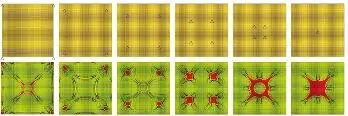
Fig. 9 Position of point supports and bottom view of the corresponding optimisation results
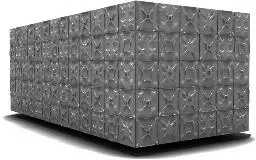
Fig. 10 Possible arrangement of parametric pattern
All of the systems use the same amount of material, all of them are optimised according to the given support conditions. The result of this study is a patterning with an inherent structural logic, comprehensible to the viewer and derived from objective targets: the development of geometries relating to their structural system.
A possible application of parametrically optimised plates is shown in Fig. 10. The material of the plates could be any mouldable material adequate resistance, such as fibre reinforced concrete or plastic. The fixing points of the cladding plates are then positioned where they were located in the optimisation run.
The optimisation can basically be scaled within certain limits. Another possible application is the generation of plates at a larger scale is shown in Fig. 11. It resembles in its appearance the famous ceiling structure of the Gatti Wool Factory in Rome, designed by Pier Luigi Nervi, a pioneer in the design of aesthetic and efficient structures. To suit the support conditions determined by the optimisation procedure the columns are branched at varying heights, corresponding to the distance of the support points. Since the plates were optimised as individual structural elements, they are arranged at a distance.

Fig. 11 Pattern roof structure, referring to Nervi‘s Gatti ceiling
It was the merit of Pier Luigi Nervi to merge aesthetics, structural efficiency and construction - as he mentioned „good engineering seems to be a necessary, however not sufficient condition for good architecture“ (Nervi 1965). Modern manufacturing methods allow variations in geometry without rising costs. Nervi‘s idea of aesthetical engineering should be carried on using modern design and manufacturing tools.
Further parametric studies deal with the design of shells: the interaction of support geometries of a structure produces related shell geometries. The curvature of the shell is then directly linked to its structural system, a possibility to create structural parametric patterns in 3D space.
3.4 Re-Design of Natural Structures
Natural structures give impressive examples of structurally optimised geometries. Nature has developed a great variety of very lightweight structures, resulting from optimisation procedures running over billions of years. The methods of structural optimisation can be used to clarify the basic characteristic of their load-bearing behaviour and to develop structural geometries with the same efficiency, basically reproducing the process of optimisation in nature. The merging of studies of natural structures with the methods of structural optimisation can produce a new morphology of natural lightweight structures. Lightweight structures must and will play an important role in architecture and engineering when acting responsively in the field of material use.
A good example for an efficient natural structure is the skeleton of the columniform cactus, which reaches up to approximately 6m of height. Its structure can be described as a perforated tube . Developed by the SOM -affiliated engineer Fazlur Khan in the 1960s tube structures are very efficient structural systems for the design of tall slender buildings: The concentration of material along the outline of the structure allows for optimised structural efficiency in comparison to the classical core structure.
For this study, the structural model was set up as a vertical cast-in beam with a hollow tube section. The optimisation objective was to minimise the compliance, i.e. maximize stiffness of the structure with the design constraint of only 15% of the structural volume to be filled with material. The result is an organic geometry with thorough structural background. Fig. 12 shows the antetype, the structural system and the optimisation result.
The tube is now optimised for one dominant wind direction. In combination with an inner tube the tube-in-tube system , also initially developed by Fazlur Khan , the structure serves all wind directions. Wind loadings acting from varying wind directions are carried by two interacting structural systems: The wind loading at the lower part of the structure is assigned mainly to the outer tube, with the geometry not being
optimised for this load case, but working as a tube. The wind loading at the top part of the skyscraper is assigned to the inner tube, which acts as a (much more slender) cantilever, cast-in into the outer tube structure, with an appropriate slenderness of about 1:6 when considering only the top part actually working on its own .
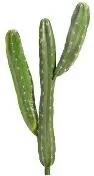
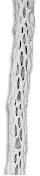
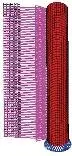



Fig. 12 Skeleton of the columniform cactus; structural model and optimisation result
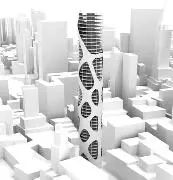
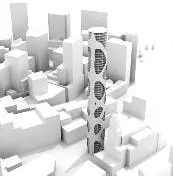
Fig. 13 Development of the structure into a tube-in-tube skyscraper structure
Another demonstrative example of efficient natural structures can be found at a much smaller scale: the diatoms. As a very good example of long-term optimisation processes in nature, there exists an evolutionary competition between crab and shell: the crab developing stronger pincers, while the diatom shell increasing in strength.
Читать дальшеИнтервал:
Закладка:
Похожие книги на «Rethinking Prototyping»
Представляем Вашему вниманию похожие книги на «Rethinking Prototyping» списком для выбора. Мы отобрали схожую по названию и смыслу литературу в надежде предоставить читателям больше вариантов отыскать новые, интересные, ещё непрочитанные произведения.

Обсуждение, отзывы о книге «Rethinking Prototyping» и просто собственные мнения читателей. Оставьте ваши комментарии, напишите, что Вы думаете о произведении, его смысле или главных героях. Укажите что конкретно понравилось, а что нет, и почему Вы так считаете.