John Nichol - Tornado Down
Здесь есть возможность читать онлайн «John Nichol - Tornado Down» весь текст электронной книги совершенно бесплатно (целиком полную версию без сокращений). В некоторых случаях можно слушать аудио, скачать через торрент в формате fb2 и присутствует краткое содержание. Город: London, Год выпуска: 2008, ISBN: 2008, Издательство: Penguin Adult, Жанр: nonf_military, Биографии и Мемуары, на английском языке. Описание произведения, (предисловие) а так же отзывы посетителей доступны на портале библиотеки ЛибКат.
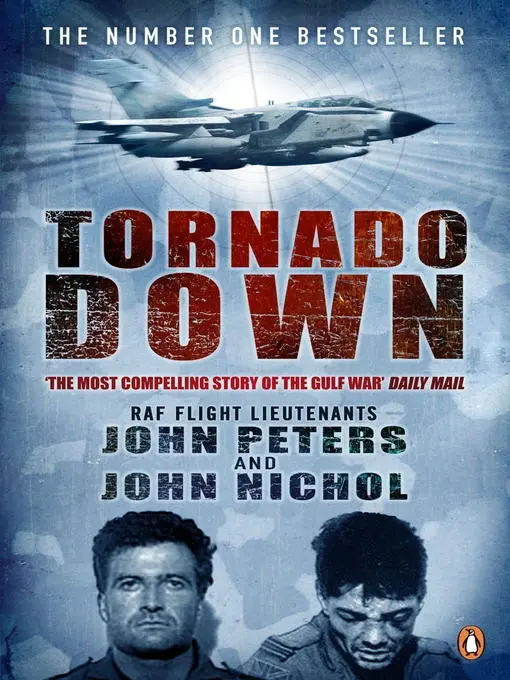
- Название:Tornado Down
- Автор:
- Издательство:Penguin Adult
- Жанр:
- Год:2008
- Город:London
- ISBN:978-0-14-193771-7
- Рейтинг книги:5 / 5. Голосов: 1
-
Избранное:Добавить в избранное
- Отзывы:
-
Ваша оценка:
Tornado Down: краткое содержание, описание и аннотация
Предлагаем к чтению аннотацию, описание, краткое содержание или предисловие (зависит от того, что написал сам автор книги «Tornado Down»). Если вы не нашли необходимую информацию о книге — напишите в комментариях, мы постараемся отыскать её.
In
, John Peters and John Nichol tell the incredible story of their part in the war against Saddam Hussien’s regime. It is a brave and shocking and totally honest story: a story about war and its effects on the hearts and minds of men.
Tornado Down — читать онлайн бесплатно полную книгу (весь текст) целиком
Ниже представлен текст книги, разбитый по страницам. Система сохранения места последней прочитанной страницы, позволяет с удобством читать онлайн бесплатно книгу «Tornado Down», без необходимости каждый раз заново искать на чём Вы остановились. Поставьте закладку, и сможете в любой момент перейти на страницу, на которой закончили чтение.
Интервал:
Закладка:
‘Shit, shit, shit, shit, shit! Have we got a spare aircraft?’ The Tornados were dispersed widely across the airfield, in case of surprise attack, but there was a spare, right on the other side. We bundled out. The aircraft we were leaving was fully set up, all the navigation kit was aligned, the computers were loaded, everything was checked out. We had to shut the bloody thing down, collect all the maps and niff-naff strewn around the cockpit, and get out. Uppermost in our minds was the feeling that we had to get airborne, we had to go. There had been three or four occasions in the past when we had had problems with the aircraft during training flights, and we had turned back: no point in crashing. But the banter from your peers, merciless as always, immediately translated these incidents into a lack of moral fibre (LMF). On exercises there was always a LMF crew, a crew that had been secretly instructed to refuse to fight, to object on moral grounds and generally to cause as much disruption to ‘normal ops’ as possible over the course of the exercise. It had become a joke that when it came to war, we would be the LMF crew, and sure enough, the sodding jet was broken. The car never starts when you have the most important appointment of your career. But you did not want to be called the LMF crew in this situation. It might just get beyond a joke.
Pulses racing, we grabbed a van, and steamed over to the spare aircraft. My checks were faster on this one – not rushed, just faster. The clock was ticking. We were listening over the radio. Mike Toft and Mark Paisey, who were part of our four-ship, called up to say they had a problem with their CSAS (fly-by-wire) kit. They asked for a specialist to come out. He came out and had a go at it for a few minutes. It still would not work. By this time, the ground crew had fixed the aircraft that we had abandoned – very impressive in so short a time, but this was all getting a teeny bit daft. So Tofty and Mark jumped out and started to wind that one up.
Meanwhile, Chris Lunt and Colin Ayton reported their Skyshadow ECM pod was unserviceable. The ground crew changed the pod. The new one refused to play. Normally it takes an hour to change a pod. The ground crew guys whipped one off another aircraft, and banged it on in record time. But it was getting close to taxi-out time now, and the next thing was that Lunty and Colin’s aircraft developed another problem. The Tornado is not usually that unreliable or problematic, as modern fast jets go; the guys were just extremely unlucky. Even so, they wanted to taxi out with us, still trying to get their Skyshadow going, still trying to get everything on line. As the rest of us reached the end of the runway, the formation leader told them to abort; they were forced to acknowledge it themselves: there were just too many things to worry about for the type of environment we were facing. They were staying behind. You could hear the desperation in their voices. It seems strange, but they were heartbroken. By the time you get to the stage of engines running, you have got to go. You are past the sticking point of your courage. You could almost touch the disappointment coming out of their aircraft. They were saying, ‘Just hang on, they’re putting another pod on, they’re putting another pod on.’ They did not want to be left out. We felt sorry for them, but at the same time, frankly, we were glad it was them and not us. Since they would not be coming along, we were now down to a three-ship attack, and I was delegated to lead the back pair of Tornados, with the formation leader and his navigator, Gary Stapleton, out in front on their ownsome. My first lead of a pair, officially, was thus in time of war.
The Victors we would shortly tank with took off in front of us, followed by Squadron Leader Mason, ourselves, then Mark Paisey and Mike Toft. With our extremely heavy take-off weight, a full Tornado war load, we stayed in afterburner until 300 knots, to make sure we were safely off the ground. The initial plan had been: take-off in the night, bomb at dawn, come home. But for operational reasons, which we were never privy to, it had all slipped, things had moved backwards. We would be attacking in broad daylight. Professionally speaking, this was not a good thing. The Tornado attacks at night. Doing so removes much of the defensive fire threat, all the visually-laid Triple-A, all the visually-laid missile systems. It’s very simple: in the dark, they cannot see you. Now, they would be able to.
Ours was to be the first, and the last, Tornado low-level daylight bombing mission of the entire war.
There was a little broken cloud at first. We lost sight of the Victors from time to time, then picked them up again as they broke out of the cotton wool. When we had been airborne for about sixty seconds, it looked as though every single friendly missile system in the Gulf locked us up. From the back, as the Radar Homing Warning Receiver (RHWR) blossomed into brilliant points of light, John exclaimed, ‘Every bugger’s looking at us!’
It was strangely comforting.
If you dick around at all on the tanker, you can foul it up for everybody else behind you, and you are not popular. And it can be bloody dangerous. In this case, there were only three of us, and we had two tankers, so there was no pressure. The formation leader was about three miles ahead, taking juice solo from the first Victor. Our pair of Tornados sidled up to the second tanker together, and we both got our noses firmly into the trailing fuel drogues first time. This was a bit of a kick, no nerves, very relaxed, very quiet, radio silent. It was just like training.
The tanker crew were excellent, real pros. Victors are old aircraft, they have very little in the way of navigational kit, but they let us off the trail at plus six seconds of the time they were meant to, which is exceptional. We stayed plugged into them right until the last second, so we were fully fuelled up. As a bomber, you still want combat fuel. You have a minimum level of fuel calculated, which is the amount you need to get to the target, bomb it, and get back to the tanker again. But you want spare fuel to fight with, if necessary. At that stage, we thought there was a fighter threat, and a very real one at that. On an attack run, you do not want to mess with a Mig-29 unless you absolutely have to. To escape that, or any threat around the target, you want power, which means ‘plugging in reheat’, afterburners on, which means speed, but it also means massive fuel consumption. At full combat power, afterburners on, the Tornado guzzles 600 kg – 200 gallons – of fuel per minute, instead of the 60 kg it uses at cruising speed.
11
Attack Run
John Peters: It was a gin-clear sky. ‘Burning blue’. We dropped away from the Victor about fifty kilometres short of the Iraqi border, diving hard for the deck. At 10,000 feet, a lot of people could see us on radar, including the enemy. As we crossed the border with Iraq, John said quietly from behind me, ‘That’s it then. No turning back now.’
The three-ship attack we were part of was flying in visual formation, but widely split. The other two aircraft looked extremely vulnerable in the bright sunshine, their canopies winking, an occasional wing flash as one of them manoeuvred. Every Iraqi between here and Baghdad must be able to see us.
Al Badiyah Al Janubiyah, Iraq’s southern desert: a barren ocean of sand.
This was nothing like flying in Europe, where there are hills, trees and even buildings to hide behind: there was absolutely no cover, it was completely flat. I wished we were lower: even at sixty feet, we wanted to be lower. At that height, we could see the faces turn skywards in alarm and amazement, as the Tornados roared over Bedouin complexes deep in the desert. This was really strange: here we were going to bomb the shit out of their country, and these people were looking up at us, close enough to spit.
Читать дальшеИнтервал:
Закладка:
Похожие книги на «Tornado Down»
Представляем Вашему вниманию похожие книги на «Tornado Down» списком для выбора. Мы отобрали схожую по названию и смыслу литературу в надежде предоставить читателям больше вариантов отыскать новые, интересные, ещё непрочитанные произведения.





Обсуждение, отзывы о книге «Tornado Down» и просто собственные мнения читателей. Оставьте ваши комментарии, напишите, что Вы думаете о произведении, его смысле или главных героях. Укажите что конкретно понравилось, а что нет, и почему Вы так считаете.