John Nichol - Tornado Down
Здесь есть возможность читать онлайн «John Nichol - Tornado Down» весь текст электронной книги совершенно бесплатно (целиком полную версию без сокращений). В некоторых случаях можно слушать аудио, скачать через торрент в формате fb2 и присутствует краткое содержание. Город: London, Год выпуска: 2008, ISBN: 2008, Издательство: Penguin Adult, Жанр: nonf_military, Биографии и Мемуары, на английском языке. Описание произведения, (предисловие) а так же отзывы посетителей доступны на портале библиотеки ЛибКат.
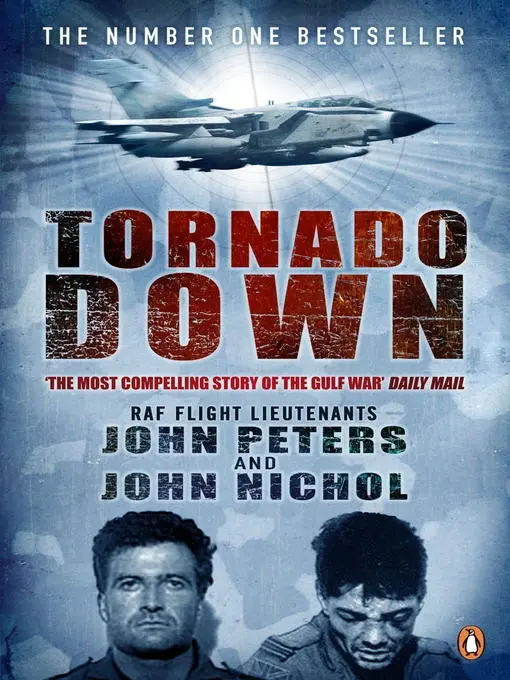
- Название:Tornado Down
- Автор:
- Издательство:Penguin Adult
- Жанр:
- Год:2008
- Город:London
- ISBN:978-0-14-193771-7
- Рейтинг книги:5 / 5. Голосов: 1
-
Избранное:Добавить в избранное
- Отзывы:
-
Ваша оценка:
Tornado Down: краткое содержание, описание и аннотация
Предлагаем к чтению аннотацию, описание, краткое содержание или предисловие (зависит от того, что написал сам автор книги «Tornado Down»). Если вы не нашли необходимую информацию о книге — напишите в комментариях, мы постараемся отыскать её.
In
, John Peters and John Nichol tell the incredible story of their part in the war against Saddam Hussien’s regime. It is a brave and shocking and totally honest story: a story about war and its effects on the hearts and minds of men.
Tornado Down — читать онлайн бесплатно полную книгу (весь текст) целиком
Ниже представлен текст книги, разбитый по страницам. Система сохранения места последней прочитанной страницы, позволяет с удобством читать онлайн бесплатно книгу «Tornado Down», без необходимости каждый раз заново искать на чём Вы остановились. Поставьте закладку, и сможете в любой момент перейти на страницу, на которой закончили чтение.
Интервал:
Закладка:
As we were about to leave the Ops Room, the eight aircraft out before us on the first wave started to check in over the radios. They were already on their way home. While we had been absorbed in the briefing for our own mission, they had completed theirs. The voice chatter came over loud and clear on the loudspeakers. As the eighth aircraft checked in, the Station Commander broadcast over the Tannoy to the whole station that they were all coming home safely. A massive cheer rippled through the entire base at the news. There had been a lot of worry that the first four days or so of the air war would see heavy losses among Tornado crews, because of the nature and difficulty of the task, and because of Saddam Hussein’s huge armoury of weapons. So the news that everyone had come through OK was extremely encouraging.
There wasn’t much left to do after that but to walk out to the transport – or rather waddle, what with the immense amount of kit festooned about our bodies. As we walked out, we met the first raid aircrew walking back in. Feeling quite a lot of respect for them, and not a little jealousy, I thought, ‘You’re lucky, you’ve proved that you can do it; you’re back here, and you’ve done it. I hope I can prove the same, that I’m not going to wimp out.’ While I never really believed I would, the doubt was still in my mind: ‘I don’t want to let anybody down. I don’t want to be the dick that lets everybody down – either by wimping out, or by fouling everything up.’ That was the big thing: fear of failure. Deep down, I suppose, I was afraid of my own fear.
The first crew we met was our Flight Commander, Squadron Leader Gordon Buckley, who had led the second four-Tornado formation on the first wave, with his navigator, Flight Lieutenant Paddy Teakle. If anybody ever had an image of a fighter-pilot, Buckley is its archetype – even though he was currently flying a bomber! He’s aggressive, confident and capable, and you would never want to compete against him in the air, because he is very, very good. He looked a curious combination of excitement and slight shock; he was obviously hyped-up from the mission, but at the same time had seen something that had not impressed him too much. The pressure and hard work of the sortie they had just flown showed on his face. ‘I am,’ he said drily, ‘stirred but not shaken.’
As for Paddy, he got his cigarettes out, lit up, and, hands shaking just a little, said, ‘You should have seen the fucking airfield. It was lit up like a bloody Christmas tree. There was flak everywhere. Tubes of bloody molten metal.’ He always did have a way with words. We stared at him.
‘But don’t worry,’ he went on, ‘you’ll be OK.’
10
Daylight Raid
John Peters: It was just coining up to dawn on the morning of 17 January. We clambered onto the minibus that would take us out to the aircraft. Their cockpits glowed an eerie green in the near darkness – just like a movie. We had a team photograph with the ground crew, who had been labouring all night to get the jets ready. The big difference this time was the eight live 1,000-pound bombs strapped under the Tornado’s long belly. We had never dropped more than one on any training mission before. We had certainly not taken off sitting on top of eight of the buggers. Now we were going to drop the whole live load onto somebody’s head, in one big hit. We were also packing two live AIM-9L Sidewinder missiles – ‘Limas’ – under the wings for self-defence. Again, we had never flown with more than one in training.
The Hughes AIM-9L Sidewinder is the standard close-range air-to-air weapon in use with US and British Air Forces. We were carrying it for self-defence and deterrence. Knowing we had Limas made fighters very wary before they dropped in behind a bomber for a shot of their own. If they had not seen the whole package, there was a good chance that they would be rolling out at perfect missile-firing range in front of somebody – somebody like us. The Lima, the great grandson of the Vietnam War ‘Bravo’ version, packs 11.4 kg (25 lb) of blast/fragmentation warhead with an active laser proximity fuse. It proved lethal in combination with the Royal Navy’s Sea Harrier during the Falklands conflict: twenty-seven fired for eighteen kills, a sixty-six per cent Probability of Kill (PK). The actual Falklands PK is nearer seventy-five per cent, because three Sidewinders were fired when Royal Navy pilots thought their first shots had missed, or because the target did not go down immediately after the first hit. Having said that, the Argentine aircraft were not carrying infra-red (IR) decoy flares, which might have helped confuse the missile, and most of the engagements in the Falklands War were ‘ideal’ – the Limas were fired from directly behind the target against a cold background – the Antarctic sea and sky. Very cold.
Under its left wing, the Tornado was carrying a Marconi ‘Skyshadow’ Electronic Counter Measures (ECM) pod, containing electronic systems that are designed to confuse and drown enemy missile guidance or tracking radars. Under the other wing was a ‘Boz’ pod: a chaff and flare countermeasures dispenser. Chaff is the word used to describe the little pieces of aluminium foil, much like the cooking foil in your kitchen drawer, that are dropped to confuse enemy radar. The foil, in thousands of little pieces, falls as a cloud, shows up on the enemy radar screens as a big solid object, and, with luck, confuses their tracking systems. Infra-red flares, also dispensed in the aircraft’s wake, give out intense heat – the idea being to distract a heat-seeking missile that is homing on the aircraft’s engines.
Last, but not least, we were carrying 340 rounds of High-Explosive Armour-Piercing (HEAP) ammunition for the two 27-mm Mauser cannons in the nose, not very much when the rate of fire is 1,700 rounds per minute. This stuff has a nasty habit of decimating anything that gets in its way. You don’t need much to turn the average personnel carrier into an armoured colander. The cannon are there as a last resort in air-to-air combat, and otherwise for ‘targets of opportunity’: a convoy you may happen to meet on the way back from doing something else, a nice juicy row of parked aircraft, or whatever. In short, we had a fully tooled-up Tornado: it felt good – it felt like power.
John mounted up, while I went around doing all the external checks, scrutinising the hydraulic levels, trying movable surfaces like flaps and slats, making sure all the safety pins had been removed from the weapons. I was very slow and pedantic making these checks, especially on the pins. There are two safety pins per bomb. I wanted to make sure that when we wanted to drop the bombs, they were going to come off and go bang. Ditto the Limas. I counted the pins. Time and time again, I checked and counter-checked them with the ground crew. They asked us what we wanted for breakfast when we got back. This was a first: they were going to meet us at the aircraft with breakfast. We must be at war.
We strapped in. After going through the initial checks, I called up the ground crew: ‘Clear start APU.’ The Auxiliary Power Unit is a small jet engine in the aircraft which is locked in to wind up the main engines.
‘Clear to start APU, Sir,’ said a voice over the headset.
‘Clear. Starting APU.’ I pressed the button. Nothing. Zilch. OK, try again. Just make sure you haven’t done anything stupid because you are half-nervous, like you haven’t checked the power switch is to external power rather than internal power. Nothing. No, I haven’t done anything silly; try again. Nothing. You only get three goes on the APU. It was not going to work. This was the last thing we needed. As it happened, we had lots of time, because we had come out early, on purpose, with just this sort of snag in mind. But it was very unsettling, to say the least.
Читать дальшеИнтервал:
Закладка:
Похожие книги на «Tornado Down»
Представляем Вашему вниманию похожие книги на «Tornado Down» списком для выбора. Мы отобрали схожую по названию и смыслу литературу в надежде предоставить читателям больше вариантов отыскать новые, интересные, ещё непрочитанные произведения.





Обсуждение, отзывы о книге «Tornado Down» и просто собственные мнения читателей. Оставьте ваши комментарии, напишите, что Вы думаете о произведении, его смысле или главных героях. Укажите что конкретно понравилось, а что нет, и почему Вы так считаете.