David Rosenberg - Inside Pine Gap
Здесь есть возможность читать онлайн «David Rosenberg - Inside Pine Gap» весь текст электронной книги совершенно бесплатно (целиком полную версию без сокращений). В некоторых случаях можно слушать аудио, скачать через торрент в формате fb2 и присутствует краткое содержание. Город: Melbourne, Год выпуска: 2011, ISBN: 2011, Издательство: Hardie Grant Books, Жанр: Биографии и Мемуары, Политика, на английском языке. Описание произведения, (предисловие) а так же отзывы посетителей доступны на портале библиотеки ЛибКат.
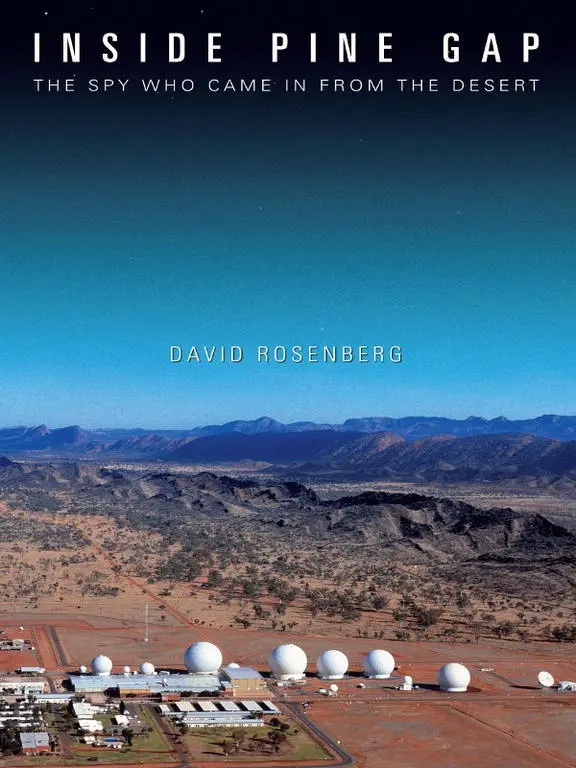
- Название:Inside Pine Gap
- Автор:
- Издательство:Hardie Grant Books
- Жанр:
- Год:2011
- Город:Melbourne
- ISBN:978-1-742-70173-8
- Рейтинг книги:4 / 5. Голосов: 1
-
Избранное:Добавить в избранное
- Отзывы:
-
Ваша оценка:
Inside Pine Gap: краткое содержание, описание и аннотация
Предлагаем к чтению аннотацию, описание, краткое содержание или предисловие (зависит от того, что написал сам автор книги «Inside Pine Gap»). Если вы не нашли необходимую информацию о книге — напишите в комментариях, мы постараемся отыскать её.
Author David Rosenberg details his career with an American intelligence agency during a tumultuous period in history that covered the terms of three American Presidents, four Australian Prime Ministers, the end of the Cold War, a peace treaty between Israel and Jordan, two wars in Iraq, genocide in Rwanda, as well as the ‘War against Terror’ and the emergence of North Korea as a nuclear-armed nation. This is a fascinating glimpse inside the top-secret world of military surveillance.
[This book contain a table.]
Inside Pine Gap — читать онлайн бесплатно полную книгу (весь текст) целиком
Ниже представлен текст книги, разбитый по страницам. Система сохранения места последней прочитанной страницы, позволяет с удобством читать онлайн бесплатно книгу «Inside Pine Gap», без необходимости каждый раз заново искать на чём Вы остановились. Поставьте закладку, и сможете в любой момент перейти на страницу, на которой закончили чтение.
Интервал:
Закладка:
In 1996, President Clinton overwhelmingly won his re-election bid on the basis of achievements such as his economic policies, the financial prosperity experienced by individuals and business, his success in negotiating a peace treaty between Israel and Jordan, and the low casualties incurred by the US military in the Balkans.
The intelligence community was concerned with the Balkans for the remainder of the Clinton presidency as many ethnic problems remained. One of our key concerns was another war, sparked when Serbia lost control of the breakaway republic of Kosovo. We were again tasked with supporting military operations as the United States and its allies intervened to prevent another slaughter of civilians in the region.
In 1997, tensions in Kosovo had begun to escalate between the ethnic Albanians (largely Muslim) and the Serbians (generally Eastern Orthodox Christians). In response to continued oppression by the Serbs, the Kosovo Liberation Army (KLA), a militant ethnic Albanian group, began killing Serbs in Kosovo, primarily targeting policemen. [15] http://www.infoplease.com/spot/kosovo1.html
The KLA eventually established control over wide areas within Kosovo, and in 1998, Serbian President Slobodan Milosevic sent Serbian troops into Kosovo to reclaim the KLA-controlled areas. President Clinton and NATO decided to intervene, citing the need to protect others from crimes against humanity. [16] ibid.
After unsuccessful diplomatic efforts, NATO warplanes began a seventy-eight-day aerial bombing campaign against Serbian forces in Kosovo and much of the weapons storage sites and infrastructure within Serbia. The intelligence community had monitored various Serbian military-related signals in advance of this action, and these were now used by NATO to assess the situation on the ground before starting offensive operations.
The United States was still concerned about the safety of the pilots flying the relatively dangerous missions over enemy terrain that had a large arsenal of Russian-made SAM systems and a fairly competent military. Disaster struck when, on 27 March 1999, a Russian made SA-3 SAM was reported to have shot down one of the United States’ most technologically advanced planes, an F-117A Nighthawk Stealth attack aircraft, near the village of Budanovici. The F-117A was designed to sneak through heavily defended areas undetected and attack high-value targets with pinpoint accuracy. Allied search-and-rescue capabilities immediately mobilised to find the pilot. The resulting rescue operation, conducted by several helicopters, successfully exfiltrated the pilot, returning him to safety before he could be captured by Serbian forces. A documentary about the shoot-down, The 21st Second , focused on Zoltán Dani, the former commander of the 3rd battery of the 250th Missile Brigade that claimed to have shot down the F-117A.
The circumstances surrounding the shoot-down were more alarming as talk within the intelligence community attributed the event to the Russians, who were rumoured to have supplied the Serbs with the flight plan for this aircraft. If true, this disturbing leak of top secret information would have informed the Serbian forces of the approximate location of the Nighthawk as it flew over Serbia, allowing them to position and prepare their SAM batteries in advance for the kill. The Serbs would certainly have provided the wreckage to the Russians (who were keen to obtain a US Stealth aircraft, or whatever was left of it), inevitably compromising some US Stealth technology. Some of the F-117A wreckage is reportedly on display at the Museum of Yugoslav Aviation close to Belgrade’s Nikola Tesla Airport. [17] http://www.military.com/forums/0,15240,167353,00.html
The military conflict in Kosovo ended in June 1999 after President Milosevic withdrew his largely intact army following the devastating destruction of numerous government buildings and many infrastructure targets throughout Serbia. The relatively low number of NATO casualties—no fatalities in combat operations—is a credit to President Clinton and the NATO commanders for waging a smart aerial war. The intelligence community had performed well, providing SIGINT to tactical planners and assisting during the search-and-rescue phase of the conflict.
While the Balkan conflict proved to be a victory for NATO and the Clinton administration, Osama bin Laden’s Al-Qaeda terrorist network had quietly but steadily been growing since its establishment some time between 1988 and 1990. It had become a multinational, stateless organisation that called for a global jihad against the West, particularly the United States, and by 1998, Al-Qaeda was suspected of either orchestrating or taking part in several successful terrorist attacks against US targets, including the World Trade Center bombing in 1993, the shoot-down of two Black Hawk helicopters in Somalia in 1993, the bombing of the US military housing complex in Dhahran, Saudi Arabia in 1996, and the United States Embassy bombings in Kenya and Tanzania in 1998. [18] http://news.bbc.co.uk/2/hi/3618762.stm
Bin Laden was already a wanted man, and the intelligence community had been actively looking for him, but this was made more difficult just after the 9/11 terrorist attacks when US Senator Orrin Hatch (R-Utah) told the Associated Press that the United States had intercepted a call between two bin Laden associates that suggested Al-Qaeda involvement. ‘They have an intercept,’ he said, ‘of some information that included people associated with bin Laden who acknowledged a couple of targets were hit.’ [19] http://www.wsws.org/articles/2002/jan2002/sept-j18.shtml
This announcement proved to be a major blow to the collection of intelligence against Al-Qaeda as Senator Hatch’s declaration informed bin Laden that his communications were being monitored and had been compromised. This pronouncement made those of us on the front lines angry and frustrated as our job was suddenly made much more difficult. In spite of his injudicious release of classified information regarding bin Laden’s satellite phone, Hatch still serves on the Select Committee on Intelligence.
President Clinton retaliated against Al-Qaeda for the embassy bombings on 20 August with intelligence available to him when Operation Infinite Reach conducted cruise missile strikes against targets in Sudan and Afghanistan. One of these strikes was reported to have narrowly missed bin Laden at a terrorist training camp in Afghanistan. This ineffective first strike did, however, mark the start of a concerted effort against the leadership and structure of the Al-Qaeda network.
The last major attack by Al-Qaeda during the Clinton administration came on 12 October 2000 with the bombing of the USS Cole —an attack that the United States had no prior warning of. Finding and dismantling the Al-Qaeda leadership would fall to President Clinton’s successor, with our efforts shifting into overdrive after 9/11.
During the Balkans conflict and the expansion of Al-Qaeda, Saddam Hussein had successfully regained his grip on power within Iraq. Following the first Gulf War in 1991, the United Nations Security Council imposed sanctions against Iraq, insisting on weapons inspectors visiting the country and calling for the dismantling of Iraq’s capability to produce weapons of mass destruction (WMD). [20] http://en.wikipedia.org/wiki/Iraq_sanctions
However, in January 1998, Iraq ceased cooperating with the weapons inspectors, and after diplomatic efforts to resume inspections failed, the United States and the United Kingdom launched Operation Desert Fox in December 1998. This was a major bombing campaign directed primarily against Iraq’s weapons research and development facilities and air defence systems as well as weapon and supply storage areas. Another stated goal was to loosen Saddam Hussein’s grip on power and replace his regime with a democratic government. [21] http://en.wikipedia.org/wiki/Bombing_of_Iraq_(December_1998 )
Интервал:
Закладка:
Похожие книги на «Inside Pine Gap»
Представляем Вашему вниманию похожие книги на «Inside Pine Gap» списком для выбора. Мы отобрали схожую по названию и смыслу литературу в надежде предоставить читателям больше вариантов отыскать новые, интересные, ещё непрочитанные произведения.











Обсуждение, отзывы о книге «Inside Pine Gap» и просто собственные мнения читателей. Оставьте ваши комментарии, напишите, что Вы думаете о произведении, его смысле или главных героях. Укажите что конкретно понравилось, а что нет, и почему Вы так считаете.