Robert Wittman - Priceless
Здесь есть возможность читать онлайн «Robert Wittman - Priceless» весь текст электронной книги совершенно бесплатно (целиком полную версию без сокращений). В некоторых случаях можно слушать аудио, скачать через торрент в формате fb2 и присутствует краткое содержание. Город: New York, Год выпуска: 2010, ISBN: 2010, Издательство: Crown Publishers, Жанр: Биографии и Мемуары, на английском языке. Описание произведения, (предисловие) а так же отзывы посетителей доступны на портале библиотеки ЛибКат.
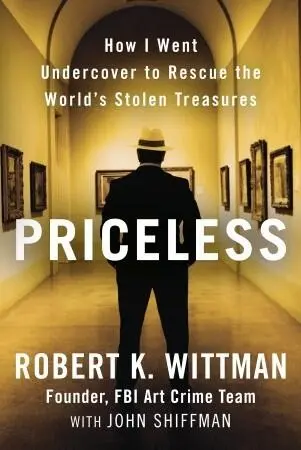
- Название:Priceless
- Автор:
- Издательство:Crown Publishers
- Жанр:
- Год:2010
- Город:New York
- ISBN:978-0-307-46149-0
- Рейтинг книги:3 / 5. Голосов: 1
-
Избранное:Добавить в избранное
- Отзывы:
-
Ваша оценка:
Priceless: краткое содержание, описание и аннотация
Предлагаем к чтению аннотацию, описание, краткое содержание или предисловие (зависит от того, что написал сам автор книги «Priceless»). Если вы не нашли необходимую информацию о книге — напишите в комментариях, мы постараемся отыскать её.
The London Times
In
Robert K. Wittman, the founder of the FBI’s Art Crime Team, pulls back the curtain on his remarkable career for the first time, offering a real-life international thriller to rival
.
Rising from humble roots as the son of an antique dealer, Wittman built a twenty-year career that was nothing short of extraordinary. He went undercover, usually unarmed, to catch art thieves, scammers, and black market traders in Paris and Philadelphia, Rio and Santa Fe, Miami and Madrid.
In this page-turning memoir, Wittman fascinates with the stories behind his recoveries of priceless art and antiquities: The golden armor of an ancient Peruvian warrior king. The Rodin sculpture that inspired the Impressionist movement. The headdress Geronimo wore at his final Pow-Wow. The rare Civil War battle flag carried into battle by one of the nation’s first African-American regiments.
The breadth of Wittman’s exploits is unmatched: He traveled the world to rescue paintings by Rockwell and Rembrandt, Pissarro, Monet and Picasso, often working undercover overseas at the whim of foreign governments. Closer to home, he recovered an original copy of the Bill of Rights and cracked the scam that rocked the PBS series By the FBI’s accounting, Wittman saved hundreds of millions of dollars worth of art and antiquities. He says the statistic isn’t important. After all, who’s to say what is worth more—a Rembrandt self-portrait or an American flag carried into battle? They're both priceless.
The art thieves and scammers Wittman caught run the gamut from rich to poor, smart to foolish, organized criminals to desperate loners. The smuggler who brought him a looted 6th-century treasure turned out to be a high-ranking diplomat. The appraiser who stole countless heirlooms from war heroes’ descendants was a slick, aristocratic con man. The museum janitor who made off with locks of George Washington's hair just wanted to make a few extra bucks, figuring no one would miss what he’d filched.
In his final case, Wittman called on every bit of knowledge and experience in his arsenal to take on his greatest challenge: working undercover to track the vicious criminals behind what might be the most audacious art theft of all.
Priceless — читать онлайн бесплатно полную книгу (весь текст) целиком
Ниже представлен текст книги, разбитый по страницам. Система сохранения места последней прочитанной страницы, позволяет с удобством читать онлайн бесплатно книгу «Priceless», без необходимости каждый раз заново искать на чём Вы остановились. Поставьте закладку, и сможете в любой момент перейти на страницу, на которой закончили чтение.
Интервал:
Закладка:
As important, Goldman treated FBI agents as partners, something that some of his prosecutor colleagues did not. Many young federal prosecutors are arrogant and insecure—paradoxically full of confidence and fear that they’ll screw up. These prosecutors often take it out on the agents, barking orders and making menial and abusive demands. Goldman was cool. He’d already worked as a county prosecutor for nearly a decade, following detectives to crime scenes, and he had earned a healthy respect for investigators, whether local cops or federal agents. I’d learned this when we worked our first case together back in 1989, a high-profile armored-car investigation, when I’d been a rookie. Since then, I’d kept returning to him with property theft cases, steadily creating a specialty. First came the jewelry store robberies, then an antique-show heist, and now, the Moche backflap.
THE JERSEY TURNPIKE meeting had gone well, but I didn’t get too excited. Start daydreaming about indictments and press conferences, you might get yourself killed.
Was I on the cusp of rescuing a South American treasure? And if so, would anyone notice? In the late 1990s, the FBI’s focus was squarely on another South American commodity, cocaine. While my supervisors and the public had certainly applauded when I arrested the thugs for robbing jewelry stores, I didn’t know how they’d react if we rescued a piece of stolen history, an antiquity that wasn’t even American. Would anyone care?
If I recovered the backflap and received a tepid reaction, it wouldn’t bode well for my fledgling career as an art crime sleuth.
I also had another worry—that Garcia might be trying to sell me a fake. And I had good reason to be suspicious.
Three years earlier, I knew, Garcia had offered to sell the backflap for $1 million to a New York art broker named Bob Smith. I also knew that Smith believed he was close to closing the deal. As a sign of good faith, Smith even made a preliminary deal, paying Garcia $175,000 cash for an ancient Peruvian headdress. But as the months passed, Garcia kept backing out of the backflap deal, coming up with lame excuses, irritating the already crusty dealer. Garcia tried to buy time, offering Smith a series of paintings and antiquities that the dealer rejected as insulting fakes. Smith shrugged it off for a while, but when Garcia tried to peddle a bogus Monet, Smith exploded, saying he’d run out of patience: Get the backflap or get lost . Garcia stopped calling.
I knew all of this because “Bob Smith” was really Bob Bazin. Smith was the name my mentor used when he worked undercover.
Bazin’s gruff art-broker shtick wasn’t my style, but it worked for him. When he retired with the backflap case still unresolved in early 1997, the FBI made two fortuitous decisions. First, supervisors decided not to charge Garcia with the illegal headdress sale; they thought it might spoil a related case, so they let him get away with it (along with the $175,000 the smuggler pocketed). As far as Garcia knew, Smith/Bazin was still looking to buy the backflap. Second, the bureau kept Bazin’s undercover phone number active, just in case.
Then, late in the summer of 1997, out of the blue, Garcia called Smith’s undercover number. An FBI operator passed the message to me; I found Bazin at his condo on the Jersey Shore and asked him to call Garcia back. The retired FBI agent fell back into his ornery covert role and lit into Garcia. He called him a joker, a poseur, a liar—a guy who made outlandish promises, then vanished for years. Bazin screamed that he didn’t have time to deal with Garcia, that he was sick and about to undergo triple bypass surgery. Still, he added…
“I don’t know why I should do this for you, but I’ll give your name to my associate, Bob Clay. Maybe he’ll call you.”
Grateful and profusely apologetic, Garcia thanked Smith/Bazin.
Within a week, Garcia and I were negotiating a sale by phone. He demanded $1.6 million, and though the price wasn’t too important—I never intended to pay—I needed to draw him out and collect as much evidence as possible. I asked for more information and he said he would mail me a package. Perfect, I thought. Use of the mails to commit a fraud is mail fraud, a serious federal crime. So even if the deal fell through, I’d have him on that charge.
Garcia’s package arrived a few days later.
August 14, 1997Dear Mr. Clay , Enclosed please find the information you requested on the backflap. The culture of the piece is Moche. The antiquity is approximately 2,000 years old. The weight is approximately 1300 grams, length 68 centimeters and width 50 centimeters. For your review, I also enclosed pictures and two National Geographic magazines that further explain the piece. Please do not hesitate if you need any further information . Sincerely,Denis Garcia
I was grateful for the dog-eared magazines from 1988 and 1990. I’d been on the case only a week, and what little I knew about the backflap I’d learned in a brief conversation with Bazin, who’d warned me to be careful about approaching expert brokers and academics for more background information. The South American antiquities field was riddled with crooks, Bazin said. It was hard to know whom to trust. I put the National Geographic s in my briefcase and headed home.
After dinner with Donna and the kids, I put my feet up and settled into our comfortable old couch. Gently, I opened the first National Geographic and flipped to the page Garcia had thoughtfully marked with a yellow Post-it note. The story, written by one of Peru’s most prominent archaeologists, began with a call in the middle of the night.DISCOVERING THE NEW WORLD’S RICHEST UNLOOTED TOMB By Walter Alva Like many a drama, this one starts violently, with the death of a tomb robber in the first act.The chief of police rang me near midnight; his voice was urgent. “We have something you must see—right now.” Hurrying from where I live and work—the Brüning Archeological Museum in Lambayeque, Peru—I wondered which of the many ancient pyramids and ceremonial platforms that dot my country’s arid north coast had been sacked of its treasures this time!
Alva wrote that he’d risen grudgingly, assuming that, as usual, the grave robbers would have already removed and sold the best artifacts, leaving only castoffs behind. But when the archaeologist arrived in the small village where they’d arrested the grave diggers, he was stunned to see what the police had seized from the looters’ homes. These were no cast-off antiquities, Alva wrote, but intricately carved pre-Columbian golden masterpieces—a broad-faced human head and a pair of feline monsters with fangs flaring. Huaqueros , or grave robbers, had picked over the Moche tombs for centuries, but such finds were rare. The police told Alva they were hearing whispers of huaqueros selling similar loot for ten times the standard amount.
Intrigued, Alva returned to the looted site at daylight to poke around. His team began to dig, and soon they found a second, sealed chamber, one that held “perhaps the finest example of pre-Columbian jewelry ever found.” Alva’s team kept digging and discovered chamber after chamber of priceless and long-lost Moche artifacts, five levels all, each layered on top of the other. After centuries of excavations, the looters had inadvertently stumbled upon the most important archaeological discovery in the New World. It was a royal mausoleum, the final resting place of the Moche king, the Lord of Sipan.
The find was supremely significant, Alva wrote, because so little is known about the Moche civilization, which apparently flourished from roughly A.D. 200 to A.D. 700, then mysteriously vanished. The tribe did not use a written language (leaders communicated by secret code painted on lima beans), and other Peruvian tribes from that era recorded few interactions. Much of what we know about Moche history and culture is derived from the local iconography—the sophisticated drawings, intricate jewelry, and dynamic ceramics.
Читать дальшеИнтервал:
Закладка:
Похожие книги на «Priceless»
Представляем Вашему вниманию похожие книги на «Priceless» списком для выбора. Мы отобрали схожую по названию и смыслу литературу в надежде предоставить читателям больше вариантов отыскать новые, интересные, ещё непрочитанные произведения.











Обсуждение, отзывы о книге «Priceless» и просто собственные мнения читателей. Оставьте ваши комментарии, напишите, что Вы думаете о произведении, его смысле или главных героях. Укажите что конкретно понравилось, а что нет, и почему Вы так считаете.