Robert Wittman - Priceless
Здесь есть возможность читать онлайн «Robert Wittman - Priceless» весь текст электронной книги совершенно бесплатно (целиком полную версию без сокращений). В некоторых случаях можно слушать аудио, скачать через торрент в формате fb2 и присутствует краткое содержание. Город: New York, Год выпуска: 2010, ISBN: 2010, Издательство: Crown Publishers, Жанр: Биографии и Мемуары, на английском языке. Описание произведения, (предисловие) а так же отзывы посетителей доступны на портале библиотеки ЛибКат.
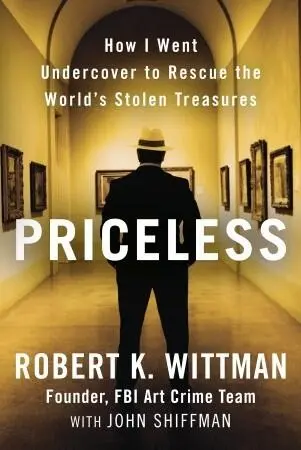
- Название:Priceless
- Автор:
- Издательство:Crown Publishers
- Жанр:
- Год:2010
- Город:New York
- ISBN:978-0-307-46149-0
- Рейтинг книги:3 / 5. Голосов: 1
-
Избранное:Добавить в избранное
- Отзывы:
-
Ваша оценка:
Priceless: краткое содержание, описание и аннотация
Предлагаем к чтению аннотацию, описание, краткое содержание или предисловие (зависит от того, что написал сам автор книги «Priceless»). Если вы не нашли необходимую информацию о книге — напишите в комментариях, мы постараемся отыскать её.
The London Times
In
Robert K. Wittman, the founder of the FBI’s Art Crime Team, pulls back the curtain on his remarkable career for the first time, offering a real-life international thriller to rival
.
Rising from humble roots as the son of an antique dealer, Wittman built a twenty-year career that was nothing short of extraordinary. He went undercover, usually unarmed, to catch art thieves, scammers, and black market traders in Paris and Philadelphia, Rio and Santa Fe, Miami and Madrid.
In this page-turning memoir, Wittman fascinates with the stories behind his recoveries of priceless art and antiquities: The golden armor of an ancient Peruvian warrior king. The Rodin sculpture that inspired the Impressionist movement. The headdress Geronimo wore at his final Pow-Wow. The rare Civil War battle flag carried into battle by one of the nation’s first African-American regiments.
The breadth of Wittman’s exploits is unmatched: He traveled the world to rescue paintings by Rockwell and Rembrandt, Pissarro, Monet and Picasso, often working undercover overseas at the whim of foreign governments. Closer to home, he recovered an original copy of the Bill of Rights and cracked the scam that rocked the PBS series By the FBI’s accounting, Wittman saved hundreds of millions of dollars worth of art and antiquities. He says the statistic isn’t important. After all, who’s to say what is worth more—a Rembrandt self-portrait or an American flag carried into battle? They're both priceless.
The art thieves and scammers Wittman caught run the gamut from rich to poor, smart to foolish, organized criminals to desperate loners. The smuggler who brought him a looted 6th-century treasure turned out to be a high-ranking diplomat. The appraiser who stole countless heirlooms from war heroes’ descendants was a slick, aristocratic con man. The museum janitor who made off with locks of George Washington's hair just wanted to make a few extra bucks, figuring no one would miss what he’d filched.
In his final case, Wittman called on every bit of knowledge and experience in his arsenal to take on his greatest challenge: working undercover to track the vicious criminals behind what might be the most audacious art theft of all.
Priceless — читать онлайн бесплатно полную книгу (весь текст) целиком
Ниже представлен текст книги, разбитый по страницам. Система сохранения места последней прочитанной страницы, позволяет с удобством читать онлайн бесплатно книгу «Priceless», без необходимости каждый раз заново искать на чём Вы остановились. Поставьте закладку, и сможете в любой момент перейти на страницу, на которой закончили чтение.
Интервал:
Закладка:
At the FBI offices, we put Garcia and Mendez in separate interview rooms, each with one ankle shackled to a chain bolted to the floor. I brought in the prosecutor to see Garcia.
Goldman flashed his Justice Department ID, smiled, and said, “They call me the Gold Man.”
Garcia closed his eyes and shook his head.
THE AFTERMATH OF every art crime case has two parts: the routine judicial process in which the defendants hopefully go to prison—here Garcia and Mendez pleaded guilty and got nine months—and the public relations bonanza in which the press goes gaga over the rescue of the stolen art.
This always seemed to baffle supervisors who didn’t appreciate the public’s (and the media’s) love of art, history, and antiquities. To these supervisors, art crime seemed very distant from the FBI’s primary missions of catching bank robbers, kidnappers, and terrorists. Once, years earlier, after Bazin and I had recovered a painting stolen from the Philadelphia Museum of Art, we met with the brass to discuss our ideas for a big press conference. A supervisor laughed at our enthusiasm. “For this little painting?” he said. “You’ll never get anyone to come!” Oh, no, we explained, the painting is a replica of a five-dollar bill by the famous artist William Michael Harnett. It’s an important piece, we said; people will care. The supervisor just laughed louder. Thankfully, we had an ace in the room—Special Agent Linda Vizi, the spokeswoman for the Philadelphia division of the FBI and a friend who shared my interests in history and art. Vizi was tough and intellectual—she’d majored in classics in college, studying Latin, Greek, Russian, Spanish, Sanskrit, and hieroglyphics. She also understood the press in ways her supervisors did not. “I guarantee you,” Vizi told the supervisor, “the five-dollar-bill story will make the front page.” The next day, when journalists jammed the press conference, she ribbed the supervisor. An hour later, he stuck his head in Vizi’s office and announced with an odd sense of satisfaction, “Well, it looks like it won’t be on the front page after all. Waco is burning.” Indeed, the next day’s Inquirer front page was dominated by stories about arguably the worst moment in FBI history, the April 19, 1993, assault and subsequent inferno at the Branch Davidian compound that left eighty people dead. But at the bottom of page one, there also was a little story about a long-lost painting, rescued by the FBI.
From that day forward, Vizi and I worked together to make sure she had as much historical background as possible before we announced one of my cases. (As an undercover agent, I couldn’t appear in front of cameras. I always stood in the back of the room, well out of camera shot.) She kept the press conferences lively. Hardened journalists, weary of the FBI’s routine fare of violence, corruption, and bank robbery, seemed to perk up at the art crime press conferences. They were always on the prowl for something different, a legitimate good-news story, and art crime gave it to them.
The media reaction to the backflap case surpassed our expectations. Reporters fell in love with a story that offered easy comparison to Raiders of the Lost Ark —a case with an exotic location, grave robbers, a smuggled national treasure secreted into the United States in a diplomatic bag, the rescue of the seventeen-hundred-year-old relic at gunpoint. The story in the Inquirer was stripped across the front page. It began, “In a tale out of an Indiana Jones movie, the FBI has recovered an exquisite Peruvian antiquity.” The headline in the tabloid Philadelphia Daily News , stealing a line from the second Indy movie, blared, “That piece belongs in a museum!” The Associated Press version of the story was published in papers across North and South America. The president of Peru soon announced that Goldman and I would be awarded the Peruvian Order of Merit for Distinguished Service, a gold medallion with a blue ribbon, the country’s top honor for distinguished service to the arts. Goldman enjoyed the spotlight and I was glad to let him and others bask in it, deservedly so.
A few months later, we held a ceremony at the Penn archaeological museum, formally returning the piece to the Peruvian ambassador and Walter Alva, the Sipan tombs’ chief archaeologist and the author of the National Geographic stories. As I stood to the side, out of camera range, Alva convened his own press conference, explaining the significance of the day, straining in broken English to make a comparison the reporters could understand. Finally, he said, “It is a national treasure. For you, it would be as if someone had stolen the Liberty Bell.” The press fawned once more, again invoking the Indiana Jones theme.
Vizi and I were thrilled because our supervisors were thrilled. We were making the FBI look good all over the world. At the end of a lousy decade—Waco, Ruby Ridge, the crime lab scandal, the Boston mafia fiasco—the FBI was eager for any positive publicity. The FBI brass seemed to be beginning to realize that art recovery was good for the bureau, and not just in Philadelphia.
Chapter 9
HISTORY OUT THE BACK DOOR
Philadelphia, 1997 .
THE SLEEPY, SOMEWHAT MUSTY HISTORICAL SOCIETY of Pennsylvania is largely unknown outside of Philadelphia. But the Federal-style building on Locust Street houses the nation’s second-largest repository of early Americana. Founded in 1824, the HSP holds thousands of important military and cultural pieces. The research library is stocked with more than 500,000 books, 300,000 graphic works, and 15 million manuscripts. Like most museums, the HSP displays only a fraction of its collection at any one time; the bulk of the collection remains in storage, where most artifacts sit for decades, untouched and largely ignored. The HSP had not conducted an inventory in a generation or more. It was simply too expensive and time-consuming.
In late October 1997, the HSP embarked on its first full inventory in decades.
Almost immediately, collections manager Kristen Froehlich found problems. Alarmed, she called me.
So far, her inventory had revealed that four items were missing—a Lancaster County long rifle and three Civil War presentation swords.
The rifle dated to the 1780s and probably had seen combat in the latter stages of the Revolutionary War. The rifle’s gold-tipped barrel extended forty-eight inches, longer than most sabers, and was handcrafted by the legendary Pennsylvania gunsmith Isaac Haines. The ceremonial presentation swords, made of gold, steel, silver, enamel, diamonds, rhinestones, and amethyst, were part of a military tradition that dated to Roman times. The missing swords and scabbards, Froelich said, were presented to the Union generals George Meade, David Birney, and Andrew Humphreys following great victories. The swords would be easy to identify because each included a unique, engraved inscription and was crammed with lavish, if not gaudy, decoration. Luckily, the curator said, she had pictures and a good written description of each one. For instance, the counter guard of the hilt on Meade’s sword, presented at Gettysburg, included thirty diamonds that formed two stars and the letter M across a blue enamel shield. I knew such swords could command $200,000 or more on the open market.
“Anything else?” I asked.
“Well, there could be more—I don’t know,” she said. “We think we’ve got twelve thousand pieces to inventory. And like I said, we’re just starting.”
I told Froehlich I’d come right over, and asked her to prepare a list of all HSP employees. I said I would need to interview everyone.
I didn’t mention that every museum employee, including Froehlich, would be a suspect.
Читать дальшеИнтервал:
Закладка:
Похожие книги на «Priceless»
Представляем Вашему вниманию похожие книги на «Priceless» списком для выбора. Мы отобрали схожую по названию и смыслу литературу в надежде предоставить читателям больше вариантов отыскать новые, интересные, ещё непрочитанные произведения.









Обсуждение, отзывы о книге «Priceless» и просто собственные мнения читателей. Оставьте ваши комментарии, напишите, что Вы думаете о произведении, его смысле или главных героях. Укажите что конкретно понравилось, а что нет, и почему Вы так считаете.