Robert Wittman - Priceless
Здесь есть возможность читать онлайн «Robert Wittman - Priceless» весь текст электронной книги совершенно бесплатно (целиком полную версию без сокращений). В некоторых случаях можно слушать аудио, скачать через торрент в формате fb2 и присутствует краткое содержание. Город: New York, Год выпуска: 2010, ISBN: 2010, Издательство: Crown Publishers, Жанр: Биографии и Мемуары, на английском языке. Описание произведения, (предисловие) а так же отзывы посетителей доступны на портале библиотеки ЛибКат.
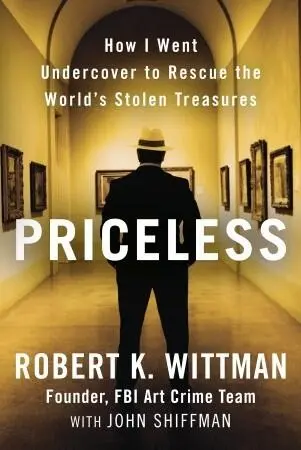
- Название:Priceless
- Автор:
- Издательство:Crown Publishers
- Жанр:
- Год:2010
- Город:New York
- ISBN:978-0-307-46149-0
- Рейтинг книги:3 / 5. Голосов: 1
-
Избранное:Добавить в избранное
- Отзывы:
-
Ваша оценка:
Priceless: краткое содержание, описание и аннотация
Предлагаем к чтению аннотацию, описание, краткое содержание или предисловие (зависит от того, что написал сам автор книги «Priceless»). Если вы не нашли необходимую информацию о книге — напишите в комментариях, мы постараемся отыскать её.
The London Times
In
Robert K. Wittman, the founder of the FBI’s Art Crime Team, pulls back the curtain on his remarkable career for the first time, offering a real-life international thriller to rival
.
Rising from humble roots as the son of an antique dealer, Wittman built a twenty-year career that was nothing short of extraordinary. He went undercover, usually unarmed, to catch art thieves, scammers, and black market traders in Paris and Philadelphia, Rio and Santa Fe, Miami and Madrid.
In this page-turning memoir, Wittman fascinates with the stories behind his recoveries of priceless art and antiquities: The golden armor of an ancient Peruvian warrior king. The Rodin sculpture that inspired the Impressionist movement. The headdress Geronimo wore at his final Pow-Wow. The rare Civil War battle flag carried into battle by one of the nation’s first African-American regiments.
The breadth of Wittman’s exploits is unmatched: He traveled the world to rescue paintings by Rockwell and Rembrandt, Pissarro, Monet and Picasso, often working undercover overseas at the whim of foreign governments. Closer to home, he recovered an original copy of the Bill of Rights and cracked the scam that rocked the PBS series By the FBI’s accounting, Wittman saved hundreds of millions of dollars worth of art and antiquities. He says the statistic isn’t important. After all, who’s to say what is worth more—a Rembrandt self-portrait or an American flag carried into battle? They're both priceless.
The art thieves and scammers Wittman caught run the gamut from rich to poor, smart to foolish, organized criminals to desperate loners. The smuggler who brought him a looted 6th-century treasure turned out to be a high-ranking diplomat. The appraiser who stole countless heirlooms from war heroes’ descendants was a slick, aristocratic con man. The museum janitor who made off with locks of George Washington's hair just wanted to make a few extra bucks, figuring no one would miss what he’d filched.
In his final case, Wittman called on every bit of knowledge and experience in his arsenal to take on his greatest challenge: working undercover to track the vicious criminals behind what might be the most audacious art theft of all.
Priceless — читать онлайн бесплатно полную книгу (весь текст) целиком
Ниже представлен текст книги, разбитый по страницам. Система сохранения места последней прочитанной страницы, позволяет с удобством читать онлайн бесплатно книгу «Priceless», без необходимости каждый раз заново искать на чём Вы остановились. Поставьте закладку, и сможете в любой момент перейти на страницу, на которой закончили чтение.
Интервал:
Закладка:
One thing is clear. As with cocaine and heroin, the buyer’s market in developed nations drives supply. When demand soared for Southeast Asian artifacts after the Vietnam War, looters decapitated almost every statue at Angkor Wat. When pre-Columbian antiques became all the rage in American collecting circles in the 1980s, grave robbers targeted virgin sites in Peru.
Generally, looters prefer small, relatively anonymous pieces. Coins are best—easy to smuggle, nearly impossible to trace. Antiquities, if smuggled in small quantities, can be disguised or mixed with souvenirs. Slap a cheap price tag on centuries-old flatware or jewelry and the average customs officer isn’t likely to catch on.
To disguise larger, higher-profile pieces, black market brokers sometimes engage in antiquity laundering. It’s a scheme similar to money laundering—a broker uses the good name of an unwitting museum to help wash an illicit piece by creating misleading paperwork. In one scam, the shady broker uses a simple query letter to prey on the professionalism and politeness of reputable museum curators. The broker offers to loan artifacts that he expects a prestigious curator will not accept. What the broker really wants is a rejection letter on the stationery of the prestigious museum, with boilerplate language that appears to acknowledge the importance of the pieces offered, but regrets that for space, budgetary, or other reasons, the museum is not currently accessing new works. The rejection letter becomes part of the illicit piece’s provenance, one more document for the disreputable broker or dealer to display. For the buyer—dimwitted or not—such a letter adds an air of legitimacy. If a famous museum considered a piece, but rejected it for space reasons, it must be clean, no?
But when an antiquity is as well known as the backflap, the black market is the only choice.
MENDEZ CALLED ME a few days after we met on the Turnpike.
He seemed suspicious and spoke slowly. “Bob, I checked and you’re not a lawyer.”
He had me.
I shouldn’t have blurted out the lawyer bit without arranging for a proper cover. I’d screwed up. All I could do was bluster, rely on the old adage that the best defense is a good offense.
I jumped in strong, nearly shouting into the phone. “You’re checking up on me? You didn’t call the state bar, did you? Now they’re going to call me, ask me what I’m doing practicing law in Jersey. Shit. You’re screwing it all up—drawing attention to me!”
“Bob, I—”
“Jesus, you really, really—you wanna know why I’m not freakin’ listed? I’m disbarred , Orlando. Disbarred.” Before he could ask how or why, I said, “I got into a thing with my wife. Let’s just say there was violence. And boom! They took my license.”
There was silence on the other end of the line. The new lie worked. It shut him down, backed him off. Mendez was like most guys: He was reluctant to press for personal details about another man’s marriage, especially anything related to domestic violence.
There was nothing left to discuss. Mendez even apologized.
Garcia called back two weeks later. His voice betrayed his excitement. “Bob, I’m in New York. We’ve got it.” The backflap was stored safely at the Panamanian consulate in Manhattan, he said, and Garcia wanted to make the exchange there. “It’s perfect. It’s good,” he said, because the consulate offered the same protections as an embassy. The building and grounds were the sovereign territory of Panama, outside U.S. jurisdiction and American laws. What’s more, Garcia revealed, the top man at the consulate was in on the deal. In fact, Garcia bragged, the consul was the mule. He’d used his diplomatic status to smuggle the backflap from Panama to New York.
“It’s good, then,” Garcia reassured me. “When can you come up?”
I stalled for time. “That’s great, great. Good news.”
But it wasn’t. I couldn’t arrest anyone inside a foreign consulate, much less have backup agents tail me. I needed to draw Garcia out, and I knew I still held an ace: Garcia and his crew were already committed. They’d invested a great deal of time and money, made a down payment in Peru, and arranged to sneak the backflap into the United States. They might be cautious, but I knew they were also hungry.
“Look, I understand you want to do it up there, at the consulate,” I said. “But here’s the deal: My authenticator, he’s an old guy. Not in such good heath. Doesn’t like to travel. So I think you’re going to have to bring the backflap down here.”
Garcia didn’t say anything for a few seconds. Then he said, “You have the money?”
Bingo. He was hooked. I said, “We’ve got the money, we got the money. One point six mil. What’s your fax number? I’ll send you a bank statement.”
Garcia gave me the number, and I asked him how he wanted the $1.6 million. I wanted him thinking about the money, not about where he could meet me or whether he could trust me. He asked for $665,000 cash and $935,000 in wire transfers to bank accounts in Miami, Peru, Panama, and Venezuela.
I jotted down names and numbers.
“Got it—see you tomorrow.” With the sale closed, I got off the line as quickly as possible, before he could think of anything else.
I called Goldman and filled him in: I would meet Garcia and Mendez at the same Turnpike rest stop at noon, then we’d drive to Philadelphia to meet the Gold Man.
THIS TIME, GARCIA and Mendez arrived even earlier—11:24 a.m., according to the surveillance team—and in style, inside a dark green Lincoln Continental with diplomatic tags, a third man behind the wheel. They backed into a spot, positioning the trunk only a few yards from the picnic tables. Mendez and the third man, a strapping, gray-haired gentleman in a dark suit, grabbed a table and scanned the crisp October sky. Garcia walked over to the Burger King and returned with two coffees.
At 11:54 a.m., I pulled into a nearby parking space with my undercover partner, Anibal Molina.
Garcia greeted me warmly. “Bob!”
“Hey Denis, how’re you doing, buddy?”
The third man stepped in front of Garcia and handed me his card. “Frank Iglesias, Consul General de Panama, New York.” He was a bear of a man—six-one and at least 230 pounds—but he used the buttery voice of a seasoned diplomat. “How nice to meet you,” he said.
We moved to the trunk and Mendez popped it. He opened a cheap black suitcase and pushed aside a pile of white T-shirts, revealing a large gold object ensconced in plastic bubble wrap—the backflap. Mendez reached into the suitcase, but I jumped in front of him. “Let me pull it out,” I said.
I lifted the backflap from the trunk and tried to contain my excitement as I considered its long journey—a Peruvian national treasure, buried for seventeen centuries, stolen by grave robbers and missing for a decade, now glistening in the New Jersey sun, rescued in part by a pair of unwitting Miami smugglers.
I beamed. “You really did it!” I said, my enthusiasm genuine. “Congratulations!” I laid the backflap back in the suitcase and bear-hugged Garcia. “I can’t believe it! You guys are pros.” I pumped Mendez’s hand. “This is fantastic. Fantastic!” I closed the trunk. “Let’s go see the Gold Man. I’ll drive slow so you can follow me.”
We piled into our cars and they followed us down the Turnpike, the start of an hour-long ride to western Philadelphia.
After we arrived in the parking lot of the Adam’s Mark Hotel, Iglesias popped the trunk and handed me the suitcase. “OK,” I said, walking toward the lobby, “let’s get this done.” As I crossed into the middle of the lot, reaching a spot where the bad guys had no place to hide, I gave the go-sign—I brushed my backside with my left hand. (The go-sign should always be something you rarely do, so you don’t give it by mistake.) Agents in raid jackets jumped out, guns drawn, shouting, “FBI! Let me see your hands! Down on your knees! FBI!” The agents pinned Mendez, Garcia, and Iglesias on the rough asphalt and cuffed their hands behind their backs. They led the Miamians away, but once they searched the diplomat, they un-cuffed him. Because of his diplomatic status, we had to let him go—for the time being. To prove Iglesias had been there, we shot a picture of him standing next to me. Ever the politician, the consul general managed an awkward smile.
Читать дальшеИнтервал:
Закладка:
Похожие книги на «Priceless»
Представляем Вашему вниманию похожие книги на «Priceless» списком для выбора. Мы отобрали схожую по названию и смыслу литературу в надежде предоставить читателям больше вариантов отыскать новые, интересные, ещё непрочитанные произведения.









Обсуждение, отзывы о книге «Priceless» и просто собственные мнения читателей. Оставьте ваши комментарии, напишите, что Вы думаете о произведении, его смысле или главных героях. Укажите что конкретно понравилось, а что нет, и почему Вы так считаете.