Robert Wittman - Priceless
Здесь есть возможность читать онлайн «Robert Wittman - Priceless» весь текст электронной книги совершенно бесплатно (целиком полную версию без сокращений). В некоторых случаях можно слушать аудио, скачать через торрент в формате fb2 и присутствует краткое содержание. Город: New York, Год выпуска: 2010, ISBN: 2010, Издательство: Crown Publishers, Жанр: Биографии и Мемуары, на английском языке. Описание произведения, (предисловие) а так же отзывы посетителей доступны на портале библиотеки ЛибКат.
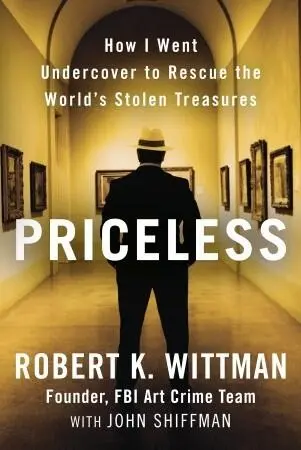
- Название:Priceless
- Автор:
- Издательство:Crown Publishers
- Жанр:
- Год:2010
- Город:New York
- ISBN:978-0-307-46149-0
- Рейтинг книги:3 / 5. Голосов: 1
-
Избранное:Добавить в избранное
- Отзывы:
-
Ваша оценка:
Priceless: краткое содержание, описание и аннотация
Предлагаем к чтению аннотацию, описание, краткое содержание или предисловие (зависит от того, что написал сам автор книги «Priceless»). Если вы не нашли необходимую информацию о книге — напишите в комментариях, мы постараемся отыскать её.
The London Times
In
Robert K. Wittman, the founder of the FBI’s Art Crime Team, pulls back the curtain on his remarkable career for the first time, offering a real-life international thriller to rival
.
Rising from humble roots as the son of an antique dealer, Wittman built a twenty-year career that was nothing short of extraordinary. He went undercover, usually unarmed, to catch art thieves, scammers, and black market traders in Paris and Philadelphia, Rio and Santa Fe, Miami and Madrid.
In this page-turning memoir, Wittman fascinates with the stories behind his recoveries of priceless art and antiquities: The golden armor of an ancient Peruvian warrior king. The Rodin sculpture that inspired the Impressionist movement. The headdress Geronimo wore at his final Pow-Wow. The rare Civil War battle flag carried into battle by one of the nation’s first African-American regiments.
The breadth of Wittman’s exploits is unmatched: He traveled the world to rescue paintings by Rockwell and Rembrandt, Pissarro, Monet and Picasso, often working undercover overseas at the whim of foreign governments. Closer to home, he recovered an original copy of the Bill of Rights and cracked the scam that rocked the PBS series By the FBI’s accounting, Wittman saved hundreds of millions of dollars worth of art and antiquities. He says the statistic isn’t important. After all, who’s to say what is worth more—a Rembrandt self-portrait or an American flag carried into battle? They're both priceless.
The art thieves and scammers Wittman caught run the gamut from rich to poor, smart to foolish, organized criminals to desperate loners. The smuggler who brought him a looted 6th-century treasure turned out to be a high-ranking diplomat. The appraiser who stole countless heirlooms from war heroes’ descendants was a slick, aristocratic con man. The museum janitor who made off with locks of George Washington's hair just wanted to make a few extra bucks, figuring no one would miss what he’d filched.
In his final case, Wittman called on every bit of knowledge and experience in his arsenal to take on his greatest challenge: working undercover to track the vicious criminals behind what might be the most audacious art theft of all.
Priceless — читать онлайн бесплатно полную книгу (весь текст) целиком
Ниже представлен текст книги, разбитый по страницам. Система сохранения места последней прочитанной страницы, позволяет с удобством читать онлайн бесплатно книгу «Priceless», без необходимости каждый раз заново искать на чём Вы остановились. Поставьте закладку, и сможете в любой момент перейти на страницу, на которой закончили чтение.
Интервал:
Закладка:
My ad-hoc education was complete.
I was ready to go undercover, in pursuit of the priceless.
In the summer of 1997, I got my first chance.
BODY OF WORK
Chapter 8
THE GOLD MAN
New Jersey Turnpike, 1997 .
THE SMUGGLERS ARRIVED TWENTY MINUTES EARLY. Our surveillance teams were already in place and watched them pull into the bustling Turnpike rest stop near exit 7A, halfway between Philadelphia and New York. Undercover agents filled the parking lot—two workmen eating Blimpie hoagies in a utility pickup, a woman gripping a Styrofoam coffee cup and speaking into a pay phone, a couple with lunch from Burger King lounging at a picnic table. Inside a dark van with tinted windows, a team of two agents aimed a video camera at the arranged meeting point—a set of picnic tables in the shade, just two hundred feet from the Turnpike. When the smugglers parked their gray Pontiac and found a table, I got the word by cell phone. I was parked a few miles away in a rented tan Plymouth Voyager van with a Spanish-speaking agent, Anibal Molina. We adjusted our body wires, stashed our weapons under the seat, and pulled out onto the Turnpike.
On this bright and gusty September afternoon, the FBI was hunting for treasure—a seventeen-hundred-year-old South American antiquity called a “backflap,” the backside of an ancient Moche king’s body armor, an exquisite piece hammered from gold. For seventeen centuries, the backflap had remained buried in a honeycombed royal tomb along the coastal desert of northern Peru—until 1987, when grave robbers stumbled upon the site. Since then, the pilfered backflap remained elusive, the most valuable missing artifact in all of Peru, frustrating law enforcement officials and archaeologists throughout the Americas. Now two swarthy Miami men, the smugglers we’d arranged to meet on the Turnpike, were offering to sell it to me for $1.6 million. I didn’t really believe these two could pull it off. I figured this was some sort of fraud or rip-off. After all, they were claiming they held the largest golden artifact ever excavated from a tomb in the Americas.
At the picnic table, the smugglers greeted us with mirrored sunglasses and crocodile smiles. We shook hands, sat down. The older one took the lead, and this was good because we had a thick FBI file on him: Denis Garcia, Hispanic male, fifty-eight years old, 225 pounds, five foot nine, brown eyes, white hair, full-time South Florida agricultural salesman, part-time antiquities smuggler. Garcia did not have a criminal record, but the FBI suspected that he had been smuggling illicit artifacts from South America since the late 1960s, when he lived in Peru and learned the pre-Columbian antiquities trade.
Garcia introduced his partner. He was twenty-five years younger and half a head shorter, a muscular man of Puerto Rican heritage. “My son-in-law,” Garcia said. “Orlando Mendez.”
We shook hands again, and I introduced myself using my undercover name, Bob Clay. Mendez fidgeted nervously. Garcia was a pro, all business. He got right to it.
“You have the money?”
“No problem—so long as you’ve got the backflap.”
“We’ll be bringing it up, making final arrangements.” Garcia shifted back to the money. “The price is one-point-six.”
I didn’t flinch. “As agreed. But I have to have it authenticated. My expert has to see it, look it over. When can we do that?”
“A couple weeks. We have a friend at the Panamanian consulate. He’ll go down and get it.”
“Customs?”
Garcia waved his hand. “Not a problem.”
“Tell me more,” I said. “How did your friend get the piece?”
Garcia launched into a cock-and-bull story about the provenance, a story designed to somehow lend an air of legitimacy to the illegal sale of a Peruvian national treasure in the parking lot of a Turnpike rest stop. I nodded and acted impressed. I let him finish his story—then switched gears, eager to get him on tape admitting that he knew he was breaking the law, an important distinction we would need if the case ever went to trial.
I began gently. “These things are touchy.”
Garcia nodded knowingly. “They are.”
“We have to be very careful when we resell it,” I said. “Obviously, it can’t go to a museum.”
Garcia opened his palms as if to say, “Of course.”
Mendez, still squirming, broke in and spoke for the first time. His words came rapid fire, his tone overly accusatory. “Are you sure about this? How do you know it’s illegal to bring the backflap into the U.S.?” Before I could answer, he fired again. “How do you know? How do you know?”
I acted like I had done this a hundred times. “Trust me, I looked it up.” I should have left it there, but Mendez didn’t look convinced, so I added an unnecessary comment. “I’m an attorney,” I said.
Mendez couldn’t argue with that, but I regretted the lie the moment it passed my lips. A lie like that trips you up. Claiming to be a lawyer was especially dumb—it was too easy for the criminals to check, and might cause trouble if the case ever went to trial.
Mendez shifted in his seat and moved to his next question. “Bob, look—I’m sure you understand, I’ve got to ask you.” He looked me in the eye, but I could tell he was nervous. I could guess what was coming. Mendez subscribed to an old wives’ tale—the mistaken belief that the law requires an undercover officer to tell the truth if directly confronted.
“Bob, are you a cop?”
I pivoted to put him on the defensive. “No, are you?”
“Of course not,” Mendez snapped. He moved to his next dumb question, the kind a veteran smuggler would never ask a fellow criminal. “Tell me more about your buyer.”
I moved to retake control of the conversation and caught his gaze. “The buyer is anonymous,” I said sternly. “That’s all you need to know.”
I turned to Garcia, the brains, and softened my tone. “Look, my buyer’s a collector. He likes gold. He buys anything made of gold. Let’s just call him the Gold Man.”
Garcia liked that. “Perhaps I can meet the Gold Man one day?”
“Maybe,” I said as we shook hands to leave. “Someday.”
I got to the van and dialed the Gold Man’s number.
A secretary came on the line. “U.S. Attorney’s Office. How can I help you?”
“Bob Goldman, please.”
ASSISTANT U.S. ATTORNEY Robert E. Goldman was unlike any other federal prosecutor I’d met.
He lived on a large working farm in Bucks County, north of Philadelphia, where he kept peacocks, horses, sheep, ducks, and dogs. Though Goldman came from a family of lawyers—and became one because it was expected of him—he liked to call himself a frustrated history professor. He wore a handlebar mustache in the style of his hero, Teddy Roosevelt, and at his home library, he stuffed his bookshelves with more than 150 Roosevelt titles. With his appreciation of history and culture, Goldman was precisely the kind of prosecutor I knew I needed if I wanted to pursue art crime. Without a kindred spirit at the U.S. Attorney’s Office to prosecute art crime cases, I knew I wouldn’t get very far. As an FBI agent, I could investigate almost any federal crime. But if I wanted to harness the full power of the U.S. Department of Justice—from subpoena to grand jury indictment to criminal prosecution—I’d need a like-minded Assistant U.S. Attorney as a partner, someone willing to take on tough, esoteric cases, even if the unstated goal of an investigation was not an arrest, but the rescue of a stolen piece of art. Goldman understood the value of pursuing stolen pieces of history and really didn’t care if his bureaucratic supervisors shared his vision.
Читать дальшеИнтервал:
Закладка:
Похожие книги на «Priceless»
Представляем Вашему вниманию похожие книги на «Priceless» списком для выбора. Мы отобрали схожую по названию и смыслу литературу в надежде предоставить читателям больше вариантов отыскать новые, интересные, ещё непрочитанные произведения.









Обсуждение, отзывы о книге «Priceless» и просто собственные мнения читателей. Оставьте ваши комментарии, напишите, что Вы думаете о произведении, его смысле или главных героях. Укажите что конкретно понравилось, а что нет, и почему Вы так считаете.