Robert Wittman - Priceless
Здесь есть возможность читать онлайн «Robert Wittman - Priceless» весь текст электронной книги совершенно бесплатно (целиком полную версию без сокращений). В некоторых случаях можно слушать аудио, скачать через торрент в формате fb2 и присутствует краткое содержание. Город: New York, Год выпуска: 2010, ISBN: 2010, Издательство: Crown Publishers, Жанр: Биографии и Мемуары, на английском языке. Описание произведения, (предисловие) а так же отзывы посетителей доступны на портале библиотеки ЛибКат.
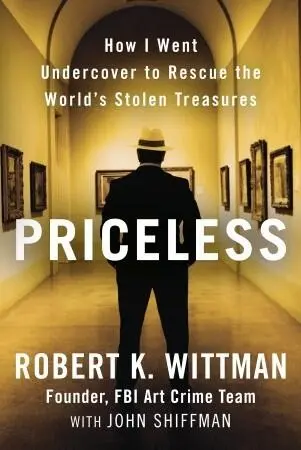
- Название:Priceless
- Автор:
- Издательство:Crown Publishers
- Жанр:
- Год:2010
- Город:New York
- ISBN:978-0-307-46149-0
- Рейтинг книги:3 / 5. Голосов: 1
-
Избранное:Добавить в избранное
- Отзывы:
-
Ваша оценка:
Priceless: краткое содержание, описание и аннотация
Предлагаем к чтению аннотацию, описание, краткое содержание или предисловие (зависит от того, что написал сам автор книги «Priceless»). Если вы не нашли необходимую информацию о книге — напишите в комментариях, мы постараемся отыскать её.
The London Times
In
Robert K. Wittman, the founder of the FBI’s Art Crime Team, pulls back the curtain on his remarkable career for the first time, offering a real-life international thriller to rival
.
Rising from humble roots as the son of an antique dealer, Wittman built a twenty-year career that was nothing short of extraordinary. He went undercover, usually unarmed, to catch art thieves, scammers, and black market traders in Paris and Philadelphia, Rio and Santa Fe, Miami and Madrid.
In this page-turning memoir, Wittman fascinates with the stories behind his recoveries of priceless art and antiquities: The golden armor of an ancient Peruvian warrior king. The Rodin sculpture that inspired the Impressionist movement. The headdress Geronimo wore at his final Pow-Wow. The rare Civil War battle flag carried into battle by one of the nation’s first African-American regiments.
The breadth of Wittman’s exploits is unmatched: He traveled the world to rescue paintings by Rockwell and Rembrandt, Pissarro, Monet and Picasso, often working undercover overseas at the whim of foreign governments. Closer to home, he recovered an original copy of the Bill of Rights and cracked the scam that rocked the PBS series By the FBI’s accounting, Wittman saved hundreds of millions of dollars worth of art and antiquities. He says the statistic isn’t important. After all, who’s to say what is worth more—a Rembrandt self-portrait or an American flag carried into battle? They're both priceless.
The art thieves and scammers Wittman caught run the gamut from rich to poor, smart to foolish, organized criminals to desperate loners. The smuggler who brought him a looted 6th-century treasure turned out to be a high-ranking diplomat. The appraiser who stole countless heirlooms from war heroes’ descendants was a slick, aristocratic con man. The museum janitor who made off with locks of George Washington's hair just wanted to make a few extra bucks, figuring no one would miss what he’d filched.
In his final case, Wittman called on every bit of knowledge and experience in his arsenal to take on his greatest challenge: working undercover to track the vicious criminals behind what might be the most audacious art theft of all.
Priceless — читать онлайн бесплатно полную книгу (весь текст) целиком
Ниже представлен текст книги, разбитый по страницам. Система сохранения места последней прочитанной страницы, позволяет с удобством читать онлайн бесплатно книгу «Priceless», без необходимости каждый раз заново искать на чём Вы остановились. Поставьте закладку, и сможете в любой момент перейти на страницу, на которой закончили чтение.
Интервал:
Закладка:
The comment shattered my assumption that prosecutors pursued fundamental fairness. As a defendant, I figured the truth, witnesses, and evidence were on my side. It didn’t occur to me that government officials would prosecute a case they did not believe in. We know this is a bad case, but it’s just one we have to lose at trial . I started to stammer a response, but thought better of it, and walked away.
I was forty years old and my hair was gray.
Chapter 7
A NEW LIFE
Camden, New Jersey, 1995 .
“WILL THE DEFENDANT PLEASE RISE?”
The jurors shuffled into the courtroom, the forewoman gripping the verdict sheet. I tried to catch her eye. The jury had been out only forty-five minutes. The trial was in its ninth day, unbelievably long for a DUI case, but I thought it was going very well. I testified that I drank four or five beers over eight hours. My attorney, Mike Pinsky, ripped the government witnesses apart, and the paramedics who took the stand said I hadn’t looked drunk. Pamela, the woman Denis met at the bar, described me as sober, the guy who was clearly his friend’s designated driver. The prosecutor stuck to her best evidence—the hospital report showed that my blood alcohol count was .21, so high that I should have had trouble walking, let alone driving.
Fortunately, Pinsky’s experts had by then solved the mystery of the blood test. They explained to the jury that when they closely compared Denis’s medical records with mine, they found something odd: My alleged blood alcohol content, when calculated to the fifth decimal point, was .21232 and Denis’s reading was .21185. It was a difference of just .00047, less than the typical variation found when testing the same vial of blood. This was too close to be a coincidence, my experts testified. Someone at the hospital had mixed up the samples. The standard practice is to test every vial of blood twice—and it looked like someone had tested Denis’s blood twice, and assigned one of the readings to me. Our argument was bolstered when our experts discovered that the hospital didn’t have a method for securing each sample—there were no procedures to keep a proper chain of custody. One of our experts was the former head of the state police crime lab. On the stand, he spoke definitively: The government’s only evidence was worthless.
As the clerk handed the verdict sheet to the judge, my mind raced. Why the quick verdict? Did the jury even take the time to analyze the lab reports? Did they like my lawyer? The prosecutor? Me? A uniformed deputy quietly slipped behind me. What did that mean? Did he plan to take me into custody? Or was he there to protect me?
As the judge unfolded the verdict sheet, the street encounter with that member of the prosecution team flashed in my head— We know it’s a bad case, but it’s just one we have to lose at trial . What if? What if the jury didn’t get that?
The judge cleared his throat. “In the case of New Jersey versus Robert K. Wittman, we find the defendant… not guilty.”
I exhaled deeply and unclenched my fists. I hugged my lawyer. I hugged Donna. I even hugged the prosecutor. The news accounts said I “wept openly.” I wanted to hug the judge, too. For after the verdict, he took the unusual step of publicly stating that he agreed with the jury. He called the blood test evidence bogus, concluding: “He lost control and tragically there was an accident and his passenger lost his life. That’s an accident.”
Donna and I vowed to make a fresh start, and decided to move from suburban New Jersey to suburban Pennsylvania.
I thought about Denis every day.
I spent late nights on the porch, with a tall glass of iced tea, thinking about all I was learning from my ordeal. I had a choice: I could go into a funk of self-pity and ride a desk for the rest of my career—put in forty hours a week, earn a pension, make no waves—or I could come out swinging. Either way, the accident and trial would mark the turning point of my life and my career.
I never seriously considered quitting the FBI, but I did vow that I wouldn’t be the same kind of agent anymore. Most law officers I knew were honorable, but some were too focused on putting people away at any cost in order to close a case. It was a dangerous attitude. These guys might say, Well, maybe he didn’t commit the crime I busted him for, but it’s OK because this guy’s a dirtbag and I’m sure he got away with something else he did do . I never agreed with that philosophy. Innocence is innocence. I now knew what it felt like to be charged with a crime I hadn’t committed, what it did to families, how an innocent person facing trial can feel helpless, alone in the world. I could never knowingly put anyone through that.
I was now a member of a narrow class. Few FBI agents indicted on felony charges take the case to trial. Fewer still win acquittal, and only a handful of those choose to remain with the bureau. I brought a perspective few of my brethren could match. Most agents saw things in black and white; I started seeing shades of gray. I understood that just because someone made a mistake in judgment, it didn’t make him evil. Perhaps as important, I also now knew what most suspects, guilty or innocent, truly feared, and what they wanted to hear. My newfound ability to see both sides of a situation—to think and feel like the accused—was invaluable. I knew it would make me a better agent, especially undercover.
But what kind of agent did I want to be?
One evening, I sat alone at my piano and played a Chopin “Fantasie.” It was a favorite from my days as a piano performance major in college, but one I had not played in years. As I got lost in the piece, I thought about the rush I’d gotten when we recovered the Chinese orb and Rodin statue, what it felt like to hold history in your hands. My thoughts bounced with the music, and settled on the inspirational pianist Van Cliburn. He always impressed me, the way he came from such lowly roots, and used his insatiable drive and talent to win the Tchaikovsky competition in Moscow at the height of the Cold War, showing unprecedented courage at a time when Americans had little hope of winning anything in Russia. I decided that, like him, I was going to take a chance and channel my energies toward making a difference in the world.
And finally it hit me: I was uniquely positioned to do something about art crime. Here I was, already an FBI agent with a track record of working art crime cases and, in the case of the jewelry-store robberies, leading a team effort that had solved a complex crime. What’s more, I’d worked on my own to become a bit of an expert in several fields. In the five-year period between the accident and my acquittal, I’d studied in classrooms as diverse as flea markets and the Barnes, mastering the nuances of everything from collectibles to fine art. While I specialized in baseball cards, Civil War relics, Japanese collectibles, antique guns, and Impressionist art, I knew the knowledge and skills I was honing could be used in almost any medium.
I could now walk into any collectibles, antiques, or fine art forum and mingle and barter with confidence. I knew that a mint condition Mickey Mantle rookie card was worth twice as much as a rookie Joe DiMaggio, that a Custer autograph was far more valuable than one from Robert E. Lee. I could spot a Soutine in a second and explain how his constructive use of color was influenced by Cézanne, and just as easily discuss Boucher’s eighteenth-century influences on Modigliani’s nineteenth-century nudes. I could explain the difference between provenance (the ownership history of a work of art) and provenience (information about the spot where an antiquity came out of the ground). I could credibly hold forth on the differences between the Colt revolver Texas Ranger Sam Walker carried into his final battle and the one Roosevelt carried up San Juan Hill. Along the East Coast, I knew most of the big players, which shows to attend and whom to trust.
Читать дальшеИнтервал:
Закладка:
Похожие книги на «Priceless»
Представляем Вашему вниманию похожие книги на «Priceless» списком для выбора. Мы отобрали схожую по названию и смыслу литературу в надежде предоставить читателям больше вариантов отыскать новые, интересные, ещё непрочитанные произведения.






Обсуждение, отзывы о книге «Priceless» и просто собственные мнения читателей. Оставьте ваши комментарии, напишите, что Вы думаете о произведении, его смысле или главных героях. Укажите что конкретно понравилось, а что нет, и почему Вы так считаете.