Robert Wittman - Priceless
Здесь есть возможность читать онлайн «Robert Wittman - Priceless» весь текст электронной книги совершенно бесплатно (целиком полную версию без сокращений). В некоторых случаях можно слушать аудио, скачать через торрент в формате fb2 и присутствует краткое содержание. Город: New York, Год выпуска: 2010, ISBN: 2010, Издательство: Crown Publishers, Жанр: Биографии и Мемуары, на английском языке. Описание произведения, (предисловие) а так же отзывы посетителей доступны на портале библиотеки ЛибКат.
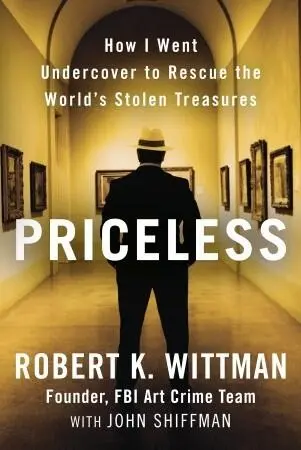
- Название:Priceless
- Автор:
- Издательство:Crown Publishers
- Жанр:
- Год:2010
- Город:New York
- ISBN:978-0-307-46149-0
- Рейтинг книги:3 / 5. Голосов: 1
-
Избранное:Добавить в избранное
- Отзывы:
-
Ваша оценка:
Priceless: краткое содержание, описание и аннотация
Предлагаем к чтению аннотацию, описание, краткое содержание или предисловие (зависит от того, что написал сам автор книги «Priceless»). Если вы не нашли необходимую информацию о книге — напишите в комментариях, мы постараемся отыскать её.
The London Times
In
Robert K. Wittman, the founder of the FBI’s Art Crime Team, pulls back the curtain on his remarkable career for the first time, offering a real-life international thriller to rival
.
Rising from humble roots as the son of an antique dealer, Wittman built a twenty-year career that was nothing short of extraordinary. He went undercover, usually unarmed, to catch art thieves, scammers, and black market traders in Paris and Philadelphia, Rio and Santa Fe, Miami and Madrid.
In this page-turning memoir, Wittman fascinates with the stories behind his recoveries of priceless art and antiquities: The golden armor of an ancient Peruvian warrior king. The Rodin sculpture that inspired the Impressionist movement. The headdress Geronimo wore at his final Pow-Wow. The rare Civil War battle flag carried into battle by one of the nation’s first African-American regiments.
The breadth of Wittman’s exploits is unmatched: He traveled the world to rescue paintings by Rockwell and Rembrandt, Pissarro, Monet and Picasso, often working undercover overseas at the whim of foreign governments. Closer to home, he recovered an original copy of the Bill of Rights and cracked the scam that rocked the PBS series By the FBI’s accounting, Wittman saved hundreds of millions of dollars worth of art and antiquities. He says the statistic isn’t important. After all, who’s to say what is worth more—a Rembrandt self-portrait or an American flag carried into battle? They're both priceless.
The art thieves and scammers Wittman caught run the gamut from rich to poor, smart to foolish, organized criminals to desperate loners. The smuggler who brought him a looted 6th-century treasure turned out to be a high-ranking diplomat. The appraiser who stole countless heirlooms from war heroes’ descendants was a slick, aristocratic con man. The museum janitor who made off with locks of George Washington's hair just wanted to make a few extra bucks, figuring no one would miss what he’d filched.
In his final case, Wittman called on every bit of knowledge and experience in his arsenal to take on his greatest challenge: working undercover to track the vicious criminals behind what might be the most audacious art theft of all.
Priceless — читать онлайн бесплатно полную книгу (весь текст) целиком
Ниже представлен текст книги, разбитый по страницам. Система сохранения места последней прочитанной страницы, позволяет с удобством читать онлайн бесплатно книгу «Priceless», без необходимости каждый раз заново искать на чём Вы остановились. Поставьте закладку, и сможете в любой момент перейти на страницу, на которой закончили чтение.
Интервал:
Закладка:
Study the overstuffed walls and discover two chairs that match the female derriere in a set of Renoirs, or an African mask that matches the shape of a man’s face in a Picasso painting. Notice a wooden trunk that mimics shapes in Prendergast and Gauguin paintings. Ponder the significance of a set of soup ladles straddling a series of Old Master paintings, or a pair of ox shoes hanging over a pair of Soutines. Chuckle when you realize the theme of a corner gallery is elbows.
Barnes always kept you guessing, thinking. He hung Matisse’s iconic The Joy of Life , considered the first painting of the Modern art era (and the one a conservative French critic famously labeled “beastly”) in a stairwell.
I got a kick out of Barnes’s life story, his egalitarian values and eclectic galleries, each filled with jaw-dropping art. But I dreaded my first homework assignment: the first few chapters of The Art in Painting , the 521-page treatise Barnes wrote in 1925. The canary-covered book felt as heavy as a brick and I feared the words would be as dense and intimidating. But when I cracked the first chapter, I was pleasantly surprised. The writing was, as I suspected, erudite, but Barnes’s unpretentious, workmanlike philosophy struck a chord. He wrote that his method for studying art presented “something basically objective to replace the sentimentalism, the antiquarianism, sheltered under the cloak of academic prestige, which make futile the present courses in art universities and colleges.” In other words, Barnes devised a method for his students to think for themselves, to resist the urge to simply accept the prevailing and often pretentious sentiments of so-called experts. Barnes seemed like my kind of guy.
“People often suppose that there is some secret about art, some password which must be divulged before they can discover its purpose or meaning,” Barnes wrote. “Absurd as such an idea is, it contains the important truth that seeing is something which must be learned, and not something which we all do as naturally as we breathe.” He called this “learning to see.”
First and foremost, Barnes taught that all art is based on the work of previous generations. “A person who professes to understand and appreciate Titian and Michelangelo and who fails to recognize the same traditions in the moderns, Renoir and Cézanne, is practicing self-deception,” Barnes wrote. “An understanding of early Oriental art and of El Greco carries with it an appreciation of the contemporary work of Matisse and Picasso. The best of the modern painters use the same means, to the same ends, as did the great Florentines, Venetians, Dutchmen, and Spaniards.”
The purpose of art is not to create a literal, documentary-style reproduction of a scene from real life. “The artist must open our eyes to what unaided we could not see, and in order to do so he often needs to modify the familiar appearance of things and so make something which is, in the photographic sense, a bad likeness.” The greatest artists teach us how to perceive through the use of expression and decoration. They are scientists, manipulating color, line, light, space, and mass in ways that reveal human nature. “The artist gives us satisfaction by seeing far more clearly than we could see for ourselves.”
A great painting should be more than a sum of technical beauty. At the Barnes, we were taught to look for delicacy, subtlety, power, surprise, grace, firmness, complexity, and drama—but to do so with a scientist’s eye. This was an important point. As an art crime investigator, or an undercover agent posing as a collector, I would have to evaluate and expound upon a wide variety of art, regardless of whether I liked a particular piece.
For the next year, I spent four hours a week in class with ten other students. Each week, we gathered in one of the Barnes’s twenty-three galleries, just a few feet from the three or four masterpieces we would study that day. As our teacher outlined the finer points of composition, palette, makeup, and light, I drank it in. I wasn’t only listening to the teacher—sometimes I learned more by tuning out and just staring at a wall ensemble. At the Barnes, I didn’t learn how to identify a fake or a forgery, but I trained my eye to discern a good painting from a bad one. I learned how to tell the difference between works by Renoir and Manet, or Gauguin and Cézanne—and more important, how to confidently explain in detail these differences and patterns. It’s not as hard as you might think, certainly not for a trained art historian or curator. But it’s not the kind of thing most police officers know. As I would learn years later, it’s not even the kind of thing most art thieves know.
My Barnes experience couldn’t have come at a better time, personally or professionally. I remember walking through the second-floor gallery one day, depressed about the indictment, stressed about lawyer bills and the thought of leaving Donna and the kids for prison, when I came upon Renoir’s Mussel Fishers at Berneval . The painting stopped me. A young mother and children along a sienna seashore. Smiling sisters holding hands. A boy with a basket of mussels. An indigo sky. I moved closer. I cocked my head and followed a brushstroke out to sea. The painting felt warm, soothing. It evoked images of a quieter, simpler time, when playing on the shoreline coupled with picking mussels for a fresh dinner were enough to bring joie de vivre.
Young kids and a mom at the shore. A family. My family.
I found a bench, sat down, and exhaled.
THE BARNES CLASSES only deepened my interest and appreciation for art, and I couldn’t help but approach my art crime cases with new enthusiasm and perspective. While I was still enrolled at the Barnes, Bazin and I got a break on an old case, a 1988 heist from the prestigious University of Pennsylvania Museum of Archaeology and Anthropology. Inside its ninety-foot rotunda, the Penn Museum showcases one of the nation’s foremost collections of Chinese antiquities. Late one winter evening, thieves lifted the Chinese exhibition’s most significant piece, a fifty-pound crystal ball from the Imperial Palace in Beijing, from its place of honor in the center of the rotunda. The perfect sphere, which projects a person’s image upside down, once belonged to the Dowager Empress Cixi, and is the second largest such orb in the world. Handcrafted during the nineteenth century, the crystal ball represented a triumph of skill and patience, a year’s worth of an artist’s labor with emery and garnet powder and water. The burglars who took the orb also swiped a five-thousand-year-old bronze statue of Osiris, the Egyptian god of the dead. Museum officials figured it was the work of amateurs, but the pieces seemed to vanish without a trace.
Now, three years later, a museum official was calling Bazin to say a former curator had spotted the Osiris statue for sale at one of the jumble of eclectic shops on Philadelphia’s South Street. We rushed over and pressed the proprietor for details. He told us that he’d bought the $500,000 bronze statue for $30 from “Al the Trash Picker,” a homeless man who trawled the streets with a shopping cart, looking for junk. We found Al and he quickly told us that he’d gotten the statue from a man named Larry, who happened to live a few blocks from the store. Bazin and I went to see “Larry.”
Larry was a compact man with a South Philly attitude and a flimsy story. “I dunno, man, it just showed up in my mudroom a few years ago,” Larry offered, lamely suggesting that a friend probably dropped it off and forgot about it. We countered with the textbook good-cop, bad-cop routine. Bazin stomped, glowered, and threatened to arrest him if he didn’t tell us “the truth.” When Bazin stormed out, I spoke softly to Larry, confiding that we wouldn’t charge him if he helped us out. When that didn’t work, I went out to tell Bazin.
Читать дальшеИнтервал:
Закладка:
Похожие книги на «Priceless»
Представляем Вашему вниманию похожие книги на «Priceless» списком для выбора. Мы отобрали схожую по названию и смыслу литературу в надежде предоставить читателям больше вариантов отыскать новые, интересные, ещё непрочитанные произведения.











Обсуждение, отзывы о книге «Priceless» и просто собственные мнения читателей. Оставьте ваши комментарии, напишите, что Вы думаете о произведении, его смысле или главных героях. Укажите что конкретно понравилось, а что нет, и почему Вы так считаете.