Robert Wittman - Priceless
Здесь есть возможность читать онлайн «Robert Wittman - Priceless» весь текст электронной книги совершенно бесплатно (целиком полную версию без сокращений). В некоторых случаях можно слушать аудио, скачать через торрент в формате fb2 и присутствует краткое содержание. Город: New York, Год выпуска: 2010, ISBN: 2010, Издательство: Crown Publishers, Жанр: Биографии и Мемуары, на английском языке. Описание произведения, (предисловие) а так же отзывы посетителей доступны на портале библиотеки ЛибКат.
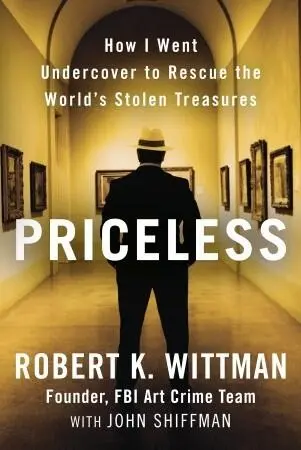
- Название:Priceless
- Автор:
- Издательство:Crown Publishers
- Жанр:
- Год:2010
- Город:New York
- ISBN:978-0-307-46149-0
- Рейтинг книги:3 / 5. Голосов: 1
-
Избранное:Добавить в избранное
- Отзывы:
-
Ваша оценка:
Priceless: краткое содержание, описание и аннотация
Предлагаем к чтению аннотацию, описание, краткое содержание или предисловие (зависит от того, что написал сам автор книги «Priceless»). Если вы не нашли необходимую информацию о книге — напишите в комментариях, мы постараемся отыскать её.
The London Times
In
Robert K. Wittman, the founder of the FBI’s Art Crime Team, pulls back the curtain on his remarkable career for the first time, offering a real-life international thriller to rival
.
Rising from humble roots as the son of an antique dealer, Wittman built a twenty-year career that was nothing short of extraordinary. He went undercover, usually unarmed, to catch art thieves, scammers, and black market traders in Paris and Philadelphia, Rio and Santa Fe, Miami and Madrid.
In this page-turning memoir, Wittman fascinates with the stories behind his recoveries of priceless art and antiquities: The golden armor of an ancient Peruvian warrior king. The Rodin sculpture that inspired the Impressionist movement. The headdress Geronimo wore at his final Pow-Wow. The rare Civil War battle flag carried into battle by one of the nation’s first African-American regiments.
The breadth of Wittman’s exploits is unmatched: He traveled the world to rescue paintings by Rockwell and Rembrandt, Pissarro, Monet and Picasso, often working undercover overseas at the whim of foreign governments. Closer to home, he recovered an original copy of the Bill of Rights and cracked the scam that rocked the PBS series By the FBI’s accounting, Wittman saved hundreds of millions of dollars worth of art and antiquities. He says the statistic isn’t important. After all, who’s to say what is worth more—a Rembrandt self-portrait or an American flag carried into battle? They're both priceless.
The art thieves and scammers Wittman caught run the gamut from rich to poor, smart to foolish, organized criminals to desperate loners. The smuggler who brought him a looted 6th-century treasure turned out to be a high-ranking diplomat. The appraiser who stole countless heirlooms from war heroes’ descendants was a slick, aristocratic con man. The museum janitor who made off with locks of George Washington's hair just wanted to make a few extra bucks, figuring no one would miss what he’d filched.
In his final case, Wittman called on every bit of knowledge and experience in his arsenal to take on his greatest challenge: working undercover to track the vicious criminals behind what might be the most audacious art theft of all.
Priceless — читать онлайн бесплатно полную книгу (весь текст) целиком
Ниже представлен текст книги, разбитый по страницам. Система сохранения места последней прочитанной страницы, позволяет с удобством читать онлайн бесплатно книгу «Priceless», без необходимости каждый раз заново искать на чём Вы остановились. Поставьте закладку, и сможете в любой момент перейти на страницу, на которой закончили чтение.
Интервал:
Закладка:
“Why did you walk out so quickly?” I said.
He shrugged. “I’m hungry, I want to get lunch.”
I kept a straight face, and we went back inside to see Larry. I tried the direct approach.
“Was there anything else that you just happened to find when you found the statue?”
“Anything else, like what?”
“A glass ball.”
“A glass ball? Yeah, yeah. It was a big heavy thing, but I thought it was one of those lawn globe things. It was pretty ugly, so I just left it in the garage for about a year. Then I gave it away.”
As nonchalantly as I could, I uncapped my pen and drew my notebook. “Gave it away?” I said. “To whom?”
“Kim Beckles. My housekeeper. For her birthday, September 1989. She was into crystals and pyramids and stuff like that. She joked that she was a good witch.”
I told Larry to call Beckles, to say that he’d just learned that the crystal might be valuable, and that he was sending a couple of appraisers over to take a look. “Tell her that if you sell it, you’ll split the money, OK?”
Larry made the call and we headed for the witch’s house in Trenton, New Jersey. As soon as we arrived, we dropped the ruse. I banged on the door and yelled, “Police!” She answered quickly. From Larry’s description we were expecting a hag, but Beckles was a lithe beauty, twenty-nine years old, blond curly hair. We showed our badges, explained what we were looking for, and she seemed genuinely surprised. She told us she kept the orb in her bedroom. We followed her upstairs.
I’ll never forget the anticipation I felt climbing those stairs. It was the same kind of nervous anticipation I got whenever I went on a drug raid, or helped collar a fleeing suspect—but better. I felt my heart pound. I wasn’t searching for common drugs or guns. I was searching for lost treasure.
We found the Dowager’s crystal ball on the witch’s dresser, under a ball cap.
When Bazin and I returned the orb to its rightful place under the rotunda at the Penn museum, I felt as proud of myself as an agent as I ever had, even though no one was charged with a crime. These art cases offered a different kind of satisfaction. And because Bazin and I were the only ones working them, we won a degree of independence rare in the by-the-book world of the FBI.
It didn’t hurt, either, that the case made big headlines. The day before the scheduled FBI press conference, someone leaked the story to the Philadelphia Inquirer and the paper put its exclusive on the front page. After the press conference, the story made all the evening news programs and appeared in four other papers the next morning. A few years later, when Bazin and I recovered a long-lost painting stolen from the Philadelphia Museum of Art, the story landed on the front page again. Fellow agents who pursued the more traditional FBI crimes, like drugs and robbery, might not seem too interested, but journalists appeared eager to write about art crime and give the stories good play. Each art crime inevitably carried a “hook,” a bit of intrigue, and the public ate it up. The attention was nice, but most important was that it made our local bosses look good, making it easier for them to green-light our next art crime case.
I led one other significant investigation while awaiting my trial in the early 1990s. Violent gangs were hitting high-end jewelry stores in smash-and-grab heists, bolting into the likes of Tiffany, Black, Starr and Frost, and Bailey Banks and Biddle in broad daylight, taking hammers and tire irons to display cases, and dashing off with fistfuls of diamonds and Rolex watches worth tens of thousands of dollars. The hoods came from Philadelphia but had hit more than one hundred stores in five states. I created and led a special task force that not only won federal indictments against thirty gang members but also snared the ringleaders who fenced the stolen loot—two corrupt merchants from Philly’s Jewelers’ Row. Our work made the front page again and I developed long-term sources on Jewelers’ Row.
The successes at work were gratifying, but the accident continued to haunt my life. No matter how hard we tried, Donna and I couldn’t escape it. It always lingered in the background. Neighbors and friends followed developments regularly in the Inquirer and the Camden Courier-Post . Most people meant well, but they asked about the case whenever they saw us, and it was awkward—we didn’t want to be rude, but we wanted to talk about anything else. Meanwhile, the legal bills and delays piled up. Court hearings were scheduled, then postponed, scheduled, then postponed again. I wanted it all to end, but I feared the result. I was driving myself nuts. I needed an escape, something to occupy my mind.
“I gotta find something to do,” I told Donna. “I gotta find a hobby.”
“Yes, you do.”
I found one in baseball. I coached my sons, Kevin and Jeff, in Little League, and we liked to duck down to Baltimore to see my Orioles play at their new, throwback stadium, Camden Yards. On each trip, we fell into a routine: We arrived early for batting practice, got cheap seats, split a pack of baseball cards, and sometimes stayed late to try to snag autographs. Soon, we started attending baseball card shows, and I recognized a market in the Cal Ripken ’82 rookie cards (special Topps edition). The Oriole infielder was hugely popular in Baltimore, but not in Philadelphia. I started driving to card shows and strip mall storefronts near Philly, snapping up as many Ripken cards as possible. I got ’em for about $25 to $50 each. Then I’d drive to shows and events in Baltimore and sell them for $100 or $200 more. The year that Ripken broke the Iron Man record for most consecutive games, I sold the cards for $400. I was making a little extra cash doing something I liked. I thought, Who knows? If I lost my job and landed in prison, I’d need a new career when I got out. Inspired, I branched out, trying my hand at Civil War collectibles and antique firearms. I attended shows, scoured newsletters for bargains, and began to buy, barter, and sell. I even put my Barnes experience to work and dabbled in fine art. I bought a few Picasso prints, and spent weekend afternoons wandering through suburban galleries and flea markets. I daydreamed about finding a long-lost Monet and turning a $1,000 investment into $100,000.
Unbeknownst to me, Donna had other things on her mind. She wanted a third child. I wasn’t so sure. My future was so uncertain. Donna was adamant. “We have to stop putting our life on hold,” she said. Our boys were already four and six. Donna was thirty-five. If we were going to expand our family, now was the time. I nervously agreed. Kristin was born on Thanksgiving Day, and, as it turned out, having a little girl was the best decision we made during those stressful years.
Incredibly, the trial delays continued into 1993, 1994, and beyond. I kept myself as busy as I could with the kids and work, and with my new hobbies and interest in fine art, but every few hours, my thoughts returned to Denis and what lay ahead for me. Each day I crossed the Delaware River on the way to work, I passed New Jersey’s Riverfront State Prison at the foot of the Ben Franklin Bridge. It was the place I would be sent if convicted.
One day in 1995, a few weeks before my trial was set to begin, I ran into a member of the prosecution team on South Street in Philadelphia. We had to be careful. We weren’t supposed to talk outside of court.
We exchanged pleasantries and an awkward silence followed. We just stood there. Finally, the person said, “How are you holding up?”
How was I holding up? I kept my cool, and answered with a question of my own. As politely as I could, I said, “Why are you doing this?”
What the person said shook me. “Look, we know this is a bad case, but it’s just one we have to lose at trial.”
Читать дальшеИнтервал:
Закладка:
Похожие книги на «Priceless»
Представляем Вашему вниманию похожие книги на «Priceless» списком для выбора. Мы отобрали схожую по названию и смыслу литературу в надежде предоставить читателям больше вариантов отыскать новые, интересные, ещё непрочитанные произведения.











Обсуждение, отзывы о книге «Priceless» и просто собственные мнения читателей. Оставьте ваши комментарии, напишите, что Вы думаете о произведении, его смысле или главных героях. Укажите что конкретно понравилось, а что нет, и почему Вы так считаете.