Robert Wittman - Priceless
Здесь есть возможность читать онлайн «Robert Wittman - Priceless» весь текст электронной книги совершенно бесплатно (целиком полную версию без сокращений). В некоторых случаях можно слушать аудио, скачать через торрент в формате fb2 и присутствует краткое содержание. Город: New York, Год выпуска: 2010, ISBN: 2010, Издательство: Crown Publishers, Жанр: Биографии и Мемуары, на английском языке. Описание произведения, (предисловие) а так же отзывы посетителей доступны на портале библиотеки ЛибКат.
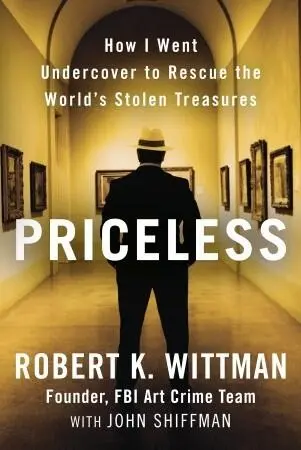
- Название:Priceless
- Автор:
- Издательство:Crown Publishers
- Жанр:
- Год:2010
- Город:New York
- ISBN:978-0-307-46149-0
- Рейтинг книги:3 / 5. Голосов: 1
-
Избранное:Добавить в избранное
- Отзывы:
-
Ваша оценка:
Priceless: краткое содержание, описание и аннотация
Предлагаем к чтению аннотацию, описание, краткое содержание или предисловие (зависит от того, что написал сам автор книги «Priceless»). Если вы не нашли необходимую информацию о книге — напишите в комментариях, мы постараемся отыскать её.
The London Times
In
Robert K. Wittman, the founder of the FBI’s Art Crime Team, pulls back the curtain on his remarkable career for the first time, offering a real-life international thriller to rival
.
Rising from humble roots as the son of an antique dealer, Wittman built a twenty-year career that was nothing short of extraordinary. He went undercover, usually unarmed, to catch art thieves, scammers, and black market traders in Paris and Philadelphia, Rio and Santa Fe, Miami and Madrid.
In this page-turning memoir, Wittman fascinates with the stories behind his recoveries of priceless art and antiquities: The golden armor of an ancient Peruvian warrior king. The Rodin sculpture that inspired the Impressionist movement. The headdress Geronimo wore at his final Pow-Wow. The rare Civil War battle flag carried into battle by one of the nation’s first African-American regiments.
The breadth of Wittman’s exploits is unmatched: He traveled the world to rescue paintings by Rockwell and Rembrandt, Pissarro, Monet and Picasso, often working undercover overseas at the whim of foreign governments. Closer to home, he recovered an original copy of the Bill of Rights and cracked the scam that rocked the PBS series By the FBI’s accounting, Wittman saved hundreds of millions of dollars worth of art and antiquities. He says the statistic isn’t important. After all, who’s to say what is worth more—a Rembrandt self-portrait or an American flag carried into battle? They're both priceless.
The art thieves and scammers Wittman caught run the gamut from rich to poor, smart to foolish, organized criminals to desperate loners. The smuggler who brought him a looted 6th-century treasure turned out to be a high-ranking diplomat. The appraiser who stole countless heirlooms from war heroes’ descendants was a slick, aristocratic con man. The museum janitor who made off with locks of George Washington's hair just wanted to make a few extra bucks, figuring no one would miss what he’d filched.
In his final case, Wittman called on every bit of knowledge and experience in his arsenal to take on his greatest challenge: working undercover to track the vicious criminals behind what might be the most audacious art theft of all.
Priceless — читать онлайн бесплатно полную книгу (весь текст) целиком
Ниже представлен текст книги, разбитый по страницам. Система сохранения места последней прочитанной страницы, позволяет с удобством читать онлайн бесплатно книгу «Priceless», без необходимости каждый раз заново искать на чём Вы остановились. Поставьте закладку, и сможете в любой момент перейти на страницу, на которой закончили чтение.
Интервал:
Закладка:
I became entranced by the history of this lost civilization. The Moche lived chiefly along the narrow river valleys of a two-hundred-mile stretch of Peru’s coastal desert. This tribe of weavers, metalsmiths, potters, farmers, and fishermen was perhaps fifty thousand strong. They fished in the Pacific, developed sophisticated irrigation systems linking mountain aqueducts to canals and ditches, and grew great fields of corn, melons, and peanuts. To appease the rain gods, they practiced ritual human sacrifices, elaborate ceremonies that climaxed with a quick slice to the throat. The Moche built giant, flat-topped pyramids of mud brick, man-made mountains that broke the desert horizon. The grandest, known as the Temple of the Sun, still stands, more than fifty million mud bricks piled over a twelve-acre foundation. No one knows why the Moche tribe disappeared between A.D. 600 and A.D. 700. Some blame invasions by the Huari mountain tribe; others point to a seventh-century El Niño–style weather system, believed to have triggered a three-decade drought in Peru, followed by a rebellion that shattered the sophisticated bureaucratic systems on which the giant desert civilization had come to rely. Perhaps the rebellion triggered chaos, civil war, and, ultimately, extinction.
Ten pages into the magazine article, I saw that Garcia had inserted another yellow Post-it note, just below a photograph of two backflaps. The caption explained that the Moche backflap was designed to protect the royal behind—the warrior king would have hung it from the small of his back down to his thighs. Archaeologists are divided over whether the armor, made mostly of gold but also of copper, would have been worn in combat or merely used during ceremonies, including the human sacrifices. The upper portion of the backflap, the most intricate piece of the armor, is called a rattle, and is surrounded by a spider web of gold. In the center of the web glares a winged Moche warrior known as the Decapitator. In one hand, the Decapitator wields a tumi knife. In the other, he grasps a severed head.
According to National Geographic , the backflaps displayed in the magazine were two of a handful known to exist. They looked a lot like the photo of the backflap Garcia wanted to sell.
I marveled at Garcia’s cojones. To entice me to buy a looted relic, he’d sent me magazine articles describing the rape of the most significant tomb in North or South America, stories that made it crystal clear the sale would be illegal. Still, if Garcia’s intention was to impress and excite me, to ignite a passion and lust for the backflap, it worked.
BY ANY NAME— tombaroli in Italian, huaquero in Spanish, grave robber in English—those who loot and illegally sell antiquities rob us all.
This was my first antiquity case, but as I would learn, looters are especially insidious art thieves. They not only invade the sanctuaries of our ancestors, plundering burial grounds and lost cities in a reckless dash for buried treasure, they also destroy our ability to learn about our past in ways other art thieves do not. When a painting is stolen from a museum, we usually know its provenance. We know where it came from, who painted it, when and perhaps even why. But once an antiquity is looted, the archaeologist loses the chance to study a piece in context, the chance to document history. Where, precisely, was it buried? What condition was it in? What was lying next to it? Can two objects be compared? Without such critical information, archaeologists are left to make educated guesses about a long-ago people and how they lived.
Most pilfered antiquities follow the same path—discovered and dug up by poor, indigenous grave robbers from the Third World, smuggled to unscrupulous dealers in the First World.
Except in rare cases, namely antiquity-rich Italy and Greece, the flow of stolen artifacts largely moves from poor to rich nations. Artifacts looted from Northern Africa and the Middle East are usually smuggled to Dubai and Abu Dhabi, from there to London, and ultimately to shops in Paris, Zurich, New York, and Tokyo, the cities where consumer demand is greatest. Artifacts pilfered from sites in Cambodia, Vietnam, and China are smuggled through Hong Kong to Australia, Western Europe, and the United States.
This slippery, largely unregulated world is considered a “gray” market because the legal market is largely supplied by an illegal one. Unlike smuggled drugs or weapons, an antiquity’s legal status may change as it crosses international borders—and once “legalized,” a looted antiquity can be sold openly by the likes of Sotheby’s and Christie’s to the likes of the Getty and the Met. While the United Nations has designed international protocols to discourage looting, every nation has its own priorities, cultural interests, and laws. What’s forbidden in one country is perfectly legal in another. It is illegal in the United States, for example, to sell bald and golden eagle feathers; and I spent a chunk of my career trying to stem this illegal trade. Yet whenever I visit Paris and wander through its finest antique shops along the Seine, I marvel at the American Indian treasures displayed openly for sale. I’ve seen full headdresses with eagle feathers selling for $30,000 or more.
The most visible criminals in the antiquity theft trade—the grave robbers doing the digging and the thieves swiping objects from religious shrines—fare poorly compared with the brokers at the other end of the smuggling chain. On average, looters earn only 1 or 2 percent of the ultimate sale price. The Sicilian men who illegally excavated a collection of Morgantina silver illegally sold it for $1,000; a collector subsequently bought it for $1 million, and resold it to the Metropolitan Museum of Art for $2.7 million. Chinese grave robbers who came across a significant Song Dynasty sculpture sold it for $900; an American dealer later resold it for $125,000.
The world’s finest museums have not escaped this distasteful cycle. The J. Paul Getty Museum in Los Angeles became ensnared in such a scandal after it purchased scores of looted antiquities from renowned Italian art dealer Giacomo Medici, including a statue of Aphrodite, purchased for $18 million in 1988. Senior curators at the Getty met with top officers from Italy’s Carabinieri and denied that they knew or should have known that the antiquities they’d purchased were looted. (Years after the backflap case, the Getty-Medici dispute would widen further and Italian officials would file criminal charges against an American curator and an art dealer.)
Illicit antiquity trading is said to be on the rise, and there’s little doubt the technology revolution that sparked the global economy made it easier to loot, smuggle, and sell antiquities. Looters employ global tracking devices, smugglers bribe low-paid customs officials, and sellers post items on eBay and clandestine chat rooms. If a piece is valuable enough, an antiquity can be smuggled out of a country on a passenger plane in a matter of hours, arriving in London, New York, or Tokyo less than twenty-four hours after it was unearthed by looters.
How big is the problem? It’s hard to say. Only a handful of countries collect reliable statistics on looting. The Greeks report 475 unauthorized digs in the past decade and say they’ve recovered 57,475 looted pieces, primarily in Peloponnese, Thessaly, and Macedonia. But Greece is an exception—the nation declared looting illegal as early as 1835, and its constitution specifically directs the government to protect cultural property. In most countries, looting is largely documented in unofficial ways, through anecdotes and extrapolation. Claims are made but unverified. Turkey says illegal looting is the fourth most lucrative (legal or illegal) job in the nation. Niger reports that 90 percent of its most significant archaeological sites have been stripped bare. A few criminologists have mingled these statistics and news accounts and drawn wild conclusions—for example, that organized crime figures and terrorists are major players in the illicit antiquities trade. I’m skeptical of such claims. Certainly mobsters have looted artifacts, and yes, there were reports that 9/11 ringleader Mohammed Atta tried to peddle Afghan antiquities in Germany. But a few isolated anecdotes do not a conspiracy make.
Читать дальшеИнтервал:
Закладка:
Похожие книги на «Priceless»
Представляем Вашему вниманию похожие книги на «Priceless» списком для выбора. Мы отобрали схожую по названию и смыслу литературу в надежде предоставить читателям больше вариантов отыскать новые, интересные, ещё непрочитанные произведения.











Обсуждение, отзывы о книге «Priceless» и просто собственные мнения читателей. Оставьте ваши комментарии, напишите, что Вы думаете о произведении, его смысле или главных героях. Укажите что конкретно понравилось, а что нет, и почему Вы так считаете.