Robert Wittman - Priceless
Здесь есть возможность читать онлайн «Robert Wittman - Priceless» весь текст электронной книги совершенно бесплатно (целиком полную версию без сокращений). В некоторых случаях можно слушать аудио, скачать через торрент в формате fb2 и присутствует краткое содержание. Город: New York, Год выпуска: 2010, ISBN: 2010, Издательство: Crown Publishers, Жанр: Биографии и Мемуары, на английском языке. Описание произведения, (предисловие) а так же отзывы посетителей доступны на портале библиотеки ЛибКат.
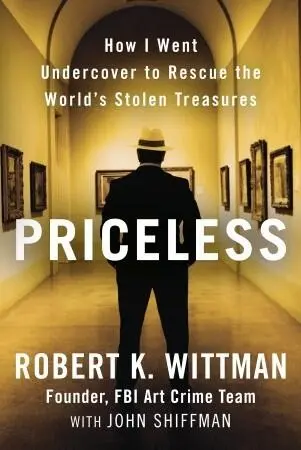
- Название:Priceless
- Автор:
- Издательство:Crown Publishers
- Жанр:
- Год:2010
- Город:New York
- ISBN:978-0-307-46149-0
- Рейтинг книги:3 / 5. Голосов: 1
-
Избранное:Добавить в избранное
- Отзывы:
-
Ваша оценка:
Priceless: краткое содержание, описание и аннотация
Предлагаем к чтению аннотацию, описание, краткое содержание или предисловие (зависит от того, что написал сам автор книги «Priceless»). Если вы не нашли необходимую информацию о книге — напишите в комментариях, мы постараемся отыскать её.
The London Times
In
Robert K. Wittman, the founder of the FBI’s Art Crime Team, pulls back the curtain on his remarkable career for the first time, offering a real-life international thriller to rival
.
Rising from humble roots as the son of an antique dealer, Wittman built a twenty-year career that was nothing short of extraordinary. He went undercover, usually unarmed, to catch art thieves, scammers, and black market traders in Paris and Philadelphia, Rio and Santa Fe, Miami and Madrid.
In this page-turning memoir, Wittman fascinates with the stories behind his recoveries of priceless art and antiquities: The golden armor of an ancient Peruvian warrior king. The Rodin sculpture that inspired the Impressionist movement. The headdress Geronimo wore at his final Pow-Wow. The rare Civil War battle flag carried into battle by one of the nation’s first African-American regiments.
The breadth of Wittman’s exploits is unmatched: He traveled the world to rescue paintings by Rockwell and Rembrandt, Pissarro, Monet and Picasso, often working undercover overseas at the whim of foreign governments. Closer to home, he recovered an original copy of the Bill of Rights and cracked the scam that rocked the PBS series By the FBI’s accounting, Wittman saved hundreds of millions of dollars worth of art and antiquities. He says the statistic isn’t important. After all, who’s to say what is worth more—a Rembrandt self-portrait or an American flag carried into battle? They're both priceless.
The art thieves and scammers Wittman caught run the gamut from rich to poor, smart to foolish, organized criminals to desperate loners. The smuggler who brought him a looted 6th-century treasure turned out to be a high-ranking diplomat. The appraiser who stole countless heirlooms from war heroes’ descendants was a slick, aristocratic con man. The museum janitor who made off with locks of George Washington's hair just wanted to make a few extra bucks, figuring no one would miss what he’d filched.
In his final case, Wittman called on every bit of knowledge and experience in his arsenal to take on his greatest challenge: working undercover to track the vicious criminals behind what might be the most audacious art theft of all.
Priceless — читать онлайн бесплатно полную книгу (весь текст) целиком
Ниже представлен текст книги, разбитый по страницам. Система сохранения места последней прочитанной страницы, позволяет с удобством читать онлайн бесплатно книгу «Priceless», без необходимости каждый раз заново искать на чём Вы остановились. Поставьте закладку, и сможете в любой момент перейти на страницу, на которой закончили чтение.
Интервал:
Закладка:
When I called the dealer, he confirmed the story. He dug into an old address book and came up with a name for the Philadelphia history buff peddling the sword—George Csizmazia.
We showed up unannounced at Csizmazia’s office on a chilly morning two days before Christmas. He was an electrical contractor, fifty-six years old, with weathered white skin, thick jowls, and narrow brown eyes. He parted his silver hair on the left and wore a neatly trimmed salt-and-pepper mustache. His boss retrieved him from a job and he met us brightly.
“What can I do for you, fellas?”
“We need help with an investigation related to Civil War artifacts,” I said. “George, we want to talk to you about some swords.”
Csizmazia turned ashen. “Ernie told you, didn’t he?”
Ernie was the janitor, the only museum employee we hadn’t interviewed.
I shot Thompson a look. “Of course,” I bluffed. “That’s why we’re here.”
“So where are the swords, George?” Thompson asked.
“At my house. I’ll take you to them.”
Csizmazia lived with his wife in a modest two-story home in a working-class suburb called Rutledge, a few miles southwest of Philadelphia International Airport. He led us upstairs, and we followed. He took us to a bedroom door; the door had more locks and alarm systems than any room at HSP. As he opened the door, he said, “I call this my museum.”
The moment we entered, I knew our pudgy little electrician was a thief on a grand scale, responsible for the theft of more than three swords and a rifle.
Two hundred museum-worthy pieces from the eighteenth and nineteenth centuries lined the walls and crowded display tables. As I circled the room, I silently counted twenty-five presentation swords and fifty firearms, assorted rifles, muskets, pistols, and revolvers. Valuable relics from early Americana filled the room—an ivory tea caddy; a brass carriage clock; a Victorian silver whistle; a teetering stack of U.S. Mint Indian ten-dollar gold coins; a tortoiseshell cigar holder; a pair of Revolutionary-era oval cuff links; a Georgian silver watch with a glass face; a pear-shaped silver sugar bowl; mother-of-pearl opera glasses in a leather case; a mahogany toy chest of drawers. It was all quality stuff.
Csizmazia played coy, rambling on about the vagaries of provenance in the military collectibles market. My partner and I didn’t say much. We just stood in the room, surrounded by so much history, so much evidence. We stared at the pieces and then we stared at Csizmazia. We let the silence hang, knowing he couldn’t help but try to fill it. He fidgeted and fidgeted and finally pointed to a Mayflower-era sword. “I use that to trim my hedges!” I gave him a look that said we were not amused. My partner crossed his arms sternly.
“George,” I said. “Come on. Don’t insult us, huh?”
Csizmazia dropped his eyes. “OK.”
He led us to the garage and opened a large cardboard garment box. Inside, we found $1 million worth of presentation swords, including the three missing from HSP.
There was so much stuff to seize we called for backup. Everywhere I looked I saw history. I picked up an early-nineteenth-century silver presentation wine cooler and marveled at the stylized swan-head handles, the chased rim, and an etched relief of Philadelphia’s famous Fairmount Water Works. I put it down and eyed a gold presentation watch with a double woven chain as long as my arm. I flipped it over to read the tiny inscription. “Presented to Maj. Gen. George G. Meade, USA as a token of esteem and regard from his friend E.P. Dorrl, Gettysburg July 1st, 2nd, 3rd. VICTORY.” I laid the watch on the table. The case was growing bigger every minute. What else was here?
Eager to learn more before Csizmazia wised up and stopped talking, I played to his vanity. “George, while we’re waiting, why don’t you give us the grand tour?”
He quickly agreed, moving through the room with pride, displaying one eclectic piece of American history after another: The flint-rock rifle abolitionist John Brown carried during his raid at Harpers Ferry. The telescope Elisha Kent Kane used to locate the Polar Sea. The burlwood coffer Revolutionary War financier Roger Morris used to store handwritten notes. A ring with a lock of hair from George Washington. A locket with a piece of the first transatlantic telegraph cable. The wedding band Patrick Henry gave to his wife.
Before the other agents arrived, Csizmazia stood before the two most valuable pieces of his private collection—a silver teapot with a gooseneck spout, circa 1755 and worth about $250,000, and a gold snuffbox worth $750,000 or more. The snuffbox, he explained, was the most historic because it was presented as payment to Andrew Hamilton in 1735 for his successful defense of New York printer John Peter Zenger, charged with libeling the colonial governor of New York. This landmark libel case was arguably the most important moment in American journalism history—the forerunner of the freedom of the press clause in the First Amendment, as adopted a half-century later in the Bill of Rights.
In all, Csizmazia’s private collection looked to be worth millions. I recognized many pieces from HSP records.
I called Froehlich. “Kristen, do you believe in Santa Claus?”
“Uh, maybe.”
“He’s left you a lot of gifts.”
Csizmazia wasn’t repentant in the least. “Whaddya want from me?” he begged. He lamely justified that he did what he did out of love and respect for history, not for money. “The stuff had been sitting in storage boxes for decades. At least, by looking at it in my house, someone got some joy from it.”
Only one question remained. “How did you steal it?”
“Ernie,” he said.
Csizmazia explained: As a trusted HSP employee for nearly two decades, Ernest Medford enjoyed unfettered and unmonitored access to the museum’s basement storage areas. The heavyset custodian with sunken brown eyes had first met Csizmazia when the contractor supervised an electrical job at the museum in the late 1980s. Over the next eight years, Medford smuggled more than two hundred artifacts out the back door, a few pieces at a time. The slimy collector paid the corrupt custodian roughly $8,000, for artifacts worth a total of $2 million to $3 million.
As Csizmazia laid out their scheme, the color rose on my face and I felt like a bumbling rookie, chagrined that I hadn’t persisted in interviewing the one guy who’d called in sick. Lesson learned. Interview all employees—no exceptions.
Still, Csizmazia’s word wasn’t good enough to arrest Medford. We needed real evidence. “George,” I said, “if what you say is true, we need you to call Ernie and tape it for us. I want you to tell him you think he sent us to you.”
Csizmazia didn’t protest—he knew we had him. Glumly, he dialed the number. “Ernie? George. The FBI’s visited me, man. Did you set the heat on me? How did they know?”
“I don’t know. I didn’t say anything.”
“Yeah, but you know, you sold me everything. So, you know, we gotta stick together.”
“Don’t worry about it.”
That was enough.
When I confronted Medford with the evidence and tape, he confessed. I asked him why he’d done it, why he’d systematically assaulted an institution where he’d spent nearly twenty years of his life. Medford shrugged. “I figured no one would miss it. I really needed the money.”
It was fortuitous that we pressed Csizmazia at his home, because by the time he arrived at the FBI office and I took his fingerprints, reality had set in. When I handed him a copy of the initial paperwork used to charge him, he recoiled, revealing his true feelings. “Three million? The stuff was worth three million dollars? I was a fool not to be selling more of this stuff.” A few minutes later, as we walked him to the U.S. Marshal’s office for processing, Csizmazia began mumbling, quietly cursing himself. Like many collectors, he’d seen the notice for the reward and knew the FBI and police were searching for the HSP pieces. “I should have just dumped all that stuff in the river. You guys never would have found it. Like in a murder case. No body, no evidence, no case.”
Читать дальшеИнтервал:
Закладка:
Похожие книги на «Priceless»
Представляем Вашему вниманию похожие книги на «Priceless» списком для выбора. Мы отобрали схожую по названию и смыслу литературу в надежде предоставить читателям больше вариантов отыскать новые, интересные, ещё непрочитанные произведения.









Обсуждение, отзывы о книге «Priceless» и просто собственные мнения читателей. Оставьте ваши комментарии, напишите, что Вы думаете о произведении, его смысле или главных героях. Укажите что конкретно понравилось, а что нет, и почему Вы так считаете.