Robert Wittman - Priceless
Здесь есть возможность читать онлайн «Robert Wittman - Priceless» весь текст электронной книги совершенно бесплатно (целиком полную версию без сокращений). В некоторых случаях можно слушать аудио, скачать через торрент в формате fb2 и присутствует краткое содержание. Город: New York, Год выпуска: 2010, ISBN: 2010, Издательство: Crown Publishers, Жанр: Биографии и Мемуары, на английском языке. Описание произведения, (предисловие) а так же отзывы посетителей доступны на портале библиотеки ЛибКат.
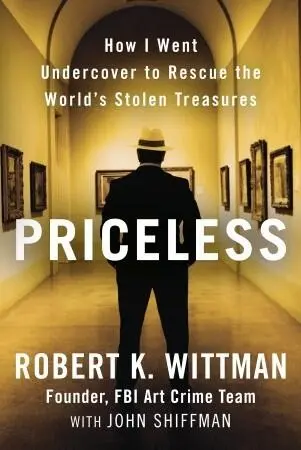
- Название:Priceless
- Автор:
- Издательство:Crown Publishers
- Жанр:
- Год:2010
- Город:New York
- ISBN:978-0-307-46149-0
- Рейтинг книги:3 / 5. Голосов: 1
-
Избранное:Добавить в избранное
- Отзывы:
-
Ваша оценка:
Priceless: краткое содержание, описание и аннотация
Предлагаем к чтению аннотацию, описание, краткое содержание или предисловие (зависит от того, что написал сам автор книги «Priceless»). Если вы не нашли необходимую информацию о книге — напишите в комментариях, мы постараемся отыскать её.
The London Times
In
Robert K. Wittman, the founder of the FBI’s Art Crime Team, pulls back the curtain on his remarkable career for the first time, offering a real-life international thriller to rival
.
Rising from humble roots as the son of an antique dealer, Wittman built a twenty-year career that was nothing short of extraordinary. He went undercover, usually unarmed, to catch art thieves, scammers, and black market traders in Paris and Philadelphia, Rio and Santa Fe, Miami and Madrid.
In this page-turning memoir, Wittman fascinates with the stories behind his recoveries of priceless art and antiquities: The golden armor of an ancient Peruvian warrior king. The Rodin sculpture that inspired the Impressionist movement. The headdress Geronimo wore at his final Pow-Wow. The rare Civil War battle flag carried into battle by one of the nation’s first African-American regiments.
The breadth of Wittman’s exploits is unmatched: He traveled the world to rescue paintings by Rockwell and Rembrandt, Pissarro, Monet and Picasso, often working undercover overseas at the whim of foreign governments. Closer to home, he recovered an original copy of the Bill of Rights and cracked the scam that rocked the PBS series By the FBI’s accounting, Wittman saved hundreds of millions of dollars worth of art and antiquities. He says the statistic isn’t important. After all, who’s to say what is worth more—a Rembrandt self-portrait or an American flag carried into battle? They're both priceless.
The art thieves and scammers Wittman caught run the gamut from rich to poor, smart to foolish, organized criminals to desperate loners. The smuggler who brought him a looted 6th-century treasure turned out to be a high-ranking diplomat. The appraiser who stole countless heirlooms from war heroes’ descendants was a slick, aristocratic con man. The museum janitor who made off with locks of George Washington's hair just wanted to make a few extra bucks, figuring no one would miss what he’d filched.
In his final case, Wittman called on every bit of knowledge and experience in his arsenal to take on his greatest challenge: working undercover to track the vicious criminals behind what might be the most audacious art theft of all.
Priceless — читать онлайн бесплатно полную книгу (весь текст) целиком
Ниже представлен текст книги, разбитый по страницам. Система сохранения места последней прочитанной страницы, позволяет с удобством читать онлайн бесплатно книгу «Priceless», без необходимости каждый раз заново искать на чём Вы остановились. Поставьте закладку, и сможете в любой момент перейти на страницу, на которой закончили чтение.
Интервал:
Закладка:
The battle won, white and black Union soldiers, having fought side by side for the first time, found themselves openly bonding, a remarkable sight during that time:Nature seems to have selected the place and appointed time for the negro to prove his manhood and to disarm prejudice…. It was all forgotten and they mingled together on terms of perfect equality. The whites were only too glad to take a drink from a negro soldier’s canteen.
A white Union officer wrote to his family: “You have no idea how my prejudices with regard to Negro troops have been dispelled by the battle.” Even some Southerners were impressed. The Confederate general Henry McCulloch, describing one of his troops’ failed forays, wrote, “This charge was resisted by the Negro portion with considerable obstinance (while) the white or pure Yankee portion ran like whipped [dogs] almost as soon as the charge was made.”
In strictly strategic military terms, the forty-eight-day battle at Port Hudson was critical. It cleared the final Confederate garrison along the Mississippi, a milestone in the Civil War. But perhaps more important, Port Hudson marked a watershed for the U.S. military and race relations. Black enlistment mushroomed following this early engagement. By the war’s end, more than 150,000 African Americans had served in the Union army and at least 27,000 died in battle. They mustered in 160 regiments and participated in thirty-nine major campaigns. Yet only five battle flags from black regiments survive.
ALL OF THIS history reeled through my head as Wilhite and I held the blood cloth by its four corners in the hotel room.
I could have arrested the bastard right then and there, signaled the SWAT team and hoped Wilhite resisted. But I wanted more. I wanted to crawl inside his mind. I wanted to know more about a man who could sell such a blood cloth, especially someone like Wilhite, who professed to be a Civil War buff. How could he be so callous, so eager to seek to profit from a piece of stolen history?
Of course, I also wanted him to incriminate himself with the video surveillance tape running. To do that, I needed to prove intent—get him to admit on tape that he knew he was selling a stolen historical artifact. After the takedown, I didn’t want his lawyer to claim that this was all some sort of misunderstanding, that Wilhite had obtained the flag in good faith, not knowing it was stolen.
Moving in for the kill, I eased back in my chair and sipped my Coke. “Did you ever find out where it came from?”
From a museum in Colorado, he said, making it clear it was stolen. “I’m telling you this upfront. I don’t want to mislead you. Because if I could take this to a show, I know what it could bring. I didn’t want to take that chance.”
This was going to be easy. Wilhite liked to hear himself talk and seemed eager for me to like him. I said, “You’re afraid someone will see it?” In other words, you know this is stolen property?
“Yeah,” he said. “I was told—I don’t know if this is correct—that it came from the West Point museum and was on its way to Colorado.”
I told him that I needed to know who else knew about the flag and our deal. This was important, I explained, because I needed to protect myself and my buyer. The fewer people who knew about the deal the better. This was a trick question, of course. Almost any answer would be incriminating. He might say “no one knows” because he didn’t trust anyone enough to join this illegal conspiracy. Or he might start naming names, vouching for them, not realizing he’d just outed them. He might even give up the name of a big fish, a dealer or broker not yet on the FBI’s radar. Either way, the question would get him talking.
Wilhite unfolded a long tale about buying the flag from some guy on the side at a Civil War show in Chicago, a cash deal consummated in his car in a city parking garage. When he finished, I changed tactics, trying to get him to admit he knew he was peddling a piece of African American history, that men died carrying this flag in battle. “Charlie,” I said, “you know much about the flag?”
“I’ve been told there are only five of these in existence, for colored troops.”
“Colored troops? Is that the same as Corps d’Afrique?”
“Yeah, they mustered in Louisiana and saw distinguished service in Tennessee. You can look it up.”
I had. “Did they have a lot of losses?”
“They had a lot of losses, yeah. They saw combat. They wasn’t just scrubbing pots, whatever, like the colored troop they made a movie on, the Massachusetts group. That’s what makes the piece for me.”
Incredible. A lot of losses. That’s what makes the piece for me . I masked my anger with a laugh and a swig of Coke. How far would this guy go? Wilhite seemed content, one of those people soothed by the sound of his own voice. He was tipping back in the chair now, one boot on the table, hands clasped behind his head. I said, “When you heard the history, you didn’t have any problem keeping it, as far as that’s concerned?”
“Me? No. I paid a lot of money for it. My buddy suggested maybe donating it to a museum and taking a tax write-off. I didn’t want to do that and thought about it for a while. This friend of mine said he had connections.” Wilhite pointed a bony finger at me. “Now, how you handle and market it is your business. But you want to be discreet. I don’t advise you to take it to a show. You may never have a problem, but I want to level with you.”
“Right, because we could get in a lot of trouble.”
“Right, we could.”
I had more than enough on him now. “Twenty-eight thousand. Cash, OK?”
“Yeah, if I had a cashier’s check, I’ve got to show that to Uncle Sam and I’d like to see if I can get around that.” I started to get up, thinking, I’ll be sure to let the IRS boys know.
Wilhite said, “Isn’t it a great piece? I told you it was.”
“It is,” I said, twisting my nose with my thumb and forefinger—the go-sign. “It could only come from a museum.”
“Yes, sir—” Wilhite’s head snapped to the right as three agents in FBI raid gear opened the adjoining door and told him to put his hands on his head. Stupidly, he jumped up, ignoring the agents, and began yelling at me. “Who are you? Who are you?”
He took an awkward step toward me, and the agents pinned him to the floor.
I’VE FOUND THAT I can read up on a stolen artifact, talk to experts about it, even hold it in my hands as the bad guys explain its black market value. But I know I won’t truly appreciate an object’s deeper meaning until I’m finally able to return it to its rightful owner.
And, as it was with Alva and the backflap, so it was with a group of black Civil War re-enactors and the Army’s chief historian.
A few weeks after the Wilhite arrest and battle flag seizure, we convened in Washington for a remarkable ceremony in which the FBI formally returned the flag to the Army. It was February and so the return was hastily inserted into the bureau’s annual Black History Month program at headquarters.
I rode to Washington with Vizi, the agent who handled the press, and the agent-in-charge of the Philadelphia office, Bob Conforti. Once inside the auditorium, they took seats of honor near the stage. Mindful of the cameras, I lingered in the back.
The long-ago-invited keynote speaker, an African American space shuttle astronaut, wowed everyone with tales from outer space, but the flag, a last-minute addition, stole the show. Flanked by an honor guard of African American re-enactors from Philadelphia, the flag loomed over the seated dignitaries, the astronaut, FBI Director Louis Freeh, and a pair of Army generals.
Joseph Lee, who leads the Philadelphia-based re-enactors group, took the podium in the Union blue full replica regalia of the United States Colored Troops, Third Regiment. He opened by describing his experience the previous month, when I had invited him to see the rescued battle flag in our Philadelphia office. “I was admonished not to touch it,” Lee recalled. “And having served in the United States Marines and Air Force, and being the sergeant major of our group, I knew how to follow an order.” He paused, wiping his lower lip with a white dress glove. “But that was one order I could not follow. Touching that flag sent chills through my body. Even thinking about it now, tears well in my eyes. They cause my heart to palpitate. Because this was true, living African American history. I had heard about it, read about it, dreamt about it, but now I was part of it.” Lee saluted the flag. “The dead still lie in shallow graves along the field of battle, where they fought and died. This flag honors them all.” Lee removed his hat and held it to his breast. “God have mercy for the deeds committed there, and the souls of those poor victims, sent to thee without a prayer. All hail, all honor, the gallant soldiers who fought for Uncle Sam.”
Читать дальшеИнтервал:
Закладка:
Похожие книги на «Priceless»
Представляем Вашему вниманию похожие книги на «Priceless» списком для выбора. Мы отобрали схожую по названию и смыслу литературу в надежде предоставить читателям больше вариантов отыскать новые, интересные, ещё непрочитанные произведения.







Обсуждение, отзывы о книге «Priceless» и просто собственные мнения читателей. Оставьте ваши комментарии, напишите, что Вы думаете о произведении, его смысле или главных героях. Укажите что конкретно понравилось, а что нет, и почему Вы так считаете.