Robert Wittman - Priceless
Здесь есть возможность читать онлайн «Robert Wittman - Priceless» весь текст электронной книги совершенно бесплатно (целиком полную версию без сокращений). В некоторых случаях можно слушать аудио, скачать через торрент в формате fb2 и присутствует краткое содержание. Город: New York, Год выпуска: 2010, ISBN: 2010, Издательство: Crown Publishers, Жанр: Биографии и Мемуары, на английском языке. Описание произведения, (предисловие) а так же отзывы посетителей доступны на портале библиотеки ЛибКат.
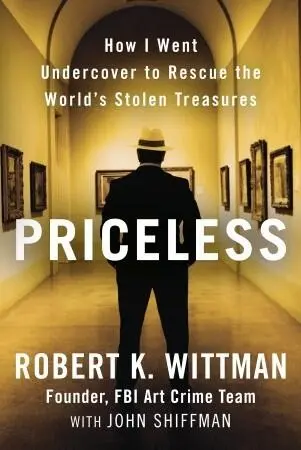
- Название:Priceless
- Автор:
- Издательство:Crown Publishers
- Жанр:
- Год:2010
- Город:New York
- ISBN:978-0-307-46149-0
- Рейтинг книги:3 / 5. Голосов: 1
-
Избранное:Добавить в избранное
- Отзывы:
-
Ваша оценка:
Priceless: краткое содержание, описание и аннотация
Предлагаем к чтению аннотацию, описание, краткое содержание или предисловие (зависит от того, что написал сам автор книги «Priceless»). Если вы не нашли необходимую информацию о книге — напишите в комментариях, мы постараемся отыскать её.
The London Times
In
Robert K. Wittman, the founder of the FBI’s Art Crime Team, pulls back the curtain on his remarkable career for the first time, offering a real-life international thriller to rival
.
Rising from humble roots as the son of an antique dealer, Wittman built a twenty-year career that was nothing short of extraordinary. He went undercover, usually unarmed, to catch art thieves, scammers, and black market traders in Paris and Philadelphia, Rio and Santa Fe, Miami and Madrid.
In this page-turning memoir, Wittman fascinates with the stories behind his recoveries of priceless art and antiquities: The golden armor of an ancient Peruvian warrior king. The Rodin sculpture that inspired the Impressionist movement. The headdress Geronimo wore at his final Pow-Wow. The rare Civil War battle flag carried into battle by one of the nation’s first African-American regiments.
The breadth of Wittman’s exploits is unmatched: He traveled the world to rescue paintings by Rockwell and Rembrandt, Pissarro, Monet and Picasso, often working undercover overseas at the whim of foreign governments. Closer to home, he recovered an original copy of the Bill of Rights and cracked the scam that rocked the PBS series By the FBI’s accounting, Wittman saved hundreds of millions of dollars worth of art and antiquities. He says the statistic isn’t important. After all, who’s to say what is worth more—a Rembrandt self-portrait or an American flag carried into battle? They're both priceless.
The art thieves and scammers Wittman caught run the gamut from rich to poor, smart to foolish, organized criminals to desperate loners. The smuggler who brought him a looted 6th-century treasure turned out to be a high-ranking diplomat. The appraiser who stole countless heirlooms from war heroes’ descendants was a slick, aristocratic con man. The museum janitor who made off with locks of George Washington's hair just wanted to make a few extra bucks, figuring no one would miss what he’d filched.
In his final case, Wittman called on every bit of knowledge and experience in his arsenal to take on his greatest challenge: working undercover to track the vicious criminals behind what might be the most audacious art theft of all.
Priceless — читать онлайн бесплатно полную книгу (весь текст) целиком
Ниже представлен текст книги, разбитый по страницам. Система сохранения места последней прочитанной страницы, позволяет с удобством читать онлайн бесплатно книгу «Priceless», без необходимости каждый раз заново искать на чём Вы остановились. Поставьте закладку, и сможете в любой момент перейти на страницу, на которой закончили чтение.
Интервал:
Закладка:
When we got to the hotel room, I tried to make Wilhite comfortable. I poured a pair of Cokes and set them on a table with two chairs, in full view of the hidden surveillance camera. “Welcome to Philadelphia,” I said.
“Well thank you, bud.” He peeled off the jacket and gloves. “Thank you very much.”
“First visit?”
“Yeah,” he said.
“Hopefully it’ll be a memorable one.”
“I hope so.”
We both laughed.
Wilhite unzipped his carry-on and I stiffened slightly. Though I’d picked him up at the airport, you never knew what a guy might be carrying. Working undercover, rip-offs are always a real threat. Years earlier, I’d nearly been attacked by a man during a hotel sting. He’d claimed to be working for the CIA and wanted to buy $15 million worth of loose diamonds to fund covert operations in Europe. Diamond merchants in Philadelphia alerted the FBI and I had gone undercover as a diamond courier to meet the man. On the phone I played along with his crazy story and agreed to meet at a nearby hotel, telling him I would be carrying the diamonds inside a briefcase attached to my arm with a handcuff. When I met the guy in the warm hotel lobby, he approached wearing dark sunglasses and a heavy overcoat. We turned toward the elevators, but the coat and the man gave me an odd feeling, and I gave the takedown signal right there in the lobby. It turned out he was carrying a gun and a hatchet—no money for diamonds. He planned to kill me, cut off my arm, and make off with the jewels.
So I breathed a sigh of relief when Wilhite pulled from his bag a neatly folded red, white, and blue cloth—a nineteenth-century American flag in fine condition.
He unfolded the flag roughly and draped it over a small round table, the edges spilling over the side, the frayed fringes dangling inches from the ground. My eyes fixed smartly on the thirty-five gold stars in the blue corner square, and I shuddered inwardly as Wilhite manhandled this antiquity, knocking flecks of gold leaf from the stars to the hotel carpet. The stars were unusual, aligned like the night sky, haphazardly in loosely defined circles, set at different angles. At first glance, they seemed to be dancing.
In the middle of one of the seven red stripes, in capital shadow-box letters, were the words 12th REG. INFANTRY CO’ A.
It was precisely as my tipster at the U.S. Army Center of Military History had described. This was the battle flag of the Twelfth Regiment Infantry, Corps d’Afrique, a near-sacred artifact in African American history, one of only five such flags to survive the Civil War. The Army museum’s historical property tag—“HP 108.62”—was still affixed to the lower left edge of the banner.
Wilhite caught my eye and smiled. “Beautiful, ain’t she?”
“Looks good to me, Charlie.”
A BATTLE FLAG is unlike any other antiquity.
Flags hoisted by the soldiers at Fort McHenry, the marines at Iwo Jima, and the firefighters at the World Trade Center are symbols of American resolve. The legend of the Fort McHenry battle flag inspired our National Anthem. Today, the tattered Star-Spangled Banner is the most visited artifact displayed at the Smithsonian Institution’s National Museum of American History, viewed by some six million tourists annually. That flag, hand-stitched with forty-two-foot reams of wool, is the most valuable artifact in the entire Smithsonian collection—worth more than the Hope Diamond, Charles Lindbergh’s Spirit of Saint Louis , or the Apollo 11 lunar module.
As an amateur Civil War artifacts collector, I knew that regimental flags played a key role in battle—that they were not merely ceremonial. The soldiers who carried the flags served as beacons for troops to follow in the chaos and cacophony of battle. The regimental flags literally marked the battle lines, where soldiers from the North and South died by the tens of thousands. Each side tried to knock off the other’s flag-bearers, eager to cut off a unit’s chief means of communication. To carry a regiment’s colors into battle was considered a great honor, but also a great personal burden and incredible risk.
The battle flag Wilhite brought to the hotel room was freighted with additional meaning. Missing from the Army archives for more than a decade, the Twelfth Regiment flag proudly stood for bravery, sacrifice, and racial history. After hanging for years in a place of honor at West Point, the flag was transferred to an Army museum in Washington. In the mid-1970s, the old records showed, it was loaned out as part of an exhibition in South Carolina, but never arrived at its destination.
I first learned of its theft a month before I met Wilhite. Leslie Jensen, an Army historian in Washington, called to say that Army investigators were tracking a tip that someone was shopping the Twelfth Regiment flag on the black market.
Could the FBI help? Jensen asked.
Tell me more about the flag, I said.
“At least five men died carrying it,” Jensen said. “That’s why they call it a blood cloth.”
This Louisiana-based regiment, the expert explained, held a particularly significant place in the history of the War Between the States—and the U.S. military, generally. The Twelfth was among the first African American regiments to see major battle. Free blacks served in the Revolutionary War and the War of 1812 in limited numbers, and they also served in the Navy in the decades leading to the Civil War, but the notion of arming full regiment-sized units of black soldiers remained controversial. At the outset of war, the South used slaves in support roles for the Confederate Army, but President Lincoln initially declined to enlist black soldiers. After the Union lost several early battles, Lincoln ordered that tens of thousands of black men be used in support positions, but barred them from carrying weapons. His Union commanders fretted that these untested soldiers might cut and run in the heat of battle. Yet faced with the realities and horrors of war, Union generals gradually changed their minds. By the fall of 1862, when Lincoln declared that all slaves would be emancipated on January 1, 1863, self-formed black units were beginning to fight alongside Union whites in Massachusetts, South Carolina, and Louisiana. One of them was the Twelfth near New Orleans.
In May of 1863, when Union troops attacked Port Hudson, the final Southern stronghold on the Mississippi River, black regiments like the Twelfth won the chance to prove their mettle in battle. In his 1887 book The Black Phalanx , Joseph T. Wilson, one of the African American soldiers who fought at Port Hudson, memorialized the battle in patriotic prose:Louder than the thunder of Heaven was the artillery rending the air shaking the earth itself; cannons, mortars and musketry alike opened in a fiery storm upon the advancing regiments, an iron shower of grape and round shot, shells and rockets with a perfect tempest of rifle bullets fell upon them. On they went and down, scores falling on right and left.
When a Confederate mortar felled the sergeant carrying the Twelfth Regiment’s flag, Wilson wrote, another scooped it up.“The flag, the flag!” shouted the black soldiers as the standard-bearer’s body was scattered by a shell. They fell faster and faster; shrieks, prayers and curses came up from the fallen and ascended to Heaven. “Steady men, steady,” cried bold Captain Cailloux, his sword uplifted, his face the color of sulphurous smoke that enveloped him and his followers, as they felt the deadly hail which came apparently from all sides.Captain Cailloux was killed with the colors in his hands; the column seemed to melt away like snow in sunshine, before the enemy’s murderous fire; the pride, the flower of the Phalanx had fallen. Then, with a daring that veterans only can exhibit, the blacks rushed forward and up to the brink with a shout. The defenders emptied their rifles, cannons and mortars.
Читать дальшеИнтервал:
Закладка:
Похожие книги на «Priceless»
Представляем Вашему вниманию похожие книги на «Priceless» списком для выбора. Мы отобрали схожую по названию и смыслу литературу в надежде предоставить читателям больше вариантов отыскать новые, интересные, ещё непрочитанные произведения.







Обсуждение, отзывы о книге «Priceless» и просто собственные мнения читателей. Оставьте ваши комментарии, напишите, что Вы думаете о произведении, его смысле или главных героях. Укажите что конкретно понравилось, а что нет, и почему Вы так считаете.