Robert Wittman - Priceless
Здесь есть возможность читать онлайн «Robert Wittman - Priceless» весь текст электронной книги совершенно бесплатно (целиком полную версию без сокращений). В некоторых случаях можно слушать аудио, скачать через торрент в формате fb2 и присутствует краткое содержание. Город: New York, Год выпуска: 2010, ISBN: 2010, Издательство: Crown Publishers, Жанр: Биографии и Мемуары, на английском языке. Описание произведения, (предисловие) а так же отзывы посетителей доступны на портале библиотеки ЛибКат.
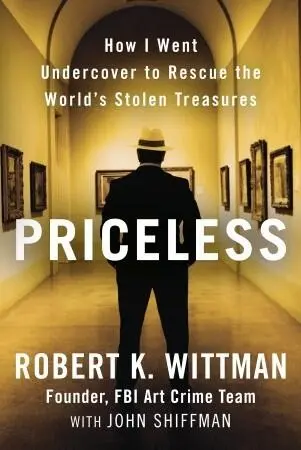
- Название:Priceless
- Автор:
- Издательство:Crown Publishers
- Жанр:
- Год:2010
- Город:New York
- ISBN:978-0-307-46149-0
- Рейтинг книги:3 / 5. Голосов: 1
-
Избранное:Добавить в избранное
- Отзывы:
-
Ваша оценка:
Priceless: краткое содержание, описание и аннотация
Предлагаем к чтению аннотацию, описание, краткое содержание или предисловие (зависит от того, что написал сам автор книги «Priceless»). Если вы не нашли необходимую информацию о книге — напишите в комментариях, мы постараемся отыскать её.
The London Times
In
Robert K. Wittman, the founder of the FBI’s Art Crime Team, pulls back the curtain on his remarkable career for the first time, offering a real-life international thriller to rival
.
Rising from humble roots as the son of an antique dealer, Wittman built a twenty-year career that was nothing short of extraordinary. He went undercover, usually unarmed, to catch art thieves, scammers, and black market traders in Paris and Philadelphia, Rio and Santa Fe, Miami and Madrid.
In this page-turning memoir, Wittman fascinates with the stories behind his recoveries of priceless art and antiquities: The golden armor of an ancient Peruvian warrior king. The Rodin sculpture that inspired the Impressionist movement. The headdress Geronimo wore at his final Pow-Wow. The rare Civil War battle flag carried into battle by one of the nation’s first African-American regiments.
The breadth of Wittman’s exploits is unmatched: He traveled the world to rescue paintings by Rockwell and Rembrandt, Pissarro, Monet and Picasso, often working undercover overseas at the whim of foreign governments. Closer to home, he recovered an original copy of the Bill of Rights and cracked the scam that rocked the PBS series By the FBI’s accounting, Wittman saved hundreds of millions of dollars worth of art and antiquities. He says the statistic isn’t important. After all, who’s to say what is worth more—a Rembrandt self-portrait or an American flag carried into battle? They're both priceless.
The art thieves and scammers Wittman caught run the gamut from rich to poor, smart to foolish, organized criminals to desperate loners. The smuggler who brought him a looted 6th-century treasure turned out to be a high-ranking diplomat. The appraiser who stole countless heirlooms from war heroes’ descendants was a slick, aristocratic con man. The museum janitor who made off with locks of George Washington's hair just wanted to make a few extra bucks, figuring no one would miss what he’d filched.
In his final case, Wittman called on every bit of knowledge and experience in his arsenal to take on his greatest challenge: working undercover to track the vicious criminals behind what might be the most audacious art theft of all.
Priceless — читать онлайн бесплатно полную книгу (весь текст) целиком
Ниже представлен текст книги, разбитый по страницам. Система сохранения места последней прочитанной страницы, позволяет с удобством читать онлайн бесплатно книгу «Priceless», без необходимости каждый раз заново искать на чём Вы остановились. Поставьте закладку, и сможете в любой момент перейти на страницу, на которой закончили чтение.
Интервал:
Закладка:
Even the stone-faced Freeh seemed moved. I now realized our case had handed Freeh and the FBI a remarkable public relations coup—not only the rescue of a significant historical artifact, but an opportunity to help improve the bureau’s poor record on race relations. It certainly didn’t hurt my quiet aspirations to expand my art crime horizons beyond Philadelphia to the national and international stage.
Before I got too carried away with such grandiose thoughts, the Army’s chief of military history, General John Brown, took to the microphone.Think of the stress of combat that was on the soldiers of the Twelfth. They could not see the faces of their loved ones; they couldn’t see the monuments that made this city great. They couldn’t see purple mountain majesties or fruited plain. But what they could see above the smoke and din of battle was the flag. And for soldiers always, the flag has captured the essence of everything that they are fighting for. It is all that is on the battlefield with them when they face death. I think it’s particularly fitting that this flag represents men who rose to fight against slavery for themselves and their families and in the course of contributing to the Union Army did in fact secure their freedom and all their descendants’ for all the generations to come. It was the first in many steps of trying to affirm the American dream that all people are equal.
As he spoke, I couldn’t help thinking about my parents, the soldier and the Japanese bride.
Chapter 11
BEFRIEND AND BETRAY
Santa Fe, 1999 .
THE PALACE OF THE GOVERNORS ON THE SANTA FE Plaza is said to be the oldest continuously used public building in the United States, and it is a must-see stop for any visitor. Built by the Spaniards in 1610 as the northern seat of power for New Spain, the low-slung, block-long adobe and timber structure remains the gravitational center of Santa Fe culture. The Palace houses the popular Museum of New Mexico and, outside, along the balustrade that overlooks the Plaza, Native American craftsmen peddle handmade jewelry to tourists.
Joshua Baer positioned his Indian art and antiquities gallery half a block away from the Palace, at 116 East Palace Avenue. A discreet wooden shingle read, GALLERY UPSTAIRS—OPEN. A poster at the entrance read, WHY TAKE RISKS? BUY AUTHENTIC ART.
On an unseasonably cool summer afternoon in 1999, my undercover partner and I headed upstairs, fake identification and tape recorders stuffed in our pockets.
The sale of counterfeit Indian art is a $1-billion-a-year problem, but it’s still dwarfed by the illegal trade of Native American religious objects, particularly those featuring eagle feathers. The crime had vexed law enforcement and tribal leaders for years, and it didn’t help that many in New Mexico, including some judges, Indian leaders, and state officials, openly criticized the federal law protecting eagle feathers. It was easy for law enforcement to target the low-level “pickers,” the scavengers who scoured reservations, acquired religious objects from dirt-poor Indians, and sold them to Santa Fe dealers. But it was a lot tougher to target the dealers. Dogged federal agents from the U.S. Fish and Wildlife Service had launched a major investigation six months earlier, and now suspected that Baer and four other dealers were illegally selling Indian religious objects, including eagle feathers. But they couldn’t prove it. They knew the only way to snare the dealers was to set up a sting, yet the tight-knit and suspicious nature of the Santa Fe arts community made it almost impossible to use local agents undercover.
So Fish and Wildlife had enlisted two outsiders, an FBI agent from Philadelphia and a Norwegian police detective, to try to make a bust big enough to frighten nefarious dealers and put them on notice. They chose me because of my background in art crime and the Norwegian because Native American religious artifacts—eagle-feather headdress, Zuni corn mothers, Hopi ceremonial masks—are popular in Europe, where their sale is perfectly legal. Wealthy Europeans often travel to Santa Fe to buy Native American artifacts, and they often bring expert American brokers along for advice. Here, I’d play broker to my undercover rich Norwegian friend Ivar Husby, with his Nordic good looks, borrowed Rolex, and Hugo Boss suits.
Husby and I bounded up the brown-carpeted steps to the second-floor gallery. An affable-looking man, six foot three, 220 pounds, stood in the center of the gallery, beside a bureau filled with a collection of Hopi kachina dolls. High-end Navajo rugs covered two walls opposite windows looking out onto Palace Avenue. The man gave us a minute to take it all in. Then he stuck out his right hand.
“Josh Baer. Welcome.”
“Hey Josh. Bob Clay, from Philadelphia.” I nodded at the rugs. “These are amazing.”
The Norwegian stepped forward. “Ivar Husby,” he said, shaking Baer’s hand. “I am living in Oslo in Norway.”
“Ivar’s a collector,” I said, slapping the Norwegian on the back. “I’m helping him out a bit because his English isn’t very good. He’s a good client of mine.”
Baer turned to Husby. “What business are you in?”
Husby was fluent in four languages, but he spoke to Baer in broken English. “Family business is oil. I own Internet company.”
Baer’s brown eyes widened. “Let me know if I can help you.” He showed us a few Navajo rugs, but I soon let him know that we were more interested in ceremonial pieces. “Ivar collects religious artifacts of the Laplander tribes in Scandinavia,” I said. “They’re similar to the Native American. That’s why we’re here.”
I handed him my card: ROBERT CLAY, ACQUISITIONS CONSULTANT.
Baer dipped into a back room. He brought out a Mimbres ceremonial bowl that dated to A.D. 900 (price: $6,000), a four-inch-high Acoma wooden kachina doll ($5,500), and a Kiowa Ghost Dance shield ($24,000). We spent about forty minutes with him but didn’t buy anything. As we began to leave, Baer invited us to an antique postcard show at his gallery that evening. We dropped by the reception later that night for a few minutes and spoke with him briefly. “Swing by tomorrow,” he said, with a tantalizing hint of promise. “I’ve got a few things to show you.”
“I look forward to it, Josh,” I said.
UNDERCOVER WORK IS like chess.
You need to master your subject and stay one or two moves ahead of your opponent.
I’ve taught hundreds of federal agents. Forget what you’ve seen on television, I always tell them. That’s not real life. The FBI’s training is fine, but the best undercover operative relies on his own instincts. I learned more from my years selling advertising for the Farmer newspapers than from any FBI manual.
These aren’t skills that can be learned in a class—an agent who doesn’t possess the natural instincts and traits to work undercover probably shouldn’t. You either have the innate sales and social skills to do the job—to befriend and betray—or you don’t.
You start with a name. Every undercover agent needs a false identity. Unless your first name is unusual—say Ulrich or Paris—it’s best to use your real first name. This adheres to my cardinal rule of working undercover: Tell as few lies as possible, because the more you tell, the more you have to remember. The less you have to remember, the more comfortable, natural you’ll be. Using your first name can also protect you if you happen to run into a friend or colleague who doesn’t know you’re working undercover. In the opening minutes of the battle flag case—when I met Wilhite at the airport—I unexpectedly ran into a neighbor. “Hi, Bob,” he said. I nodded, quickly said hello, and kept moving with Wilhite. If that neighbor had called me by any other name, it might have blown the case.
Читать дальшеИнтервал:
Закладка:
Похожие книги на «Priceless»
Представляем Вашему вниманию похожие книги на «Priceless» списком для выбора. Мы отобрали схожую по названию и смыслу литературу в надежде предоставить читателям больше вариантов отыскать новые, интересные, ещё непрочитанные произведения.











Обсуждение, отзывы о книге «Priceless» и просто собственные мнения читателей. Оставьте ваши комментарии, напишите, что Вы думаете о произведении, его смысле или главных героях. Укажите что конкретно понравилось, а что нет, и почему Вы так считаете.