Robert Wittman - Priceless
Здесь есть возможность читать онлайн «Robert Wittman - Priceless» весь текст электронной книги совершенно бесплатно (целиком полную версию без сокращений). В некоторых случаях можно слушать аудио, скачать через торрент в формате fb2 и присутствует краткое содержание. Город: New York, Год выпуска: 2010, ISBN: 2010, Издательство: Crown Publishers, Жанр: Биографии и Мемуары, на английском языке. Описание произведения, (предисловие) а так же отзывы посетителей доступны на портале библиотеки ЛибКат.
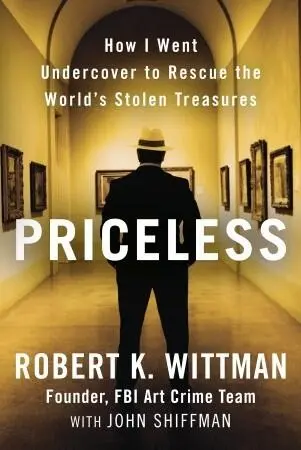
- Название:Priceless
- Автор:
- Издательство:Crown Publishers
- Жанр:
- Год:2010
- Город:New York
- ISBN:978-0-307-46149-0
- Рейтинг книги:3 / 5. Голосов: 1
-
Избранное:Добавить в избранное
- Отзывы:
-
Ваша оценка:
Priceless: краткое содержание, описание и аннотация
Предлагаем к чтению аннотацию, описание, краткое содержание или предисловие (зависит от того, что написал сам автор книги «Priceless»). Если вы не нашли необходимую информацию о книге — напишите в комментариях, мы постараемся отыскать её.
The London Times
In
Robert K. Wittman, the founder of the FBI’s Art Crime Team, pulls back the curtain on his remarkable career for the first time, offering a real-life international thriller to rival
.
Rising from humble roots as the son of an antique dealer, Wittman built a twenty-year career that was nothing short of extraordinary. He went undercover, usually unarmed, to catch art thieves, scammers, and black market traders in Paris and Philadelphia, Rio and Santa Fe, Miami and Madrid.
In this page-turning memoir, Wittman fascinates with the stories behind his recoveries of priceless art and antiquities: The golden armor of an ancient Peruvian warrior king. The Rodin sculpture that inspired the Impressionist movement. The headdress Geronimo wore at his final Pow-Wow. The rare Civil War battle flag carried into battle by one of the nation’s first African-American regiments.
The breadth of Wittman’s exploits is unmatched: He traveled the world to rescue paintings by Rockwell and Rembrandt, Pissarro, Monet and Picasso, often working undercover overseas at the whim of foreign governments. Closer to home, he recovered an original copy of the Bill of Rights and cracked the scam that rocked the PBS series By the FBI’s accounting, Wittman saved hundreds of millions of dollars worth of art and antiquities. He says the statistic isn’t important. After all, who’s to say what is worth more—a Rembrandt self-portrait or an American flag carried into battle? They're both priceless.
The art thieves and scammers Wittman caught run the gamut from rich to poor, smart to foolish, organized criminals to desperate loners. The smuggler who brought him a looted 6th-century treasure turned out to be a high-ranking diplomat. The appraiser who stole countless heirlooms from war heroes’ descendants was a slick, aristocratic con man. The museum janitor who made off with locks of George Washington's hair just wanted to make a few extra bucks, figuring no one would miss what he’d filched.
In his final case, Wittman called on every bit of knowledge and experience in his arsenal to take on his greatest challenge: working undercover to track the vicious criminals behind what might be the most audacious art theft of all.
Priceless — читать онлайн бесплатно полную книгу (весь текст) целиком
Ниже представлен текст книги, разбитый по страницам. Система сохранения места последней прочитанной страницы, позволяет с удобством читать онлайн бесплатно книгу «Priceless», без необходимости каждый раз заново искать на чём Вы остановились. Поставьте закладку, и сможете в любой момент перейти на страницу, на которой закончили чтение.
Интервал:
Закладка:
GOING UNDERCOVER CAN be tough on the family.
You’re gone for long stretches of time. You leave your spouse home alone with the kids, with all their activities, homework assignments, trips to the doctor, housekeeping, and car problems. You can’t say precisely when you’ll leave or when you’ll be back—it might be a few days or it might be weeks. Your spouse knows where you’re going and has a general idea of what you’re doing—and that it might be dangerous—but for your own safety, you tell her she can’t discuss it with anyone.
I certainly leaned on Donna for support. She came from a line of strong women. Her upbringing—especially what she learned from her mother, Jerry—guided us through our toughest times. Jerry would frequently remind us to “slow down and smell the roses.” Whenever Donna’s parents visited, they would bring the boys a bushel of enormous Maryland steamed crabs. Jerry would bring for Kristin her sewing machine and quilting fabric. For Donna, she’d bring hand-sewn drapes to hang in our new home. Jerry lived by example, offering her unconditional love and support, beginning with my car accident and continuing through her long, valiant battle against breast cancer. Donna had the same focus and strength imparted to her by her mother. As a result my family thrived.
Which made it easier for me to go undercover with a clear mind.
UNDER THE FBI’s strict undercover rules, you’re only supposed to work one case at a time. I never followed that rule. It made no sense: Most opportunities in life don’t come along so conveniently, one neatly after the other. It seemed silly to ignore a chance to solve one case simply because another was still evolving. Besides, my supervisors certainly couldn’t complain when I worked multiple cases. They didn’t have an alternative. I was the FBI’s only undercover agent working the art crime beat.
When I returned home to inspect the hurricane damage, I received an e-mail from a Penn museum curator, a woman I’d met during the backflap case. Her tip was unrelated to the Baer investigation, but by coincidence involved the illegal sale of eagle feathers. Someone was offering a war bonnet once worn by the Apache warrior and medicine man Geronimo.
“Not sure if this is a prank, nor if it would interest the FBI,” the tipster e-mailed, “but thought it might be of interest regardless. Please see the forwarded post below.”Subject: Authentic Geronimo autograph $22,000Serious inquiries only. His original headdress is for sale for one million dollars but it is not allowed in this country because of the feathers. Serious international inquiries only. Contact Steve at the e-mail address Gourmetcook@aol.com
I e-mailed “Steve.” The next day, a fast-talking Marietta, Georgia, car salesman named Thomas Marciano called my undercover cell phone. Indeed, he said, Geronimo’s eagle-feather war bonnet was still for sale. Excellent condition, he said. I asked about provenance and Marciano explained that Geronimo had worn the headdress in October 1907 to mark the Last Pow-Wow, a carnival celebrating Oklahoma’s transition from territory to state. By then, he said, Geronimo was no longer a legendary military and spiritual leader but a seventy-eight-year-old prisoner of war, a tragic over-the-hill celebrity granted regular leave to appear at fairs and parades. The Last Pow-Wow was one such gig, but more significant than most because the great chief had dressed in full regalia and took center stage during a ceremony in which he performed spiritual dances. Afterward, Geronimo presented the headdress he wore to his military escort, a half-Cherokee named Jack Moore. Later, Moore gave the war bonnet to a good friend, C. W. Deming. The man’s grandson, Leighton Deming, inherited the headdress and kept it mothballed in a trunk for decades. Deming had recently fallen on hard financial times, Marciano explained, and was looking to sell the headdress.
Wow, great story, I told Marciano. I’ve got an interested buyer in Europe. Mail me some pictures and background, and I’ll take a look, I said. OK, he said, but be careful. It’s illegal, he warned me, to sell eagle feathers in the United States. With the tape recorder rolling, I acted surprised. Are you sure? Yes, yes, he insisted, I’m quite sure. Hmm, I said, I dunno.
There are plenty of dumb criminals out there—the prisons are full of them. But Marciano tops my list. Eager to prove he was correct, that our deal was indeed illegal, he mailed me a copy of the law—16 United States Code 668, The Bald and Golden Eagle Protection Act of 1940, which explicitly prohibits the sale of eagle feathers.
“You were right,” I said when we spoke again, acting amazed. I tried to lure him north so I could work the case on my home turf with Goldman, who was restricted to prosecuting cases in the Eastern District of Pennsylvania. “Tell you what,” I said. “I wanna do this, but I’m kind of busy. Can you make it up here? How about we meet at the Embassy Suites in Philadelphia, the one right at the airport?”
Marciano and Deming arrived at the hotel room on an early October afternoon, carrying a turn-of-the-century trunk. They set it beside the couch, right below the hidden surveillance camera. I’d brought along a friend from New Mexico—the expert Fish and Wildlife Service agent in my Santa Fe case, Lucinda Schroeder. She would know immediately whether the headdress was made of eagle feathers, or the common fake material, turkey feathers.
Deming and Marciano couldn’t have been more different. Deming was a laid-back Southerner, fifty-five years old with a bulging nose, tired blue eyes, bushy black eyebrows, thin lips. Back in Sewanee, Georgia, he was a lawyer and president of the Gwinnett County Optimists Club. Deming liked to talk and slowly unspool family yarns in a silky voice—“My grandfather was friends with Jack Moore. Grandfather was in the oil business out there and Jack Moore used to come to his home, break down the door in the middle of the night, and sleep off the whiskey. And then two weeks later, Jack would be all sobered up by now, he’d come back and bring him a cow or something. My grandfather liked Jack Moore, so he never said anything. That was just Jack Moore.” One day, instead of a cow, Jack Moore showed up and handed the grandfather Geronimo’s headdress and a few other souvenirs, including an autographed photo.
Marciano, by contrast, couldn’t sit still. Forty-two and beefy, with thick brown hair that receded to the top of his crown, he bounced about the room, throwing out factoids about Geronimo in a hard Boston accent—how he was a prisoner of war, how he spent his final decade peddling souvenirs. “It’s how he earned his living. He kept a valise of hats. He would put one on and sell it and then get another and put it on. He would cut a button off from his jacket and sell it and then have his wife sew on another one. It’s kind of sad, really.”
As the men held forth, Schroeder studied the headdress a few feet away. After a few minutes, she pronounced the war bonnet likely authentic. We moved to the guts of the deal, and Deming proposed a way around the Bald and Golden Eagle Protection Act: He would sell me the Geronimo autographs for $1 million and loan my buyer the headdress indefinitely. OK, I agreed, but I insisted that he sign a bill of sale agreement. This was Goldman’s idea—he wanted Deming to admit that he was selling the eagle feather war bonnet. I told Deming that my buyer insisted on a contract to protect him from Deming’s heirs. Without a signed contract, I said, Deming’s children might someday make a claim for the headdress. Deming hesitated. He eyed the undercover Fish and Wildlife agent suspiciously. “I’m sure you’re a nice lady, but I don’t know you.”
I turned to her. “Why don’t you step outside for a minute?”
Читать дальшеИнтервал:
Закладка:
Похожие книги на «Priceless»
Представляем Вашему вниманию похожие книги на «Priceless» списком для выбора. Мы отобрали схожую по названию и смыслу литературу в надежде предоставить читателям больше вариантов отыскать новые, интересные, ещё непрочитанные произведения.












Обсуждение, отзывы о книге «Priceless» и просто собственные мнения читателей. Оставьте ваши комментарии, напишите, что Вы думаете о произведении, его смысле или главных героях. Укажите что конкретно понравилось, а что нет, и почему Вы так считаете.