Robert Wittman - Priceless
Здесь есть возможность читать онлайн «Robert Wittman - Priceless» весь текст электронной книги совершенно бесплатно (целиком полную версию без сокращений). В некоторых случаях можно слушать аудио, скачать через торрент в формате fb2 и присутствует краткое содержание. Город: New York, Год выпуска: 2010, ISBN: 2010, Издательство: Crown Publishers, Жанр: Биографии и Мемуары, на английском языке. Описание произведения, (предисловие) а так же отзывы посетителей доступны на портале библиотеки ЛибКат.
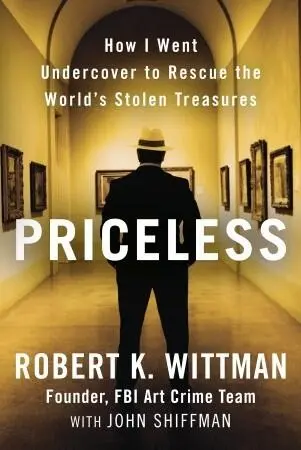
- Название:Priceless
- Автор:
- Издательство:Crown Publishers
- Жанр:
- Год:2010
- Город:New York
- ISBN:978-0-307-46149-0
- Рейтинг книги:3 / 5. Голосов: 1
-
Избранное:Добавить в избранное
- Отзывы:
-
Ваша оценка:
Priceless: краткое содержание, описание и аннотация
Предлагаем к чтению аннотацию, описание, краткое содержание или предисловие (зависит от того, что написал сам автор книги «Priceless»). Если вы не нашли необходимую информацию о книге — напишите в комментариях, мы постараемся отыскать её.
The London Times
In
Robert K. Wittman, the founder of the FBI’s Art Crime Team, pulls back the curtain on his remarkable career for the first time, offering a real-life international thriller to rival
.
Rising from humble roots as the son of an antique dealer, Wittman built a twenty-year career that was nothing short of extraordinary. He went undercover, usually unarmed, to catch art thieves, scammers, and black market traders in Paris and Philadelphia, Rio and Santa Fe, Miami and Madrid.
In this page-turning memoir, Wittman fascinates with the stories behind his recoveries of priceless art and antiquities: The golden armor of an ancient Peruvian warrior king. The Rodin sculpture that inspired the Impressionist movement. The headdress Geronimo wore at his final Pow-Wow. The rare Civil War battle flag carried into battle by one of the nation’s first African-American regiments.
The breadth of Wittman’s exploits is unmatched: He traveled the world to rescue paintings by Rockwell and Rembrandt, Pissarro, Monet and Picasso, often working undercover overseas at the whim of foreign governments. Closer to home, he recovered an original copy of the Bill of Rights and cracked the scam that rocked the PBS series By the FBI’s accounting, Wittman saved hundreds of millions of dollars worth of art and antiquities. He says the statistic isn’t important. After all, who’s to say what is worth more—a Rembrandt self-portrait or an American flag carried into battle? They're both priceless.
The art thieves and scammers Wittman caught run the gamut from rich to poor, smart to foolish, organized criminals to desperate loners. The smuggler who brought him a looted 6th-century treasure turned out to be a high-ranking diplomat. The appraiser who stole countless heirlooms from war heroes’ descendants was a slick, aristocratic con man. The museum janitor who made off with locks of George Washington's hair just wanted to make a few extra bucks, figuring no one would miss what he’d filched.
In his final case, Wittman called on every bit of knowledge and experience in his arsenal to take on his greatest challenge: working undercover to track the vicious criminals behind what might be the most audacious art theft of all.
Priceless — читать онлайн бесплатно полную книгу (весь текст) целиком
Ниже представлен текст книги, разбитый по страницам. Система сохранения места последней прочитанной страницы, позволяет с удобством читать онлайн бесплатно книгу «Priceless», без необходимости каждый раз заново искать на чём Вы остановились. Поставьте закладку, и сможете в любой момент перейти на страницу, на которой закончили чтение.
Интервал:
Закладка:
After she left, I braced for an argument from Deming, but he instead leaned close and spoke in a whisper. “All bullshit aside, Bob, I’ll sign this and then do another one when she comes back in.” He was offering to sign two contracts, a secret one admitting that he was selling the headdress and another in front of my expert with no mention of the headdress. That way, he figured, if she turned out to be a cop, he’d be OK.
“Absolutely,” I said, pushing the incriminating document in front of him. We signed the contract mentioning the headdress and Deming watched me stuff it in my pocket.
I said, “Before she comes back, between us, how many other people are involved in this?… Because I don’t want to get in any trouble.”
Deming: “Shit no.”
“One other thing,” I said, slowly, almost in a drawl. “Once overseas, this thing ain’t never coming back. We understand that, right?”
They nodded. I let Schroeder back in, Deming signed the second contract and the two men were so pleased with themselves that they dug the artifact out of the trunk to pose for one last series of pictures wearing Geronimo’s headdress.
“You did the right thing bringing it to me,” I told them.
“Well, it’s a piece of history,” Deming said.
I gave the code phrase for the SWAT team: “You guys hungry?”
After the arrests, FBI Philadelphia spokeswoman Linda Vizi received a call from the chief of the Lenape tribe in Delaware. He told her that the headdress, dormant in a trunk for three quarters of a century, needed a spiritual cleaning, to wipe away the bad spirits and influences. He offered to perform a smudging ceremony. The chief repeated what I’d heard in New Mexico: A headdress must be respected and kept pure, because the eagle feather is considered a telephone to God. Vizi and I felt we should honor the request. What was the point of rescuing a piece of antiquity if you couldn’t respect its raison d’etre?
The next day, the Lenape leader brought a batch of herbs to a sterile FBI conference room in Philadelphia. He lit the herbs like incense, filling the room with a pungent smell of sage. Vizi watched nervously as a trail of smoke drifted toward ceiling fire detectors. The Lenape chief rubbed his hands through the smoke, softly chanting prayers, and began blessing and massaging the wilted feathers. The sage cleansed, he explained, driving away evil influences. Next, he burned sweetgrass, an herb designed to draw positive spirits. He stepped aside when the ritual was over. The feathers had perked up, and the headdress looked like new.
When the FBI announced the Geronimo arrests at a press conference that week, I took my regular spot in the back of the room, out of camera shot, careful to preserve my undercover identity. This time, Vizi took an extra precautionary step, one that probably saved us from inadvertently ruining my case in Santa Fe.
She spoke to the journalists off the record and asked them not to report my name or the fact that an undercover agent from Philadelphia was involved. The information about my name and my role was publicly available—as required by law, it was filed in the court affidavit I’d signed laying out the facts of the case, and it was the kind of document reporters routinely used to write their stories. Thankfully, all of the journalists honored her request.
WHEN I CALLED Baer in Santa Fe the day after the Geronimo press conference, it was the first thing he mentioned.
“Bob! You OK? Man, I thought maybe you got swept up in that thing in Philly. You know, some guys got busted trying to sell a headdress. It was Geronimo’s!”
I played dumb. “No kidding? For real?”
“Yeah, I got the paper right here. Big story in the New Mexican.” Baer began reading the story aloud: “‘An FBI affidavit filed yesterday said an undercover agent received an electronic message early last month in an Internet chat room.’” I recognized the wording. It was the story from the Philadelphia Inquirer , reprinted word for word in the Santa Fe paper. Damn, I thought, good thing Vizi got to the reporters. Baer, still fired up, read through the whole article.
I said, “That’s incredible, Josh, just incredible.”
“Yeah, well, you have to be careful, because of who is running these things and is behind these stings. It’s nuts. Hey, you know what, Bob? That Geronimo war bonnet was way overpriced. I wouldn’t have paid more than a hundred grand.”
I flew out to see Baer in November. I enjoyed his company, despite his crimes, and he taught me a great deal about Native Americans and their fascinating rituals. Between mid-August and January, I met with him more than a dozen times in Santa Fe and spoke with him on the phone at least ten times. I ate at his home and treated him to dinner at his favorite restaurants. We talked about our families, but mostly about art deals. Baer was an intellectual, a connoisseur of fine Indian art and good wine, but he was no snob—he didn’t sniff when I told him I didn’t drink alcohol or roll his eyes when I asked an ignorant question about Native American traditions. He’d begun his career in New Mexico in the mid-1970s, spending years on the pueblos building relationships with the Navajo, and brokering their rugs, their art, and their sacred artifacts. Baer was a San Francisco liberal who fit in easily in hoity-toity Santa Fe, but many in Indian country found him off-putting, the epitome of a patronizing White Man. He lived in a fine home and drove a Mercedes, but he lived precariously. His bank balance varied widely month to month and he always seemed on the cusp of the big deal. Baer had a ready justification for selling illegal Indian religious and eagle-feathered artifacts: “It’s all about karma,” he would say. “I’ve given so much stuff back, repatriated it to the tribes—they give me stuff, I give them stuff. It’s all good karma. You gotta be careful, do things right, or it will come back to haunt you.”
Early on, Baer aired suspicions that I might be a Fed. He never directly confronted me; he would say that others suspected it. Once, he began asking me so many questions, I tossed him my wallet and told him he was free to rifle through it. “I don’t have anything to hide,” I said. I think the thing that ingratiated me with him the most was my offer to rip off my own client. I proposed that we inflate Husby’s price, then split the profits fifty-fifty. In Baer’s eyes, my crime—fraud against the Norwegian—was far worse than breaking some silly law about eagle feathers. That’s when I knew I had connected, that I had him.
I flew to Santa Fe a week after we spoke on the phone, and Baer offered good news: He’d found an eagle-feather bonnet in Colorado. We could buy it for $75,000, he said, and charge the Norwegian $125,000. I brought Husby to the gallery.
Baer beckoned us to the back room. “This is your lucky day,” he said. He lifted a shopping bag and pulled out an eagle-feather headdress, laying it across a table. “I’m proud to show you this,” he said, then left us alone to appreciate it. The headdress was intoxicating: seventy golden eagle feathers stitched together in a five-foot-long tail, with domed brass buttons, rawhide, and strips of braided human hair. Husby noticed a tiny label that said “RI66Y,” clearly an inventory mark from a museum. When Baer returned, Husby acted thrilled. Baer explained that the headdress, of course, would be a gift and that Husby would buy a quiver and a few other legal artifacts at sharply inflated prices. The total sale price would be $125,000. We shook hands and celebrated that night with a dinner at Baer’s home with his wife. After dinner, Baer took out the headdress and placed it on Husby’s head, a crowning end to a fun evening.
It would have been perfect, too, if not for an incredibly frustrating discovery late that night—the batteries on my hidden tape recorder had died. I’d have to find a way to get Baer to repeat his incriminating statements.
Читать дальшеИнтервал:
Закладка:
Похожие книги на «Priceless»
Представляем Вашему вниманию похожие книги на «Priceless» списком для выбора. Мы отобрали схожую по названию и смыслу литературу в надежде предоставить читателям больше вариантов отыскать новые, интересные, ещё непрочитанные произведения.












Обсуждение, отзывы о книге «Priceless» и просто собственные мнения читателей. Оставьте ваши комментарии, напишите, что Вы думаете о произведении, его смысле или главных героях. Укажите что конкретно понравилось, а что нет, и почему Вы так считаете.