Robert Wittman - Priceless
Здесь есть возможность читать онлайн «Robert Wittman - Priceless» весь текст электронной книги совершенно бесплатно (целиком полную версию без сокращений). В некоторых случаях можно слушать аудио, скачать через торрент в формате fb2 и присутствует краткое содержание. Город: New York, Год выпуска: 2010, ISBN: 2010, Издательство: Crown Publishers, Жанр: Биографии и Мемуары, на английском языке. Описание произведения, (предисловие) а так же отзывы посетителей доступны на портале библиотеки ЛибКат.
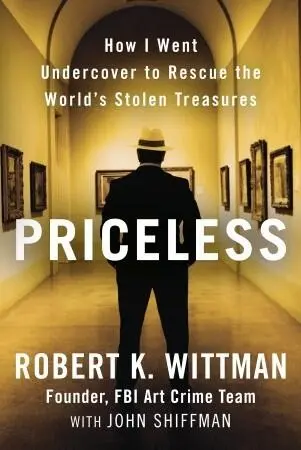
- Название:Priceless
- Автор:
- Издательство:Crown Publishers
- Жанр:
- Год:2010
- Город:New York
- ISBN:978-0-307-46149-0
- Рейтинг книги:3 / 5. Голосов: 1
-
Избранное:Добавить в избранное
- Отзывы:
-
Ваша оценка:
Priceless: краткое содержание, описание и аннотация
Предлагаем к чтению аннотацию, описание, краткое содержание или предисловие (зависит от того, что написал сам автор книги «Priceless»). Если вы не нашли необходимую информацию о книге — напишите в комментариях, мы постараемся отыскать её.
The London Times
In
Robert K. Wittman, the founder of the FBI’s Art Crime Team, pulls back the curtain on his remarkable career for the first time, offering a real-life international thriller to rival
.
Rising from humble roots as the son of an antique dealer, Wittman built a twenty-year career that was nothing short of extraordinary. He went undercover, usually unarmed, to catch art thieves, scammers, and black market traders in Paris and Philadelphia, Rio and Santa Fe, Miami and Madrid.
In this page-turning memoir, Wittman fascinates with the stories behind his recoveries of priceless art and antiquities: The golden armor of an ancient Peruvian warrior king. The Rodin sculpture that inspired the Impressionist movement. The headdress Geronimo wore at his final Pow-Wow. The rare Civil War battle flag carried into battle by one of the nation’s first African-American regiments.
The breadth of Wittman’s exploits is unmatched: He traveled the world to rescue paintings by Rockwell and Rembrandt, Pissarro, Monet and Picasso, often working undercover overseas at the whim of foreign governments. Closer to home, he recovered an original copy of the Bill of Rights and cracked the scam that rocked the PBS series By the FBI’s accounting, Wittman saved hundreds of millions of dollars worth of art and antiquities. He says the statistic isn’t important. After all, who’s to say what is worth more—a Rembrandt self-portrait or an American flag carried into battle? They're both priceless.
The art thieves and scammers Wittman caught run the gamut from rich to poor, smart to foolish, organized criminals to desperate loners. The smuggler who brought him a looted 6th-century treasure turned out to be a high-ranking diplomat. The appraiser who stole countless heirlooms from war heroes’ descendants was a slick, aristocratic con man. The museum janitor who made off with locks of George Washington's hair just wanted to make a few extra bucks, figuring no one would miss what he’d filched.
In his final case, Wittman called on every bit of knowledge and experience in his arsenal to take on his greatest challenge: working undercover to track the vicious criminals behind what might be the most audacious art theft of all.
Priceless — читать онлайн бесплатно полную книгу (весь текст) целиком
Ниже представлен текст книги, разбитый по страницам. Система сохранения места последней прочитанной страницы, позволяет с удобством читать онлайн бесплатно книгу «Priceless», без необходимости каждый раз заново искать на чём Вы остановились. Поставьте закладку, и сможете в любой момент перейти на страницу, на которой закончили чтение.
Интервал:
Закладка:
The last name you use should be bland and fairly common, something hard to pin down with a simple Internet search.
Once you’ve picked a name, you’ll need a paper trail. The FBI calls this backstopping—the false-identity paperwork you need to do your job. To help an undercover agent create a second identity and backstop his persona, the FBI employs teams of agents, analysts, and support staff in Washington.
Because the FBI’s undercover rules tend to be tedious and bureaucratic, I did a lot of my own backstopping. I filled my undercover wallet with secondary identification—a Philadelphia library card, a U.S. Airways frequent-flyer card, discount cards from Barnes & Noble and Borders, a family membership card for the Philadelphia Museum of Art, a random gallery receipt with my false name. I also created a few undercover Hotmail e-mail accounts. I suppose I should have filled out paperwork for those, too. But if I’d followed every FBI undercover rule to the letter, I’d never have gotten anything done. Most supervisors understood this. Usually, they looked the other way.
The next step is to create your bona fides—professional but understated business cards, phone numbers, and, if possible, a public-records history. For my small one-man operation, I didn’t need much. Mostly I simply used my cell phone and e-mail. That’s all it took. If necessary, I knew I could always rely on the bureau. In special situations, I might even approach a private corporation or university. Sometimes, real companies help undercover FBI agents establish false identities, loaning a company’s good name, stationery, and identification badges.
Backstopping is relatively easy. It’s largely a game of paperwork and patience. Almost anyone can do it. The next steps take guts and a special set of personal skills.
What follows is my personal approach to working undercover.
Going undercover is a lot like sales. It’s all about understanding human nature—winning a person’s trust and then taking advantage of it. You befriend, then betray.
Every undercover case is different. But I think most can be boiled down to five steps: You assess your target. You introduce yourself. You build rapport with the target. You betray. You go home.
Step One: Assess the Target. Who’s your target? What’s he peddling? A sure-thing investment? A tax scheme? Bribes to a city councilman? Drugs? Whatever it is, you’ve got to master that realm.
Let’s say your target is selling cocaine. You’ve got to master the drug as it’s used today, forgetting what you’ve seen on television or witnessed in college. You need to know how to handle cocaine, how to cut it, how much the average person might snort. You’d better know the current street prices in your hometown—from a kilo to a gram. You need to master the lingo: With cocaine, you should know that an eight-ball equals three and a half grams; soft means cocaine powder; hard means crack; a hammer is a gun. And while you can still call cocaine blow, yeyo , or powder , you’d better not use dated terms like nose candy or snow —or worse yet, use law-enforcement-only terms like user —as in, “He’s a user” or “She uses cocaine.”
This translates to any genre. When I began selling the ads for the Farmer , I quickly learned that this city boy had better know the difference between a Holstein and an Angus cow. One is a dairy cow, the other a beef cow. One you milk, one you eat. One is a valued member of a farmer’s family, the other dinner.
In most situations, once you master a realm, you can use this knowledge in case after case, targeting the same kind of criminal. Skills learned for a Ponzi-scheme sting can be transferred to the next undercover financial crimes case. Drug and corruption cases tend to follow a predictable pattern—and there are a limited number of drugs or bribery schemes to master. Art crimes are different, some would say harder, because there are so many genres. For virtually each case you need to shift gears and research the market, learn the lingo.
Step Two: The Introduction. There are two ways to meet a target. I call them the bump and the vouch.
The bump is tough to pull off. It takes a lot of preparation and a little bit of luck. The bump is exactly what it sounds like: You find a way to bump into the target in a way that appears perfectly natural. You bump into him at a bar or a club or a gallery. Sometimes, you’ve got to spend weeks, perhaps months, creating your bona fides in your target’s world. If he’s an outlaw biker, you’ll have to find a way to hang out with biker gangs, waiting for the right chance to bump into him.
Much faster is the vouch , in which someone verifies that you’re the real deal. The vouch is usually made by a confidential informant or cooperating witness. In the backflap case, Bazin was my vouch, and one of his informants was his vouch. The vouch doesn’t always have to come from a person. It can be anything that convinces the target that you are who you say you are—in my case, an expert in a particular area of art. You can create the virtual vouch by demonstrating your expertise. In the battle flag case, I lured the Kansas City man to Philadelphia after multiple phone conversations in which I made it clear I was well traveled on the Civil War collectors’ circuit.
Step Three: Build Rapport. You need to win a target’s trust, and the best way to do that is to infatuate and ingratiate. You can do this with drinks and dinner, chauffeuring him in your shiny car, but subtler techniques are more effective. Psychological tricks work best.
First impressions are critical. From the outset, you want to create a friendly aura. Facial expressions are the most important, because that’s how we most visibly communicate as social creatures. When I meet someone who smiles, makes soft eye contact, and shakes my hand reasonably, I’m apt to think he’s a nice guy. When I meet someone who grimaces, glares, and bear-grips my hand, I’m immediately on guard, thinking, this guy’s either an enemy or a competitor. It’s far more nuanced than the fight-or-flight reflex—I work the margins of a target’s personality. (If I encounter a competitor, I let him excel at his thing, but insist he let me excel at mine. If he’s a thief, I let him call the shots when it’s time to steal, so long as he lets me call the shots when it’s time to deal.)
Don’t underestimate the importance of a friendly smile. If you smile, odds are good the target will smile too. It’s human nature for people to mirror what they see. It’s a primal psychological reaction, a trait learned during infancy. When you smile at a baby and she smiles back, it’s not because she likes you. It’s because the baby is mirroring you. Scowl and the baby will cry. It’s a survival technique every infant learns in her first few months. We retain it our whole lives.
The mirroring technique works in other ways. It’s gratifying when you make a point and someone says, “Hey, that’s a good idea.” People let their guard down when they’re hanging out with people just like them. A good undercover operative uses this to his advantage. If a target sits close to the table, you sit close. If he puts on his sunglasses, you do too. If he smiles, you smile. Whatever he says, find a way to validate it. If he says it’s hot out, you agree. If he criticizes a politician’s position or character, agree that the politician is vulnerable on many issues. If he orders iced tea, you do the same.
Once the two of you start talking, share. Tell the target about yourself; ask him about himself. Exchanging personal information is a great way to develop a rapport, build that critical trust.
But tread carefully. Make sure that whatever you say can be verified, or is so personal that it can’t be verified. Stay as close to the truth as possible—don’t say you have six kids if you only have two, because somewhere along the line you’re likely to screw up.
Читать дальшеИнтервал:
Закладка:
Похожие книги на «Priceless»
Представляем Вашему вниманию похожие книги на «Priceless» списком для выбора. Мы отобрали схожую по названию и смыслу литературу в надежде предоставить читателям больше вариантов отыскать новые, интересные, ещё непрочитанные произведения.











Обсуждение, отзывы о книге «Priceless» и просто собственные мнения читателей. Оставьте ваши комментарии, напишите, что Вы думаете о произведении, его смысле или главных героях. Укажите что конкретно понравилось, а что нет, и почему Вы так считаете.