Robert Wittman - Priceless
Здесь есть возможность читать онлайн «Robert Wittman - Priceless» весь текст электронной книги совершенно бесплатно (целиком полную версию без сокращений). В некоторых случаях можно слушать аудио, скачать через торрент в формате fb2 и присутствует краткое содержание. Город: New York, Год выпуска: 2010, ISBN: 2010, Издательство: Crown Publishers, Жанр: Биографии и Мемуары, на английском языке. Описание произведения, (предисловие) а так же отзывы посетителей доступны на портале библиотеки ЛибКат.
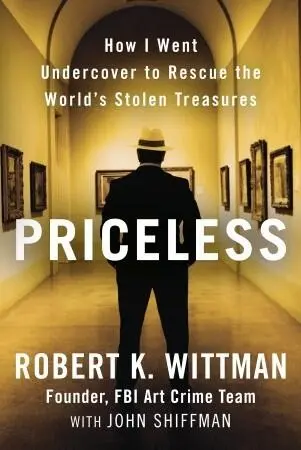
- Название:Priceless
- Автор:
- Издательство:Crown Publishers
- Жанр:
- Год:2010
- Город:New York
- ISBN:978-0-307-46149-0
- Рейтинг книги:3 / 5. Голосов: 1
-
Избранное:Добавить в избранное
- Отзывы:
-
Ваша оценка:
Priceless: краткое содержание, описание и аннотация
Предлагаем к чтению аннотацию, описание, краткое содержание или предисловие (зависит от того, что написал сам автор книги «Priceless»). Если вы не нашли необходимую информацию о книге — напишите в комментариях, мы постараемся отыскать её.
The London Times
In
Robert K. Wittman, the founder of the FBI’s Art Crime Team, pulls back the curtain on his remarkable career for the first time, offering a real-life international thriller to rival
.
Rising from humble roots as the son of an antique dealer, Wittman built a twenty-year career that was nothing short of extraordinary. He went undercover, usually unarmed, to catch art thieves, scammers, and black market traders in Paris and Philadelphia, Rio and Santa Fe, Miami and Madrid.
In this page-turning memoir, Wittman fascinates with the stories behind his recoveries of priceless art and antiquities: The golden armor of an ancient Peruvian warrior king. The Rodin sculpture that inspired the Impressionist movement. The headdress Geronimo wore at his final Pow-Wow. The rare Civil War battle flag carried into battle by one of the nation’s first African-American regiments.
The breadth of Wittman’s exploits is unmatched: He traveled the world to rescue paintings by Rockwell and Rembrandt, Pissarro, Monet and Picasso, often working undercover overseas at the whim of foreign governments. Closer to home, he recovered an original copy of the Bill of Rights and cracked the scam that rocked the PBS series By the FBI’s accounting, Wittman saved hundreds of millions of dollars worth of art and antiquities. He says the statistic isn’t important. After all, who’s to say what is worth more—a Rembrandt self-portrait or an American flag carried into battle? They're both priceless.
The art thieves and scammers Wittman caught run the gamut from rich to poor, smart to foolish, organized criminals to desperate loners. The smuggler who brought him a looted 6th-century treasure turned out to be a high-ranking diplomat. The appraiser who stole countless heirlooms from war heroes’ descendants was a slick, aristocratic con man. The museum janitor who made off with locks of George Washington's hair just wanted to make a few extra bucks, figuring no one would miss what he’d filched.
In his final case, Wittman called on every bit of knowledge and experience in his arsenal to take on his greatest challenge: working undercover to track the vicious criminals behind what might be the most audacious art theft of all.
Priceless — читать онлайн бесплатно полную книгу (весь текст) целиком
Ниже представлен текст книги, разбитый по страницам. Система сохранения места последней прочитанной страницы, позволяет с удобством читать онлайн бесплатно книгу «Priceless», без необходимости каждый раз заново искать на чём Вы остановились. Поставьте закладку, и сможете в любой момент перейти на страницу, на которой закончили чтение.
Интервал:
Закладка:
CSIZMAZIA’S REMARK ABOUT destroying the evidence triggered memories of my last face-to-face conversation with my father, who’d died about a year earlier.
Dad and I had just left Good Samaritan Hospital in Baltimore, having received a dire prognosis. He’d developed diabetes in his late forties and hadn’t really changed his habits or taken better care of himself. Now, he was sixty-eight and in bad shape. The doctor had given him weeks to live.
Dad hadn’t wanted to talk about it. He asked about my work, and I obliged, telling him about a burglary at Pennsbury Manor, the historical home of the founder of Pennsylvania, William Penn. I said we had a few suspects in our sights, and that we planned to interview their girlfriends the next day.
“No, no,” he interrupted. “Don’t tell me about the suspects. What about the antiques they took? Are you going to be able to get them back?”
That was Dad. He understood what was important—retrieving stolen pieces of history and culture, not arresting a couple of knuckleheads trying to pawn a few pieces of silver.
Another memory the HSP case triggered came later, as I kneeled in the FBI evidence vault with a museum curator, shortly after the arrests. We were cataloging each of the nearly two hundred stolen antiques, one by one, and carefully wrapping them for storage—precisely as I had done at my father’s Baltimore antique shop after his death.
My dad had opened Wittman’s Oriental Gallery in 1986, two years before I left the Farmer newspapers to become an FBI agent. He’d sold the papers and returned to his true passion, collecting Oriental antiques, renting a place with my brother Bill down on Howard Street along Jewelers’ Row in Baltimore. He’d stocked it with pieces from his personal collection and with works he’d purchased by taking out a second mortgage on his home, the redbrick house where I’d grown up. He filled it with hundreds of pieces—exquisitely carved jade powder boxes, Kutani vases, ukiyo-e woodblocks, and dozens of works by the bigger names in Japanese art: Hiroshige, Kunisada, Hokusai, and Utamaro.
Dad had spent his final years among the antiques, and I think he took as much pleasure giving customers tours of the gallery, stopping to explain the significance of a Burmese textile or a Japanese figurine, as he did actually selling anything, probably more so. His collection had filled the floors and walls of the narrow shop and it nearly rivaled the holdings at Baltimore’s best public galleries. Whenever I’d visit the shop with Donna and the kids, he’d dig out a piece from his collection and delight Kevin, Jeff, and Kristin with a quick lesson about Japanese culture. I always listened in and learned something new. Already, I missed that.
Now in the FBI evidence room, my eyes lingered on a stolen antique watch and I thought about how Dad might describe the piece, what history lesson it might reveal.
WE CHARGED CSIZMAZIA and Medford under a new law that made it a federal crime to steal anything worth more than $5,000 from a museum. Previously, thieves who had never crossed state lines, as was the case here, could only be charged in state court. But Congress had recently created a new federal art-crime law, largely in response to the 1990 Gardner heist in Boston, and in 1995 Goldman and I had been the first to use the law, employing it during the case of the theft from William Penn’s home.
In the HSP case, Csizmazia and Medford entered plea agreements, presuming this would lead to light sentences. But the case did not end neatly.
The judge assigned to the case was a World War II veteran who did not look kindly on the theft of military artifacts. United States District Judge Clarence C. Newcomer, seventy-five years old, had a reputation for toughness at sentencing. He had presided over several celebrated mob and police corruption cases, and issued several rulings that belied his conservative bent, including one close to my heart—he was the judge who broke up the Topps baseball card monopoly, paving the way for competitors. If the judge needed a reminder of American history, his wide-windowed chambers office overlooked Independence Hall, the nation’s birthplace.
A few minutes before the HSP sentencing hearing began on July 16, 1998, I settled into a seat at the prosecution table, next to Goldman. Following routine preliminaries, the judge read aloud the recommendation of the probation office—a sentence in the range of twenty to thirty months for each man. The prosecution, citing the plea agreement, asked for a twenty-month term; the defense lawyers didn’t suggest a specific sentence, just something considerably less than twenty months.
Before he imposed the sentence, the judge held aloft a stack of fifteen letters from museum directors across the nation, each imploring him to impose a stiff sentence. What made art theft different from most financial and property crimes, many museum directors told the judge, is the harm to society. Such artifacts not only fill museums, they serve as the raw material for historians and scholars. Most are irreplaceable. “Any theft from any museum goes beyond the crime itself—such a destructive act robs the entire community of its history, its cultural heritage,” wrote Anne Hawley, the Gardner Museum director. The president of the American Association of Museums, Edward Able, called “theft by insiders the most serious of all, involving as it does a betrayal by those charged with guarding property held in the public trust.” He cited a Latin phrase whispered by wise security professionals, “Quis custodiet ipsos custodes?” Who shall guard the guards?
To my delight, the judge shared the museum directors’ outrage. The thefts were not, as the defense claimed, some relatively minor and isolated indiscretion, an anomaly committed by two men who led otherwise productive lives. The defendants carried out their scheme in a systematic way, pilfering more than two hundred times, month after month for eight years. Worse, these thieves were not common thugs; by virtue of their positions in society as museum employee and serious collector, Medford and Csizmazia, more than most, understood the value and significance of what they took. And the harm they caused.
“The conduct you engaged in is an assault and affront to our culture, to our society, and must be dealt with accordingly,” the judge said. “Therefore, it is the judgment of this court that you be sentenced to forty months….”
Forty months! Double the sentence we sought!
I wanted to smile but kept FBI cool, stoic. I stole a glance at the defense table. The lead lawyer stood, mouth agape, fingers squeezing an empty legal pad. Medford dropped into his chair and slumped. Csizmazia turned to the gallery, searching for a sympathetic face, blinking back tears.
I turned to Goldman and pumped his hand. Forty months! Maybe this marked the start of a trend for art crime cases.
Chapter 10
A BLOOD CLOTH
Philadelphia, 1998 .
WHEN YOU WORK UNDERCOVER, IT’S ALWAYS A GOOD idea to greet an out-of-town target at the airport. A guy just getting off a plane is less likely to be carrying a weapon.
I met Civil War artifact collector Charlie Wilhite a few minutes after his flight landed from Kansas City. We ducked into a shuttle bus headed to the Embassy Suites near the Philadelphia airport. It was a brisk January afternoon in the mid-twenties, and in the bus Wilhite stayed bundled in a ski jacket and gloves, gripping a large black gym bag. He carried no other luggage. I knew he was booked on a return flight that evening, so I figured he had the merchandise in the satchel. Wilhite was a middle-aged, gangly man with a pale face and a bad blond comb-over. He wore cowboy boots and spoke with a Southern drawl.
Читать дальшеИнтервал:
Закладка:
Похожие книги на «Priceless»
Представляем Вашему вниманию похожие книги на «Priceless» списком для выбора. Мы отобрали схожую по названию и смыслу литературу в надежде предоставить читателям больше вариантов отыскать новые, интересные, ещё непрочитанные произведения.











Обсуждение, отзывы о книге «Priceless» и просто собственные мнения читателей. Оставьте ваши комментарии, напишите, что Вы думаете о произведении, его смысле или главных героях. Укажите что конкретно понравилось, а что нет, и почему Вы так считаете.