Hugh Mills - Low Level Hell
Здесь есть возможность читать онлайн «Hugh Mills - Low Level Hell» весь текст электронной книги совершенно бесплатно (целиком полную версию без сокращений). В некоторых случаях можно слушать аудио, скачать через торрент в формате fb2 и присутствует краткое содержание. Город: Novato, CA, Год выпуска: 2009, ISBN: 2009, Издательство: Presidio Press, Жанр: Биографии и Мемуары, military_history, на английском языке. Описание произведения, (предисловие) а так же отзывы посетителей доступны на портале библиотеки ЛибКат.
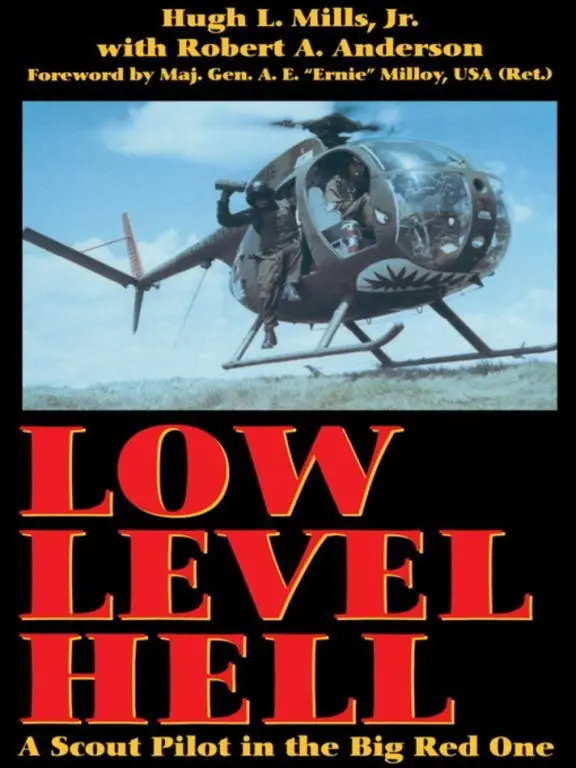
- Название:Low Level Hell
- Автор:
- Издательство:Presidio Press
- Жанр:
- Год:2009
- Город:Novato, CA
- ISBN:978-0-307-53792-8
- Рейтинг книги:4 / 5. Голосов: 1
-
Избранное:Добавить в избранное
- Отзывы:
-
Ваша оценка:
Low Level Hell: краткое содержание, описание и аннотация
Предлагаем к чтению аннотацию, описание, краткое содержание или предисловие (зависит от того, что написал сам автор книги «Low Level Hell»). Если вы не нашли необходимую информацию о книге — напишите в комментариях, мы постараемся отыскать её.
Low Level Hell — читать онлайн бесплатно полную книгу (весь текст) целиком
Ниже представлен текст книги, разбитый по страницам. Система сохранения места последней прочитанной страницы, позволяет с удобством читать онлайн бесплатно книгу «Low Level Hell», без необходимости каждый раз заново искать на чём Вы остановились. Поставьте закладку, и сможете в любой момент перейти на страницу, на которой закончили чтение.
Интервал:
Закладка:
I found this out in spades on 8 July, the day immediately following the “swimming” experience with the VC major in the rice paddy.
On that day, Chuck Koranda (Three Nine) and I received a frag order for a hunter-killer team to assist the 2d Squadron, 11th Armored Cavalry on a sweep mission near the Dead Man, a terrain feature located just south of Boundary Road and west of Highway 13. Our first step was to fly into the 2d Squadron’s night defensive position to get briefed on what they wanted us to do for them. They were located up Highway 13 north of Lai Khe in the general vicinity of our Thunder I base camp.
Koranda and I landed outside the wire, shut down, and walked together into the NDP. Chuck met with the squadron’s S-2 and got all the map coordinates, details of the operation that 2/11 was about to launch, and the latest information on enemy activity in the area. There was to be a 2d Squadron sweep-and-destroy mission into an enemy base camp thought to be located immediately south of Boundary Road. The intent was to push an armored column up from the southeast to hit the south end of Charlie’s base camp. Additional tanks and infantry were positioned to patrol Boundary Road on the north of the camp. This would put the enemy in a vice if he tried to escape through the back door.
Our job was to get out ahead of the main column, guide it through the jungle, and screen to its front and flanks. As the aerial scout, I was to stay on the FM radio and keep Strider Eight (the armored column’s CO) continuously informed as to what I was seeing around him.
As the crow flies, it was about ten kilometers from Thunder I northwest up to the enemy base camp area. As the column got underway, Koranda and I took off to circle it a few times and make sure the area was clear.
From my position twenty to thirty feet above the armor, I was fascinated watching the column work its way through the jungle. Out in the lead were five or six M-48A3 diesel-powered tanks with their 90mm main gun turrets pointed forward. The flanking tanks had their turrets turned to the side. The ACAVs (M-113A-ls), with their infantry troops, were in the middle.
Mixed in with the ACAVs were several Zippo tracks, which were Ml 13s with a turret on top that carried a flame dispenser. The flamethrowers were used on bunkers and a variety of other targets when their special kind of devastation was needed. The Zippo tracks were particularly vulnerable to enemy ground fire, however. All loaded up with jellied fuel and tanks of compressed air, they were a choice target for an enemy RPG round.
My door gunner that day was Al Farrar, and as we geared the base camp I told him to be especially alert because we weren’t sure whether the bunkers were occupied. The jungle was very thick, double canopy reaching up eighty to a hundred feet. Because of the dense jungle, Koranda told me that he couldn’t see where the base camp actually was. I asked Farrar to get a yellow smoke ready to mark the area.
Al reached up to the wire strung across the back of the bulkhead and pulled off one of the smoke canisters. He popped the pin and held it outside the airplane, tipping the top of it toward me so I could verify the yellow color. The color of the smoke we dropped and the color I told Koranda to look for had to match, for obvious reasons.
As we passed over the center of the base camp area, I told Farrar, “R-e-a-d-y… NOW!” He threw the grenade straight down from the aircraft. Yellow smoke boiled up out of the jungle, telling Koranda exactly where to mark the bunker positions on his map.
As we passed over, it was apparent to both Farrar and me that there were people down there. We didn’t see any bad guys out in the open, but there were plenty of fresh traffic signs. The trails and the general area were well beaten down; the camouflage strewn around looked all freshly cut; a few pots and pans were lying around; even some clothing was hanging out to dry on lines underneath the trees.
After dropping the smoke, I headed back to the column, which was still several klicks away to the southeast. I needed to keep them on a straight-line course to the base camp, as well as scout the area around them again. With the main guns of the tanks pointed either to the dead front or flanks, the vulnerable point for ambush appeared to me to be the immediate left and right front of the column.
I also had to keep a close watch on the north side of the base camp. If Charlie decided to bolt out the back door to the north, I needed to immediately alert the tanks patrolling along Boundary Road.
Running back and forth to check the base camp and check the progress of the column kept on through two Loach fuel loads. Each time I got low on JP-4, Bob Davis and Bruce Foster would come up from our staging area at Lai Khe and take over until I could get back on station.
I had just come back from Lai Khe with my third fuel load when I learned that the troop C and C Huey with Major Moore aboard had pulled in above us. The new troop CO especially liked to watch his hunter-killer teams work during enemy contact and action. With the armor nearing the southern outskirts of the enemy base camp, Moore probably thought that sparks were about to fly.
Moore was a dynamic man who liked to talk on the UHF radio to his aerial teams, especially the scouts. He acted almost like a cheerleader from the sidelines, spurring on his people.
I liked Moore. I didn’t mind him suddenly appearing overhead in the C and C ship, to be on hand “to make troop command decisions” when he felt they were necessary. But what did bother me—and most of the other scouts—was his almost continuous use of the UHF radio. The aerial scout talked to his gunship on UHF, and the gun spoke back to his scout on VHF. By using different radios, there was never a voice overlap and no words were ever garbled. Charlie Moore’s UHF cheerleading screwed up the equation, because the gun pilot couldn’t always hear what his scout was saying.
Just back on station with my third load of fuel, I made a pass through the enemy base camp to see what was happening. Our armor was drawing near from the south.
Just as I rounded the northwest corner of the base camp, Farrar’s M-60 opened up in several quick bursts. Shooting with one hand and keying his intercom with the other, Farrar yelled, “I got dinks under me, lots of them, sir. And they’re running north out of the camp.”
I had to immediately alert Koranda, as well as the tanks patrolling the back door along Boundary Road, so I keyed Three Nine on UHF. As soon as Major Moore heard us say we had seen enemy and taken them under fire, he opened up on UHF from his command and control ship. Right in the middle of my transmission to the gun pilot, and completely overriding what I was saying to Koranda, Major Moore began hollering, “Where are they, One Six? Go get ‘em! Knock ‘em down… kill the little bastards. Get in there One Six… shoot their asses off, Mills. Get the fuckers!”
Seeing the impossibility of trying to outscream the Old Man over UHF, I flipped off the toggle switch for UHF, put the selector on VHF, and came up to Koranda. “Three Niner, this is One Six. I’m on Victor. Can you hear me now?”
Koranda came back, “OK, One Six, good copy. Glad you switched. I couldn’t hear a damned thing you were saying.”
Now, without “Mad Charlie” screaming in my ear, I pulled the Loach around hard in a decelerating right turn and looked straight down at where Farrar had fired.
There they were! Probably fifteen to twenty VC, dressed in brown, green, and blue uniforms, some with camouflage cloaks, all wearing Ho Chi Minh sandals, carrying weapons, and running like hell to the northwest out the back door of the base camp.
Farrar’s M-60 began to chatter. Two VC dropped instantly, one right out in an open area, the other crumpled up under a tree. Continuing bursts from Farrar’s gun nearly drowned out my FM transmission to the armor, telling Strider Eight that we had people running from the base.
Читать дальшеИнтервал:
Закладка:
Похожие книги на «Low Level Hell»
Представляем Вашему вниманию похожие книги на «Low Level Hell» списком для выбора. Мы отобрали схожую по названию и смыслу литературу в надежде предоставить читателям больше вариантов отыскать новые, интересные, ещё непрочитанные произведения.












Обсуждение, отзывы о книге «Low Level Hell» и просто собственные мнения читателей. Оставьте ваши комментарии, напишите, что Вы думаете о произведении, его смысле или главных героях. Укажите что конкретно понравилось, а что нет, и почему Вы так считаете.