Hugh Mills - Low Level Hell
Здесь есть возможность читать онлайн «Hugh Mills - Low Level Hell» весь текст электронной книги совершенно бесплатно (целиком полную версию без сокращений). В некоторых случаях можно слушать аудио, скачать через торрент в формате fb2 и присутствует краткое содержание. Город: Novato, CA, Год выпуска: 2009, ISBN: 2009, Издательство: Presidio Press, Жанр: Биографии и Мемуары, military_history, на английском языке. Описание произведения, (предисловие) а так же отзывы посетителей доступны на портале библиотеки ЛибКат.
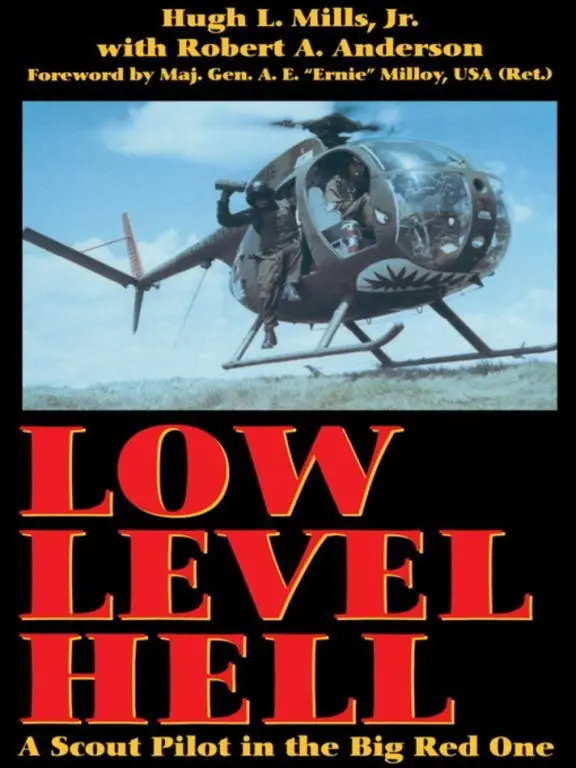
- Название:Low Level Hell
- Автор:
- Издательство:Presidio Press
- Жанр:
- Год:2009
- Город:Novato, CA
- ISBN:978-0-307-53792-8
- Рейтинг книги:4 / 5. Голосов: 1
-
Избранное:Добавить в избранное
- Отзывы:
-
Ваша оценка:
Low Level Hell: краткое содержание, описание и аннотация
Предлагаем к чтению аннотацию, описание, краткое содержание или предисловие (зависит от того, что написал сам автор книги «Low Level Hell»). Если вы не нашли необходимую информацию о книге — напишите в комментариях, мы постараемся отыскать её.
Low Level Hell — читать онлайн бесплатно полную книгу (весь текст) целиком
Ниже представлен текст книги, разбитый по страницам. Система сохранения места последней прочитанной страницы, позволяет с удобством читать онлайн бесплатно книгу «Low Level Hell», без необходимости каждый раз заново искать на чём Вы остановились. Поставьте закладку, и сможете в любой момент перейти на страницу, на которой закончили чтение.
Интервал:
Закладка:
All I could say was, “Let’s go home… that’s all we can do.”
Without another word said, the Huey lifted off from Lai Khe, leveled off at fifteen hundred feet, and headed southeast to Phu Loi.
I sat on the floor with my legs drawn up, my arms folded over my knees, and my head cradled in my arms. The wind rushed through the open rear compartment doors and the Huey’s rotors beat a steady rhythm in my ears.
My body demanded sleep, but the pictures in my mind of Ameigh and Slater kept playing over and over again. Even in the misty fog of my exhaustion, I kept thinking just how fragile life really is. This was my first close-up exposure to death, and it was a deep, hurting shock to my twenty-one-year-old mind.
CHAPTER 8
MAD CHARLIE
Rod Willis (One Seven) completed his scout training flights and moved onto the active flying roster, taking the place of Jim Ameigh. Jim Morrison had left the scout platoon for troop maintenance, so there was another vacancy in the Outcasts. Filling that slot was a new pilot, Bob Calloway, who took the scout platoon call sign One Zero. I made it a point to fly with new pilots coming into the troop as often as I could.
Calloway had been flying as door gunner for about a week, getting the feel of things. On 7 July, I decided to take him out on a pilot training mission, with him doing the flying out of the right seat and me riding along as observer in the left seat. I chose an area where I felt we could work without a great deal of danger—out along the Saigon River north and west of the Mushroom.
At that time of year, the Vietnamese were harvesting their rice crop and planting a new crop right behind it. In the area where Calloway and I were to fly that day, there were lots of U.S. Army and ARVN troops, protecting the farmers while they harvested and planted their rice. I felt, therefore, that the area would be relatively free of bad guys and potential combat situations. Besides, there were old forts, winding trails, Highway 14, various types of bunkers, tiny villages, and rice paddies on which Calloway could practice scouting techniques.
When we reached the area, I asked our Cobra pilot, Paul Fishman (Three Four), to put us down over a small open field. I wanted Calloway to practice how to drop out of altitude into a low search pattern, orbit a given area, and report everything he saw to the gun pilot.
I counseled One Zero, remembering that not so long ago, / was the trainee. “The good scout pilot never stops talking to his gun from the moment he goes down out of altitude until he comes back up again. It not only keeps the Cobra happy and informed, but it tends to keep your own guts stabilized when you’re down low working and, at any instant, could catch a bellyful of AK-47 fire.”
Then, while Calloway practiced, I relaxed. I hung my left foot out of the aircraft and let it flap in the breeze. I lit a cigarette and began watching the ground out the left side of the ship.
I noticed a group of people working a rice paddy out to the west, just off the east bank of the Big Blue (Saigon River). It looked like about thirty Vietnamese men and women all wearing the usual conical hats and traditional pajama tops and bottoms, pants rolled up above their knees.
Calloway didn’t see them at first because he was looking straight down in his right-hand orbits over the field. But each time we came around, I watched their progress as the group waded through the paddy, all heading in the same direction and working in almost perfect unison.
It was fascinating to see how smoothly and quickly they worked. They had bags of rice shoots strapped to their backs. With each step, they’d withdraw a shoot from their pack, plunge the shoot into water up to their elbows, leaving it standing erect in the mud, then move on to insert the next shoot. I was momentarily captivated by their almost military cadence as they moved down the watery furrows.
Then, the little alarm twitch in the back of my neck went off. Something about the group was just not right. I couldn’t figure it out.
My attention began to center on one of the workers near the middle of the group. He didn’t seem to be doing things the way the others did. As he moved forward with the group, he seemed also to be inching his way ninety degrees out of the knot of workers and toward the riverbank.
He didn’t have a hat on, and all the other workers were wearing hats. I studied his face. He appeared to be about military age, not very young or very old like the rest of the workers. While they marched steadily on, planting their rice and paying absolutely no attention to our orbiting aircraft, this person kept nervously glancing up at us, keeping close watch on where we were and what we were doing.
To distract him from the fact that we were keeping an eye on him, from our orbits over the adjacent field, I dropped a couple of smokes. I hoped that would make him think we were interested in something right beneath the airplane.
But he was too nervous to take the bait. Every moment or two he glanced over his shoulder at us—all the time trying to give the appearance of feverishly planting rice—while hurrying his movement across the main body of the group to make his exit.
That did it for me. I got on the radio to the gun. “Three Four, this is One Six. We got a guy over there in the middle of those farmers who’s planting rice the wrong way and looking suspicious as hell.”
“What do you think you’ve got, One Six?” Fishman came back.
“I don’t know, Paul,” I answered. “But I don’t think he’s a farmer. I think we’ve got a dink over there who’s trying to look like he’s planting rice, while trying to pull a didi-mau out the other side and make a run for the river.”
“What do you want to do, One Six?”
“I’m going to tell Calloway to go over there and make a few passes near them to see what this person does. Then I’ll let you know. In the meantime, why don’t you get up on the ARVN push and find out who the controlling agency is for this area, so we can bring an interpreter in here and run a few questions by this guy.”
Three Four rogered that and I pushed the intercom button to Calloway. “OK, Bobby, roll out of here easy and move on over to that group of farmers. Then take up an orbit at a respectable distance away, not directly over their heads. There’s a guy acting weird. We’re going to see what the hell he’s doing in there and nail his ass if he keeps looking phony.”
Just as we were getting to the group of farmers, Fishman came back up on VHF. “Sorry, One Six. None of our friendlies in the area have anybody right now they can plug into this area to pick up your guy and interrogate him. What do you want to do now?”
I thought for a minute while we watched below. Calloway now had the bird in right-hand turns about twenty feet off the ground, just to the west and on the river side of the group.
Our bareheaded rice planter was looking more suspicious than ever, glancing over his shoulder to make sure that he knew our every move. The other farmers were ignoring us, planting their rice without ever breaking stride.
I was convinced by this time that the fellow didn’t belong in that group of farmers, so I suggested that Fishman call up the troop and scramble the ARPs. We could put them down somewhere around here and they could take the guy into custody and find out what he was up to.
In less than a minute, Fishman was back to let me know that the ARPs were on strip alert for an infantry operation someplace else in the 1st Division area. So they weren’t available to us for anything other than a major priority situation.
Well, damn! I thought. I keyed the gun back. “OK, Three Four, cover me, please. We’re going in there and land, and I’m going to get that sucker myself.”
Читать дальшеИнтервал:
Закладка:
Похожие книги на «Low Level Hell»
Представляем Вашему вниманию похожие книги на «Low Level Hell» списком для выбора. Мы отобрали схожую по названию и смыслу литературу в надежде предоставить читателям больше вариантов отыскать новые, интересные, ещё непрочитанные произведения.











Обсуждение, отзывы о книге «Low Level Hell» и просто собственные мнения читателей. Оставьте ваши комментарии, напишите, что Вы думаете о произведении, его смысле или главных героях. Укажите что конкретно понравилось, а что нет, и почему Вы так считаете.