Hugh Mills - Low Level Hell
Здесь есть возможность читать онлайн «Hugh Mills - Low Level Hell» весь текст электронной книги совершенно бесплатно (целиком полную версию без сокращений). В некоторых случаях можно слушать аудио, скачать через торрент в формате fb2 и присутствует краткое содержание. Город: Novato, CA, Год выпуска: 2009, ISBN: 2009, Издательство: Presidio Press, Жанр: Биографии и Мемуары, military_history, на английском языке. Описание произведения, (предисловие) а так же отзывы посетителей доступны на портале библиотеки ЛибКат.
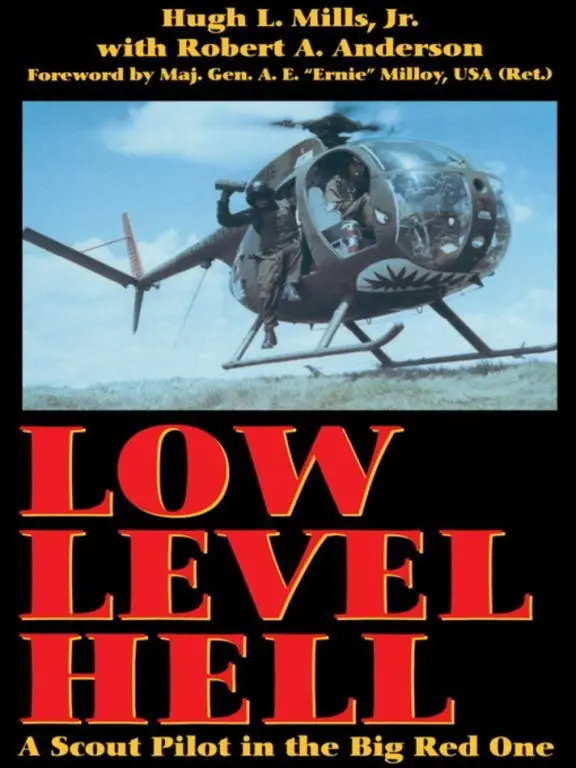
- Название:Low Level Hell
- Автор:
- Издательство:Presidio Press
- Жанр:
- Год:2009
- Город:Novato, CA
- ISBN:978-0-307-53792-8
- Рейтинг книги:4 / 5. Голосов: 1
-
Избранное:Добавить в избранное
- Отзывы:
-
Ваша оценка:
Low Level Hell: краткое содержание, описание и аннотация
Предлагаем к чтению аннотацию, описание, краткое содержание или предисловие (зависит от того, что написал сам автор книги «Low Level Hell»). Если вы не нашли необходимую информацию о книге — напишите в комментариях, мы постараемся отыскать её.
Low Level Hell — читать онлайн бесплатно полную книгу (весь текст) целиком
Ниже представлен текст книги, разбитый по страницам. Система сохранения места последней прочитанной страницы, позволяет с удобством читать онлайн бесплатно книгу «Low Level Hell», без необходимости каждый раз заново искать на чём Вы остановились. Поставьте закладку, и сможете в любой момент перейти на страницу, на которой закончили чтение.
Интервал:
Закладка:
A short time after the base camp incident, I learned that I had been recommended to receive the Air Medal with “V” device for discovering the enemy RPG team. I decided that it was time to grind an old troop-policy ax that had bothered me (and Bob Davis) for as long as we had been in aerial scouts. Policy was that when an aircraft commander was put in for an award, the copilot was automatically put in for an award one step down from the pilot. Then the crew chief generally was recommended for an award one level down from the copilot. In the case of the scout platoon, where we did not normally carry a copilot-observer, the crew chief was recognized right under the pilot. In other words, if the pilot was put in for a DFC, the crew chief might be awarded an Air Medal with “V” device for the same action.
Bob Davis and I both thought that it was a stupid way to handle the awards situation, particularly since that crew chief was up there in the same aircraft, yet had no control over his destiny. He was totally at the mercy of the pilot. If a pilot made a mistake that cost him his life, the crew chief generally died too. On the other hand, in order for the pilot to do his job effectively, he had to have a good crew chief who would keep the enemy’s head down, knock out enemy gun positions before they could come to bear, and provide a second pair of sharp eyes to help spot trouble.
As scout platoon leader, I told Davis that I would write up anew policy and present it to the Old Man. That new policy simply stated that I would no longer endorse any awards for combat flight unless the crew chief got the same award as the pilot. If the pilot got a Silver Star, the crew chief got a Silver Star.
Major Moore agreed.
CHAPTER 9
THE CRATER
Stuff really began to hit the fan in late July and August of 1969, as far as enemy activity was concerned. We believed that the war in Vietnam was close to being over just a month before. But things had changed.
Instead of looking all day and seldom finding the enemy, the scout platoon was making two, three, or more solid enemy contacts a day. We were beginning to find bigger groups of enemy soldiers in the field—more NVA soldiers than Viet Cong. We were beginning to get more people in the troop hurt and killed as a result of the increased enemy contact. And more scout helicopters were being wrecked and lost due to heavier ground fire from a determined enemy.
We were finding that our OH-6As never got to three hundred hours for regular maintenance. We were darned lucky to get to one hundred hours before handing it over to the maintenance people—generally in pieces. There were, in fact, many times that we didn’t even have a chance to get a new factory-fresh bird painted with troop markings before it was pressed into scout service to replace one shot up beyond flyable use.
The enemy was getting busy as hell in the 1st Infantry Division area, and none of us really knew the reasons why. We speculated, of course. President Johnson had stopped the bombings of North Vietnam on 1 November 1968, and we figured that this had allowed Charlie time to rebuild forces decimated in their last big Tet offensive. With forces and supplies so strengthened, more and more enemy troops were probably heading into the field from their protected Cambodian sanctuaries.
There was also the fact that newly elected President Nixon had formally announced a schedule of planned withdrawals of American forces from Vietnam, beginning 8 July. With some of the Americans starting to leave, and ARVN forces replacing them in the ranks, the unfriendlies may have felt that the moment was right to rekindle their offensive.
It could have been one, none, or all of these factors. But we were just taking the days as they came. Flying every day, up to 130 hours or more a month, and doing what we could to find and bloody Charlie’s nose every chance we got.
We took a little bloodying, too. Bob Harris’s aerorifle platoon took 30 percent casualties in one day’s fighting while holed up in an old B-52 bomb crater in the western Trapezoid.
It all started with a report from VR-1 that an abandoned base camp just south of the Michelin and west of the Onion was showing some evidence of rehabilitation and reoccupation by the enemy.
Scout pilot Bob Calloway was first up that morning on VR-1, and had reported seeing a platoon-sized group of VC move into a heavily wooded area near the old base camp. At this time in 1969 finding a platoon or larger element of enemy all together in a single group was unusual, and Calloway’s report immediately caught the attention of G-2. The intelligence people wanted the troop to insert the ARPs ASAP to do ground reconnaissance and check out the enemy situation.
Even though Calloway wasn’t a seasoned scout pilot, he still recognized the potential danger of the situation. After making two passes over the site and seeing the enemy running from the open area into the woods, Calloway radioed his Cobra. “Don’t put the ARPs in. I think there are a lot of bad people in here.”
On this day I was scheduled to fly VR-2. While Calloway was up on VR-1, I was training another new scout pilot in the unit, a warrant by the name of Jim Bruton. While I was doing some chalkboarding and maneuvers with Bruton around the base area, I.was also monitoring the radio conversations between VR-1 and Darkhorse operations.
It wasn’t long before Major Moore was in the ops bunker and personally involved in the situation. He radioed Calloway’s snake driver. “Look, if there are a lot of people down there, we need to put in the ARPs. Let’s get Four Six on the ground and see what’s going on.”
At that point, Calloway made another pass over the area and again reported to his Cobra. “There are a lot of people down here. I don’t think you ought to put in the ARPs.”
The Cobra responded, “Do you see anybody down there, One Zero?”
“Negative,” Calloway came back.
Since no additional movement of enemy troops was seen and the scout was not taking any fire, the decision was made to scramble the ARPs for a ground sweep and investigation of the area. Since it was a scramble alert for the ARPs, Bob Harris didn’t get a mission briefing before lift-off; therefore, he had not heard about the size of the enemy force. Wayne McAdoo and his platoon of slicks whisked the ARPs out of Phu Loi in short order and headed up the Saigon River toward the western Trapezoid.
Harris, following his normal procedure, was in the lead slick listening for any radio information that would help him size up the ground tactical situation. If he had known that a platoon of enemy troops was involved, Harris probably would have called for a reinforcing company of infantry. This was routine in order to provide the normal three to one numerical advantage, which the attacker is traditionally deemed to need over a defending force.
Once out of the Hueys and about three hundred meters to the west of the objective area, ARP Sgt. Jim Gratton and Specialist Mitchell took the point and led the platoon toward the wooded area. Gratton had his usual shirt full of frag grenades and carried a shotgun. Mitchell had an M-16.
Harris waved his Kit Carsons forward to take up positions near Gratton and Mitchell. The situation called for cautious movement because the aeroscout had seen enemy in the area, and there was always the possibility of booby traps. The Kit Carson scouts, being former Viet Cong themselves, were generally better at spotting booby-trap situations than our people.
As the ARP formation reached the edge of the wooded area objective, Gratton sensed real danger. The Kit Carsons were beside themselves with fear. The point got on the radio to Harris, who was just in back of the lead element.
“There’s a lot of people around here, in the woods. We think this thing is occupied.”
Читать дальшеИнтервал:
Закладка:
Похожие книги на «Low Level Hell»
Представляем Вашему вниманию похожие книги на «Low Level Hell» списком для выбора. Мы отобрали схожую по названию и смыслу литературу в надежде предоставить читателям больше вариантов отыскать новые, интересные, ещё непрочитанные произведения.












Обсуждение, отзывы о книге «Low Level Hell» и просто собственные мнения читателей. Оставьте ваши комментарии, напишите, что Вы думаете о произведении, его смысле или главных героях. Укажите что конкретно понравилось, а что нет, и почему Вы так считаете.