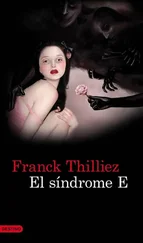
Franck Thilliez - Syndrome E
Здесь есть возможность читать онлайн «Franck Thilliez - Syndrome E» весь текст электронной книги совершенно бесплатно (целиком полную версию без сокращений). В некоторых случаях можно слушать аудио, скачать через торрент в формате fb2 и присутствует краткое содержание. Город: New York, Год выпуска: 2012, ISBN: 2012, Издательство: Viking, Жанр: Триллер, на английском языке. Описание произведения, (предисловие) а так же отзывы посетителей доступны на портале библиотеки ЛибКат.
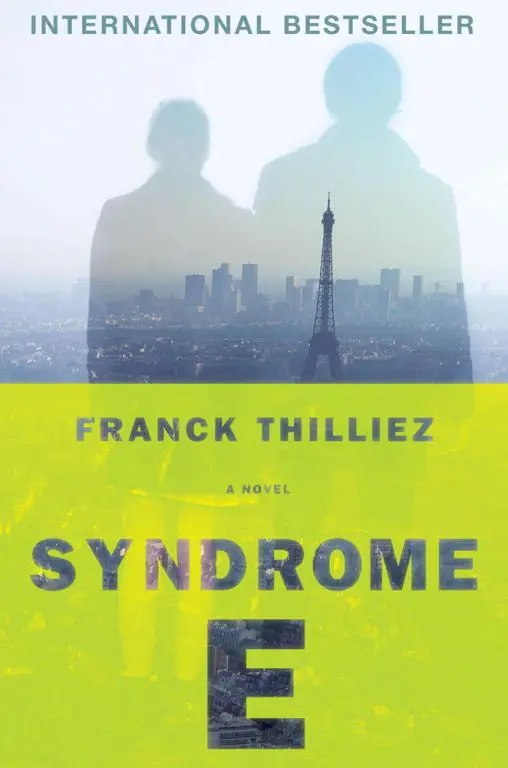
- Название:Syndrome E
- Автор:
- Издательство:Viking
- Жанр:
- Год:2012
- Город:New York
- ISBN:978-1-101-60117-4
- Рейтинг книги:5 / 5. Голосов: 1
-
Избранное:Добавить в избранное
- Отзывы:
-
Ваша оценка:
Syndrome E: краткое содержание, описание и аннотация
Предлагаем к чтению аннотацию, описание, краткое содержание или предисловие (зависит от того, что написал сам автор книги «Syndrome E»). Если вы не нашли необходимую информацию о книге — напишите в комментариях, мы постараемся отыскать её.
In this international bestseller, which is soon to be a major motion picture penned by the screenwriter of
, the classic procedural meets cutting-edge science Lucie Henebelle, single mother and beleaguered detective, has just about enough on her plate when she receives a panicked phone call from an ex-lover who has developed a rare disorder after watching an obscure film from the 1950s. With help from the brooding Inspector Franck Sharko, who is exploring the movie’s connection to five unearthed corpses at a construction site, Lucie begins to strip away the layers of what may be the most disturbing film ever made. With more lives on the line, Sharko and Lucie struggle to solve this terrifying mystery before it’s too late.
In a high-stakes, adrenaline-fueled hunt that jumps from France to Canada, Egypt to Rwanda, and beyond, this astonishing page-turner, with cinematic echoes from
and the Bourne series, will keep you guessing until the very end.
Syndrome E — читать онлайн бесплатно полную книгу (весь текст) целиком
Ниже представлен текст книги, разбитый по страницам. Система сохранения места последней прочитанной страницы, позволяет с удобством читать онлайн бесплатно книгу «Syndrome E», без необходимости каждый раз заново искать на чём Вы остановились. Поставьте закладку, и сможете в любой момент перейти на страницу, на которой закончили чтение.
Интервал:
Закладка:
“Are you the one who called on the phone?”
Lucie nodded and showed him her official card. She had justified the visit with a version of the truth: the police were interested in one of the films Ludovic Sénéchal had made off with, owing to the violent nature of its imagery.
“That’s me,” she said. “Can I come in?”
He looked her over with a beady, porcine eye. His hair looked as if it had exploded on his head, like the guy from Tokyo Hotel.
“Come on in. But don’t try telling me that my father was mixed up in some kind of trafficking.”
“No, no. Nothing like that.”
They sat in the spacious living room, reached by a series of steps that plunged the area below ground level. A glass roof opened onto a limpid, deep blue sky. It reminded Lucie of a kind of giant vivarium. Luc Szpilman uncapped a beer; his interlocutor opted for water. Somewhere in the house someone was playing a musical instrument. The notes danced, light and mesmerizing.
“The clarinet. It’s my girlfriend.”
Surprising. Lucie figured him for someone whose partner played electric guitar or drums. She decided not to waste any time and cut to the chase.
“Were you still living with your father?”
“Sometimes. We didn’t really have much to say to each other, but he never had the guts to throw me out. So yeah, I alternated between here and my girlfriend’s place. Now that he’s not here anymore, I think the choice is made.”
He downed half the bottle—a Chimay red with double the alcohol content—and set it on the glass tabletop, next to an ashtray holding the remains of a few joints. The detective tried to size him up: rebellious kid, probably spoiled as a child. His father’s recent passing didn’t seem to have left much of an impression.
“Tell me about the circumstances of his death.”
“I already told the police everything, and—”
“If you don’t mind.”
He sighed.
“I was in the garage. Since the old man didn’t have a car anymore, that’s where we set up our instruments. I was working on a piece with a bud and the GF. It was probably around 8:25 when I heard this huge crash from upstairs. First I ran in here, because when the news is on, you can’t budge my old man from his chair. Then I went upstairs and I saw the attic door was open. That was weird.”
“Why’s that?”
“My dad was over eighty. He still got around pretty well, sometimes he even went for a walk in town to go to the library or something, but he never went up there anymore—the steps were way too steep. When he wanted to stare at one of his movies, he always asked me.”
Lucie knew she was on the right track. Something sudden and unexpected had triggered a reaction in the old man, pushing him to go up without asking his son for help.
“And after that, in the attic?”
“That’s where I discovered his body, at the foot of the ladder.”
Luc stared at the floor, pupils dilated, then got hold of himself in a fraction of a second.
“His head was in a pool of blood. He was dead. It felt weird seeing him like that, motionless, eyes staring. I immediately called emergency.”
He grabbed up his beer with a firm hand, letting nothing show. Somewhere in all this was a late-born son who’d seen his father as just some clumsy geezer, a guy who could never play football with him. Lucie nodded toward the painting of an elderly gentleman, firm gaze and black eyes. A mug as severe as the Great Wall of China.
“Is that him?”
Luc nodded, both hands around his beer.
“Papa, in all his glory. I wasn’t even born yet when he had that painted. He was already fifty. Can you imagine?”
“What was his occupation?”
“Curator at FIAF, the International Federation of Film Archives, and he went there regularly to poke around. FIAF’s mission is to ‘preserve the international cinematic heritage.’ My father spent his life in films. It was his great passion, along with history and geopolitics of the past hundred years. The major conflicts, Cold War, espionage, counterespionage… He knew all about that stuff.”
He raised his eyes.
“You said on the phone there was a problem with one of the films from the attic?”
“Yes, probably the one he was trying to get to that evening. A short from 1955, which opens with a scene of a woman getting her eye slashed. Does that ring any bells?”
He took a moment to think.
“No, not a thing. I never watched his movies. Those old spy chestnuts didn’t interest me. And my father always watched them in his private screening room. He was nuts about cinema, a real fanatic, able to watch the same film twenty or thirty times over.”
He gave out a nervous laugh.
“Dad… I think he pinched a lot of those reels from FIAF.”
“Pinched?”
“Yeah, pinched. It was one of his little quirks as a collector. He couldn’t help himself. Call it an obsessive tic. I knew he made deals with a fair number of his colleagues who did the same thing. Because, theoretically, those films never left the building. But Dad didn’t want those reels to rot in some soulless corridor. He was the type who’d pet film cans the way you’d pet an old cat.”
Lucie listened, then told him about the little girl on the swing, the scene with the bull. Luc continued to deny and seemed sincere. Then she asked him to show her the attic.
In the staircase, she understood why Szpilman Senior had stopped going up: the steps were practically a sheer vertical. Once at the top, Luc went to the ladder and slid it to the far corner.
“The ladder was exactly here when I found the body.”
Lucie gave the place a good once-over. A fanatic’s inner sanctum.
“Why was it moved?”
“A ton of people have been by here, and others will probably still come. Since yesterday morning, the movies have been selling like hotcakes.”
Lucie suddenly felt a connection forming.
“Did all the visitors buy something?”
“Uh… no, not all of them.”
“Tell me.”
“There was this one guy who came just after your friend. He seemed kind of strange.”
He walked one step at a time, not as sharp as before. The beer, apparently.
“Tell me more.”
“He had really short hair. Blond, buzz cut. Under thirty. Solid guy, wearing combat boots, or something like that. He poked through everything in the attic. It was like he was looking for something specific among the cans. In the end, he didn’t buy anything, but he asked if anyone had already been here or had removed any of the films. So I told him about your Ludovic Sénéchal. When I mentioned that film he’d taken, the unmarked one, the guy said he’d like to make a deal with this Sénéchal. So I let him have the address.”
“You knew it?”
“It was on the check.”
So it all started here. Like Ludovic, the mysterious individual must have come across the ad and rushed over. He’d come just a bit too late, and Ludovic, who lived close to the border, had made away with the prize. Did this mean the other guy had been haunting junk shops and combing through want ads for years, in secret hopes of getting his hands on the lost film?
Lucie grilled Szpilman further. The visitor had come in a classic car, a black Fiat, as he recalled. French plates, whose number the young Belgian couldn’t recall.
They went back to the living room. Lucie gazed at the giant flat screen set into the wall. Szpilman had said his father was watching the news just before his death.
“Do you have any idea what might have caused your father to suddenly run up to the attic?”
“No.”
“What channel was he watching?”
“Your national station, TF1. It was his favorite.”
Lucie made a mental note to watch a tape of the news from that evening, just in case.
Читать дальшеИнтервал:
Закладка:
Похожие книги на «Syndrome E»
Представляем Вашему вниманию похожие книги на «Syndrome E» списком для выбора. Мы отобрали схожую по названию и смыслу литературу в надежде предоставить читателям больше вариантов отыскать новые, интересные, ещё непрочитанные произведения.
Обсуждение, отзывы о книге «Syndrome E» и просто собственные мнения читателей. Оставьте ваши комментарии, напишите, что Вы думаете о произведении, его смысле или главных героях. Укажите что конкретно понравилось, а что нет, и почему Вы так считаете.