Franck Thilliez - Syndrome E
Здесь есть возможность читать онлайн «Franck Thilliez - Syndrome E» весь текст электронной книги совершенно бесплатно (целиком полную версию без сокращений). В некоторых случаях можно слушать аудио, скачать через торрент в формате fb2 и присутствует краткое содержание. Город: New York, Год выпуска: 2012, ISBN: 2012, Издательство: Viking, Жанр: Триллер, на английском языке. Описание произведения, (предисловие) а так же отзывы посетителей доступны на портале библиотеки ЛибКат.
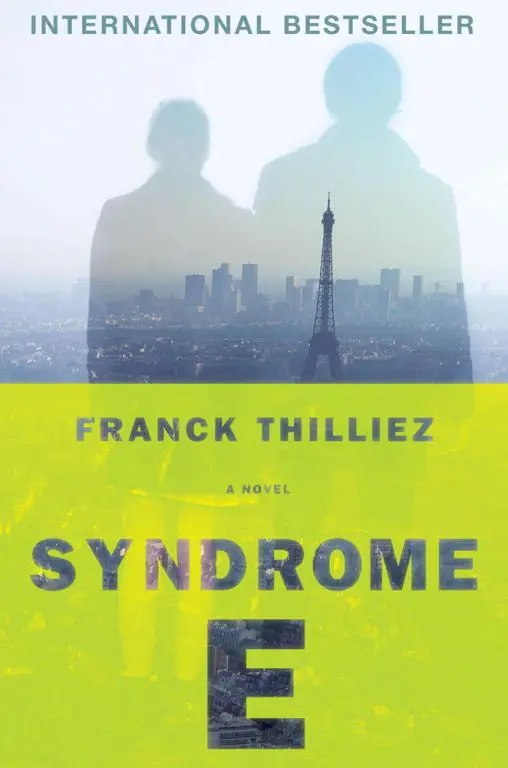
- Название:Syndrome E
- Автор:
- Издательство:Viking
- Жанр:
- Год:2012
- Город:New York
- ISBN:978-1-101-60117-4
- Рейтинг книги:5 / 5. Голосов: 1
-
Избранное:Добавить в избранное
- Отзывы:
-
Ваша оценка:
Syndrome E: краткое содержание, описание и аннотация
Предлагаем к чтению аннотацию, описание, краткое содержание или предисловие (зависит от того, что написал сам автор книги «Syndrome E»). Если вы не нашли необходимую информацию о книге — напишите в комментариях, мы постараемся отыскать её.
In this international bestseller, which is soon to be a major motion picture penned by the screenwriter of
, the classic procedural meets cutting-edge science Lucie Henebelle, single mother and beleaguered detective, has just about enough on her plate when she receives a panicked phone call from an ex-lover who has developed a rare disorder after watching an obscure film from the 1950s. With help from the brooding Inspector Franck Sharko, who is exploring the movie’s connection to five unearthed corpses at a construction site, Lucie begins to strip away the layers of what may be the most disturbing film ever made. With more lives on the line, Sharko and Lucie struggle to solve this terrifying mystery before it’s too late.
In a high-stakes, adrenaline-fueled hunt that jumps from France to Canada, Egypt to Rwanda, and beyond, this astonishing page-turner, with cinematic echoes from
and the Bourne series, will keep you guessing until the very end.
Syndrome E — читать онлайн бесплатно полную книгу (весь текст) целиком
Ниже представлен текст книги, разбитый по страницам. Система сохранения места последней прочитанной страницы, позволяет с удобством читать онлайн бесплатно книгу «Syndrome E», без необходимости каждый раз заново искать на чём Вы остановились. Поставьте закладку, и сможете в любой момент перейти на страницу, на которой закончили чтение.
Интервал:
Закладка:
“The author of the report is Mahmoud Abd el-Aal. The name of the Egyptian officer who cast the first stone?”
“So it seems.”
“Is this paper the only thing we’ve got?”
“For now. We first got in touch with Interpol in Egypt, then International Technical Cooperation in Cairo, who shunted us over to an inspector at the French embassy, Michael Lebrun, who’s in direct contact with the authorities over there. The early intel isn’t exactly promising.”
“Why not?”
“This Abd el-Aal apparently hasn’t been active there since this business.”
Sharko paused a moment.
“Can someone get us access to the file?”
“Yes. His name is Hassan Noureddine, and he’s the chief of police in charge of the squad. Something of a dictator, according to Lebrun. The locals are keeping mum—they don’t like having Westerners sticking their noses in their business. Torture of defendants and jail time for dissidents is still common coin in Egypt. We won’t get anywhere on the phone, and they refuse to send their files here, electronically or by mail.”
Sharko sighed. Péresse was right. The police in Arab countries, and especially in Egypt, were still light-years from the Europeans—corrupted by money and power, focused entirely on internal security.
With a click of his mouse, Péresse sent the telegram to the printer.
“I called your boss. He’s okay with us sending you over there. Cairo is four hours away by plane. If you don’t mind, start with the embassy. Michael Lebrun will get you into the Cairo police. He’ll direct you to Hassan Noureddine.”
Eugenie suddenly burst into the room, livid. Sharko turned his head toward the girl, who started yanking on his shirt.
“Come on, come on. Let’s get out of here,” she whined. “No way we’re going to that horrible place. I hate all that heat and sand. And I’m afraid of flying. I don’t want to.”
“…spector? Chief Inspector?”
Sharko turned back toward Péresse, hand on his chin. Egypt… Not quite what he’d been expecting.
“Sounds like a bad James Bond movie.”
“We don’t really have much choice. We handle the groundwork, and you—”
“The paperwork, I know.”
With a sigh, Sharko picked up the printout of the telegram. Several lines sent haphazardly, lost between two continents, with which he was going to have to make do. He thought of Egypt, a country he knew only from travel brochures, back when he still looked at brochures. The Nile, the great pyramids, the crushing heat, the palm groves… A tourist factory. Suzanne had always wanted to go; he’d refused, because of his job. And now that same lousy job was tossing him onto the cursed sands of Africa.
Lost in thought, he stared at Eugenie, who was sitting in the captain’s seat and playing with rubber bands, snapping them against Péresse’s ass.
“What’s so funny?” the Rouen cop asked, turning around.
Sharko raised his head.
“I suppose I’m to leave as soon as possible?”
“Tomorrow at latest. Do you have an official passport?”
“Required. I’m supposed to expedite international investigations, even though that never actually happens.”
“Here’s proof that it does. Watch yourself—in Cairo, you’ll be bound hand and foot. The embassy will saddle you with an interpreter, and you won’t get anywhere unless the locals want you to. You’ll have to walk on eggshells. Keep me posted.”
“Am I allowed to carry a weapon?”
“In Egypt? Are you joking?”
They shook hands politely. Sharko tried to slip out and leave the little girl behind, but Péresse called him back one last time.
“Chief Inspector Sharko?”
“Mmm?”
“Next time, try not to send one of my sergeants to do your shopping for you.”
Sharko left the building and headed for his hotel, Xeroxes of the reports under one arm, the jar of Pink Salad and candied chestnuts in the other. He was heading into an especially unwholesome business, apparently.
And about to dive into the guts of a burning hot city that reeked of spices.
The mythic city of al-Qahira.
Cairo.
12
After a revolting lunch with her daughter—a slab of overcooked meat with no sauce and boiled potatoes—Lucie swung by her place, a small apartment surrounded by the student dorms of the Catholic university. The tree-lined boulevard overflowed with neo-Gothic buildings, including the university, which regurgitated its several thousand students through the city’s arteries. With all those young people around her, and her daughters growing up, Lucie felt a bit older every day.
She unlocked the door, went in, and dropped her bag of dirty clothes in the laundry room. Quick, crank up the washing machine to get rid of those horrid hospital odors. Then she dove under a cool shower, letting the spray beat against the back of her neck, nibble at her breasts. Those two days away from home, eating mush, taking bird baths, and sleeping folded in half, showed her just how much she loved her little existence, with her girls, her habits, the movies she watched every evening, cozy in the rabbit slippers that her twins—and her mother—had given her for her birthday. It’s when you veer away from the simplest things that you realize they aren’t so bad after all.
Once dried, she chose a light, supple blue silk tunic that she let fall naturally over her hips, over calf-length pedal pushers. She liked the curve of her legs, toned by the jogging she did twice a week around the Citadelle. Since her daughters started going to school and eating in the cafeteria, she’d managed to regain some measure of balance between work, leisure, and family time. She had once again become, as her mother said, a woman.
She stopped at her computer to check her online dating account. Her failure with Ludovic hadn’t soured her on that kind of relationship. In fact, she couldn’t quite do without these virtual, neatly wrapped interchanges. It was worse than a drug, and more than anything it saved time—which, as with everyone else, she found in short supply.
Seven new messages had accumulated on her profile. She looked them over quickly, rejected five off the bat, and put the other two aside: dark-haired men of forty-three and forty-four. The self-confidence a man gave off at around forty was what she was seeking first and foremost. A strong, dependable presence, who wouldn’t drop her for the first airhead that came along.
She went out, the back of her neck nicely refreshed. It was then that she noticed the slight grating of her key in the lock. Something seemed to catch when she gave the second turn. Lucie leaned down, looked closely at the metal, tried again. Although she managed to lock the door, the trouble persisted. Annoyed, she opened up again, ran her eyes over her living room, checked in the other rooms. She explored the closets where she kept her DVDs and novels. Apparently , nothing had been touched. She immediately thought of the phantom presence at Ludovic’s. Whoever had rifled through there could easily have noted her license number when he left and gone to her house. Anyone else would have thought the lock was just getting old, that it was time for a drop of oil. Lucie shrugged her shoulders with a smile and finally headed out again. She really had to stop worrying over nothing. Which didn’t keep her from staring at length into her rearview mirror after driving off, and reassuring herself that the film, that weird-ass film, was perfectly safe at Claude Poignet’s.
Getting to Liège in an old rattletrap with no air-conditioning, along the bone-jarring highways of Belgium, was no mean feat, but she managed it nonstop. Luc Szpilman opened up for her. An off-putting safety pin ran through his lower lip.
Читать дальшеИнтервал:
Закладка:
Похожие книги на «Syndrome E»
Представляем Вашему вниманию похожие книги на «Syndrome E» списком для выбора. Мы отобрали схожую по названию и смыслу литературу в надежде предоставить читателям больше вариантов отыскать новые, интересные, ещё непрочитанные произведения.






Обсуждение, отзывы о книге «Syndrome E» и просто собственные мнения читателей. Оставьте ваши комментарии, напишите, что Вы думаете о произведении, его смысле или главных героях. Укажите что конкретно понравилось, а что нет, и почему Вы так считаете.