Erin Bow - Plain Kate
Здесь есть возможность читать онлайн «Erin Bow - Plain Kate» весь текст электронной книги совершенно бесплатно (целиком полную версию без сокращений). В некоторых случаях можно слушать аудио, скачать через торрент в формате fb2 и присутствует краткое содержание. Год выпуска: 2010, ISBN: 2010, Издательство: Scholastic Inc., Жанр: Старинная литература, на английском языке. Описание произведения, (предисловие) а так же отзывы посетителей доступны на портале библиотеки ЛибКат.
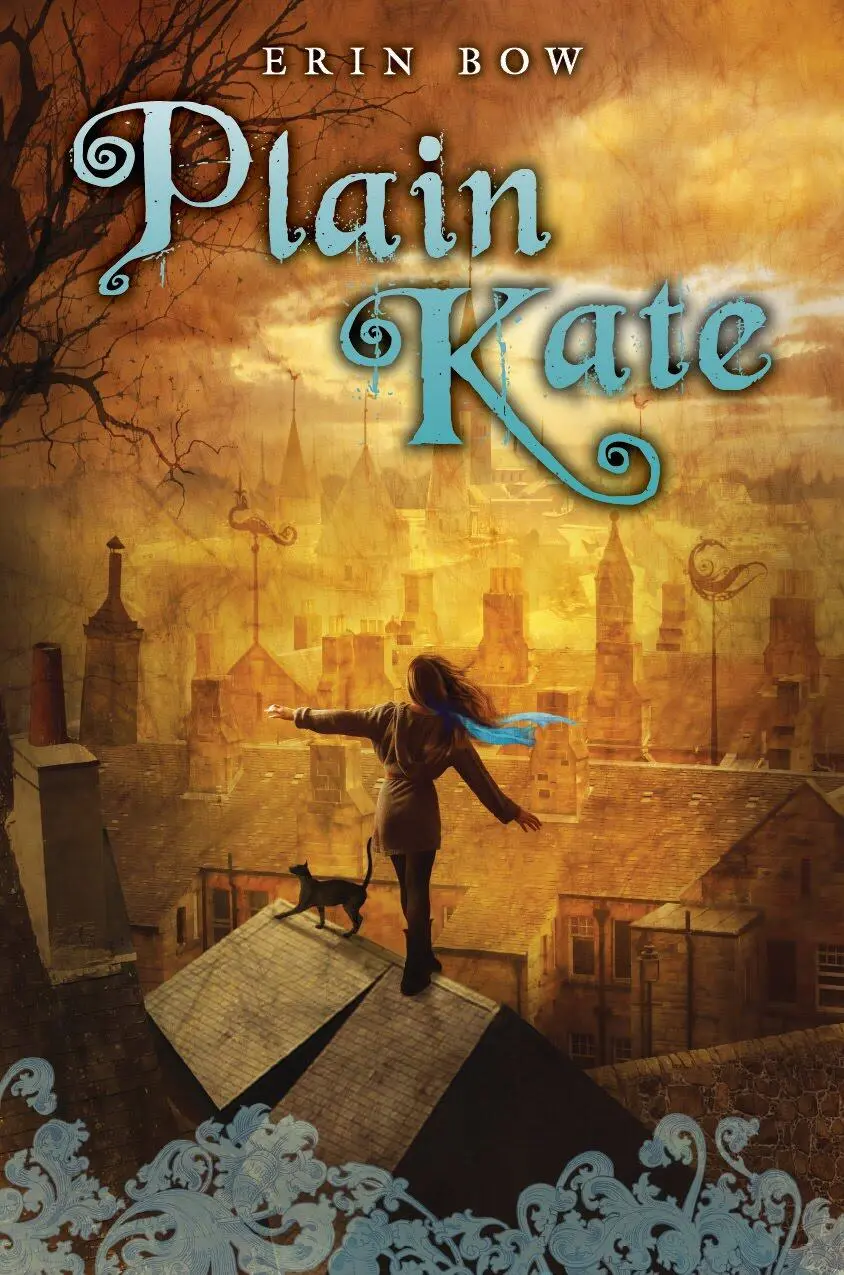
- Название:Plain Kate
- Автор:
- Издательство:Scholastic Inc.
- Жанр:
- Год:2010
- ISBN:9780545166645
- Рейтинг книги:3 / 5. Голосов: 1
-
Избранное:Добавить в избранное
- Отзывы:
-
Ваша оценка:
Plain Kate: краткое содержание, описание и аннотация
Предлагаем к чтению аннотацию, описание, краткое содержание или предисловие (зависит от того, что написал сам автор книги «Plain Kate»). Если вы не нашли необходимую информацию о книге — напишите в комментариях, мы постараемся отыскать её.
Plain Kate — читать онлайн бесплатно полную книгу (весь текст) целиком
Ниже представлен текст книги, разбитый по страницам. Система сохранения места последней прочитанной страницы, позволяет с удобством читать онлайн бесплатно книгу «Plain Kate», без необходимости каждый раз заново искать на чём Вы остановились. Поставьте закладку, и сможете в любой момент перейти на страницу, на которой закончили чтение.
Интервал:
Закладка:
Linay’s tin-gray eyes glittered as he said, “I want you well. But there are other things I want more. And a swarm of fish might be just a beginning. Think on it. Your shadow for a heart’s wish. Is it such a bad bargain?”
“What I wish ,” she said, “is that you would go away.”
And as if answering a command, Taggle slunk around the awning prop, sprang out, swarmed up Linay’s shirt, and attacked his ear. Linay shouted and spun and flailed like a man who’d stepped on a beehive. All his dignity and all his menace gone in a whirl of squeaks and ungainly limbs. Plain Kate laughed. Finally the cat went flying out of the melee and bolted across the square. There was scattered applause.
Linay bowed. “Until tomorrow,” he said to Kate, and sauntered off, bleeding.

When they opened the smokehouse the next day, the fish were bones and ashes. They fell to dust at a touch. Only Plain Kate’s trout were still plump, smoke-yellow and pink, perfect.
The master of the smokehouse summoned her, and she had to go stand before him in the drizzle with her strong hands curled into silent fists. The master was a grand man, his hands fat and many-ringed, his white hair dressed in curls, yellowed with smoke, smelling of fish. His chair was grand too, with arms carved into the form of leaping salmon: her father’s work. She remembered helping him with it, his big calloused hands over her small calloused ones as he taught her the way of wood grain—oh, her hands had been so small, and she had been happy.
“I have decided,” the master said, leaning back in the beautiful chair, dry under his awning, “that your catch will be split among the men whose fish were in the batch. Since, after all, only luck has spared your fish alone.”
Only luck. He was daring her to contradict. No one thought it was luck. She looked at the salmon, so strong she could almost sense the whip of their muscle. There was a little crowd gathered at her back. She thought the salmon were swimming hard against the current of their looks. “That’s fair,” she said at last. “But I didn’t burn the fish.”
“As I say, girl,” he frowned, “only luck.”
“It’s not luck, it’s witchcraft,” she said, and at her back the silence hardened. “The stranger, Linay. He drew the fish.”
Big Jan, behind her, said what Linay had said: “But you caught them.”
“The fish will be split,” the master said. “And that’s enough from you, Kate Carver.”
Plain Kate could feel how it was going to be. Linay was useful; he was powerful. Those that knew he was a witch wanted his protection; those that didn’t would take an easier target. Stranger though he was, people knew that Linay was not someone to cross. He was powerful as a cornered dog. If the town was going to choose someone to blame for the hard times coming, it wouldn’t be Linay.
Plain Kate turned on her heel, swam silently through the knot of people, and went back to her stall. The bow was lying on her countertop. She wanted to smash it, but it was beautiful. It was quiet and strong. She picked it up, and went back to work.
She was watching for Linay, but he still managed to sneak up on her. “Fair maid of the wood,” he said, making her jump. “How goes the work?”
Plain Kate steadied herself and shrugged. “It will be a good bow,” she said. “I am a good carver.”
“Too good, they say.” He tapped her nose. “They call you ‘witch-child’ already, Katie girl.”
“If they do, it’s because of you.”
He caught her words and sang them back at her:
If they do it’s because of you
What they see is because of me
That may be, that may be,
But I see what I say and I say what I see
He smiled at her. “Do you know what happens to witches, Plain Kate? Have you seen the fires?”
The sour smell from the smokehouse suddenly seemed stronger. “Over a few fish?” Plain Kate tried a laugh; it came out tight.
“Well,” said Linay with a bow, “there might be more.”
“Go away. Or I’ll set my cat on you.”
And he went away. But not very far.

The next day there was no catch—or no catch of fish. Old Boyar brought in three boots. Big Jan caught a dead dog. On the next day the nets were wholly empty. The whole week there was no catch, and the grain barges didn’t come, and rain fell like a long fever.
Then Boyar took a punt upriver into the fog banks, and the next day the boat came back drifting. Boyar was lying on the deck like a king of old, not dead but sleeping—an unnatural sleep from which he could not be woken.
Talk in the market turned to muttering. Plain Kate saw Big Jan swat Taggle from his nest atop a coil of rope. The cat was kicked and cursed from every stall.
Kate herself kept to her work. The bow was nearly finished. The Wheat Maiden haunted her. The carved face was smooth and beautiful—but in its narrow sadness and quizzical brow, Kate saw her own reflection.
At night she locked herself in her drawer and lay awake in the hot darkness. Her thoughts chased themselves until Taggle came in through the little door she’d made him. He flopped on her face. Plain Kate cuddled him under her chin like a fiddle, and they both went to sleep.
And so it went, for a week. Then one night someone took an axe to her stall.

Lightning. She thought she’d been hit by lightning. It was that loud.
And cold. Night air got dumped over her as if from a bucket. Something smashed into the blanket by her head. Taggle’s claws raked her throat as he bolted out of his hole.
She was awake now. There were daggers of wood everywhere. Her safe little drawer was a nest of splinters. And again something clapped past her ear. An axe. Kate screamed.
The axe yanked free and came again. Air and light and falling things hit her.
Plain Kate yanked the door lever. The drawer lurched and jammed.
Her stall was shattering. Smashing through a gap came that swinging axe.
She pounded her fists against the drawer above her. Something gave way to her hands. She shoved and scrambled and hit air.
Plain Kate lurched to her feet. The square was quiet, full of fog. Whoever had wielded the axe was gone. A few folk had clustered outside the inn door, drawn by the noise. Linay was sitting up on his white blanket, looking sleepy. Heads hung from windows. The town’s watchmen came pounding through the river arch. And everyone was looking at her. She didn’t feel anything. She didn’t even feel frightened. She had gone so far beyond frightened that it would take a while for fear to catch up with her.
The running watchmen stopped when they saw it was only her. The drinkers from the inn had begun to talk again, and wandered inside. Windows closed. Plain Kate stood alone. Her muscles were so tight that they made her tremble, the way wood trembled when bent almost to breaking.
Her father’s stall—her home—was a jagged, jumbled ruin. Tools and half-finished carvings were scattered across the wet cobbles. One pale deer, still whole, leapt toward the edge of a splintered piece of awning. She lifted it and looked at it for a while. Where shall I put it? she thought. I don’t have anywhere to put it. She took four steps away from the wreck, and set the deer gently on bare stones.
Taggle came back and tangled around her feet, bleating. She stooped, stroked him between his ears, then picked up an awl that had spun out from the shattered heap, a little way. She set the tool down beside the deer. She edged back toward the wreck. She moved one broken drawer. Things tumbled out of it. It made a lot of noise, but Plain Kate said nothing. No one came. She worked without a word, sorting carvings and tools from junk and straw.
Читать дальшеИнтервал:
Закладка:
Похожие книги на «Plain Kate»
Представляем Вашему вниманию похожие книги на «Plain Kate» списком для выбора. Мы отобрали схожую по названию и смыслу литературу в надежде предоставить читателям больше вариантов отыскать новые, интересные, ещё непрочитанные произведения.










Обсуждение, отзывы о книге «Plain Kate» и просто собственные мнения читателей. Оставьте ваши комментарии, напишите, что Вы думаете о произведении, его смысле или главных героях. Укажите что конкретно понравилось, а что нет, и почему Вы так считаете.