Erin Bow - Plain Kate
Здесь есть возможность читать онлайн «Erin Bow - Plain Kate» весь текст электронной книги совершенно бесплатно (целиком полную версию без сокращений). В некоторых случаях можно слушать аудио, скачать через торрент в формате fb2 и присутствует краткое содержание. Год выпуска: 2010, ISBN: 2010, Издательство: Scholastic Inc., Жанр: Старинная литература, на английском языке. Описание произведения, (предисловие) а так же отзывы посетителей доступны на портале библиотеки ЛибКат.
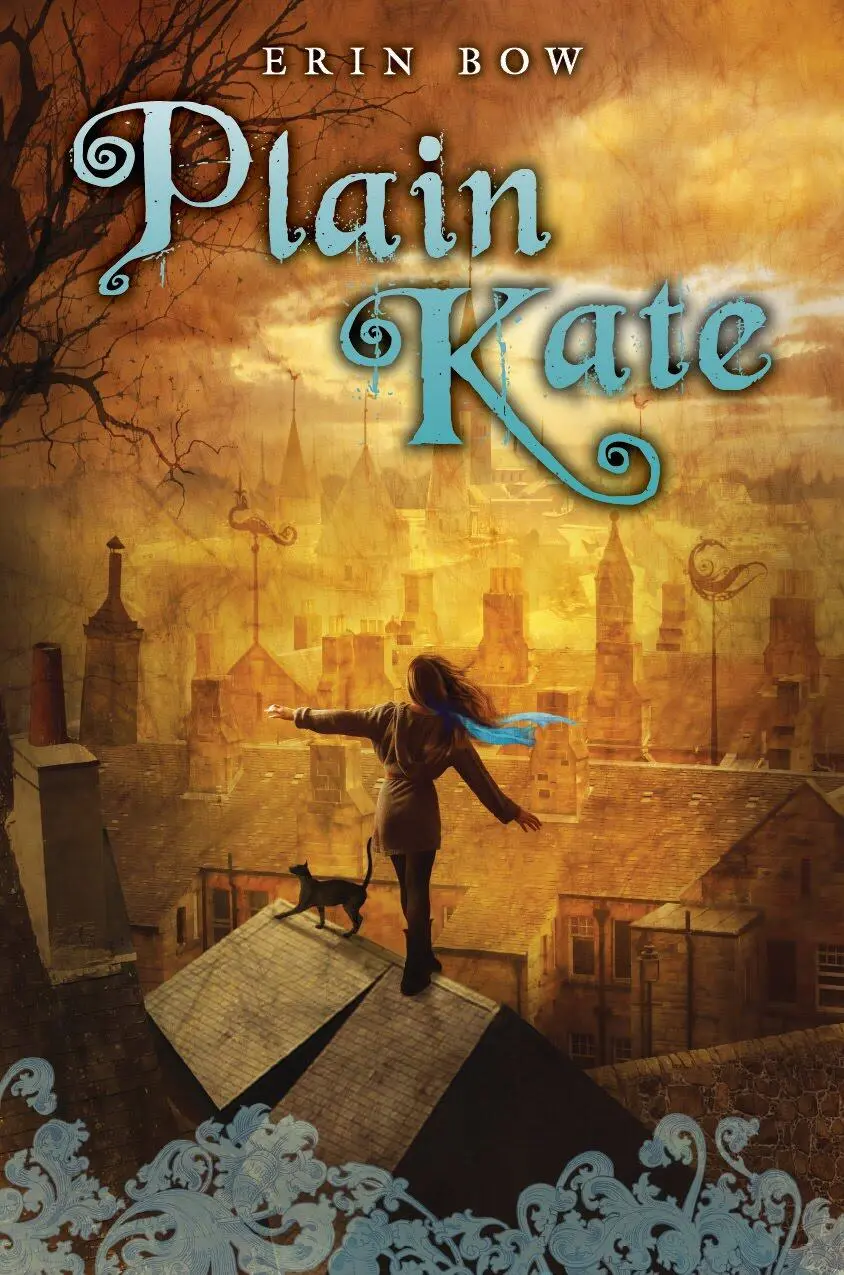
- Название:Plain Kate
- Автор:
- Издательство:Scholastic Inc.
- Жанр:
- Год:2010
- ISBN:9780545166645
- Рейтинг книги:3 / 5. Голосов: 1
-
Избранное:Добавить в избранное
- Отзывы:
-
Ваша оценка:
Plain Kate: краткое содержание, описание и аннотация
Предлагаем к чтению аннотацию, описание, краткое содержание или предисловие (зависит от того, что написал сам автор книги «Plain Kate»). Если вы не нашли необходимую информацию о книге — напишите в комментариях, мы постараемся отыскать её.
Plain Kate — читать онлайн бесплатно полную книгу (весь текст) целиком
Ниже представлен текст книги, разбитый по страницам. Система сохранения места последней прочитанной страницы, позволяет с удобством читать онлайн бесплатно книгу «Plain Kate», без необходимости каждый раз заново искать на чём Вы остановились. Поставьте закладку, и сможете в любой момент перейти на страницу, на которой закончили чтение.
Интервал:
Закладка:
With no standing in the wood guild, she could carve but she couldn’t sell, not without telling all who asked that there was a guild shop not a hundred steps away. An apprentice’s fee was the price of a matched team of horses, a fortune she couldn’t imagine earning. A dowry was beside the point for a skinny girl with witch’s eyes. She was going to starve. It was just a matter of time.
But she wasn’t hungry yet. She lay still and listened. The drawer grew brighter as her eyes grew used to darkness, then darker as the world darkened. Finally she couldn’t see anything. As the night grew still each sound got sharper, and each sounded like it was coming for her. Boots. The bark of a dog. Like a knife through the darkness, the bell of a watchman calling the hour.
The night grew quieter and quieter. Her eyes ached from seeing nothing. Her ears strained after little sounds. She heard the river singing to itself. She heard the wind snuffling at the gap where she’d entered the drawer. And finally, littler than any of those things, she heard something crying.
The small cry came from somewhere close. Plain Kate’s first thought was that it was a ghost, that its next whisper would be “Katerina, Star of My Heart.” But she was not the sort for ghosts, so she lay listening, afraid but brave. She moved her head from side to side to track the sound, and decided that the crying was coming from one of the drawers above.
So she climbed out of the drawer and looked.
In the smallest drawer of her father’s stall, among the lace-fine carvings packed in straw, she found them: kittens. They were mouse-little, with their eyes still sealed closed and their ears tucked flat. There was no cat. It was almost dawn and frost furred everything. The market square was as still as the inside of a bell after the ringing has stopped. The straw nest was getting cold.
Plain Kate stood for a while and watched the kittens stagger about. Then she scooped them up and squeezed herself back into the drawer.
And that was the beginning of her new life.
There were three kittens: a white cat, a black cat, and a gangly gray tom. Their mother never came back. The next morning Plain Kate traded the cowherd girl the mending of a milk stool for a squirt of milk, and the promise of more each morning. She watered the milk and let the kittens suck on the twisted end of a rag. She kept them in the felt-lined pockets of her leather apron, under her coat during the day, and beside her at night in the warm, closed darkness of the drawer. Day by day, their dark eyes opened and their ears untucked and their voices grew louder.
She was patient with them, and took care of them every moment, and against all odds all three lived. The black cat grew wild and fearless and went to live on one of the pole barges that plied the shallow, twisting Narwe River. The white cat grew crafty and fat, and went to live on mice and milk with the cowherd girl. The gray tom grew long and narrow, and stayed with Plain Kate.
He was dandy with one ear cocked, a gleam on his claw and a glint in his eye. He sauntered through the market square and tattered, admired and cursed: a highwayman, a gentleman thief. His name was Taggle, for the three kittens had been Raggle, Taggle, and Bone.
Plain Kate grew too: skinnier and stronger, but not much taller. The years were thin. But against all odds, and with the cat by her side, she too lived.
The guild man kept the shop, but Kate was the better carver. He took most of the work, because no one could afford to defy the guilds for small matters. Kate made most of the objarka, the charmed charms that drew the luck. Luck in that place was a matter of life and death, and that made the guilds worth defying.
Plain Kate’s own objarka was a cat curled up asleep. She had made it herself, from a burl of walnut that her father had given her. Burl wood, with its tight whorls, was the hardest wood to carve, but she had carved it. Slowly and patiently she followed its flowing lines, looking for the wood’s truth. When she was finished, the curling wood grain suggested lanky strength at rest.
“Kate, My Star,” her father had said, “this could be a masterpiece.” He meant the piece an apprentice makes when the apprenticeship is finished, to gain admission to the guild. The little objarka was not big enough for a masterpiece, but, her father said, it was good enough. “Look at it,” he said. “It is telling you about yourself.”
But he would not tell her what it said.
Plain Kate gave the cat objarka to her father, and he wore it always, around his neck on a leather thong. It was almost black now, shiny with the oil of his skin. She wore it inside her own shirt, over her heart. But if it was telling her something, she could not hear it.
After a while she stopped listening and simply tried to live. She made a hinged front for her drawer, so that she could lock herself in. She put ragged hems in her father’s striped smocks when her dresses wore out. She carved when there was light. When there was no light she fished, and caught trout with her wooden fireflies. Taggle brought her mice and rats, birds and bats. She learned to suck the meat from the smallest bone. She got by.
The kinder folk of the market square gave her what they could not sell: bruised apples, carrots with strange legs. The crueler gave her curses; they spat and whispered. She was lonely, though she didn’t know it. Folk said she had a long shadow.
But every night Taggle came to wrap himself around her as she slept in the lowest drawer.
And so it went for cold days and hot, wet days and dusty, and long, hungry winters.
Then one summer day, change and magic came loping and waltzing into her life, wearing white, and in that moment nothing seemed dark.
two
the stranger
The stranger was white. His hair was white-gray like bleached wood, his eyes white-silver like tin, his skin was white as if he were a day dead.
Albino was the scholar’s word for it—but witch-white was what they said in Plain Kate’s country. It was unlucky, and perhaps, Plain Kate thought, it was what kept him wandering. She felt a surge of sympathy for the man: It was far too easy to lose your place in a town or farmhold, to be forced onto the roads. A chance turn of skin color was more than enough.
But the man was no starveling beggar, she could see that. He was thin but strong, and he moved through the market like a lord. Across the square from Plain Kate’s stall, he flipped open a blanket and spread out an array of tin trinkets. He sat down on the blanket edge with a tambourine on his knee.
Kate was working just then on an objarka for Niki the Baker—a mask in the form of the Wheat Maiden, to hang on the stall door of the new horse he was planning to buy. It was a good-sized piece, and it would earn her a few weeks without hunger. As she carved, she listened. The stranger played the tambourine as she’d never heard it played: not just bangs and jiggles, but music, lively as a quick stream, bright as birdsong, the sort of music that made you tap a toe. The music drew people to his blanket. He tipped his chin up and smiled at one and all, chattering like a baby bird—but he listened like an empty well.
The stranger puzzled Plain Kate. The trinkets he was selling wouldn’t keep him fed. There must be more than that. As evening gathered, Niki the Baker came by to check on his carving. Niki was a big man, soft as bread dough and as kind, and one of the few people in the town of whom Kate might ask an unguarded question. She jerked her chin toward the stranger. “Who’s that one? What’s he selling?”
“That one?” Niki snorted. “Useless frippery. Useless.” The baker hated things that were useless, from lapdogs to wedding cakes. “You watch him, Plain Kate. That one might steal everything that’s not nailed down, and some things that are nailed only loosely.” Without comment he set down a pair of rolls that were too stale to sell, and without comment Plain Kate took them and bit into one. It was a regular thing between them.
Читать дальшеИнтервал:
Закладка:
Похожие книги на «Plain Kate»
Представляем Вашему вниманию похожие книги на «Plain Kate» списком для выбора. Мы отобрали схожую по названию и смыслу литературу в надежде предоставить читателям больше вариантов отыскать новые, интересные, ещё непрочитанные произведения.








Обсуждение, отзывы о книге «Plain Kate» и просто собственные мнения читателей. Оставьте ваши комментарии, напишите, что Вы думаете о произведении, его смысле или главных героях. Укажите что конкретно понравилось, а что нет, и почему Вы так считаете.