Erin Bow - Plain Kate
Здесь есть возможность читать онлайн «Erin Bow - Plain Kate» весь текст электронной книги совершенно бесплатно (целиком полную версию без сокращений). В некоторых случаях можно слушать аудио, скачать через торрент в формате fb2 и присутствует краткое содержание. Год выпуска: 2010, ISBN: 2010, Издательство: Scholastic Inc., Жанр: Старинная литература, на английском языке. Описание произведения, (предисловие) а так же отзывы посетителей доступны на портале библиотеки ЛибКат.
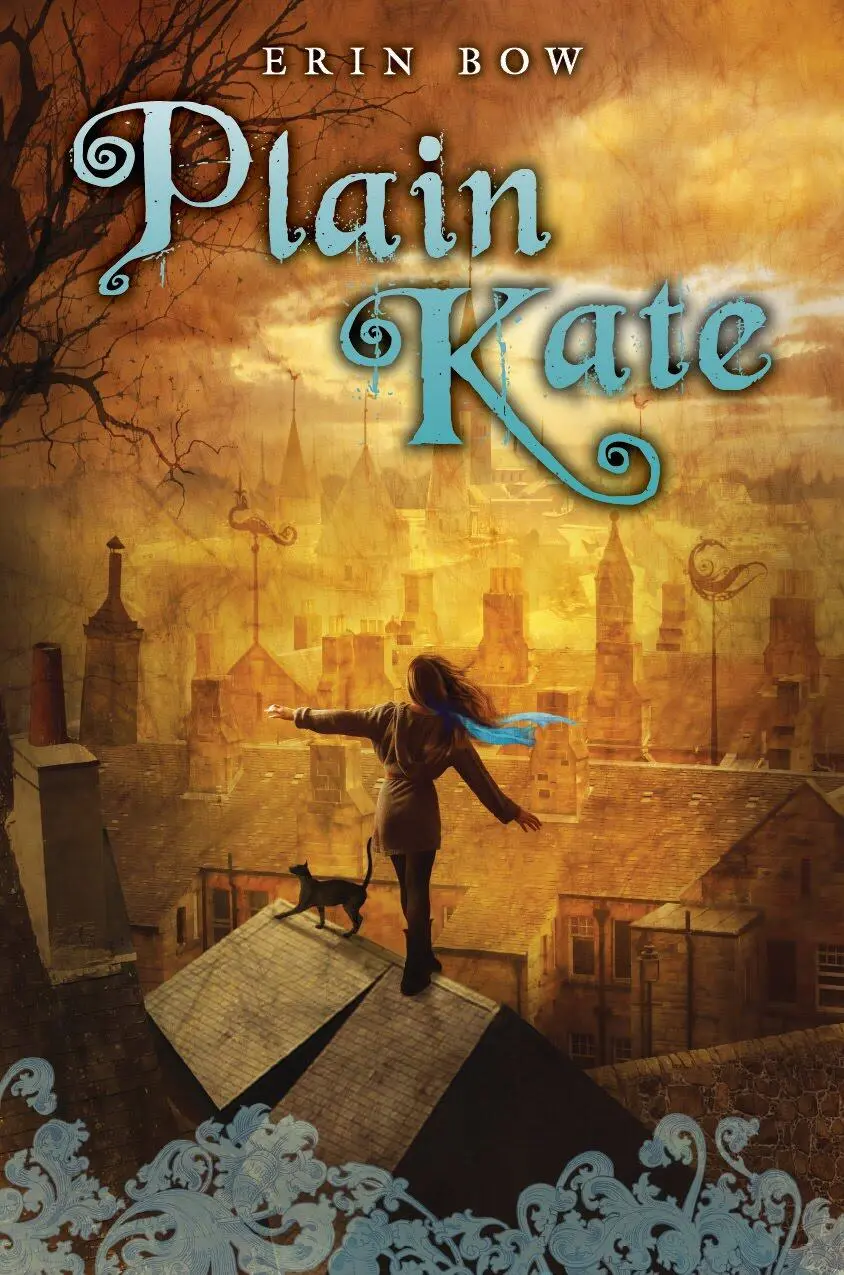
- Название:Plain Kate
- Автор:
- Издательство:Scholastic Inc.
- Жанр:
- Год:2010
- ISBN:9780545166645
- Рейтинг книги:3 / 5. Голосов: 1
-
Избранное:Добавить в избранное
- Отзывы:
-
Ваша оценка:
Plain Kate: краткое содержание, описание и аннотация
Предлагаем к чтению аннотацию, описание, краткое содержание или предисловие (зависит от того, что написал сам автор книги «Plain Kate»). Если вы не нашли необходимую информацию о книге — напишите в комментариях, мы постараемся отыскать её.
Plain Kate — читать онлайн бесплатно полную книгу (весь текст) целиком
Ниже представлен текст книги, разбитый по страницам. Система сохранения места последней прочитанной страницы, позволяет с удобством читать онлайн бесплатно книгу «Plain Kate», без необходимости каждый раз заново искать на чём Вы остановились. Поставьте закладку, и сможете в любой момент перейти на страницу, на которой закончили чтение.
Интервал:
Закладка:
But slowly the dewy frost gave way to brilliant, hard mornings, and the fever, as fevers do, began to loosen its for the winter. Plain Kate went down to the market to see what food could be had, and found little knots of people around stalls heaped with the last of the fresh harvest: winter-fat leeks and frost-tattered cabbages. The frowning shops that fronted the square seemed to sigh and spread their shoulders.
Plain Kate came home with her basket piled with apples, and found her father slumped at his workbench. He’d left the lathe whirling: a long hiss, winding down in the clotting silence of the shop. She could hear the shudder in his breath.
Somehow she got him up on her shoulder. It made her feel tiny, smaller than she had in years; he was so heavy and she could hardly hold him up. She took him to his bed.
Not everyone who got witch’s fever died. She kept telling herself that. She tried to give him water, she tried to make him eat. She was not sure if he should be kept warm or cold. She tucked his red quilt over him and put a cold cloth on his forehead. Like the others, he sobbed and he saw things. She talked to him day and night until she grew so hoarse that her mouth tasted of blood. “You are here, you are here, I am with you, stay where you belong.” She stayed awake, day and night, saying it.
After two days and three nights, somewhere in the gray hour before dawn, she fell asleep. She woke still sitting on the chair by the bedside, her forehead resting on her father’s hand.
“Katerina,” he rasped.
“You’re here,” she stuttered, lifting her head. “I am here, Father, right here.”
“Not you,” he said, breaking her heart. “Your mother.” There was a screen in the shape of climbing roses between their room and the front of the shop. Light was piercing through it, the long slanting yellow of dawn. Her father was staring into it, his eyes runny and blind. “Look.”
Plain Kate turned for a moment to look, then turned back, afraid of what she might see if she let herself. “Father,” she said. “Papa.”
“Katerina,” he said again. “She is in the light. She’s here. Katerina, you’re here!”
“Don’t go,” said Plain Kate, and clutched his hand to her cheek. “Papa!”
He looked at her. “Katerina, Star of My Heart.” He breathed in. He breathed out. And he stopped breathing.
“I’m right here,” she said. “Papa, I’m right here.” She kept saying it for a long time.

The year of the hot summer, sickness, and starvation came to be called the skara rok , the bad time. It had emptied their purse. Plain Kate took what money they had left and bought Piotr Carver a decent burial. Then she went back to the shop and spent a month carving a grave marker for him. She would make one and cast it to the fire, make another and still not find peace.
“People think we are witches because we show them the truth.” She could see her father’s face, feel his hands on hers. A carving had just snapped apart when her knife found some hidden flaw in the wood. “You will learn to know where the knots are and how the grain flows, even deep inside the wood where no one can see it. You will show people the truth: the truth in the wood. But sometimes, in your carving, people will see another truth. A truth about you. About themselves.” His hands were warm on hers, sturdy as his smile. “And that is magic,” he said. “You will know it when you feel it.”
She wanted the grave marker to show the truth: that Piotr Carver had been a wonderful carver, and she had loved him. But the only thing it said was that her father was dead.
At last she could not leave the grave unmarked anymore. So she finished the marker, and placed it.
And when that was done she had nothing more to do. She stood by his lathe like a girl under a spell. Her hands hung empty at her sides.
And then the wood guild sent another carver to take the shop.
His name was Chuny and he wasn’t half the carver she was, but he had a warrant from the guild. Plain Kate had nowhere to go. She’d been born in that shop. She’d been a baby watching the light shift through the rose screen. She’d been a chubby-fisted toddler putting wood shavings in the pottage. But now the guild warrant gave Chuny claim over the shop and its fittings, its tools, even the wood Kate and her father had cured but not carved.
Master Chuny stood watching her pack. There was very little she was allowed to take. A bit of food: apples and oats, a jar of oil. Her own three dresses. Her father’s smocks and leggings. His leather carpenter’s apron. There were two bowls, with porridge dried like parched earth at the bottom of the one that had been her father’s. Two spoons. The red marriage quilt from the big carved bed, which smelled like her father and like sickness. Her own small hand tools: knives and chisels and awls and gouges.
“The carving things stay with the shop,” said Chuny, still watching.
Plain Kate was slotting the tools into the pockets of her own leather apron. “He gave them to me,” she whispered. She did not look up; the hair around her face hid her strange eyes and the tears in them from the man watching her. She raised her voice: “These are mine. My father gave them to me.”
An apprentice’s tools—” Chuny began. The rule was that an apprentice’s tools belonged to his master, and through the master to the guild.
“I was not his apprentice.” She looked up and she was not crying anymore. “I am going. Do you want to search my bags?”
“I—” Chuny began, then shook his head. His fingers were twined in the rose screen; it hurt to see his hands there. Kate and her father had had an old joke where they would smell the carved roses, but even outside the joke Piotr would never have closed his hands round a blossom, as Chuny was doing now.
She tore her eyes away. “I am going to the market,” she said. “I am going to live in our stall.”
“ Live in it?” he echoed, shocked.
“The bottom drawer will be big enough.”
The stall too belonged to the guild. Plain Kate raised her witch’s eyes, daring Chuny to make that claim. He looked back, then looked at his shoes, and didn’t. Kate picked up her bags.
“They, uh,” he said, “tell me you can carve a little. I would—when you are of age, that is, if I still need an apprentice—”
She was insulted by the awkward half kindness. “You have nothing to teach me,” she said. “And I don’t have the fee.”
“Go then,” he said, angry.
So she did, with her head held high.

In the market, she put down her bags and looked at the square with new eyes. The tall and narrow shops seemed leering to her, the streets crooked. Underfoot, cobble-backs rose like islands from the packed and dirty snow. Above it all the weizi towered, sending a long sunset shadow across the gray roofs of Samilae and toward the black wall of the hills beyond.
Her father’s stall was sitting in that shadow: a big box cabinet with many drawers, large and deep on the bottom and little on top. The front was carved to show a deer hunt: a stag leaping into a patch of wood, hounds and riders at its heels. Plain Kate had always thought before that it looked as if the stag was going to get away. Tonight it looked different; one of the riders had nocked an arrow, his aim true. The poor beast was dead and just didn’t know it.
The cold grew bitter as the sun fell; her breath swirled around her. She pulled open the big bottom drawer. She put the quilt in it, and pushed it as much closed as she could and still get in. Then she rolled in through the gap and lay down.
The wood was hard despite the quilt; the air was stale. She couldn’t see, but the drawer walls pressed her shoulders, and the sense of the wood above pressed from inches away. A coffin, she thought, and pushed the thought away. It came back. This is my coffin.
Читать дальшеИнтервал:
Закладка:
Похожие книги на «Plain Kate»
Представляем Вашему вниманию похожие книги на «Plain Kate» списком для выбора. Мы отобрали схожую по названию и смыслу литературу в надежде предоставить читателям больше вариантов отыскать новые, интересные, ещё непрочитанные произведения.








Обсуждение, отзывы о книге «Plain Kate» и просто собственные мнения читателей. Оставьте ваши комментарии, напишите, что Вы думаете о произведении, его смысле или главных героях. Укажите что конкретно понравилось, а что нет, и почему Вы так считаете.