Erin Bow - Plain Kate
Здесь есть возможность читать онлайн «Erin Bow - Plain Kate» весь текст электронной книги совершенно бесплатно (целиком полную версию без сокращений). В некоторых случаях можно слушать аудио, скачать через торрент в формате fb2 и присутствует краткое содержание. Год выпуска: 2010, ISBN: 2010, Издательство: Scholastic Inc., Жанр: Старинная литература, на английском языке. Описание произведения, (предисловие) а так же отзывы посетителей доступны на портале библиотеки ЛибКат.
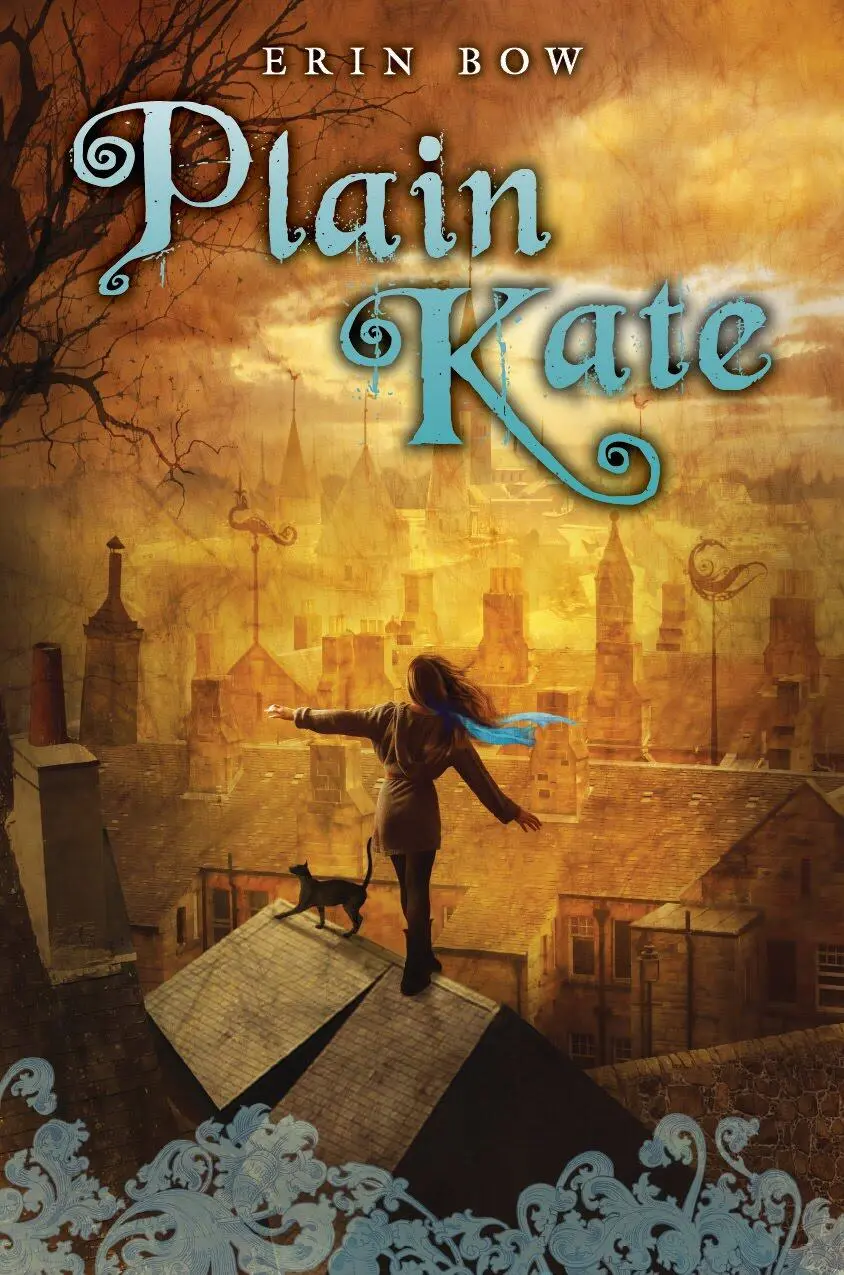
- Название:Plain Kate
- Автор:
- Издательство:Scholastic Inc.
- Жанр:
- Год:2010
- ISBN:9780545166645
- Рейтинг книги:3 / 5. Голосов: 1
-
Избранное:Добавить в избранное
- Отзывы:
-
Ваша оценка:
Plain Kate: краткое содержание, описание и аннотация
Предлагаем к чтению аннотацию, описание, краткое содержание или предисловие (зависит от того, что написал сам автор книги «Plain Kate»). Если вы не нашли необходимую информацию о книге — напишите в комментариях, мы постараемся отыскать её.
Plain Kate — читать онлайн бесплатно полную книгу (весь текст) целиком
Ниже представлен текст книги, разбитый по страницам. Система сохранения места последней прочитанной страницы, позволяет с удобством читать онлайн бесплатно книгу «Plain Kate», без необходимости каждый раз заново искать на чём Вы остановились. Поставьте закладку, и сможете в любой момент перейти на страницу, на которой закончили чтение.
Интервал:
Закладка:
The roll was hard as an uncooked turnip. “Easy on that,” Niki said, watching her eat. “It might be the last for a bit—flour’s low.”
She nodded and wrapped the other roll up to tuck away. Niki looked at the bundle with his sad-dog eyes. “It’s bad, bad,” he sighed. “The wheat barges are overdue at least a week. No grain and no news. Something’s amiss upriver.” He crooked his two middle fingers into a sign against witchcraft.
A hungry time. Plain Kate felt cold in the warm evening. The skara rok had begun this way.

Plain Kate listened to Niki and watched the stranger. He wasn’t selling much: a few toys and tin charms Kate could have made better in wood. Three days of music put three lonely kopeks into his begging bowl. What he seemed to be selling mostly was talk. When Plain Kate came back from fishing, his blanket was still spread, white in the thickening twilight, alone in the evening-empty market.
Plain Kate was thinking of witches. How in bad times people were more eager to buy her objarka, but also more inclined to take a step back, to crook their fingers at her when they thought she wasn’t looking, or when they were sure she was. How they wanted the witchcraft to protect them, but how they looked too for a witch to blame. It didn’t matter that there was no magic in her blade; people saw it there. They saw witchcraft in her skill, witch marks in her mismatched eyes, her bad luck, her long shadow.
The stranger was selling things in the shadows. All sorts came: from the ragged charcoal man to the wife of the lord justice, men and women, young and old. They came in ones and twos, shying from the others, looking around them. He sold them glass vials that twisted the firelight from the market’s cressets, sold them herbs and feathers knotted with string.
Charms, Kate thought. Charms against empty wombs, indifferent loves. Against hunger, sickness. Against the rumor of something worse that came off the river. The stranger was selling the witchcraft that people craved to protect them. But he would likely be gone when they began to look for someone to blame.
Plain Kate watched for four days and thought. On the fourth day a sudden silence made her look up, startled as if the river had stopped running. The stranger had set down his tambourine. He stood and stretched and sauntered toward her.
She watched him come. He moved like a jumping jack that strung too loosely, so that he seemed about to turn a flip or clatter into a pile of bones and string. His zupan’s loose skirts swirled around his knees and its undone sleeves swung as he walked. Every man in Kate’s country wore such a coat, but on this man it hung like a costume. Kate wondered if he was foreign. His strange, witch-pale skin and hair made it hard to tell. The white coat bleached him further, made him look like a painting that had half washed away.
“Lovely lass,” he drawled, leaning sharp elbows on her counter, “I hear you work wonders in wood.”
Now, Plain Kate had caught no fish for two days. Niki’s bread was gone and she was hungry. But she was required to turn down work, and she did: “There’s a wood guild shop—” she began.
He laughed elegantly. “Master Chuny? Boxwood for brains, dead twigs for fingers. No, no, Little Knife. I want someone with some feeling. You see”—he widened his eyes at her—“I’ve suffered a loss.” And he drew from his back, where it was slung like a sword, a length of wood. He set it down in front of her.
The thing was the size of a small branch, polished and curved. The back of the curve was splintery and broken, like a bone. A snapped string curled around it. Plain Kate picked it up. “What is it?”
“A courtier to the queen of all wooden things,” he said.
Plain Kate raised an eyebrow and waited for a more sensible answer.
“It’s a bow,” he said. “A bow for my fiddle.” And he half sang: “A walker, a wanderer, a trader in tin—a roamer with a violin. My name is Linay, and I grant wishes.”
Just then, Taggle sprang from nowhere and landed neatly in front of her. He stuck his long nose into Linay’s pack. Plain Kate picked him up. The cat squirmed, then relaxed into her arm and started to purr. She eased him onto one shoulder and he slunk around her neck, where he draped bonelessly, like a fur collar with glittering eyes.
“Why,” said Linay, “no silver mink could match that.” He reached out to chuckle the cat’s chin.
Taggle bit him.
Linay pulled his hand back and smiled with many teeth. “Sweet-tempered little beast.”
Plain Kate had recovered from the strangeness of Linay’s singing, and his eyes that shone like new tine. She ran a finger down the broken bow. “Yes, I think I could make you another. What can you pay me?”
“Mmmm.” Linay leaned close. “I could write a song about your eyes.”
Kate avoided snorting at a paying customer, but she answered shortly: “Something I can eat.”
Linay smiled, slow as a fern uncurling, and sang: “What do you wish for, Plain Kate?” As he sang he reached out and brushed the side of her face with bony fingers. His hands smelled of herbs, and something shot through her like ice on the neck. She leapt backward.
“Now that’s a wish,” he said, smiling at her distress. “But I wouldn’t. To raise the dead, it’s a tricky thing, goes wrong most often.”
Plain Kate was panting. “I don’t want you to raise my father!”
“Of course you do, orphan girl. All folk want their dead back, and I should know. I’ve spoken with the shadowless, and they come shambling, how they come hungry, how they come wrong as a bird in water—”
“Stop it!”
Linay laughed, merry but not kind. “Well, what do you want, then? Beauty? Luck? I sell them all.” He leaned in, smelling bitter as burnt spices. “Of course, the trinkets are nonsense, fodder for fools. But I have true power and a will to use it. It’s more than the work is worth, but we might trade.”
“What do you want?”
“Your shadow.” His own shadow fell across the table between them, and it seemed thin to Kate, swirling as if cast by smoke, not solid flesh. “If you give me your shadow, I’ll grant the secret wish of your heart.”
“But why? Why do you want it?”
“Ah.” He winked at her. “I know a lady who lacks one.” She must have been gaping at him, because he crooked a finger under her chin to close her mouth. Taggle swiped at him lazily. Linay jerked clear, his smile folding up. “I’ve been listening to talk in this town. They say your shadow is long and that no one loves you. You are luckless and defenseless. Do not doubt that I can twist things until you are glad enough to give me anything I like.”
Then suddenly his smile was back and the roiling edge of his shadow was gone. “But in the meantime, what about my bow? Would you like a beauty charm, perhaps, in payment, Plain Kate?” On his tongue her name suddenly sounded like the insult it had once been.
“I’ll take turnips,” she said sturdily. “Or fishhooks. Fine wood maybe. Coin on the off chance you have it. But I’ll have no deals with witches.”
“Won’t you now?” He was merry again. “I have no turnips or fishhooks or oxcarts or sailcloth. Two silver.”
“Five,” she said.
“Three.”
“Five,” she said again.
He shrugged as if it didn’t matter. “Five.”
Plain Kate put the coin he gave her in advance in her pouch and pulled out her slate to sketch the bow. Taggle’s fur was soft against her neck, and that was the only part of her that felt warm. Linay was eyeing the part of her hair. Finally, as she kept working, he turned away, whistling.
three
the fish, the axe, and the bargain
For the next three days Plain Kate sketched and carved in scrap wood, trying to learn how the bow worked. She kept her head down even though it was a lively time: There were Roamers in the market.
Читать дальшеИнтервал:
Закладка:
Похожие книги на «Plain Kate»
Представляем Вашему вниманию похожие книги на «Plain Kate» списком для выбора. Мы отобрали схожую по названию и смыслу литературу в надежде предоставить читателям больше вариантов отыскать новые, интересные, ещё непрочитанные произведения.






Обсуждение, отзывы о книге «Plain Kate» и просто собственные мнения читателей. Оставьте ваши комментарии, напишите, что Вы думаете о произведении, его смысле или главных героях. Укажите что конкретно понравилось, а что нет, и почему Вы так считаете.