Erin Bow - Plain Kate
Здесь есть возможность читать онлайн «Erin Bow - Plain Kate» весь текст электронной книги совершенно бесплатно (целиком полную версию без сокращений). В некоторых случаях можно слушать аудио, скачать через торрент в формате fb2 и присутствует краткое содержание. Год выпуска: 2010, ISBN: 2010, Издательство: Scholastic Inc., Жанр: Старинная литература, на английском языке. Описание произведения, (предисловие) а так же отзывы посетителей доступны на портале библиотеки ЛибКат.
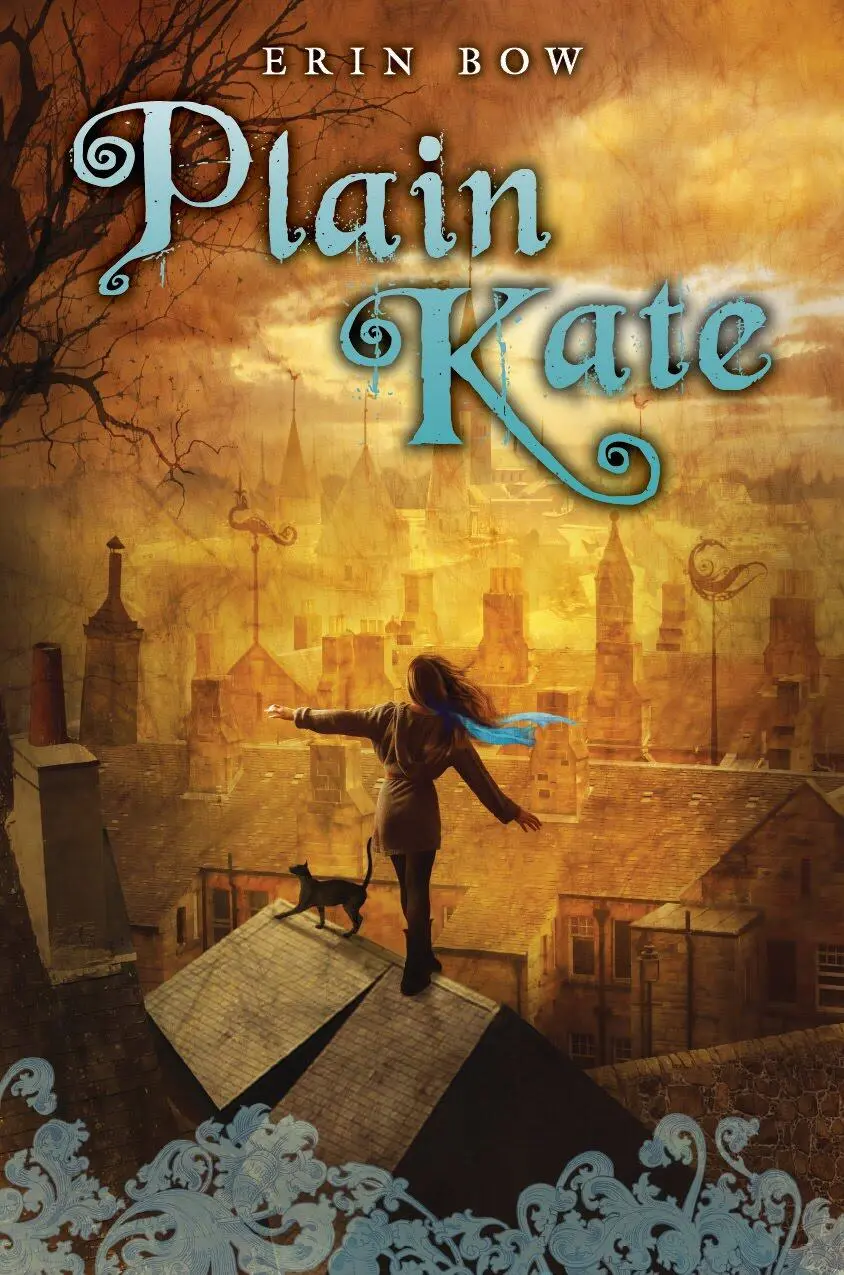
- Название:Plain Kate
- Автор:
- Издательство:Scholastic Inc.
- Жанр:
- Год:2010
- ISBN:9780545166645
- Рейтинг книги:3 / 5. Голосов: 1
-
Избранное:Добавить в избранное
- Отзывы:
-
Ваша оценка:
Plain Kate: краткое содержание, описание и аннотация
Предлагаем к чтению аннотацию, описание, краткое содержание или предисловие (зависит от того, что написал сам автор книги «Plain Kate»). Если вы не нашли необходимую информацию о книге — напишите в комментариях, мы постараемся отыскать её.
Plain Kate — читать онлайн бесплатно полную книгу (весь текст) целиком
Ниже представлен текст книги, разбитый по страницам. Система сохранения места последней прочитанной страницы, позволяет с удобством читать онлайн бесплатно книгу «Plain Kate», без необходимости каждый раз заново искать на чём Вы остановились. Поставьте закладку, и сможете в любой момент перейти на страницу, на которой закончили чтение.
Интервал:
Закладка:
Roamers were wanderers; they lived in tents and traveled from town to town, trading, singing for supper, telling fortunes. Begging, sometimes. Stealing, people said. They had skin like polished walnut, eyes like chestnuts, clothes like a carnival. They lived on the edges of things, and tended to be thin.
Most Roamers were not much welcome in Kate’s little town, which lived too close to hunger to take joy in jugglers, too close to fear to like fortune-tellers. This particular clan, though, came once a year and traded in horses, which was so sensible that even Niki the Baker did business with them. He bought a sturdy pony from the two young men, twins, who tended the little herd. “A dull life she’ll have, driving millstone,” he said, “but she’ll not be beaten.”
Linay, as if driven out by the other strangers, had melted away. Plain Kate put his bow down and worked on Niki’s objarka instead. She found her thoughts chasing one another. There had been a time, in that country, when the Maid of the Wheat was a real woman. When she was led into the last standing quarter of the ripe grain and tied there while the fields were set on fire. Her burning spirit kept the gods fed; her blood was plowed into the ground.
Now they had only one God, and the Wheat Maiden was just a talisman. But women still burned. Plain Kate worked to turn the ends of the objarka’s hair into bearded barley, to turn crosshatch cuts into a woven wheat crown that sat against the smooth forehead. She wished Niki had asked for a horse’s face—the horses in the market were full of life; their hooves clattered on the cobbles like good music. Better than Linay’s tambourine, much better. Kate was sad as evening fell, and the dark-skinned men in their bright colors led the horses away.
When it got too dark to work, Plain Kate went down to the docks to catch dinner. Taggle went ahead of her, with his tail curled in anticipation of fish. The fishing boats were just coming in, the great beacon fire was being lit, and the dock was busy. Plain Kate fished as the stars came out, throwing her line into the darkening water.
Plain Kate caught only one bony bitterling in the first hour, but as the fishermen came by with their barrows, things changed. Where her line went in, the river suddenly swarmed with fish, thick as waves in a whirlpool. Taggle dug in claws and leaned down until his nose almost touched the water. His golden eyes were huge; his teeth clicked with excitement.
The fishermen stopped to look. “Would you look at that,” said Big Jan. He loomed over her in the moonlight. “A body could stand on them.” He nudged Taggle’s twitching rear end with his boot.
The cat fell and twisted as he fell, sinking claws deep into the dock and kicking at the water. Plain Kate grabbed him by the scruff and dragged him out. Taggle dripped and yowled and hissed at Big Jan, who laughed. “Fierce beast you’ve got there, girl,” he said. “Don’t you want to see if he can walk on fish?”
“Leave be, Jan,” said the oldest fisherman, whose name was Boyar. “What happens here, Plain Kate? How did you draw the fish?”
“I didn’t!” she exclaimed. “They’ve just…” She had no explanation. “They’ve just come.”
Big Jan sneered and even Old Boyar looked skeptical, but he said, “Fish, then. Don’t turn your back on blessing.” He eased the dripping cat from her arms so that she was free to fish. Taggle squirmed loose and bolted, swiping at Big Jan’s ankle on the way by.
The fishermen stood a moment, watching as Kate cast her line into the swarm, pulling out fish after fish, big trout that flashed white in the moonlight. “It’s an uncanny thing,” said Old Boyar.
“A witchy thing,” muttered Big Jan.
“Ah, leave off, Jan,” said Old Boyar. “Let’s get the catch in.” He walked away and the other men followed.
A little way downstream, an unfamiliar little boat—a small punting barge—lay tied up at the bank. Moonlight caught at it, and Kate saw something move there, something white. Linay was standing on the deck like a ghost on a battlement. She saw him lift his hand in ironic salute, and remembered his threat: Do not doubt that I can twist things…
She believed him. But she was hungry, and she kept the fish.

In the end, Plain Kate caught twenty-seven trout. She traded the fixing of a cracked spar on Old Boyar’s boat for a share of his space in the town smokehouse. One fat fish she stuffed with wild dill and onion and roasted over the market square fire. She ate as much of it as she could and was full for the first time in weeks. But she was uneasy. The lively chatter of the Roamers and the horse buyers was gone, and Linay was back, brooding in the corner of the market like a stork. With him he’d brought foul weather: The sky had slid shut under a lid of low clouds.
Plain Kate had not quite finished the Wheat Maiden objarka when Niki the Baker came to collect it for the new horse’s stall door. She was shamed but he shrugged it off and paid her anyway, then stood, shifting, as if he wanted to say something. Plain Kate was not much good at such things; she didn’t know how to help him find words. “Uncanny,” said Niki at last, poking at the leftover fish that was wrapped up in oilcloth at Kate’s elbow. “ ’Twas uncanny, those fish. You should take care, Plain Kate. People say…” He stopped.
Plain Kate crossed her arms in front of her, her fingers finding the bony knots of her shoulders. “What do they say?”
But Niki just looked away. “Take care, Plain Kate,” he said again.
In the damp heat of the afternoon, as she worked on Linay’s bow, Plain Kate felt that warning like a hand on her neck. She knew she lived mostly by the town’s thin kindness. She could feel just how thin it was, between her and the whispers of the market square. A strange smell, sour and stale, came from the smokehouse, roiling in the foggy heat. Linay’s tambourine rattled and jangled in her head.
Taggle came and presented her with a half-dead bat. Plain Kate hit it with a hammer and hid it in a drawer to eat later. It would not do to eat such things in daylight, not now, with people talking. When she looked up she saw people watching her as if she were already eating it, as if she had the membranous black wings coming out of her mouth. She looked down.
Taggle made a bleat that sounded like “want, want,” and butted at her hand.
“After dark. You can have some when I cook it.” She pegged together the wood for the bow.
The cat flopped down on top of her work.
“You’re in the way.”
“Wrmmm,” Taggle whirred. He rolled to show his belly, pink under his gray fur.
“Thanks for the bat, cat. But you’re still in the way.” She scratched him, then leaned her nose into his soft, warm fur. “Everyone’s watching us, Tag,” she whispered. “I—”
But Taggle flipped to his feet and hissed. Plain Kate looked up. Linay was lounging against the prop of her awning.
“I’ve heard your name in strange tales, Katie girl. They say you witched the fish.” And he sang, “Witch, fish, flinch, kiss—won’t you let me grant your wish?”
“No.”
“Hmmm.” He smiled. “I wonder how much it will take to make you change your mind.” And he sang:
Plain Kate, Kate the Carver
No one’s friend and no one’s daughter
Little Kate might meet her fate
Whittling sticks till it’s too late
Plain Kate stared. “You drew the fish.”
“But you caught them. And it’s about you they whisper.” Linay’s smile was long and narrow. “I tell you true, Plain Kate, I would not want to see you hurt. You know that, don’t you, about us witches: We tell the truth.”
She had heard the tale: that witches could not lie. People said that as the devil gave witches power, God bound their tongues to truth. It did not seem to her a likely story, and she did not trust Linay.
Читать дальшеИнтервал:
Закладка:
Похожие книги на «Plain Kate»
Представляем Вашему вниманию похожие книги на «Plain Kate» списком для выбора. Мы отобрали схожую по названию и смыслу литературу в надежде предоставить читателям больше вариантов отыскать новые, интересные, ещё непрочитанные произведения.








Обсуждение, отзывы о книге «Plain Kate» и просто собственные мнения читателей. Оставьте ваши комментарии, напишите, что Вы думаете о произведении, его смысле или главных героях. Укажите что конкретно понравилось, а что нет, и почему Вы так считаете.