Gary Rivlin - Broke, USA
Здесь есть возможность читать онлайн «Gary Rivlin - Broke, USA» весь текст электронной книги совершенно бесплатно (целиком полную версию без сокращений). В некоторых случаях можно слушать аудио, скачать через торрент в формате fb2 и присутствует краткое содержание. Город: New York, Год выпуска: 2010, ISBN: 2010, Издательство: HarperCollins Publishers Inc., Жанр: Старинная литература, на английском языке. Описание произведения, (предисловие) а так же отзывы посетителей доступны на портале библиотеки ЛибКат.
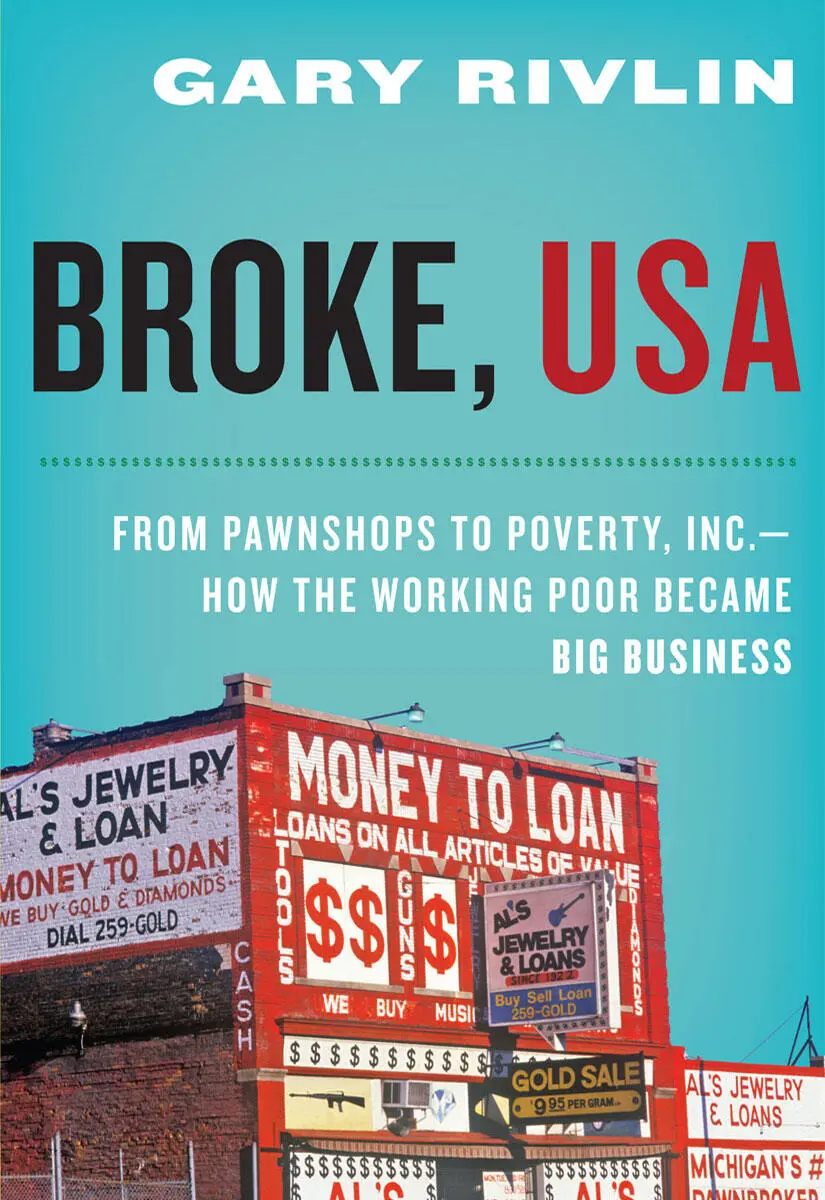
- Название:Broke, USA
- Автор:
- Издательство:HarperCollins Publishers Inc.
- Жанр:
- Год:2010
- Город:New York
- ISBN:978-0-06-199794-5
- Рейтинг книги:3 / 5. Голосов: 1
-
Избранное:Добавить в избранное
- Отзывы:
-
Ваша оценка:
Broke, USA: краткое содержание, описание и аннотация
Предлагаем к чтению аннотацию, описание, краткое содержание или предисловие (зависит от того, что написал сам автор книги «Broke, USA»). Если вы не нашли необходимую информацию о книге — напишите в комментариях, мы постараемся отыскать её.
Broke, USA — читать онлайн бесплатно полную книгу (весь текст) целиком
Ниже представлен текст книги, разбитый по страницам. Система сохранения места последней прочитанной страницы, позволяет с удобством читать онлайн бесплатно книгу «Broke, USA», без необходимости каждый раз заново искать на чём Вы остановились. Поставьте закладку, и сможете в любой момент перейти на страницу, на которой закончили чтение.
Интервал:
Закладка:
Brennan picked up his first mortgage fraud case at around the same time the Journal-Constitution was running its series. And then his second, third, and fourth. Each of his clients told Brennan more or less the same story. All had fallen behind on their mortgages and they heard from a local business, Brown Realty Associates, offering to help. The name of that business rolls easily off Brennan’s tongue twenty years after the fact, as if he’s been talking about them regularly ever since: the Browns of Brown Realty Associates, a husband-wife team and their adult son. One of the Browns would tell the beleaguered homeowners that clearing everything up was as easy as signing a few papers to make payments to Brown Realty until they were all caught up. “What these folks didn’t realize is they had signed a legal document called a ‘quitclaim,’ transferring ownership of the home to the Browns,” Brennan said. “As soon as they missed a payment, the Browns would file to take possession.” The Browns had gotten their hands on dozens of homes before he and others with Legal Aid figured out what was going on. Joining forces with a pair of local private attorneys, Brennan and his cohorts won millions in damages against the Browns and forced them out of business.
Perhaps most disturbing to Brennan was the fact that a major downtown bank had granted Brown Realty a $1.5 million line of credit. Without it, he figured, the company could not have accumulated that many homes in so short a period of time. Brennan didn’t care how much the bank knew about what the Browns were doing with the money. They were financing scam artists who were “targeting black neighborhoods to steal people’s houses,” Brennan said, at the same time they were refusing to make legitimate loans to qualified would-be homeowners in those same communities. In 1988, with additional funding from the county, he convinced his bosses to create a Home Defense Program, the first of its kind in the country. Brennan has served as its executive director ever since.
Brennan learned from the Brown case that established financial institutions were no longer ignoring the black community entirely. What he discovered working the next set of cases the Home Defense Program took on was that the challenge was larger than a few rogue lenders working the area’s working-class and poor communities. In these same neighborhoods, larger financial concerns were now aggressively peddling loans that were so destructive that they left borrowers in a far more precarious financial position than when they started. “It was incredible,” said Brennan. “These banks went from making no loans in all these black neighborhoods to making loans that were totally abusive.” Jack Long, one member of the group that Brennan assembled to fight back, gave the phenomenon a name: “reverse redlining.”
The first firms to recognize the profits to be made from the neighborhoods that the banks had historically ignored were nonbank lenders such as Champion Mortgage. A Legal Aid attorney named Ira Rheingold watched in wonder as Champion used redlining as its main selling point. Its advertising campaign featured the slogan “When your bank says no, Champion says yes.” It was, Rheingold had to confess, devilishly brilliant—and also underscored the shortsightedness of the established banks.
“I don’t know if it was because of their own prejudices or because of the limits of the system they built, but traditional banks failed to recognize that there was plenty of need and desire in low-income and minority communities that was going untapped,” said Rheingold, who worked as a legal aid attorney in both suburban Washington, D.C., and Chicago before becoming the executive director of the National Association of Consumer Advocates. “So companies like Champion moved in and figured out that not only could they make money lending to these people, they could make a lot more money than a bank. These were unsophisticated consumers who didn’t know how banks worked, so the Champions of the world came in and said, ‘We’re going to go in as your best friend and act as your trusted adviser.’” The typical customer, Rheingold said, didn’t feel ripped off paying interest rates of 20 percent or more but instead felt grateful that, finally, someone was saying yes.
“It took them time,” Rheingold said, “but eventually the banks figured it out.”
Annie Lou Collier had been living in the same home since 1953 when a man who could have stepped out of the movie Tin Men knocked on her door in 1990. He was a home-improvement salesman who wanted to talk about a new roof. Collier had paid off the house years earlier but she was eighty years old and scraping by on a modest fixed income. She told him she couldn’t afford a new roof but the man advised her that given the worth of her home, she could simply borrow the money. He even offered to drive her to a lender who would lend her $6,900 that very day. “She was this wonderful lady,” Brennan recalled, “but they gave her this crazy loan she could never afford.”
Predictably, Collier quickly fell behind in her payments and by 1991, one year after signing the deal, she was already in arrears on a loan that included 22 percent in points and fees and carried an annual 25.3 percent interest rate. Brennan contacted the lender, who told him that they had Collier’s signature on the loan papers and that’s all the proof they needed that she understood the terms of her loan. It did not seem to matter to the person on the other end of the phone that Collier had a second-grade education and could not read or that, given her income, she couldn’t possibly afford the monthly payments. It didn’t matter, either, that the contractor had not completed the job that she had paid for. When the Home Defense Program heard from several more elderly people living in southwest Atlanta who found themselves in a similar predicament to Collier’s through strikingly similar circumstances, Brennan figured that they again would be combating a small-time local firm like Brown Realty. The loan terms were “so terribly abusive,” he reasoned, there couldn’t possibly be a legitimate company behind them. The going rate for a conventional mortgage at the time was around 9 percent, but he had one client who was being charged 29 percent on a home loan. Consequently, he suspected the lender was more interested in seizing homes through judgments of default than in accruing steady profits through regular monthly payments. Brennan would be shocked when he learned that the institution holding paper on all these loans was Fleet Bank, a large, publicly traded firm from Providence, Rhode Island.
For years activists had been lobbying the likes of Fleet to make more loans in the country’s less affluent communities. But this was not what they had in mind. These were not loans to first-time homebuyers; they were mortgage refinancings and home equity loans. They were also not conventional loans made through bank branches; they were deals arranged by a subsidiary called Fleet Finance.
While the morality of what Fleet was doing might be questionable, there was no doubting its profitability. Through much of the 1980s, the Economist reported in March 1990, banks across the country were posting big losses. One exception was Fleet, which was posting a return on equity (a “spanking 17 percent,” the magazine wrote) that made it the envy of the industry. Its “prize performer,” the Economist wrote—“the jewel in Fleet’s crown”—was its “hugely profitable” consumer finance subsidiary. Fleet Finance, with 150 offices in twenty-seven states, produced $43 million in after-tax profits in 1989. Its portfolio would generate another $55 million in profits in 1990. By 1991, Fleet had surpassed the venerable Bank of Boston to reign as New England’s largest bank. The financial press hailed Terrence Murray, the company’s chief executive and chairman, for transforming a small Rhode Island bank into a regional powerhouse.
Читать дальшеИнтервал:
Закладка:
Похожие книги на «Broke, USA»
Представляем Вашему вниманию похожие книги на «Broke, USA» списком для выбора. Мы отобрали схожую по названию и смыслу литературу в надежде предоставить читателям больше вариантов отыскать новые, интересные, ещё непрочитанные произведения.










Обсуждение, отзывы о книге «Broke, USA» и просто собственные мнения читателей. Оставьте ваши комментарии, напишите, что Вы думаете о произведении, его смысле или главных героях. Укажите что конкретно понравилось, а что нет, и почему Вы так считаете.