Mila 18 - Leon Uris
Здесь есть возможность читать онлайн «Mila 18 - Leon Uris» весь текст электронной книги совершенно бесплатно (целиком полную версию без сокращений). В некоторых случаях можно слушать аудио, скачать через торрент в формате fb2 и присутствует краткое содержание. Жанр: Старинная литература, на английском языке. Описание произведения, (предисловие) а так же отзывы посетителей доступны на портале библиотеки ЛибКат.
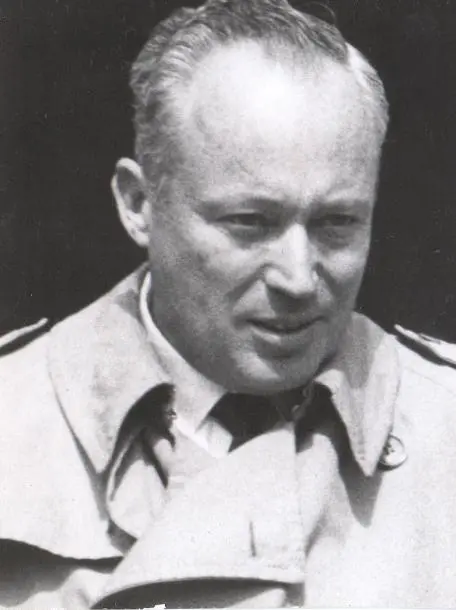
- Название:Leon Uris
- Автор:
- Жанр:
- Год:неизвестен
- ISBN:нет данных
- Рейтинг книги:4 / 5. Голосов: 1
-
Избранное:Добавить в избранное
- Отзывы:
-
Ваша оценка:
Leon Uris: краткое содержание, описание и аннотация
Предлагаем к чтению аннотацию, описание, краткое содержание или предисловие (зависит от того, что написал сам автор книги «Leon Uris»). Если вы не нашли необходимую информацию о книге — напишите в комментариях, мы постараемся отыскать её.
Review
"Not only authentic as history . . . . It is convincing as fiction . . . . The story of a sacrifice that had real meaning and will forever be remembered . . . . A fine and important novel." --
Leon Uris — читать онлайн бесплатно полную книгу (весь текст) целиком
Ниже представлен текст книги, разбитый по страницам. Система сохранения места последней прочитанной страницы, позволяет с удобством читать онлайн бесплатно книгу «Leon Uris», без необходимости каждый раз заново искать на чём Вы остановились. Поставьте закладку, и сможете в любой момент перейти на страницу, на которой закончили чтение.
Интервал:
Закладка:
Once there had been big glittering rooms where Ulanys bowed and kissed the ladies’ hands as they flirted from behind their fans.
Warsaw! Warsaw!
“Miss Rak. I am a Jew.”
Day by day, week by week, month by month, the betrayal gnawed at Andrei’s heart. He ground his teeth together. I hate Warsaw, he said to himself. I hate Poland and all the goddamned mothers’ sons of them. All of Poland is a coffin.
The terrible vision of the ghetto streets flooded his mind. What matters now? What is beyond this fog? Only Palestine, and I will never live to see Palestine because I did not believe.
By late afternoon the train inched into the marshaling yards in the railhead at Lublin, which was filled with lines of cars poised to pour the tools of war to the Russian front.
At a siding, another train which was a familiar sight these days. Deportees. Jews. Andrei’s skilled eye sized them up. They were not Poles. He guessed by their appearance that they were Rumanians.
He walked toward the center of the city to keep his rendezvous with Styka. Of all the places in Poland, Andrei hated Lublin the most. The Bathyrans were all gone. Few of the native Jews who had lived in Lublin were still in the ghetto.
From the moment of the occupation Lublin became a focal point. He and Ana watched it carefully. Lublin generally was the forerunner of what would happen elsewhere. Early in 1939, Odilo Globocnik, the Gauleiter of Vienna, established SS headquarters for all of Poland. The Bathyrans ran a check on Globocnik and had only to conclude that he was in a tug of war with Hans Frank and the civilian administrators.
Globocnik built the Death’s-Head Corps. Lublin was the seed of action for the “final solution” of the Jewish problem. As the messages from Himmler, Heydrich, and Eichmann came in through Alfred Funk, Lublin’s fountain-head spouted.
A bevy of interlacing lagers, work camps, concentration camps erupted in the area. Sixty thousand Jewish prisoners of war disappeared into Lublin’s web. Plans went in and out of Lublin, indicating German confusion. A tale of a massive reservation in the Uplands to hold several million Jews ... A tale of a plan to ship all Jews to the island of Madagascar ... Stories of the depravity of the guards at Globocnik’s camps struck a chord of terror at the mere mention of their names. Lipowa 7, Sobibor, Chelmno, Poltawa, Belzec, Krzywy-Rog, Budzyn, Krasnik. Ice baths, electric shocks, lashings, wild dogs, testicle crushers.
The Death’s-Head Corps took in Ukrainian and Baltic Auxiliaries, and the Einsatzkommandos waded knee-deep in blood and turned into drunken, dope-ridden maniacs. Lublin was their heart.
In the spring of 1942 Operation Reinhard began in Lublin. The ghetto, a miniature of Warsaw’s, was emptied into the camp in the Majdan-Tartarski suburb called Majdanek. As the camp emptied, it was refilled by a draining of the camps and towns around Lublin, then by deportees from outside Poland. In and in and in they poured through the gates of Majdanek, but they never left, and Majdanek was not growing any larger.
What was happening in Majdanek? Was Operation Reinhard the same pattern for the daily trains now leaving the Umschlagplatz in Warsaw? Was there another Majdanek in the Warsaw area, as they suspected.
Andrei stopped at Litowski Place and looked around quickly at the boundary of civil buildings. His watch told him he was still early. Down the boulevard he could see a portion of the ghetto wall. He found an empty bench, opened a newspaper, and stretched his legs before him. Krakow Boulevard was filled with black Nazi uniforms and the dirty brownish ones of their Auxiliaries.
“Captain Androfski!”
Andrei glanced up over the top of the paper and looked into the mustached, homely face of Sergeant Styka. Styka sat beside him and pumped his hand excitedly. “I have been waiting across the street at the post office since dawn. I thought you might get in on a morning train.”
“It’s good to see you again, Styka.”
Styka studied his captain. He almost broke into tears. To him, Andrei Androfski had always been the living symbol of a Polish officer. His captain was thin and haggard and his beautiful boots were worn and shabby.
“Remember to call me Jan,” Andrei said.
Styka nodded and sniffed and blew his nose vociferously. “When that woman found me and told me that you needed me I was never so happy since before the war.”
“I’m lucky that you were still living in Lublin.”
Styka grumbled about fate. “For a time I thought of trying to reach the Free Polish Forces, but one thing led to another. I got a girl in trouble and we had to get married. Not a bad girl. So we have three children and responsibilities. I work at the granary. Nothing like the old days in the army, but I get by. Who complains? Many times I tried to reach you, but I never knew how. I came to Warsaw twice, but there was that damned ghetto wall ...”
“I understand.”
Styka blew his nose again.
“Were you able to make the arrangements?” Andrei asked.
“There is a man named Grabski who is the foreman in charge of the bricklayers at Majdanek. I did exactly as instructed. I told him you are on orders from the Home Army to get inside Majdanek so you can make a report to the government in exile in London.”
“His answer?”
“Ten thousand zlotys.”
“Can he be trusted?”
“He is aware he will not live for twenty-four hours if he betrays you.”
“Good man, Styka.”
“Captain ... Jan ... must you go inside Majdanek? The stories ... everyone really knows what is happening there.”
“Not everyone, Styka.”
“What good will it really do?”
“I don’t know. Perhaps ... perhaps ... there is a shred of conscience left in the human race. Perhaps if they know the story there will be a massive cry of indignation.”
“Do you really believe that, Jan?”
“I have to believe it.”
Styka shook his head slowly. “I am only a simple soldier. I cannot think things out too well. Until I was transferred into the Seventh Ulanys I was like every other Pole in my feeling about Jews. I hated you when I first came in. But ... my captain might have been a Jew, but he wasn’t a Jew. What I mean is, he was a Pole and the greatest soldier in the Ulanys. Hell, sir. The men of our company had a dozen fights defending your name. You never knew about it, but by God, we taught them respect for Captain Androfski.”
Andrei smiled.
“Since the war I have seen the way the Germans have behaved and I think, Holy Mother, we have behaved like this for hundreds of years. Why?”
“How can you tell an insane man to reason or a blind man to see?”
“But we are neither blind nor insane. The men of your company would not allow your name dishonored. Why do we let the Germans do this?”
“I have sat many hours with this, Styka. All I ever wanted was to be a free man in my own country. I’ve lost faith, Styka. I used to love this country and believe that someday we’d win our battle for equality. But now I think I hate it very much.”
“And do you really think that the world outside Poland will care any more than we do?”
The question frightened Andrei.
“Please don’t go inside Majdanek.”
“I’m still a soldier in a very small way, Styka.”
It was an answer that Styka understood.
Grabski’s shanty was beyond the bridge over the River Bystrzyca near the rail center. Grabski sat in a sweat-saturated undershirt, cursing the excessive heat which clamped an uneasy stillness before sundown. He was a square brick of a man with a moon-round face and sunken Polish features. Flies swarmed around the bowl of lentils in which he mopped thick black bread. Half of it dripped down his chin. He washed it down with beer and produced a deep-seated belch.
Читать дальшеИнтервал:
Закладка:
Похожие книги на «Leon Uris»
Представляем Вашему вниманию похожие книги на «Leon Uris» списком для выбора. Мы отобрали схожую по названию и смыслу литературу в надежде предоставить читателям больше вариантов отыскать новые, интересные, ещё непрочитанные произведения.








Обсуждение, отзывы о книге «Leon Uris» и просто собственные мнения читателей. Оставьте ваши комментарии, напишите, что Вы думаете о произведении, его смысле или главных героях. Укажите что конкретно понравилось, а что нет, и почему Вы так считаете.