Mila 18 - Leon Uris
Здесь есть возможность читать онлайн «Mila 18 - Leon Uris» весь текст электронной книги совершенно бесплатно (целиком полную версию без сокращений). В некоторых случаях можно слушать аудио, скачать через торрент в формате fb2 и присутствует краткое содержание. Жанр: Старинная литература, на английском языке. Описание произведения, (предисловие) а так же отзывы посетителей доступны на портале библиотеки ЛибКат.
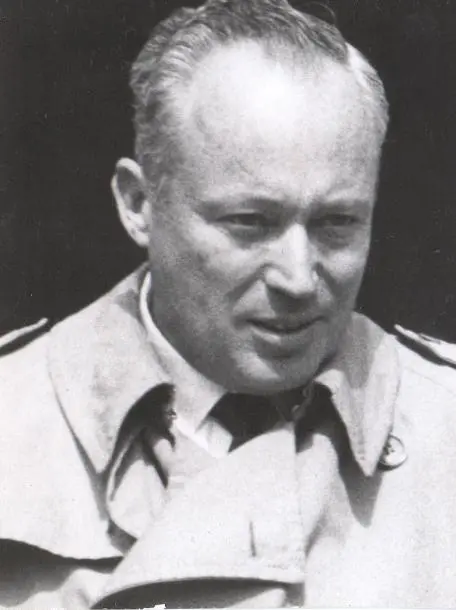
- Название:Leon Uris
- Автор:
- Жанр:
- Год:неизвестен
- ISBN:нет данных
- Рейтинг книги:4 / 5. Голосов: 1
-
Избранное:Добавить в избранное
- Отзывы:
-
Ваша оценка:
Leon Uris: краткое содержание, описание и аннотация
Предлагаем к чтению аннотацию, описание, краткое содержание или предисловие (зависит от того, что написал сам автор книги «Leon Uris»). Если вы не нашли необходимую информацию о книге — напишите в комментариях, мы постараемся отыскать её.
Review
"Not only authentic as history . . . . It is convincing as fiction . . . . The story of a sacrifice that had real meaning and will forever be remembered . . . . A fine and important novel." --
Leon Uris — читать онлайн бесплатно полную книгу (весь текст) целиком
Ниже представлен текст книги, разбитый по страницам. Система сохранения места последней прочитанной страницы, позволяет с удобством читать онлайн бесплатно книгу «Leon Uris», без необходимости каждый раз заново искать на чём Вы остановились. Поставьте закладку, и сможете в любой момент перейти на страницу, на которой закончили чтение.
Интервал:
Закладка:
“Tell her that I am waiting,” Chris said.
It took all the restraint he owned to contain the overpowering drive to sweep Deborah into his arms. She was thin, and the signs of weariness were in her face. But she was more beautiful than he remembered. Her eyes spoke a compassion that one can gain only through suffering. They stood before each other with lowered heads.
“I have never stopped hungering for you for a minute in all these months,” Chris blurted.
“This is hardly the time or the place for a balcony scene,” she answered stiffly. “I only agreed to see you to avoid an embarrassing argument.”
“All of this great pity you give. Is there none for me? Is there no word of consolation for the hours I’ve stood beneath the bridge praying to get a glimpse of you? Is there no iota of sympathy for all those nights I’ve drunk myself into a stupor from loneliness?”
The hardness flowed out of her. She had been cruel. She sat down and folded her hands in her lap, and they rested like a Mona Lisa’s.
“Listen to me without haste or anger,” Chris pleaded. “I can get you and the children safely out of Poland.”
Deborah blinked her eyes and frowned as though she really did not comprehend what he was saying. She stole a glance at him.
“Do you understand what I am saying?”
“There’s so much work here. Every day we lose two or three or four of our babies.”
“Deborah, your own people encourage escape. It is no sin. You owe the gift of life to your children.”
She became confused; she tried to piece together a line of logic. “My children are strong. We will fight this out as a family. Rachael and I have work ...”
He knelt before her. “Listen to me. I was at the capture of Kiev. Within a week after the German army entered, Special Action Kommandos rounded up nearly thirty-five thousand Jews. They were dragged out of basements and closets and barns. The Ukrainians helped hound them down for an extra ration of meat. Then they were marched to a suburb called Babi-Yar—Grandmother’s Pits. A thousand at a time they were stripped naked—men, women, children. They were lined up at the edge of the pits and shot in the back. Then bayoneted, then covered with lime—then another thousand were marched in. Thirty-three thousand in three days, and the Ukrainians cheered every time the guns went off. An insanity has taken over the Germans.”
Deborah was glassy-eyed with disbelief.
“I saw it with my own eyes!”
“Paul will keep us alive.”
“Paul has brought you to this. He has dishonored himself and sold himself to them so completely, they will never let him out alive.”
“Paul has only done this for us!”
“You don’t believe that yourself. He has done it for Paul. Now, listen. You’re leaving. I’ll have you picked up and forced out beyond your choice before I’d let you die.”
“You’ll never touch me again.”
Chris nodded and stood. “I know that,” he said weakly. “I have already resigned myself to the fact that I will never see you. I know that there can never be a life for us if Paul is left here. That doesn’t matter to me—all I want is for you to live.”
“I can’t leave him,” Deborah said.
“Ask him! I think he will let you and your son and daughter die before he faces this alone here.”
“That’s not true.”
“Ask him!”
Deborah tried to push her way to the door, but Chris grabbed her arms with a vise-like grip. She started a useless resistance. Then she stiffened.
“I’ll haunt you, Deborah. Every day and every night I’m waiting beyond the wall.”
“Let me go!”
“Haven’t we been punished enough? Do you want the death of your children as part of the penance too?”
“Please, Chris,” she begged.
“Tell me you don’t love me and you’re free of me.”
Deborah leaned against him and put her head on his chest and sobbed softly, and his strong arms folded about her gently. “That is my greatest sin,” she cried, “still loving you.”
Chris’s arms were empty. He watched her disappear among the cots in the ward.
Paul dozed in the overstuffed chair. She was sick with worry about him since the Germans closed the Civil Authority and moved their headquarters to the big ghetto at Zamenhof and Gensia, in the former ghetto post office. They would have to move soon, too, she was certain. House by house, the Germans were emptying the little ghetto on the south.
Deborah watched him over the top of her book. Sometimes his mind would go blank in the middle of a sentence and he would stare aimlessly, then try to mumble his way back to reality. He wanted to sleep, only to sleep. He was taking greater doses of pills to block from his mind the torment of the German directives.
The children never said it, but she knew. She knew they were ashamed of him.
God, why did I have to see Chris? No rational human being could avoid being swayed by the thought of leaving this chamber of horrors. There was less and less she could do about the wails of the pitiful ragamuffins. Babi-Yar ... Would it happen in Warsaw? Did she have the right to deny a try for life for Stephan and Rachael?
She doubted that Rachael would leave. She had sent her own daughter to a woman’s bed at the age of seventeen. She felt it would be the greater sin to yield to society’s dogmas of morality and find some morning the boy was gone forever and her child bear a lonely and unfulfilled cross. They had so little and so little time. But Rachael would not leave the boy. Deborah knew that as surely as she knew she would not leave Paul.
Perhaps she should send Stephan away by himself. He was a tenacious little boy, so much like his Uncle Andrei. So eager to fight. He would rebel.
Suppose she asked Paul. Would he let them go, or would he let them die first? Was Paul’s weakness for survival at any price so consuming that he would bring his family to doom out of sheer fear?
Paul blinked his eyes open and saw Deborah’s black eyes searching him questioningly.
“I must have dozed,” he said groggily. “Dear, what is it? Why do you look at me that way?”
She started at the realization that she had not heard him.
“Is something wrong, Deborah? Is there something you want to ask?”
“No,” she said. “I have the answer.”
Chapter Thirty
Journal Entry
IF YOU WANT TO be in movies,
You don’t have to travel far,
The ghetto is like Hollywood,
All here, have a
STAR.
COMPLIMENTS OF CRAZY NATHAN
Ervin Rosenblum has done a magnificent job as cultural secretary of Orphans and Self-Help. We now have a full Ghetto Symphony Orchestra, fifteen theatrical productions in Yiddish and Polish, a secret school for both primary education and religious training in each orphanage; art exhibitions, debates, poetry readings, etc., etc. Several individual artists perform in roving troupes. Most well known is Rachael Bronski, who has made her debut with the symphony playing Chopin’s Second Concerto. She is called the “Angel of the Ghetto.” A pity Emanuel Goldman was not there to see her great talent.
But ... our situation continues to degenerate. The death rate, mainly from typhus and starvation, climbs upward: July, 2200; August, 2650; September, 3300; October, 3800. So far in November, 150 a day. Strange, the suicide rate continues to drop. Conclusion: The weaker ones have killed themselves already. The rest are determined to survive. Each morning families deposit new corpses on the sidewalk. No money for funerals. The “sanitation teams” come along with hand pushcarts, shovel the corpses up, twenty or thirty to a cart, and wheel them to the cemetery for burial in mass graves. The spectacle of death and starvation no longer impresses anyone. We must immunize ourselves. How crass.
Читать дальшеИнтервал:
Закладка:
Похожие книги на «Leon Uris»
Представляем Вашему вниманию похожие книги на «Leon Uris» списком для выбора. Мы отобрали схожую по названию и смыслу литературу в надежде предоставить читателям больше вариантов отыскать новые, интересные, ещё непрочитанные произведения.











Обсуждение, отзывы о книге «Leon Uris» и просто собственные мнения читателей. Оставьте ваши комментарии, напишите, что Вы думаете о произведении, его смысле или главных героях. Укажите что конкретно понравилось, а что нет, и почему Вы так считаете.