Mila 18 - Leon Uris
Здесь есть возможность читать онлайн «Mila 18 - Leon Uris» весь текст электронной книги совершенно бесплатно (целиком полную версию без сокращений). В некоторых случаях можно слушать аудио, скачать через торрент в формате fb2 и присутствует краткое содержание. Жанр: Старинная литература, на английском языке. Описание произведения, (предисловие) а так же отзывы посетителей доступны на портале библиотеки ЛибКат.
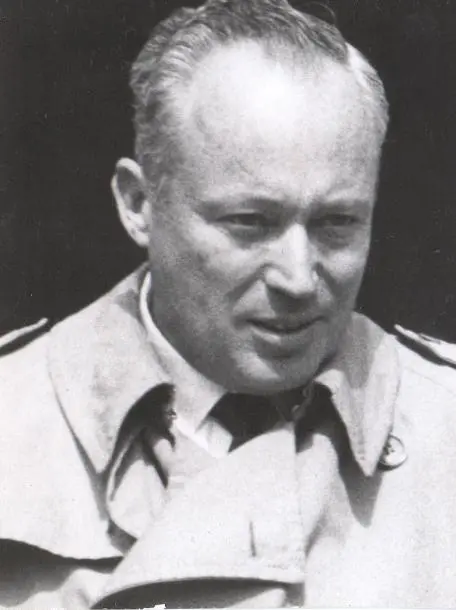
- Название:Leon Uris
- Автор:
- Жанр:
- Год:неизвестен
- ISBN:нет данных
- Рейтинг книги:4 / 5. Голосов: 1
-
Избранное:Добавить в избранное
- Отзывы:
-
Ваша оценка:
Leon Uris: краткое содержание, описание и аннотация
Предлагаем к чтению аннотацию, описание, краткое содержание или предисловие (зависит от того, что написал сам автор книги «Leon Uris»). Если вы не нашли необходимую информацию о книге — напишите в комментариях, мы постараемся отыскать её.
Review
"Not only authentic as history . . . . It is convincing as fiction . . . . The story of a sacrifice that had real meaning and will forever be remembered . . . . A fine and important novel." --
Leon Uris — читать онлайн бесплатно полную книгу (весь текст) целиком
Ниже представлен текст книги, разбитый по страницам. Система сохранения места последней прочитанной страницы, позволяет с удобством читать онлайн бесплатно книгу «Leon Uris», без необходимости каждый раз заново искать на чём Вы остановились. Поставьте закладку, и сможете в любой момент перейти на страницу, на которой закончили чтение.
Интервал:
Закладка:
“Sorry, Mr. de Monti. Until further instructions you will have to file all dispatches here at the Bureau for Censorship.”
Chris was tired and his head was fuzzy from the long trip back from the front lines. He stifled his irritation, knowing nothing could be done until he could put the pieces back in place. A hot bath and a tall drink and the things that a man looks forward to after living in the mud were in order.
While he soaked arid sipped he decided not to pursue it any more until he could get his mind straight after a night’s sleep.
Chris hid himself at a corner table at Bruhl House to avoid conversation and nibbled his way halfheartedly through a leather-tough schnitzel. The room was filled with guttural sounds of talk about the eastern front, the voices sharp with confidence.
“You are not hungry tonight, Mr. de Monti?” the waiter asked patronizingly as Chris gave up. “It is getting more and more difficult to put together an eatable menu. They ... get it all.”
Chris signed the bill and wandered out into the street. Warsaw was a gay place these days. The city was filled with German troops having their last fling before shipment to the eastern front. Although the Polish people were open in their hatred of the enemy, there were enough women not annoyed with patriotic considerations to give the German lads a good time. Brothels reaped a fortune, beer and vodka and goldwasser flowed in the taverns, and even the ancient streetwalkers struck an unexpected vein of gold.
Most of Warsaw’s musicians were Jews. German soldiers and their girls slipped into the ghetto to dance and live it up in one of the fifty night clubs, mainly operated by the Big Seven, for the music on the Aryan side was dreadful.
Chris walked for several blocks. He was weary and unsettled from the shocks of war and hung in limbo by the sudden turn of events in Warsaw.
From the taverns, there was riotous singing from Germans as drunk as Poles and from Poles as drunk as Poles. In order to avoid further accosting by the streetwalkers, he crossed at Pilsudski Square and stopped to get his bearings.
Back to his car and home? No. Damned apartment gave him the creeps.
Track down a party? A good bender and maybe a little action afterward? No.
Chris looked around, then found himself walking up a footpath in the Saxony Gardens, which seemed more delightful with every step because it put the sounds of Warsaw behind him. It grew darker and dimmer as he walked. All he could hear now were occasional squeals from the bushes by roomless couples consummating their deals. Now and then a self-conscious pair emerged from the thickets or down the path, avoiding his eyes.
Chris walked past the swan lake. So often he had waited there for Deborah ... sitting on the bench ... waiting for her to appear. That first wonderful instant he would see her ... That moment never changed, never dulled.
Damned fool, sitting here. Deborah isn’t coming up the path—there won’t be a tryst. No beautiful Deborah to see through the velvet curtains. Only a roomful of microphones and hidden eyes.
Chris was magnetically drawn to the ghetto wall. He crossed the Saxony Gardens and wandered along Chlodna Street, which divided the big and little ghettos. On both sides of him was the wall. The night lights caught the broken glass cemented on the top, causing it to sparkle like the sudden glint of a rat’s eyes.
So dark ... so quiet. It was hard to comprehend that six hundred thousand people lay in silence on the other side. All that could be heard was the sound of his own steps, and all that could be seen of life was his shadow, which grew longer and longer as the light contorted the angle of his movement.
He stood underneath the bridge. It was covered with barbed wire. He had come there many times during the day and stared at it, watching the Jews cross from one ghetto to the other over the “Polish corridor,” hoping beyond hope he could catch a glimpse of Deborah.
He stood for a half hour.
What the hell, he thought, and walked away quickly.
From the corner of his eye he detected movement in an indentation in the wall ahead of him. Quickly two men stepped out and blocked his path. Chris stopped and looked over his shoulder. Two more men were behind him. He could not distinguish their faces, but the bulky cut of their clothing and leather workers’ caps and their size intimated that they were thugs.
“Waiting for somebody under the bridge, Jew boy?” a voice came from one of the figures.
Hoodlums out Jew hunting. Big sport, these days. Good source of income. What to do? Show his papers and pass through?
“Come on, Jew boy. Two hundred zlotys or you’ll take a walk to Gestapo House.”
Chris’s blood boiled. “Go to hell,” he snapped, and walked straight at the pair ahead of him.
One from behind hooked his arm and turned him around. Chris drove his fist into the figure’s mouth and the man fell backward, hit the curb, and landed on the flat of his back.
Damn! Damn my temper!
Two leaped on him, and while he struggled to free himself the third brought a blackjack to the side of his cheek.
A surge of raw strength threw the men from him. As he shook himself free, the first one got up and caught him in the eye with a hamlike fist, and for an instant Chris was blinded. He reeled, then stopped abruptly as his back hit the ghetto wall.
Chris grunted as the blackjack found its mark again. He sank to his hands and knees and wobbled on all fours and the ground spun around him.
“Get up, Jew boy!”
Chris looked up. They hovered over him. One with the blackjack, another with a jagged broken bottle. Another, bloody-mouthed from his blow. He could not see the fourth man.
His head cleared and the ground steadied. Chris lurched up, ramming his shoulder into the one with the glass bottle to crack out of the ring. With the air suddenly smacked from his lungs, the hoodlum fell and sat on the ground, gasping.
And then Chris sank under a rain of fists and boots. He was jerked to his feet and propped against the wall, his arms spread-eagled as in the position of a crucifixion. The leader could not resist one last smash into the stomach of his helpless victim. A light was held to Chris’s face. His dark Italian features were studied. “He’s a Jew, all right.”
Chris’s head rolled up and his eyes opened and he snarled. The leader pressed the jagged glass close to his eye, so he dared not move.
Chris brought his knee up into the man’s groin and the man shrieked and staggered back, then came forward, enraged and intent on cutting up his face.
“Wait. He fights too good to be a Jew. We had better make sure he is.”
“What’s the difference now? Just take his money.”
“Holy Mother! Look at these papers! He isn’t a Jew.”
“Let’s get out of here.”
Footsteps ... faded ... they’re gone ...
Chris slipped down to the ground, bloody, and pawed around to pull himself up.
Someone stood over him. He managed to hold his head up enough to see the faces of a frightened middle-aged couple.
“Help me ...”
“Don’t touch him, Poppa. Can’t you see he’s a Jew? He jumped over the wall. Leave—leave before the guard comes.”
Chapter Twenty-seven
A WEEK PASSED BEFORE Horst von Epp returned to Warsaw. He entered the Holy Cross Church, spotted Chris kneeling in the first row, and knelt beside him.
“Good Lord,” Horst said, “what happened to you?”
“I was mistaken for a Jew.”
“Bad mistake, these days.”
“You should have seen me a week ago.”
“I thought we’d better meet out of the office,” Horst said, nodding in the direction of the little black box on the altar containing Chopin’s heart. “Let’s take a walk. That box may have a microphone hidden in it. Matter of fact, I bit into a microphone planted in my breakfast bun this morning.”
Читать дальшеИнтервал:
Закладка:
Похожие книги на «Leon Uris»
Представляем Вашему вниманию похожие книги на «Leon Uris» списком для выбора. Мы отобрали схожую по названию и смыслу литературу в надежде предоставить читателям больше вариантов отыскать новые, интересные, ещё непрочитанные произведения.








Обсуждение, отзывы о книге «Leon Uris» и просто собственные мнения читателей. Оставьте ваши комментарии, напишите, что Вы думаете о произведении, его смысле или главных героях. Укажите что конкретно понравилось, а что нет, и почему Вы так считаете.