Mila 18 - Leon Uris
Здесь есть возможность читать онлайн «Mila 18 - Leon Uris» весь текст электронной книги совершенно бесплатно (целиком полную версию без сокращений). В некоторых случаях можно слушать аудио, скачать через торрент в формате fb2 и присутствует краткое содержание. Жанр: Старинная литература, на английском языке. Описание произведения, (предисловие) а так же отзывы посетителей доступны на портале библиотеки ЛибКат.
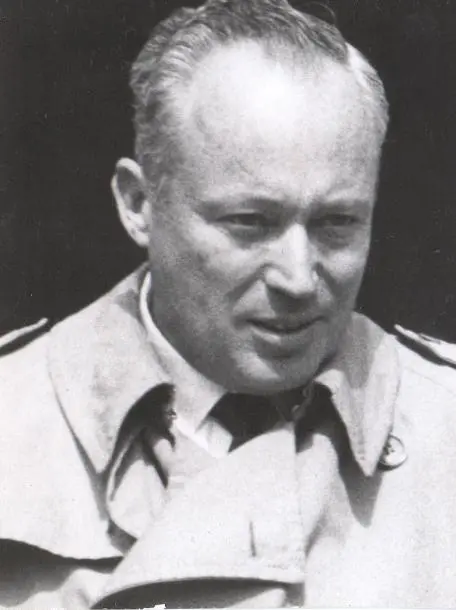
- Название:Leon Uris
- Автор:
- Жанр:
- Год:неизвестен
- ISBN:нет данных
- Рейтинг книги:4 / 5. Голосов: 1
-
Избранное:Добавить в избранное
- Отзывы:
-
Ваша оценка:
Leon Uris: краткое содержание, описание и аннотация
Предлагаем к чтению аннотацию, описание, краткое содержание или предисловие (зависит от того, что написал сам автор книги «Leon Uris»). Если вы не нашли необходимую информацию о книге — напишите в комментариях, мы постараемся отыскать её.
Review
"Not only authentic as history . . . . It is convincing as fiction . . . . The story of a sacrifice that had real meaning and will forever be remembered . . . . A fine and important novel." --
Leon Uris — читать онлайн бесплатно полную книгу (весь текст) целиком
Ниже представлен текст книги, разбитый по страницам. Система сохранения места последней прочитанной страницы, позволяет с удобством читать онлайн бесплатно книгу «Leon Uris», без необходимости каждый раз заново искать на чём Вы остановились. Поставьте закладку, и сможете в любой момент перейти на страницу, на которой закончили чтение.
Интервал:
Закладка:
As usual, Alex thought, Rabbi Solomon has all the answers. Perhaps he has an answer that has been nagging at me for weeks now. For a long time Alexander longed to show someone his journal. He desired a concurrent opinion that his notes and hours of work at it really had some significance. He knew that Simon Eden and David Zemba had been more or less indulgent of a former historian. Time and again he was tempted to take someone into his confidence. But whom? Rabbi Solomon? Beneath that crustiness lay a shrewd and brilliant mind. One thing was certain—the man could be trusted. Alex started to clear his throat for the proclamation.
“Alex. Already, what is on your mind? You are like a little boy with a secret. Nu?”
Alex smiled and walked to the door and bolted it. He went to the big floor safe behind his desk, dialed the combination, and pulled the heavy iron doors open and took out three volumes of thick notebooks wrapped in a large canvas cloth and placed them before the old man.
“Nu?” said Solomon, putting on his thick glasses. “What is the great mystery?” He bent his face down so that his nose nearly touched the page to give vision to his semi-blind eyes. “Alex, you are a goy. You even write in Polish.”
“You will find some in Yiddish, some in Hebrew.”
“Hummm—let me see. Let me see what is so important. ‘August 1939. This is the first entry in my journal. I cannot help but feel that war will begin in a few weeks. If the lessons of the past three years are any barometer, something awesome is apt to happen if Germany makes a successful invasion. ...’ ” He looked up quickly to Alex and back to the book, and only his mouth moved, forming the words as he read more rapidly.
Rabbi Solomon seemed spellbound as he turned page after page. It was all there. From the first declaration of Alexander Brandel’s intuition of a unique event to the daily record from the moment of occupation. There were limericks by Crazy Nathan, gossip, German directives, his personal diary, events of the world outside, ghetto poems, songs, poetry. The names and number of Yiddish theatrical productions. The recording of the sudden departure of friends. The constant groping for an answer.
At the end of the first hour, when he had closed the initial volume of the journal, Rabbi Solomon knew he had read a remarkable history of his people going through another siege of Rome and Greece and Babylon.
His eyes stung and were watery, but he quickly opened the second volume and thumbed through page after page with pulsating wonder.
Then he stopped.
“Who knows about this?” he asked in a hush.
“Eden. Zemba. Emanuel Goldman, before his murder.”
The rabbi was on his feet “When have you had time?”
“At night, in my room.”
“Amazing! Your intuition of a holocaust. Your wisdom in putting it all down on paper before the events occurred.”
Alex shrugged. “Time and again Jews have written secret histories from intuition.”
“Intuition? I wonder. The Lord works in His own ways. Moses was a goy, like you. Alex, you must not leave this about. Not even in the safe. Hide it.”
“Rabbi, I have never seen you so excited. Are you certain of its importance?”
“Certain! This will sear the souls of men for centuries to come. This journal is a brand that is to be stamped on the German conscience so that a hundred of their unborn generations will have to live with these words with guilt and shame!”
Alex sighed and nodded with contentment. He knew now that all those hours through the night when he had been drugged from lack of sleep and forced his hand to write out another line had not been in vain.
“May God forgive me for saying this, Alex, but that journal is like a new chapter of the ‘Valley of Tears Chronicle.’ ”
Journal Entry
Rabbi Solomon has an infectious enthusiasm for the journal and he has paid me the most magnificent of compliments. He calls it a new chapter in the “Valley of Tears Chronicle!” (The “Valley of Tears” lists fifteen centuries of Jewish martyrdom, particularly detailing the massacres and suffering of the Jews under the Crusaders during the Middle Ages. The lifework of Rabbi Yosef Hacohen was discovered by Rabbi Eibeschutz in 1850 and translated and has become a part of our lore, prayer, and tradition.)
Rabbi Solomon insists I expand the journals and that it should be hidden more carefully and even duplicated in case of the destruction or German discovery of the original. Such precautions! He and I have gone to the basement of Mila 19 and made a hiding place by moving bricks. I think it is nonsense, but so long as it pleases him ...
We have formed a secret society of contributors. We call ourselves the Good Fellowship Club. Simon Eden and David Zemba are left over from the original contributors.
All of the executive council of the Bathyran (except Andrei Androfski) are members of the Good Fellowship Club; i.e., Susan Geller, Ervin Rosenblum, Tolek Alterman, and Ana Grinspan. Other members:
Silberberg, the former playwright, who is on the Jewish Civil Authority and our closest ally there.
Rodel, Communist leader in the ghetto. He has been in semi-hiding since the occupation but has been valuable in both children’s aid and contacts on the Aryan side.
Dr. Glazer, chief of medical staff of Orphans and Self-Help.
Rabbi Solomon, of course.
Father Jakub, priest of the Converts Church. I have known him since 1930. He is one of the few who has had a long record of sympathetic understanding toward us. (Incidentally, Orphans and Self-Help does not have much to do with converts. The converts and half Jews fare much better than most in the ghetto. It seems as though the Catholic Church is determined to take care of “their” Jews.)
From time to time we will vote in new members to the Good Fellowship Club.
Ervin Rosenblum, who still works on the Aryan side and has less demands on his time than we do, has agreed to spend his spare time classifying and cataloguing the information now pouring in.
Rabbi Solomon is making duplicate copies of the first three volumes (in Yiddish and Hebrew only). In the Jewish tradition, special scribes write all our Torah scrolls by hand. That is why they have been so accurate for millennia. Seeing Rabbi Solomon copying the journal reminds me of that.
It is thrilling to see this come alive and the belief that the work is important.
I must admonish everyone to write more neatly, especially Father Jakub.
ALEXANDER BRANDEL
Chapter Twenty-one
“RACHAEL.”
“Wolf!”
They stood facing each other in the hallway outside the main recreation room of the new Max and Soma Kleperman Orphanage on Nowolipki Street. Children swirled around them before herding nurses who clapped their hands sternly.
“Wolf, this is such a surprise, seeing you.”
“I didn’t know I was going to be able to come in. I didn’t have any time to write.”
“How did you find out where I was?”
“Stephan told me. I was with him all morning. I’ve been here for an hour. I was watching you give the recital from out here. You were very good.”
“Why didn’t you come in?”
“I don’t know. I got to watching you singing and playing and watching the kids all laughing ...”
The hallway suddenly became empty. It was shadowy and hard for them to see each other, and they were wordless as the impact of the sudden meeting lessened.
“It’s nice to see you again,” Wolf said.
“Will you be here long?”
“That depends. I don’t know.”
Wolf looked about and grunted. “Could we take a walk or something? Here, let me hold your music.”
Читать дальшеИнтервал:
Закладка:
Похожие книги на «Leon Uris»
Представляем Вашему вниманию похожие книги на «Leon Uris» списком для выбора. Мы отобрали схожую по названию и смыслу литературу в надежде предоставить читателям больше вариантов отыскать новые, интересные, ещё непрочитанные произведения.








Обсуждение, отзывы о книге «Leon Uris» и просто собственные мнения читателей. Оставьте ваши комментарии, напишите, что Вы думаете о произведении, его смысле или главных героях. Укажите что конкретно понравилось, а что нет, и почему Вы так считаете.