Mila 18 - Leon Uris
Здесь есть возможность читать онлайн «Mila 18 - Leon Uris» весь текст электронной книги совершенно бесплатно (целиком полную версию без сокращений). В некоторых случаях можно слушать аудио, скачать через торрент в формате fb2 и присутствует краткое содержание. Жанр: Старинная литература, на английском языке. Описание произведения, (предисловие) а так же отзывы посетителей доступны на портале библиотеки ЛибКат.
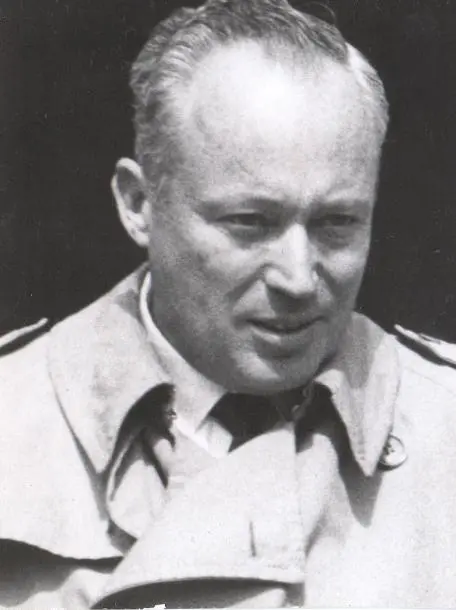
- Название:Leon Uris
- Автор:
- Жанр:
- Год:неизвестен
- ISBN:нет данных
- Рейтинг книги:4 / 5. Голосов: 1
-
Избранное:Добавить в избранное
- Отзывы:
-
Ваша оценка:
Leon Uris: краткое содержание, описание и аннотация
Предлагаем к чтению аннотацию, описание, краткое содержание или предисловие (зависит от того, что написал сам автор книги «Leon Uris»). Если вы не нашли необходимую информацию о книге — напишите в комментариях, мы постараемся отыскать её.
Review
"Not only authentic as history . . . . It is convincing as fiction . . . . The story of a sacrifice that had real meaning and will forever be remembered . . . . A fine and important novel." --
Leon Uris — читать онлайн бесплатно полную книгу (весь текст) целиком
Ниже представлен текст книги, разбитый по страницам. Система сохранения места последней прочитанной страницы, позволяет с удобством читать онлайн бесплатно книгу «Leon Uris», без необходимости каждый раз заново искать на чём Вы остановились. Поставьте закладку, и сможете в любой момент перейти на страницу, на которой закончили чтение.
Интервал:
Закладка:
“And deep in your heart you really don’t want her back. Except for the blow to your vanity, you are happy to be free.”
For a moment Chris looked offended.
“That’s hitting below the belt, Oscar.”
“Truth does not offend you, Christopher.”
“I guess you’re right.”
“Well, there’s no use of both Eileen and me losing you. I saw it coming for a long time. One of us had to be the big loser, and I’m glad it’s not me.”
“Let me get back to work, Oscar, right away.”
“Fine. How does Ethiopia sound? The legions of Rome are on the march. That Italian passport of yours will come in handy.”
“You know how I feel about the Fascists. I can’t stomach covering their side of a war against defenseless little black men with spears.”
“You are a journalist, Christopher. Leave your personal politics out of it. We can get you attached to the Italian command. Get the best you can out of the latitude they give you to operate.”
Chris walked slowly to the big wall map behind Oscar Pecora’s desk. “Ethiopia? Why not? That’s about as far away as I can get from the goddamned mess I’ve made.”
Chapter Ten
MUSSOLINI’S CAMPAIGN IN ETHIOPIA was a pleasant little war. Sort of reminded one of when the colonizers of the last century directed their armies from campaign chairs in the shade of banana trees with a tall, cool gin and tonic in their hands as they brought “civilization” to the Zulus.
It was, indeed, good practical experience for the aspiring new legions of Rome. The little clay townships made excellent targets for the artillery gunners. The infantry could zigzag about the tall brush, boning up on their efficiency without too much danger, for the natives were mostly armed with spears and the few Ethiopian riflemen were dreadful shots.
Chris made peace with himself and played it straight. He could stand nearly everything except when he interviewed the bragging, strutting aviators after they had returned from their missions of bombing and strafing undefended villages of thatched huts.
Ethiopia was not the real battleground.
The British fleet ordered a muscle-flexing maneuver in the Mediterranean. Mussolini called the bluff. There were indignant pickets in Paris and New York and London against Italian legations by people who had learned only in the last month or so that there was actually a country named Ethiopia.
For one fleeting moment the world had a twinge of conscience. An embargo was called against Italy, but it was really not an embargo at all.
Then, for all its inept and ill-fated existence, the League of Nations was honored by one great moment of human dignity. A small black man who was named the Lion of Judah, Haile Selassie, the Emperor of Ethiopia, made a plea to the souls of men for his people. But Ethiopia was a long way from about everywhere, and who the hell really cared about Addis Ababa?
Apathy of free men. This was the real victory. The scent of blood made the legions of Rome hungry.
On the Yangtze River an American gunboat named the Panay was sunk. Some Americans were able to convince other Americans that the Panay had no right being there in the first place. Yellow men in the Orient were battling yellow men—but that was far away too.
There followed the era of appeasement. The Versailles Treaty was broken by the tramping of German boots into the Rhineland.
The bullies grew brave.
The crucible: Spain.
“Christopher, you did a magnificent job in Ethiopia. Your restraint was remarkable. Now, Christopher! Your Italian passport is really going to come in handy,” Oscar Pecora said. “I’ve gotten you credentials to cover the Insurgent side in Spain.”
Christopher de Monti went to Spain on the Fascist side as a man obsessed with a mission. This was the climax of his life. This was the meaning of every word he had read about freedom and truth. Spain was not Ethiopia. Now the world would listen!
He joined Franco’s forces just after the conquest of Malaga. He became a man with a split personality. On the surface, Christopher de Monti sent out routine dispatches and stories expected of a competent journalist.
All his skill and ingenuity were used in smuggling stories to the free world. Using daring and cunning, he risked his life time and again to get reports over the border to the “neutral” embassies in self-exile in France.
Christopher de Monti secretly reported the arrival of millions of tons of German and Italian war materials—cannons, tanks, airplanes.
Christopher de Monti secretly reported the arrival of the first contingents of German and Italian aviators fighting for Franco.
Christopher de Monti secretly reported that Germany and Italy were using Spain as a testing ground for personnel and equipment.
Christopher de Monti secretly reported the arrival of masses of Italian ground forces.
Christopher de Monti secretly reported the atrocities committed by Franco’s Moroccan hordes and wrote the true reports that the ranks of the Catholic Church were, in actuality, with the Loyalist government.
Christopher de Monti was the first to send through a secret report that the “unidentified” submarines blockading Loyalist ports were Italian.
He was the first to send through documentary evidence that the Italian air force was murdering women and children in undefended open cities.
And he watched his work drown in a cesspool of German propaganda. The rape of Spain, the first of the great sellouts in an age of sellouts, left him a disillusioned man. Fainthearted democracies hid behind shallow words and non-intervention pacts and embargoes which penalized a democracy fighting for its life.
The world did not want to hear what Christopher de Monti risked his life to tell them.
Oscar Pecora kept a close eye on Chris and finally decided that he could not go on smuggling out his stories from the Franco side. Afraid for Chris’s life, he recalled him from Spain early in 1938.
Christopher de Monti, a quiet boy who had formed a love of truth long before he was a man, had been betrayed by his mother and disillusioned by his father. He had destroyed his own relations with a fine woman and he hated himself for that. But this was to be the crudest disillusion of all.
He left Spain with his faith in the human race gone.
Chris had always been a sensible and hard-working journalist. He was particularly sober and responsible in a fraternity of the not-so-sober and sometimes irresponsible. His one binge had been with reason—when he broke his marriage with Eileen.
His second was worse. Oscar Pecora bailed him out of a Paris police station after a month’s solid drinking and packed him off to his villa on the lake at Lausanne.
Oscar Pecora was a patient man who loved Christopher. Christopher was his own protégé. Like a son, Chris sulked bitterly until the boiling within him could not be contained.
And one night it all exploded.
Chris was drunk. Madame Pecora, Oscar’s beautiful former-opera-singing wife, had retired. They were sitting on the balcony and there was a full moon on the lake and Chris was coming to the end of a fifth of scotch whisky.
“Why, Oscar, why! Why did they do that?”
“Tell me about it, Chris.”
“Saw them killing women and children. Dirty bastard Italian fliers sitting in their dirty bastard clubs bragging about it ... Watched them torture soldiers. Ever seen a Moroccan torture someone? By putting his testicles in a squeezer ... Oscar ... God dammit ... I got all that over the border to the Americans!”
“Christopher. Every report that you sneaked out of Spain was planted in newspapers and wire services. All we can do is give the facts to the people. We cannot force them to stage a rebellion in righteous wrath.”
Читать дальшеИнтервал:
Закладка:
Похожие книги на «Leon Uris»
Представляем Вашему вниманию похожие книги на «Leon Uris» списком для выбора. Мы отобрали схожую по названию и смыслу литературу в надежде предоставить читателям больше вариантов отыскать новые, интересные, ещё непрочитанные произведения.








Обсуждение, отзывы о книге «Leon Uris» и просто собственные мнения читателей. Оставьте ваши комментарии, напишите, что Вы думаете о произведении, его смысле или главных героях. Укажите что конкретно понравилось, а что нет, и почему Вы так считаете.