SS
Здесь есть возможность читать онлайн «SS» весь текст электронной книги совершенно бесплатно (целиком полную версию без сокращений). В некоторых случаях можно слушать аудио, скачать через торрент в формате fb2 и присутствует краткое содержание. Жанр: Справочники, на английском языке. Описание произведения, (предисловие) а так же отзывы посетителей доступны на портале библиотеки ЛибКат.

- Название:SS
- Автор:
- Жанр:
- Год:неизвестен
- ISBN:нет данных
- Рейтинг книги:5 / 5. Голосов: 1
-
Избранное:Добавить в избранное
- Отзывы:
-
Ваша оценка:
SS: краткое содержание, описание и аннотация
Предлагаем к чтению аннотацию, описание, краткое содержание или предисловие (зависит от того, что написал сам автор книги «SS»). Если вы не нашли необходимую информацию о книге — напишите в комментариях, мы постараемся отыскать её.
SS — читать онлайн бесплатно полную книгу (весь текст) целиком
Ниже представлен текст книги, разбитый по страницам. Система сохранения места последней прочитанной страницы, позволяет с удобством читать онлайн бесплатно книгу «SS», без необходимости каждый раз заново искать на чём Вы остановились. Поставьте закладку, и сможете в любой момент перейти на страницу, на которой закончили чтение.
Интервал:
Закладка:
7.4.3 Managing demand
Customer assets or the user s of services are a source of variation in demand. Service demand is not only embedded with uncertainty – it also varies significantly based on the type of customer assets that generate demand and the patterns of business activity supported. It is therefore necessary to analyse patterns of business activity. Sources of demand with similar workload characteristics are identified and classified into distinct segments. Each segment is then expected to represent a certain type of demand distinguished by variables such as frequency, patterns, and volume of business activity. Service design s, model s and assets are then specialized to serve a particular type of demand most effectively and efficiently.
The resulting focus leads to higher levels of customer satisfaction within each segment since service assets are now optimized to serve relatively homogeneous groups of users. Processes and system s are simplified, standardized and stabilized leading to cost-efficiencies, higher utilization levels for resource s, and reduction in error s due to excessive complexity (Figure 7.17). The segmentation of demand does not mean that economies of scale are entirely lost. They are simply captured elsewhere through sharing of resources that are common across segments and service types. The same segment of users can present more than one type of demand simultaneously or under different conditions.
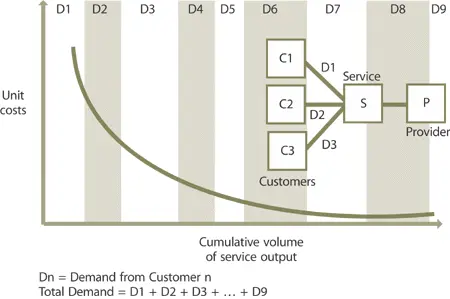
Figure 7.17 Consolidation of demand across customers
7.5 Strategy and improvement
7.5.1 Quality perspectives
Industry experience shows that SLA metric s are necessary but not sufficient to measure the quality of service delivered to customers. The quality of services perceived by customers and their users rests on the utility and warranty delivered. In other words, the notions of service quality are embedded within the notions of service utility and warranty. Service quality takes into account the positive impact of the service (utility) and the certainty of impact (warranty). There are many definitions of quality that are summarized below into four broad perspectives:
Level of excellence
Value for money
Conformance to specifications
Meeting or exceeding expectations.
The dominant perspective will influence how services are measured and controlled particularly within the context of Service level management .
Each perspective has its own strengths and weaknesses with respect to measurement, general applicability, its usefulness to managers and relevance to customers. It is therefore a strategic decision for service provider s to make, or a strategic imperative they support based on the customers they serve and distinctions they must make. One or more, if not all four, perspectives, are usually required to guide the measurement and control of service management processes (Figure 7.18).
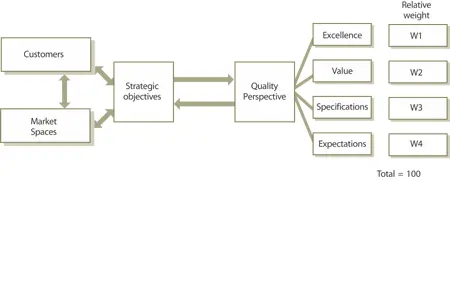
Figure 7.18 Quality perspectives and strategic imperatives influence each other
Defining the meaning of service quality is one of the important decisions that senior leadership makes. Quality by itself is a basis of strategies in a market space and therefore the definition of quality influences strategic decisions and objective s. It influences the way services are designed and operated, and it influences internal performance measures, policies and incentives used by managers.
7.5.2 Warranty factors
7.5.2.1 Intangibility factor
There are differences and similarities in how goods and services are produced, and how their value is transferred to customers, verified and assured (Table 7.3). The activity and impact of a service can be visible or tangible in certain ways, as in the case of repaired equipment, shipped document s, printed reports, and physical record s of completed transaction s, installations and upgrades. Shipping of documents involves tangible changes in terms of location and possession. People are mobile with the use of wireless phones. However, the actual utility of services, such as the right person having the document at the right time, the flexibility to conduct business from anywhere, and the productive state of equipment, is always intangible. A document shipped late, people moving about without a signal on their phone, and equipment repaired but not usable have no utility for the customer.
Physical characteristics
Value transfer
Proof of transfer
Utility
Warranty
Goods
Always tangible
Embedded in objects and transferred to customers who subsequently extract it in use
Verifiable on arrival or exchange of goods in tangible form
Sometimes intangible
Assurance on utility over a fixed period under specific conditions for use; does not include normal wear and tear or misuse
Service s
Sometimes tangible
Transferred on demand to customers at the time of service delivery
Not easily verified since it is embedded in the context of outcomes and conditions
Always intangible
Assurance on utility over the duration of the service contract under specific conditions for use
The intangibility factor makes the availability of a service almost a surrogate measure of service quality . It is more obvious than capacity , continuity and security. User s perceive the effects of capacity, continuity and security in terms of availability.
Service s typically become unavailable because of failure s in the underlying service asset s such as application s, infrastructure, processes and people. Services are value-creating system s whose overall availability depends on a combination of factors such as reliability , maintainability , redundancy , capacity and structure. The following sections on reliability, maintainability, redundancy and accessibility refer to services simply as systems.
7.5.3 Reliability
7.5.3.1 Applications and infrastructure
Highly reliable systems function without disruptions or failures for longer periods on average. To fulfil the warranty aspect of value to customers, services must be adequately reliable. This is a critical input from Service Strategy to Service design and Service operation . The provision of highly reliable services can be the basis of strategic positioning. Some services need to be more reliable than others, depending on the business outcomes they support.
The reliability of a service depends on the reliability of underlying service assets and their configuration . The reliability of an asset depends on various factors such as the quality of its design, development , installation, obsolescence, maintenance, and security. System s and components function properly within the parameters of their design . Operating conditions are an important factor in discussions on reliability. Scheduled and preventive maintenance activities that eliminate causes of potential and recurring failure s are also an important factor.
Читать дальшеИнтервал:
Закладка:
Обсуждение, отзывы о книге «SS» и просто собственные мнения читателей. Оставьте ваши комментарии, напишите, что Вы думаете о произведении, его смысле или главных героях. Укажите что конкретно понравилось, а что нет, и почему Вы так считаете.