SS
Здесь есть возможность читать онлайн «SS» весь текст электронной книги совершенно бесплатно (целиком полную версию без сокращений). В некоторых случаях можно слушать аудио, скачать через торрент в формате fb2 и присутствует краткое содержание. Жанр: Справочники, на английском языке. Описание произведения, (предисловие) а так же отзывы посетителей доступны на портале библиотеки ЛибКат.

- Название:SS
- Автор:
- Жанр:
- Год:неизвестен
- ISBN:нет данных
- Рейтинг книги:5 / 5. Голосов: 1
-
Избранное:Добавить в избранное
- Отзывы:
-
Ваша оценка:
SS: краткое содержание, описание и аннотация
Предлагаем к чтению аннотацию, описание, краткое содержание или предисловие (зависит от того, что написал сам автор книги «SS»). Если вы не нашли необходимую информацию о книге — напишите в комментариях, мы постараемся отыскать её.
SS — читать онлайн бесплатно полную книгу (весь текст) целиком
Ниже представлен текст книги, разбитый по страницам. Система сохранения места последней прочитанной страницы, позволяет с удобством читать онлайн бесплатно книгу «SS», без необходимости каждый раз заново искать на чём Вы остановились. Поставьте закладку, и сможете в любой момент перейти на страницу, на которой закончили чтение.
Интервал:
Закладка:
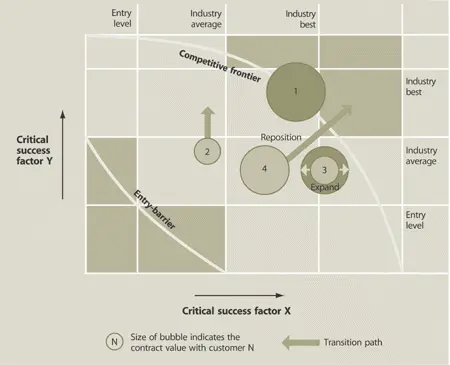
Figure 7.11 Service Transition advises strategic options
Service Transition capabilities help determine good answers to the following types of questions:
What are the implications with each path in terms of costs, time and risks?
In what scenarios is one path preferable to the other?
What are the likelihoods of those scenarios?
Can existing assets support a transition path?
Are there contingency plans to contain the adverse impact changes?
Can a particular change be implemented fast enough to support the strategy ?
The following are examples of tactical and operations level initiatives evaluated by ST to implement strategy:
Augment staff at call centre s
Analyse business activity patterns and redefine user s
Define Service level package s and revise SLA templates
Develop knowledge assets specialized for the market space
Add new service to the market space
Replicate assets and configure for fault tolerance
Offer complementary services
Implement service-oriented architecture
Re-engineer Incident Management process.
The planning and development of the ST function s and processes are dependent on the type of strategies pursued. The nature of the strategy , market spaces, services and customers will determine the type of transition s needed (Figure 7.12). ST requirement s are filtered by the context of the Contract Portfolio .
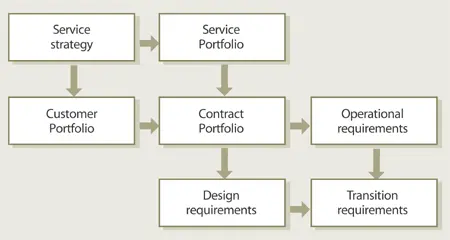
Figure 7.12 Service strategies generate requirements for Service Transition
The Contract Portfolio contains all the present and future commitments made to customers with respect to specific services. These commitments and any changes in them determine requirements for Service Design and Service Operation s. Those in turn determine the Transition Requirement s.
7.4 Strategy and operation
Strategies are ultimately realized through Service Operation. Well-crafted strategies with great potential are pipe dreams without proper support from operations. Strategies must be mindful of operational capabilities and constraints. Operation s, on the other hand, should clearly understand the outcomes necessary for a given strategy and provide adequate support with effectiveness and efficiency .
For example, some businesses have large-scale operations in several countries or regions with high levels of business activity driven by the needs of their own customers. The end-customers may be a cost-conscious but highly dependable source of revenue for the business . Many government agencies operate in similar business conditions though with different mandates. Such high-volume, low-margin, steady-stream business strategies depend on service provider s being able to support them with adequate availability and capacity but at low unit cost s.
7.4.1 Deployment patterns
Deploy service assets in patterns that are most effective in delivering value to customers. For example, multiple segments exist within internal and external markets. Each segment may have distinct requirements and common requirements with respect to other segments. Segments may exist within an organization such as the various user profile s and activity patterns discussed earlier in Section 5.5.3. Deployment of service assets should be in patterns that most effectively deliver the required utility and warranty in each segment across the Service Catalogue . Some segments may require dedicated capacity at one level even if they share lower levels of infrastructure with other segments (Figure 7.13). Customer s are willing to pay a premium for the privilege, making it easier for such a deployment pattern to pass the requirements of Financial Management .
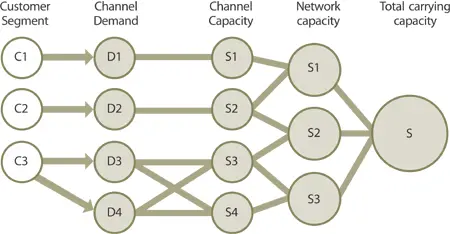
Figure 7.13 Example of a pattern for deployment of assets based on market segments
A template for deploying asset s is defined by the need to provide high levels of warranty for services in terms of capacity and continuity. In such cases, rather than have dedicated resource s, it is necessary to have shared service asset s to provide multiple levels of redundancy (Figure 7.14). Such patterns are also useful for service provider s to reduce the footprint of expensive infrastructure and to build economies of scale .
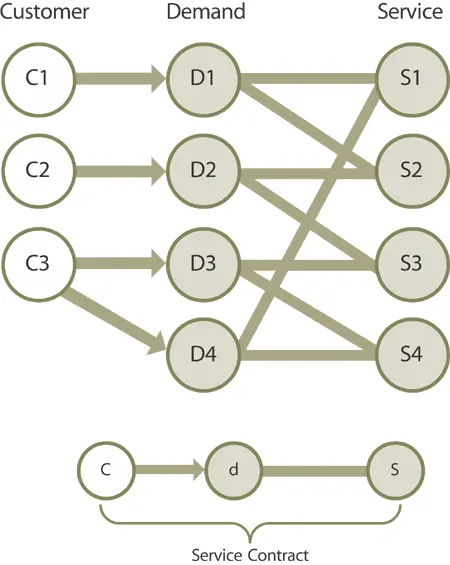
Figure 7.14 Example of a shared services pattern for capacity and continuity
Deployment patterns in Service operation by themselves define operational strategies for customers. Apart from the deployment of service assets, such strategies may include a particular set of service design s, service level options (or limits), and charging policies that recover the costs of assets.
7.4.2 Hosting the Contract Portfolio
The need to host service contract s influences deployment patterns. Service contracts are the context within which the Service Portfolio realizes its potential for creating value for customers. Growth in the Contract Portfolio may require a system for allocating contracts to service units that can host them. Each contract has its own set of commitments made to the customer in terms of utility and warranty. Hosting decisions seek to distribute costs and risks in the Contract Portfolio across service units (Figure 7.15). For example, a follow-the-sun model involving a visualized Service Desk located in four strategically located service units may suit one contract. Other contracts may require localized Service desk s with on-site support.
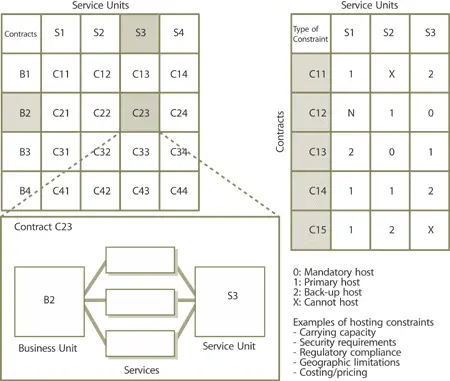
Figure 7.15 Hosting of service contracts
Hosting decisions involve close coordination between Service Strategy and Service Operation . The strategy for a market space has an influence on the contents of the Customer Portfolio and the Service Portfolio . This is because particular perspectives, positions, plans, and patterns (the Four Ps) open up or close the possibilities of what services are offered, on what contractual terms and conditions, and with what type of customers. The combination of Service Portfolio s and Customer Portfolios generates the Contract Portfolio (Figure 7.16). In other words, every item in the Contract Portfolio is mapped to at least one item in the Service Portfolio and at least one item in the Customer Portfolio. The mappings are one-to-one, one-to-many and many-to-one.
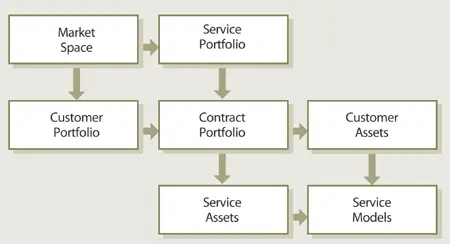
Figure 7.16 The Contract Portfolio
Service Operation is responsible for delivering the Contract Portfolio. Service Transition enables items in the Customer Portfolio and Service portfolio to enter the Contract Portfolio. Transition project s are of two types: services and customers. For each type of transition there are costs and risks to be evaluated by Service Transition. Items are added to the Contract Portfolio only after the necessary service asset s such as infrastructure, application s, knowledge assets and staff are made available.
Читать дальшеИнтервал:
Закладка:
Обсуждение, отзывы о книге «SS» и просто собственные мнения читателей. Оставьте ваши комментарии, напишите, что Вы думаете о произведении, его смысле или главных героях. Укажите что конкретно понравилось, а что нет, и почему Вы так считаете.