SS
Здесь есть возможность читать онлайн «SS» весь текст электронной книги совершенно бесплатно (целиком полную версию без сокращений). В некоторых случаях можно слушать аудио, скачать через торрент в формате fb2 и присутствует краткое содержание. Жанр: Справочники, на английском языке. Описание произведения, (предисловие) а так же отзывы посетителей доступны на портале библиотеки ЛибКат.

- Название:SS
- Автор:
- Жанр:
- Год:неизвестен
- ISBN:нет данных
- Рейтинг книги:5 / 5. Голосов: 1
-
Избранное:Добавить в избранное
- Отзывы:
-
Ваша оценка:
SS: краткое содержание, описание и аннотация
Предлагаем к чтению аннотацию, описание, краткое содержание или предисловие (зависит от того, что написал сам автор книги «SS»). Если вы не нашли необходимую информацию о книге — напишите в комментариях, мы постараемся отыскать её.
SS — читать онлайн бесплатно полную книгу (весь текст) целиком
Ниже представлен текст книги, разбитый по страницам. Система сохранения места последней прочитанной страницы, позволяет с удобством читать онлайн бесплатно книгу «SS», без необходимости каждый раз заново искать на чём Вы остановились. Поставьте закладку, и сможете в любой момент перейти на страницу, на которой закончили чтение.
Интервал:
Закладка:
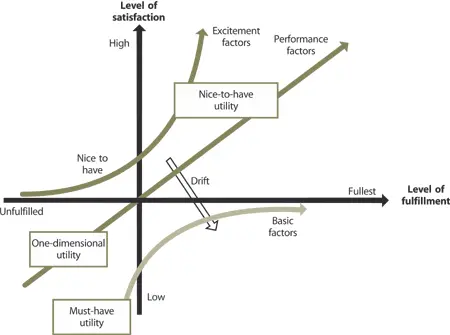
Figure 7.9 Mapping perceptions of utility28
Extensive dialogue is required with targeted customers or segments of market spaces to determine the attributes a service must have, should have, and could have in terms of must-have attractive utility. Questionnaires are used to elicit responses from customers from which further analysis is possible. The Kano Evaluation Table is a useful method (Table 7.2).
Customers are asked ...
Dysfunctional form (-)
How would you feel if the product does not have attribute X?
Functional form (+)
Customers respond ...
Like it
Expect it
Neutral
Accept it
Dislike it
How would you feel if the product has attribute X?
Like it
Q
E
E
E
P
Expect it
R
I
I
I
B
Neutral
R
I
I
I
B
Accept it
R
I
I
I
B
Dislike it
R
R
R
R
Q
B: Basic E: Excitement P: Performance I: Indifferent R: Reversed Q: Questionable
Table 7.2 The Kano Evaluation Table28
A well-designed service provides a combination of basic, performance and excitement attributes to deliver an appropriate level of utility for the customer. Different customers will place different weights or importance on the same combination of attributes. Furthermore, even if a particular type of customer values a particular combination, they may not find justification to pay for additional charges. The utility of a service can be under-engineered or over-engineered for a particular type of customer .
7.2.3 Design driven by constraints
Customer needs translate into attributes of a service, which in turn determine a set of design constraints. Design constraints are of various types. Their combined effect is to define a set of solutions that are feasible in terms of meeting customer needs (Figure 7.10). The shape and size of the solutions space changes with changes in any of the constraints still in effect. A constraint is no longer in effect when another constraint nullifies it. (Graphically the constraint is no longer one of the lines forming the solution space). Solutions at the corners of the space are preferred to solutions in the middle because they tend to push a constraint to its maximum limit.
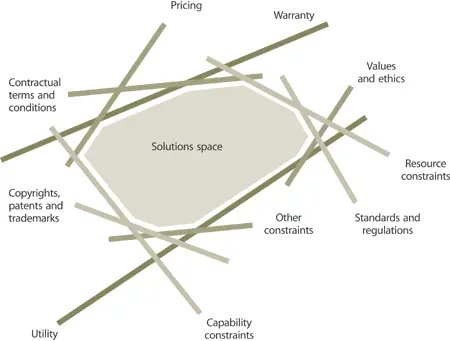
Figure 7.10 Design driven by constraints
There is no universal list of constraints for a given service. Developing the list of constraints and visualizing their combined interaction requires a team of specialists from business and technical practices to interact with customers, supplier s, partners and advisors. All five elements of the Service Lifecycle provide input for the constraints. The method is a means for Service Strategy to communicate challenges and opportunities to Service Design .
7.2.4 Pricing as a design constraint
Dissecting the customer’s business model is necessary to design , develop, package and offer services that meet the business needs of customers. Service designs are better with pricing as a key design constraint. By analysing how customers create value for their own customers it is possible to correctly identify the most important attributes of the service. This leads to better design and packaging of services. What outcomes are customers aiming to achieve? What resources and constraints do they have? What is the value customers place on the achievement of those outcomes, productivity of those resources, and the removal of those constraints? Answers to those questions are the basis for weighing the individual attributes and pricing them within a service bundle.
Take, for example, an aircraft manufacturer that designs derivative aircraft as a service for subsequent lease to specific customer segments. By utilizing price as a design constraint, and applying insight gained from customers sharing their specific industry knowledge, needs, business and revenue models, the manufacturer can decompose the final product into characteristics that can then be analysed in two ways. The first analysis focuses on what combinations of characteristics can maximize customer revenue, margins and/or excitement or satisfaction. This includes the price the customer is able and willing to pay for various characteristics, given its market positioning and economic models. The second analysis focuses on what groupings of characteristics the provider can bundle to best fulfil the needs of the customer, that also represent the best opportunity for cost reductions related to provisioning those services.
A common illustration of bundling service components in a manner that generates service cost reductions for a provider, while maximizing positive service impact for the customer, can be found in a car maintenance example. For many cars, the price of replacing a timing belt is fairly high, and is composed primarily of labour. Because the time and activities required to gain access to the timing belt are the same as those required to gain access to the water pump, mechanics will offer to replace both parts while servicing the car. By doing so, the customer can receive services for two components of great utility at a reduced rate, achieving greater piece of mind at a price substantially less than it would cost to have each component serviced separately. Conversely, while the provider sells only an incremental increase in the amount of labour, it can sell an additional piece of hardware which carries a superior margin, and increase the overall margin achieved on the service labour performed. In this example, both the provider and the customer achieve greater satisfaction from the transaction .
7.3 Strategy and transition
Service Strategy is dependent on the dynamic capabilities of service provider s, which allow effective responses to challenges and opportunities with customers and market spaces. Strategies often require changes to be implemented to achieve specific objective s while minimizing costs and risks. There are no cost-free and risk-free strategic plans or initiatives. There are always costs and risks with decisions such as introducing new services, entering new market space s, and serving new customers.
In many cases, the costs are real and in other cases, they are notional. The inability to respond quickly to a business need may have opportunity cost s for the service provider. They may also have real costs in terms of penalties or contract terminations. Service transition represents one of the most important sets of service management capabilities with processes such as Change Management , Configuration Management and service deployment . The ability to drive changes rapidly in Service Portfolio s and contracts is a critical success factor in certain market spaces and strategies. Therefore, Service Transition (ST) is an important capability in service management.
Service Transition system s and processes provide the decision analysis necessary to analyse, evaluate and approve strategic initiatives. They help determine the options or transition paths for changing the strategic position for a customer or market space (Figure 7.11). Service Transition evaluates the costs and risks for each path and takes into account the impact on existing contracts. Service Transition processes maintain visibility and control over service asset s, configurations and current allocation of resource s. To reduce risk of failure s all strategic changes go through Service Transition.
Читать дальшеИнтервал:
Закладка:
Обсуждение, отзывы о книге «SS» и просто собственные мнения читателей. Оставьте ваши комментарии, напишите, что Вы думаете о произведении, его смысле или главных героях. Укажите что конкретно понравилось, а что нет, и почему Вы так считаете.