Alexander Theroux - Darconville’s Cat
Здесь есть возможность читать онлайн «Alexander Theroux - Darconville’s Cat» весь текст электронной книги совершенно бесплатно (целиком полную версию без сокращений). В некоторых случаях можно слушать аудио, скачать через торрент в формате fb2 и присутствует краткое содержание. Год выпуска: 1996, Издательство: Holt Paperbacks, Жанр: Современная проза, на английском языке. Описание произведения, (предисловие) а так же отзывы посетителей доступны на портале библиотеки ЛибКат.
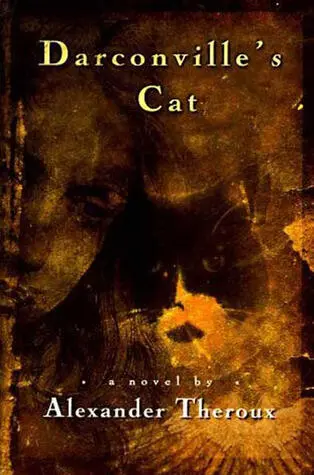
- Название:Darconville’s Cat
- Автор:
- Издательство:Holt Paperbacks
- Жанр:
- Год:1996
- ISBN:нет данных
- Рейтинг книги:3 / 5. Голосов: 2
-
Избранное:Добавить в избранное
- Отзывы:
-
Ваша оценка:
Darconville’s Cat: краткое содержание, описание и аннотация
Предлагаем к чтению аннотацию, описание, краткое содержание или предисловие (зависит от того, что написал сам автор книги «Darconville’s Cat»). Если вы не нашли необходимую информацию о книге — напишите в комментариях, мы постараемся отыскать её.
Darconville's Cat Its chapters embody a multiplicity of narrative forms, including a diary, a formal oration, an abecedarium, a sermon, a litany, a blank-verse play, poems, essays, parodies, and fables. It is an explosion of vocabulary, rich with comic invention and dark with infernal imagination.
Alexander Theroux restores words to life, invents others, liberates a language too long polluted by mutters and mumbles, anti-logic, and the inexact lunacies of the modern world where the possibility of communication itself is in question. An elegantly executed jailbreak from the ordinary,
is excessive; funny; uncompromising; a powerful epic, coming out of a tradition, yet contemporary, of both the sacred and the profane.
Darconville’s Cat — читать онлайн бесплатно полную книгу (весь текст) целиком
Ниже представлен текст книги, разбитый по страницам. Система сохранения места последней прочитанной страницы, позволяет с удобством читать онлайн бесплатно книгу «Darconville’s Cat», без необходимости каждый раз заново искать на чём Вы остановились. Поставьте закладку, и сможете в любой момент перейти на страницу, на которой закончили чтение.
Интервал:
Закладка:
The alternative was search-and-seizure. Classes at Quinsy College, excluding those for seniors, were still in session, and Darconville hoped that, rather than be found waiting for her at some door, he might meet her in a casual encounter. He roamed out by the hockey and archery fields, looked into the old tennis courts, and then walked out along, and then back by, “The Reproaches.” He stepped into the art building and went upstairs where in one classroom six narcoleptics, fast asleep on their notebooks, were missing the pointer-to-board lecture of Floyce R. Fulwider:
“This [tap] is a pot-walloper of the Flemish rubricator who called himself Pieter De Hooch, the grandfather of American gin. For his dates you’ll want 1629 and 1677. You may or may not be disheartened to know that he wanted nothing heroic [tap] in his art. His dry, domestic, explicit-as-arithmetic masterpukes [tap] tend nevertheless to narrative. Now let us look at this bit of scrumpy [tap]: Courtyard of a Dutch House . Notice the light archway with a woman in shadows staring off? Where is she facing? And why? The shading here is. .”
Darconville left the building and crossed over to the music building. He checked all the piano rooms: nothing. The auditorium was locked. He wandered over to Smethwick, going floor to floor, aisle to aisle, and found no one but two girls, upstairs, flipping through old Bride’s magazines and Miss Pouce, down in her office, pasting a concealing strip of paper over two blasphemous lines in the fourth stanza of Atalanta in Corydon . Where could she be? He cut across the street to the English building — opening doors, closing doors — and went through the history department to the Rotunda and then down to the dining hall. She was nowhere in sight. He was outside again, on the run now back around the ring-road by Gund and Truesleeve, heading toward the high-rise dorms which led, past the woods, toward the cemetery where in certain moods that had become all too characteristic of what in her frightened him Isabel was wont to go, to read, to think. But he saw only the memory of himself rising up creepily, slowly, from behind a gravestone with a gleam in his impish eyes — but this time of ridicule.
The seniors, during these days of grace, were sunbathing on dormitory steps, by the student union, across almost every lawn that Darconville crossed. They sprawled about in the sunshine like delicious confections in a sweetshop: tarts in wicked shorts; cupcakes in halters and cut-away jeans; and turnovers in swirl skirts up to the hips and brief shirts without so much as the hint of a bra. The main topic of conversation, of course, was the graduation dance to be held that night. It was the social event of the year.
“I’m about to blow up from excitement,” exclaimed Tracy Upjohn.
“Me too,” squeaked Berthalene Rhodie, catching her hands.
“Forget the dance,” said “Pookie” Pumpgarten, rising an inch to unpinch her shorts grown moist from the dewy grass. She winked at Mehitabel Huntoon and Betty Ann Unglaub. “It’s what’s for later !”
“Well, it just dreads me to death,” confessed Shirley Newbegin, unchambering a mouthful of bobby-pins and twirling out a set of pink, snailshaped rollers—”spoolies”—from her hair. Her fears, not to the dance, were rather being addressed to arrangements then being made for a midnight party at the Bide-A-Wee Motel.
“Dean Barathrum will shit feathers,” said Shrimpie De Vein.
“ Hush your mouth !” shouted Harriet Bowdler, prick-me-dainty and whilom Sunday-school teacher at the Wyanoid Baptist Church. Harriet’s, alas, wasn’t a lucky life: she had trout’s eyes, a bad case of pimples, and an unfortunate walk — she toed in — which the girls constantly mimicked.
“O turn blue, Bowdler,” muttered Divinity Jones, slipping on her sunglasses. “You want a little damn confidence is what you want.”
“Exactly. Like this girl here,” said Quandra Tour, who snapped back a page in the book she was reading and declaimed for everyone:
“‘—to receive his instructions in psalmody was Katrina Van Tassel, the daughter and only child of a substantial Dutch farmer. She was a blooming lass of fresh eighteen; plump as a partridge; ripe and melting and rosy-cheeked as one of her father’s peaches; and universally famed, not merely for her beauty but her vast expectations. She was, withal, a little of a coquette—’ “
“ ‘Vast expectations’?” repeated Harriet Bowdler. “I believe that’s dirty.”
Everybody groaned.
“It means she’s on the lookout for boys, for cry-eye,” said Gerda Bean, “nothin’ else.”
Harriet, near tears, explained. “ ‘She was with all,’ it says. You heard it, same as me.”
“O, put a sock in it!” snapped Cookie Crumpacker.
“Confidence, that’s all he means,” said Quandra Tour, shrugging. She turned to the twins, Scarlett and Melanie Longstreet. “It’s symbolism.”
“Who means?”
Quandra Tour jerked the book to the opening page and showed Mehitabel Huntoon. The frontispiece pictured a man resting his cheek, authorially, on two fingers. “Irving,” she replied. “One of America’s greatest authors.”
“Sounds like a little ol’ jewboy to me,” said Divinity Jones, cracking her gum.
Ravissa Deadlow, lying face down on a towel, muttered into her armpit, “And she sounds like a fat little bitch to me.”
“With a whole lot of boyfriends,” said Quandra Tour, tapping the page with a little plic-plac of authority, “so don’t knock it.”
“I want to get knocked,” giggled Tracy Upjohn, reaching out insatiably with both hands and salaciously wadgeting the tips of her fingers in a charade of manic intemperance.
“An evening of sex!” screeched Betty Ann Unglaub.
“Kissy-poo! Huggy-poo! And—”
Harriet Bowdler, wincing, had her ears plugged.
“You name it,” cried Cookie Crumpacker, joyfully shaking her moon-shaped earrings and proudly adjusting the maroon-striped jersey she wore to punctuate the comment, twice, with what natural increments were hers. “And if I die tonight, hey,” she added with twinkling eyes, “they’ll have to bury me in a Y-shaped coffin!”
The day was glorious, with honeysuckle dangling about in festoons, the syringas thickets of sweets, all perfuming the sunshine that elevated moods all over campus and increased the general excitement. The girls were all making careful preparations to look spontaneously beautiful, sampling scents, swapping pearls and purses, and chinning up to the shimmering rays as their skin turned from the airiest, fairiest tones of straw to the awfulest, tawniest fawns. The dance mattered deeply to the girls. No detail was too small to hold their interest, no project too large for them to entertain — and both, the detailed project and the interest they entertained, were keenly seen to by no less an arbiter elegantiae than Hypsipyle Poore who, though not now among the group, with slow love from her room looked at the scattered colors of the afternoon, pleased to lose herself in those intricate dreams of hers where desire and possession somehow became one. Hypsipyle exacted the very kind of personal adoration and attendance-dancing from her following that Isabel missed. She lived raptly in a play-world and could find romantic adventure every time she walked down the street. She softly taught her coterie the art of making drama from the most ordinary everyday events, and so with indescribable delectation her girls generally kept mental trysts, had revelations and premonitions, saw miracles flowering under their very eyes, and, ready to find mystic excitement in the most casual occurrence, always looked for magic in a mood. The motel idea was Hypsipyle’s, and each of the four years she’d organized it. And so plans were afoot.
Читать дальшеИнтервал:
Закладка:
Похожие книги на «Darconville’s Cat»
Представляем Вашему вниманию похожие книги на «Darconville’s Cat» списком для выбора. Мы отобрали схожую по названию и смыслу литературу в надежде предоставить читателям больше вариантов отыскать новые, интересные, ещё непрочитанные произведения.










Обсуждение, отзывы о книге «Darconville’s Cat» и просто собственные мнения читателей. Оставьте ваши комментарии, напишите, что Вы думаете о произведении, его смысле или главных героях. Укажите что конкретно понравилось, а что нет, и почему Вы так считаете.