Alexander Theroux - Darconville’s Cat
Здесь есть возможность читать онлайн «Alexander Theroux - Darconville’s Cat» весь текст электронной книги совершенно бесплатно (целиком полную версию без сокращений). В некоторых случаях можно слушать аудио, скачать через торрент в формате fb2 и присутствует краткое содержание. Год выпуска: 1996, Издательство: Holt Paperbacks, Жанр: Современная проза, на английском языке. Описание произведения, (предисловие) а так же отзывы посетителей доступны на портале библиотеки ЛибКат.
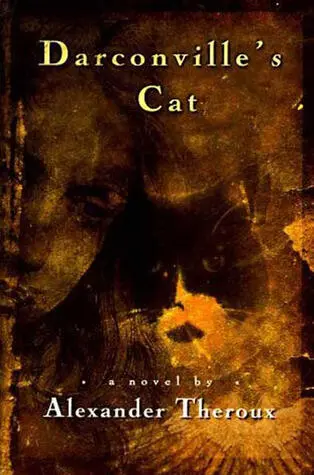
- Название:Darconville’s Cat
- Автор:
- Издательство:Holt Paperbacks
- Жанр:
- Год:1996
- ISBN:нет данных
- Рейтинг книги:3 / 5. Голосов: 2
-
Избранное:Добавить в избранное
- Отзывы:
-
Ваша оценка:
Darconville’s Cat: краткое содержание, описание и аннотация
Предлагаем к чтению аннотацию, описание, краткое содержание или предисловие (зависит от того, что написал сам автор книги «Darconville’s Cat»). Если вы не нашли необходимую информацию о книге — напишите в комментариях, мы постараемся отыскать её.
Darconville's Cat Its chapters embody a multiplicity of narrative forms, including a diary, a formal oration, an abecedarium, a sermon, a litany, a blank-verse play, poems, essays, parodies, and fables. It is an explosion of vocabulary, rich with comic invention and dark with infernal imagination.
Alexander Theroux restores words to life, invents others, liberates a language too long polluted by mutters and mumbles, anti-logic, and the inexact lunacies of the modern world where the possibility of communication itself is in question. An elegantly executed jailbreak from the ordinary,
is excessive; funny; uncompromising; a powerful epic, coming out of a tradition, yet contemporary, of both the sacred and the profane.
Darconville’s Cat — читать онлайн бесплатно полную книгу (весь текст) целиком
Ниже представлен текст книги, разбитый по страницам. Система сохранения места последней прочитанной страницы, позволяет с удобством читать онлайн бесплатно книгу «Darconville’s Cat», без необходимости каждый раз заново искать на чём Вы остановились. Поставьте закладку, и сможете в любой момент перейти на страницу, на которой закончили чтение.
Интервал:
Закладка:
Across the way, Darconville suddenly heard a recitation in progress. He leaned forward, looking, to find Miss Sally Bull Sweetshrub’s four o’clock class— Great Southern Writers —now under way. With her eyeglasses low on her nose, she was giving a passionate rendition of Maria J. Mclntosh’s poem, “Frown Not,” as a consolatory prelude to the final exam the girls were about to take. He went to check the class — Isabel, who should have been among that number, wasn’t — but, before he left, sidestepping glum Howlet, who sat doggo by the door, took up a mimeographed copy of the exam from a stack of them on a chair outside. He read the following:
Great Southern Writers
(1.) Confute the charge that Almira Lincoln Phelps’s “Southern Housekeepers” is narrowly regionalistic. (Be careful. Be honest.)
(2.) Develop my view that Emma D. E. N. Southworth’s Sybil Brotherton, or The Temptation is “the most perfect plot in the American novel.” (Illustrate by example.)
(3.) Identify: a. Samuel Minturn Peck
b. Henry Lynden Flash
c. Mirabeau Buonaparte Lamar
d. Sallie Ada Reedy
e. Stringfellow Barr
N. B. Hard part: which of the five is greatest?
(4.) How is Henry Timrod’s brilliant poem Ethnogenesis in the same epic tradition as Milton’s Paradise Lost ?
(5.) I prefer a) Caroline Lee Hentz’s “Aunt Patty’s Scrap-Bag”; b) Rosa Vertner Johnson’s Hasheesh Visions ; c) Sally Bull Sweetshrub’s The Big Regret ; or d) Una Altera Hint’s The Black Duchess . Dissertate amply.
(6.) Write a cogent essay (using only one side of the paper please ) discounting the efforts of Mr. William Faulkner as contrasted to Jane T. H. Cross’s Wayside Flowerets ; Anna Peyre Dinnies’ Wedded Love ; and the prose-pieces of fascinating Octavia Walton LeVert, the “sweet rose of Florida.”
(7.) Anna Cora Mowatt Ritchie’s “Armand’s Love” is/is not in the cavalier tradition. Why? Why not?
(8.) Compare and Contrast: Mary Windle and John Banister Tabb; Eleanor Percy Lee and St. George Tucker; William Byrd of Westover and Edward Coote Pinckney. How discouraged would you be to hear that they were all, at one time or another, tempted to rip up their manuscripts?
Name
Pledge
I am both low and down South, a redundancy, thought Darconville, if a poetic turn of phrase. South is down, isn’t it? South means down. He shaped the exam sheet into a tiny futuristic airship and launched it, somewhere, on the breath that was the exhalation of his disgust — and walked dolefully up to his office.
“She’s not good enough for you, sir.”
Darconville, surprised, turned to see a figure step out of a shadow. It was Winnie Pegue, an overweight sophomore whom he had known for an F in his novel course the previous semester. She had hair both the shape and color of dulse and chubby legs, now quakebuttocking under her as she moved forward.
“I can imagine how it feels to be deserted,” said Winnie Pegue, the words rushing out as if memorized. She stood before him, a little mont-de-piété nervously hugging her buldering armpits and perspiring frightfully. Then she asked him if he thought she had any right, being as she was nothing, to ask him if he had any right, seeing he was everything, to throw it all away. Staring at her saddle shoes, she snuffled up a sob and said, “If I were you, sir, I’d forget her. You’re— you’re too good for her, for anybody !” She scooped her handbag further up her arm and broke down completely. “All life,” she wept, “all life is ahead of you! The sun, the stars—!” She couldn’t go on for the tears, however, and, turning, flew pigeon-toed down the corridor, around the corner, and out of sight.
Philosophy major, thought Darconville.
He shut the office door. He sat down at his desk. A fact couldn’t be ignored: he had been for some time now looking for signs — revelations, of a sort — to determine what direction he should take in the coming year. Perhaps, now, a sign had come. Or symptoms of a sign. He loved a girl much younger than he, for one thing, and what could one really expect of it? Obscure gestes, lost love, short commons in the midst of plenty. He had been jealous, intemperate, weak of faith, and, suffering both in action and consequence, unproductive — doing everything but what, in fact, he’d come there for. That was the truth of the thing, for sure, suiting the word to action, not action to the word. Goodnight, sweet print.
And then what of Isabel? Was it one and the other? Or one in the other? Was it one for, through, or against the other? Against ? Was it possible?
Darconville looked up on the office wall to see his favorite photograph of her. It was technically one of the poorest, a large black-and-white blowup of her head and shoulders, the brown seeksorrow eyes, the hair like clarified honey pulled back to a beautiful knot, and the gentle mouth, almost happy, yet not quite ripening into a smile. (No photograph ever quite caught her: each of the many taken spoke of the one that got away — with El Dorado, maddeningly, waiting just outside every frame.) He loved this one photograph, however. It had absorbed more vows than he thought admissible to admit, and yet he felt absolved, for he had come to believe, under that head, that he couldn’t live without her morally , that her faults, in fact, were both what he himself must personally overcome for his own benefit and yet not overcome at the risk of damnation. Almost literally, he was she.
What Chrysostom could explain, what Cassiodorus write, the story of this love? It began, simply, with diffidence, followed by sudden devotion, and then the thought that he might ruin her life if he left her, a pressure she transmitted by implying that his life might be ruined if she stayed, for in the intensity of their deepening love the sweet confessions left unspoken were too often interpreted as hesitation and doubt. She seemed to believe that passion overstated the love she didn’t, for some reason, deserve, while he believed her loving soul needed what he could only give insufficiently. What, wondered Darconville, what if he had held back? What if in dreaming we have actually entered another world, daring to commit all but our consciousness? Why, journeys and dreams went together like two people very much in love.
Overcome with weariness, Darconville laid his head on his folded arms and shut his eyes. I love her, he thought, and yet I want to leave: a plural I and a single gloom. Or was the gloom merely a plural I? Whatever, two antagonistic Darconvilles, smitten to death, had fallen desperately in love with her. Duples imply choice. He was double-damned. Park your ka , Egyptian. Yes, he thought: the possible that did not become reality was impossible. No, he thought: it was possible. Cumaea Sibylla horrendas canit : nothing which will not be in reality is possible. Let the ambiguity stand, concluded Darconville in a last sleepy reflection, for in the dungeon of our dreams images embody the sensations they can also cause.
He was soon fast asleep, when beating forward through the darkness to the front of his mind came the poisonous archlucifer, Satan himself, who, ready to kill what he wouldn’t yet devour, squatted down by his ear like a foul gryllus and whispered:
“ I am Gog’s ghost, come alive, to pipe to you! Here, would you see it? My porphyritic hoof? I rode up in a dogboat now to boot your god. I pun to amuse you, poet. Pay attention to me! I talk unlike you want to hear, upsidedown and backwards, with a nice repetition of G’s — the hump in them is the hump in your gunzel: tumorous, a gold cancer, the load you bear on your back. Isabel! There she is! Mistress Gummigutt! I know you are ashamed to feel this way about someone you love, but, look, the girl’s legs are a proximate occasion of sin to a cannibal! And that’s your ideal? Laugh with me at her, can’t you? Yaw, yaw. No, with more conviction! O, how I hate her, her mammoth legs, her vanity about her hair which she has either just washed or is about to. I hate the back of her head as she rides in your car with her collar turned up. She eats a lot: snacks. She doesn’t know whether her arsehole is punched or bored. She weeps in the most unconvincing way I’ve ever seen. She repeats what you say and rarely offers anything to a conversation. Your ideal? I hear you call an ideal what I take to be a personified inconceivability. A galeopsis is nothing but a thing with a cat’s face! But, soft, she troops by with her mother! Par-nels march by two and three saying, Sweetheart, come with me! Pay attention to me, or you shall not see all I see! I love you, Maher-shalal-hash-baz. Too partial a piece of piety? I love you but I pity you, for is it not written: ‘Before the child shall have knowledge to cry “My father and my mother,” the riches of Damascus and the spoil of Samaria shall be taken away’? I will remind you of poetry if you let me, I promise. Not so she. She takes too much humoring and requires more attention than a rosebush with greenfly! Are you laughing? O yes, laugh! That is wonderful! Reverence to this! Stand beside me and watch. I knooow you have a conscience. Look! She is holding your book! She is reading! She is going to pronounce about it! ‘Blap,’ she says — can you hear her ? — ’ that’s a great verb!’ O she is wise. Isn’t she wise? Yaw, yaw. The father’s chuckling! Give it two balls! But trust her, whorepouncer? Touch pitch and be defiled, for isn’t a vision grim when a vision is great? She wants to be safe. I want you to hurt her. Please, I love you! Accept her rejection, for he who won’t when he may, when he will he shall have nay! I talk unlike you hear, but does one go to Greece by Rome, riddler? Pay attention to me! Leave her! Hurt her! Dispatch her to the land of Ganabim! I used a G for you just now, now you do something for me. A ruse. A sprat to catch a mackerel. I won’t put up a wall between us, I promise. Ask her something I know about now but your face won’t see! Ask her about me! I will whisper it again for you. Ask her —”
Читать дальшеИнтервал:
Закладка:
Похожие книги на «Darconville’s Cat»
Представляем Вашему вниманию похожие книги на «Darconville’s Cat» списком для выбора. Мы отобрали схожую по названию и смыслу литературу в надежде предоставить читателям больше вариантов отыскать новые, интересные, ещё непрочитанные произведения.





Обсуждение, отзывы о книге «Darconville’s Cat» и просто собственные мнения читателей. Оставьте ваши комментарии, напишите, что Вы думаете о произведении, его смысле или главных героях. Укажите что конкретно понравилось, а что нет, и почему Вы так считаете.