Alexander Theroux - Darconville’s Cat
Здесь есть возможность читать онлайн «Alexander Theroux - Darconville’s Cat» весь текст электронной книги совершенно бесплатно (целиком полную версию без сокращений). В некоторых случаях можно слушать аудио, скачать через торрент в формате fb2 и присутствует краткое содержание. Год выпуска: 1996, Издательство: Holt Paperbacks, Жанр: Современная проза, на английском языке. Описание произведения, (предисловие) а так же отзывы посетителей доступны на портале библиотеки ЛибКат.
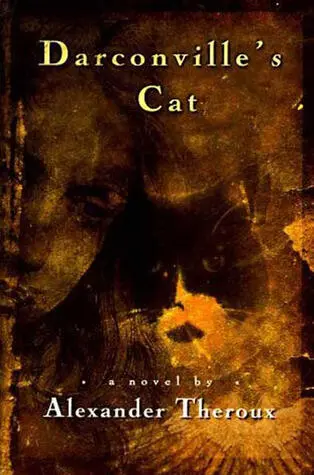
- Название:Darconville’s Cat
- Автор:
- Издательство:Holt Paperbacks
- Жанр:
- Год:1996
- ISBN:нет данных
- Рейтинг книги:3 / 5. Голосов: 2
-
Избранное:Добавить в избранное
- Отзывы:
-
Ваша оценка:
Darconville’s Cat: краткое содержание, описание и аннотация
Предлагаем к чтению аннотацию, описание, краткое содержание или предисловие (зависит от того, что написал сам автор книги «Darconville’s Cat»). Если вы не нашли необходимую информацию о книге — напишите в комментариях, мы постараемся отыскать её.
Darconville's Cat Its chapters embody a multiplicity of narrative forms, including a diary, a formal oration, an abecedarium, a sermon, a litany, a blank-verse play, poems, essays, parodies, and fables. It is an explosion of vocabulary, rich with comic invention and dark with infernal imagination.
Alexander Theroux restores words to life, invents others, liberates a language too long polluted by mutters and mumbles, anti-logic, and the inexact lunacies of the modern world where the possibility of communication itself is in question. An elegantly executed jailbreak from the ordinary,
is excessive; funny; uncompromising; a powerful epic, coming out of a tradition, yet contemporary, of both the sacred and the profane.
Darconville’s Cat — читать онлайн бесплатно полную книгу (весь текст) целиком
Ниже представлен текст книги, разбитый по страницам. Система сохранения места последней прочитанной страницы, позволяет с удобством читать онлайн бесплатно книгу «Darconville’s Cat», без необходимости каждый раз заново искать на чём Вы остановились. Поставьте закладку, и сможете в любой момент перейти на страницу, на которой закончили чтение.
Интервал:
Закладка:
A crash! Darconville shot up out of his chair, in a cold sweat, his mouth open in terror. Wavering, he steadied himself on the desk to watch the nightmare dissolve like water in water, having dreamt, he felt, what he feared but feeling he caused what he dreamt. His hand was trembling. How long had he slept?
The windowpanes were dark. Darconville went downstairs, his mind stammering down to reality, and left the building. It felt good to be outside. The sky, made exotic by a sickle of moon, was so clear and black it seemed to fetch one toward it, and, looking up, he could almost feel the nutation of the earth, the swing of the universe. On the other side of town a train rocketed through the night, leaving behind a few spotballs of smoke and a disembodied wail. Essences were in the spring wind. He could feel the warm breezes chuffing the leaves of the magnolia tree which stood sentinel-like, an Urpflanze , over the lonely bench that sat more than one memory in it. But it all saddened him.
The tall live-oaks and elms like black-cloaked prophets muttering urgent warnings of the vanity of all flesh seemed to represent some kind of extinct symbolism — with any interpretation made owed more, perhaps, to the homiletic power of the mind observing it than anything else. But every focus of concentration, regardless, seemed only to serve that mind for purposes of dejection, of apprehension: he looked out dolefully across the grounds and, turning one way, then turning another, set out again like a Rufa’iyah dervish in his black coat, searching for a trace of his promised but lost and unadaptive child.
XLI The Turner
As falcons to the lure, away she flies,
The grass stoops not, she treads on it so light.
— WILLIAM SHAKESPEARE, Venus and AdonisTHE CURTAINS BILLOWED SOFTLY in and out with the night breezes that also carried the music of the dance across campus into the front parlor of Fitts. Isabel Rawsthorne, waiting by herself, had her chair set up halfway between, and faced around from, the two open windows and the door which she had locked. She sat unobserved, wearing a smock-with-flowers, jeans, and pink canvas shoes and staring without reaction into the flame on the far wall she had studied for more than an hour now: a reproduction of one of those Turners where the ocean seems on fire. The proctors had disappeared, the girls had gone, and the room was perfectly dark, silvered to ghostliness, however, by the streetlights outside.
It was a complete solitudinarium. The empressement of the parlor’s interior, old and distinctly Southern, was also the source of its gloom: the moquette carpets, sofas the color of asparagus rust, a grandmother clock severely ticking. There was a defeated grace to the room, somehow worse than the oppressive silence made by the sudden evacuation of the gentlemen callers who’d come, picked up their dates, and disappeared. Fixed to the flame growing out of the sea, Isabel was only waiting and listening to the slight flutter of the velivolent curtains behind her, thinking neither of gentlemen callers nor addressing with despair the feeling that time is too short. There’s no end to nothing, she thought; there’s always an end to something, but there’s never an end to nothing. So if I can just be nothing, she thought, I can even be bigger than something. She twicked her thumbs. I am nothing.
Now she knew that without the shadow of a doubt: that afternoon she had been summoned to the registrar’s office only to be told by Dean Barathrum, as Mrs. McAwaddle handed her her grades — with each one lower than those of the first semester — that, as probation no longer applied, she couldn’t return to Quinsy College unless she took the fall semester off, reapplied, and hoped for the best, understanding, of course, that there would be no guarantee, without a full review by the admissions board, she could even be readmitted. Her reaction, strangely, was almost ceremonious, subdued, as she was, less by shame than by the simple ineluctability of fate. She remembered walking to her room, packing her clothes, and now — it was so sad and simple— she was waiting only to go home. What medium is the darkness, she wondered, that one can lean on it?
“Isabel?”
The voice, a familiar one, called through the window. Isabel’s scar whitened: she froze in her chair and, motionless, shut her eyes only to feel tears roll down her cheeks. There’s always an end to something, she thought.
“Hello? Isabel?”
She experienced a sudden sensation in her arms and legs of terrifying lightness, a suspension effected by the mind to feign invisibility, and immediately she felt she would disappear. She took refuge in interior mystery, a forest appeared to her, a magic world where as a princess she—
“Are you there, Isabel? Please?”
Determined, covered in the dark robe of her closed eyes, the night, the shadowed room, Isabel sat perfectly still until the voice called out no more, and she knew beyond all truth that there was never an end to nothing. And she never moved but only rested her head against the back of the chair, resigned in will, and continued to stare toward the wall at the impossible, paradoxical flame splitting up through the darkness of the canvas like some pale and lovely summoner beckoning her beyond her failures and broken dreams into the safety of nothingness, a place where there were no consequences, no grades, no plans, no expectations, nothing to live up to or long for or even love, for love was not only over but love was the worst something of all.
She was waiting, she remembered, and she was waiting, she knew, for someone. But who? she wondered. But who?
XLII The Jejune Dance
A hall, a hall! give room! and foot it, girls.
— WILLIAM SHAKESPEARE, Romeo and JulietTHE QUINSY DANCE — sound lutes! tabrets! bombardons! — had begun. The large ballroom of the student union, decorated with flowing blue-and-white bunting, was brightly lit, and a felt oriflamme proclaiming the year (apostrophe, two digits) of the graduating class rose in the shape of a Q behind the main table, where stood hundreds of paper cups filled with red punch. There was to be no tippling. The previous night, President Greatracks had delivered to the class his usual Levitical caveat on the subject, a flat denunciation for the most part, complete with anecdotes, of that prince of winepots, General Ulysses S. Grant, “a dang winebibbin’ dipsofreek who couldn’t wake up of a morning without walkin’ sideways!”
“The girls are quiet as question marks now,” said Mrs. McAwaddle to Prof. Wratschewe, the other chaperon, “but I fancy they’ll all be running us jakeleg around here later on.” She was dressed in a blue double-knit, a necklace of huge dead turquoises, and serviceable shoes. “I trust you’ll prove, being the senior member here, to have the eyes of a potato?”
“Potato,” observed Prof. Wratschewe, graciously bowing a cup of punch to his colleague. “Did you ever stop to think that if ‘gh’ stood for ‘p’ as in ‘hiccough’; ‘ough’ for ‘o’ as in ‘dough’; ‘phth’ for ‘t’ as in ‘phthisis’; ‘eigh’ for ‘a’ as in ‘neighbor’; ‘tte’ for ‘t’ as in ‘gazette’; and ‘eau’ for ‘o’ as in ‘beau’ “—he snapped out his ball-point and scribbled on a flattened cup—”then the correct spelling of potato would be ghoughphtheightteeau ?” He looked up smiling.
But Mrs. McAwaddle was already on the other side of the room.
The band — a blotch-complexioned group from Charlottesville named The Uncalled Four —ripped it all open with a muscular rendition of “Dixie,” always so popular, always so malapropos, and then settled into its repertoire of out-of-date tunes and shopworn instrumentais, abuses made even more frightful by the almost parturifacient din coming from the direction of that one great guy with big ears in the schnitz-pie-colored tux (that’s him on the electric guitar) who has a voice like a toad under a harrow. But his money paid for most of the instruments. And they travel in his car.
Читать дальшеИнтервал:
Закладка:
Похожие книги на «Darconville’s Cat»
Представляем Вашему вниманию похожие книги на «Darconville’s Cat» списком для выбора. Мы отобрали схожую по названию и смыслу литературу в надежде предоставить читателям больше вариантов отыскать новые, интересные, ещё непрочитанные произведения.






Обсуждение, отзывы о книге «Darconville’s Cat» и просто собственные мнения читателей. Оставьте ваши комментарии, напишите, что Вы думаете о произведении, его смысле или главных героях. Укажите что конкретно понравилось, а что нет, и почему Вы так считаете.