Alexander Theroux - Darconville’s Cat
Здесь есть возможность читать онлайн «Alexander Theroux - Darconville’s Cat» весь текст электронной книги совершенно бесплатно (целиком полную версию без сокращений). В некоторых случаях можно слушать аудио, скачать через торрент в формате fb2 и присутствует краткое содержание. Год выпуска: 1996, Издательство: Holt Paperbacks, Жанр: Современная проза, на английском языке. Описание произведения, (предисловие) а так же отзывы посетителей доступны на портале библиотеки ЛибКат.
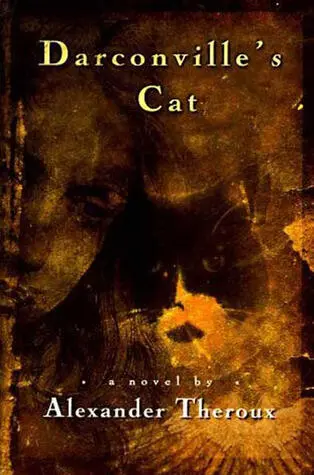
- Название:Darconville’s Cat
- Автор:
- Издательство:Holt Paperbacks
- Жанр:
- Год:1996
- ISBN:нет данных
- Рейтинг книги:3 / 5. Голосов: 2
-
Избранное:Добавить в избранное
- Отзывы:
-
Ваша оценка:
Darconville’s Cat: краткое содержание, описание и аннотация
Предлагаем к чтению аннотацию, описание, краткое содержание или предисловие (зависит от того, что написал сам автор книги «Darconville’s Cat»). Если вы не нашли необходимую информацию о книге — напишите в комментариях, мы постараемся отыскать её.
Darconville's Cat Its chapters embody a multiplicity of narrative forms, including a diary, a formal oration, an abecedarium, a sermon, a litany, a blank-verse play, poems, essays, parodies, and fables. It is an explosion of vocabulary, rich with comic invention and dark with infernal imagination.
Alexander Theroux restores words to life, invents others, liberates a language too long polluted by mutters and mumbles, anti-logic, and the inexact lunacies of the modern world where the possibility of communication itself is in question. An elegantly executed jailbreak from the ordinary,
is excessive; funny; uncompromising; a powerful epic, coming out of a tradition, yet contemporary, of both the sacred and the profane.
Darconville’s Cat — читать онлайн бесплатно полную книгу (весь текст) целиком
Ниже представлен текст книги, разбитый по страницам. Система сохранения места последней прочитанной страницы, позволяет с удобством читать онлайн бесплатно книгу «Darconville’s Cat», без необходимости каждый раз заново искать на чём Вы остановились. Поставьте закладку, и сможете в любой момент перейти на страницу, на которой закончили чтение.
Интервал:
Закладка:
“Here, y’all!” he clapped. “It’s only me who clum up here, not to preach, not to teach, but only to put in my jerp’s worth about this here dance, OK? Now, I don’t want to be accused of bein’ nar-ruh but I’m in charge here at Quinsy for you outsiders who mayhap have got another im-pression, your college president, the straw that stirs the drink! These is facts, in horsetradin’ lingo. I’m feelin’ like a bull moose tonight! And why? Wha ? Well, I cain’t hardly memorize, lemme tell you, the last time I set my peepers on gals lookin’ so mightily good appearanced, mmm- mmm ! Glo-rious! We folks from the upbrush, ‘course, never had anything near as good a time as this, bein’ poor as Job’s turkey and all, but then, see, we don’t count long as y’all in high fettle here at the graduation dance, hear? Delivered.
“But now pay me some mind: I naturally don’t expect y’all to be in low cotton tonight, do I, and I want that put in capitals, see? — yow-ever, I hear tell been some liquor-tipplin1 going on here, yes? That right? Look around, this kind of thing prelavent? Huh? That Southern quality? You been raised up — where, Paree? Babylon, for cry-eye ? I only just now put my hand on one wimpbucket here in his dang shirttails, I want you to know, walkin’ around slantindicular and actin’ like a field-nigger at a weekend funeral! You can wipe off them phony Miss-Little-What-Me? faces, girls, ‘cause, I can tell you , I been all the way there and back again! I took him a twist by his ear, that’s right, and showed him into the middle of next week where that oP boy goin’ to be wakin’ up famous with the collywobbles and a nice pro-nounced case of kitney trouble, bet on it! OK? Now you can set your foot down on this, people: I ain’t gonna buy this kind of thing! Not here, not there, not nowhere! You got it ?” He pulled his mouth. “Good, now keep it. I’m hot as a sunburnt sheep up here, them lights is in-tense and like to give me pinwheels in the eyeball, and I need me a Co’-Cola.”
There were murmurs. President Greatracks, stepping down, gulped a cup of punch so quickly it splashed down his chin and squittered all over the paper tablecloth and then, making a battery of reluctant handshakes, he drew out his flashlight, waved it, and went charging back into battle. Whereupon Xystine Chappelle, as the applause died down, motioned everyone forward to hold hands and sing the school song, “Pledge We to You, Quinsy, All Our Troth.” The lights dimmed, the band again flouted up a medley of slow uningenious waltzes, and in the semi-darkness couples once more closed in, groin to groin, clutching in tenacious spasms of ardor but showing now, at least it seemed to Mrs. McAwaddle, too much in vertical behavior of what seemed, clearly, horizontal intentions. After giving one couple the benefit of the doubt — had they caught buttons ? — she stepped onto the floor, touched a boy who had his head buried in his partner’s neck like a hatchet, and whispered too loudly, “Elbow room!”
Returning to her place, she sought a collaborative response in the face of the other chaperon, who merely blinked.
“Elbow room,” repeated Prof. Wratschewe, interlacing his fingers. “Do you realize, Miz McAwaddle, that Shakespeare was the first person ever to use that expression?”
Mrs. McAwaddle was utterly adsorbed.
The clock bonged its lonesome numbers from the library. Darconville, a multitude of one, had positioned himself at some distance on a hill rising up toward Truesleeve dormitory and wished, as he watched the lights of the college and outlying Quinsyburg below, that they were the lights of Venice, a city that now seemed further away in time than in space. The palazzo, remaining under a writ of quo warranto , was still stuck in the courts and yet he didn’t care — there was London, Paris, Rome — as he thought for the first time of going away, anywhere. The student union, noisy and aglow, stood below him on the phenomenal level, but what, he wondered, but where, my interdimen-sional love, shall I search for you on the noumenal level, down or up? What, he asked himself, could he want with such a will to want it? What, he thought, that I need it with such intensity?
Darconville ached, he believed, to know the ineffable thing-in-itself! I am in love, he thought, with the Ding-an-Sich ! To postulate, yet not perceive: it was a doom that now began to ask too much of him. O artif actual game! O artificial pastime! He longed for her, for Isabel, for the prepredicative heart without which he felt, truthfully, he couldn’t live, but his knowledge was conscious of its own insufficiency, a “learned ignorance” to which, even with the bribe of desperation, truth saw fit to supply little or nothing, suffering forth only a spate of murderous questions: what was the part of the subject, the object, in knowledge? Did man’s limited ability to know necessarily deform objects according to his own subjective nature? Was truth the concordance of knowledge with itself or with that which is? Did we have in all domains of knowledge the same certitude? Darconville was not even convinced that the question, whether they were important questions, was itself an important question. They were questions, clearly, not to be solved without immortality, in which state all philosophy was once only one philosophy, and mortals had only a handful of fragments like puzzle-pieces to prove it true. Who knows what will happen? Do we know Who knows but not know what? Perhaps, thought Darconville, the doubter was the true savant — to prescind from judgment and know, by default, that which you wouldn’t judge. There is no Doubt but Doubt, and Aenesidemus is his prophet!
The trees soughed in several rushes of night wind, blowing as if off an invisible sea upon which sailed only that which sailed, was meant to sail, and meaning nothing more, and Darconville, imagining himself, the while, at some point in the future recalling this particular moment, found it restful to think that somewhere some things existed without significance, without dreams, without memory. But that was memory, wasn’t it? And what had memory wrought of joy? Memory wounded. We must free what we are in time, he thought, from memory and live toward the future which, second upon second, made memory irrelevant even if it increased its size!
It was well past midnight now, and the band, at a primordial pitch, challenged the Quinsy girls, the drumlike beating in their blood leading with incredible rapidity to various misadventures. Ariadne Naxos swirled toilet paper around her and, vamping from one boy to another, danced her smoldering “Veil of the Béguines.” Trudy Look-ingglass, having punted away her silk pumps, sat perched over the balcony dangling one of her garters and rotating her shoulder à faire provoquer while a dozen or so boys went scrambling — bookety-bookety! — through the doorway and up the stairs, howling with encouragement. Dancing a sexy shuffle on one of the tables to a clap-chant below, Sabrina Halliburton slowly hoisted her gown almost to her hips, revealing a pair of legs smooth and delicious as a pawpaw. And all the while, her beautiful eyes narrowed in black disapproval, Hypsipyle Poore watched from a distance, being made no happier, certainly, by finding her escort, a blond cavalier-in-uniform from V.M.I., staring at those legs. She puffed exasperatedly through her nose and shifted position. The young man, turning to her, asked if anything was wrong. Hypsipyle merely sighed, loath to establish another’s credibility by a criticism that could only be misapplied, for Southern girls, actually, alarm each other quite easily: such is their homogeneity, in fact, that one’s particular actions are always another’s in potency, and so, with each a simulacrum of the next, they must all sustain in constant reflection what approving of themselves within they must hate in others without — while the concomitant virtue, paradoxically, of admiring in another for self-esteem what the burden should logically reverse is curiously absent. It is often common for them, in fact, to make friends in order to avoid enemies, a contradiction, in this instance, that could no more be eliminated by explanation than it could be diverted by disapproval or reversed by ruse.
Читать дальшеИнтервал:
Закладка:
Похожие книги на «Darconville’s Cat»
Представляем Вашему вниманию похожие книги на «Darconville’s Cat» списком для выбора. Мы отобрали схожую по названию и смыслу литературу в надежде предоставить читателям больше вариантов отыскать новые, интересные, ещё непрочитанные произведения.










Обсуждение, отзывы о книге «Darconville’s Cat» и просто собственные мнения читателей. Оставьте ваши комментарии, напишите, что Вы думаете о произведении, его смысле или главных героях. Укажите что конкретно понравилось, а что нет, и почему Вы так считаете.