Alexander Theroux - Darconville’s Cat
Здесь есть возможность читать онлайн «Alexander Theroux - Darconville’s Cat» весь текст электронной книги совершенно бесплатно (целиком полную версию без сокращений). В некоторых случаях можно слушать аудио, скачать через торрент в формате fb2 и присутствует краткое содержание. Год выпуска: 1996, Издательство: Holt Paperbacks, Жанр: Современная проза, на английском языке. Описание произведения, (предисловие) а так же отзывы посетителей доступны на портале библиотеки ЛибКат.
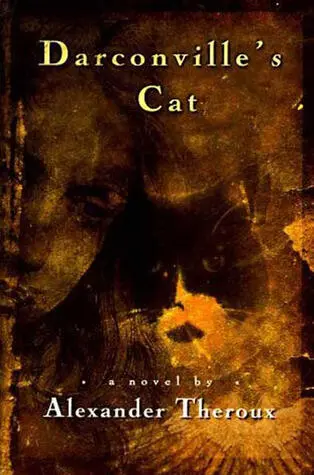
- Название:Darconville’s Cat
- Автор:
- Издательство:Holt Paperbacks
- Жанр:
- Год:1996
- ISBN:нет данных
- Рейтинг книги:3 / 5. Голосов: 2
-
Избранное:Добавить в избранное
- Отзывы:
-
Ваша оценка:
Darconville’s Cat: краткое содержание, описание и аннотация
Предлагаем к чтению аннотацию, описание, краткое содержание или предисловие (зависит от того, что написал сам автор книги «Darconville’s Cat»). Если вы не нашли необходимую информацию о книге — напишите в комментариях, мы постараемся отыскать её.
Darconville's Cat Its chapters embody a multiplicity of narrative forms, including a diary, a formal oration, an abecedarium, a sermon, a litany, a blank-verse play, poems, essays, parodies, and fables. It is an explosion of vocabulary, rich with comic invention and dark with infernal imagination.
Alexander Theroux restores words to life, invents others, liberates a language too long polluted by mutters and mumbles, anti-logic, and the inexact lunacies of the modern world where the possibility of communication itself is in question. An elegantly executed jailbreak from the ordinary,
is excessive; funny; uncompromising; a powerful epic, coming out of a tradition, yet contemporary, of both the sacred and the profane.
Darconville’s Cat — читать онлайн бесплатно полную книгу (весь текст) целиком
Ниже представлен текст книги, разбитый по страницам. Система сохранения места последней прочитанной страницы, позволяет с удобством читать онлайн бесплатно книгу «Darconville’s Cat», без необходимости каждый раз заново искать на чём Вы остановились. Поставьте закладку, и сможете в любой момент перейти на страницу, на которой закончили чтение.
Интервал:
Закладка:
“We create what we love as we love what we want to become, our dreams, queerly, acting our temptations, for the higher men can raise their ideals the greater is the reflected glory which they feel at their devotions. Indeed, love, it might be said, is not directed toward beauty but toward the procreation of beauty, creating a new woman for man instead of a real woman and for woman a new, not a real, man. It does not solve, it contemplates; it does not examine itself, it awakens. We are reborn, as it were, in the mind of another, a perishable transubstantiated — hi substance, not accidents — into an imperishable. This fully unattainable goal of all longing, love, cannot be totally realized in experience, in fact, and much of it must forever remain an idea, immaculate, which is why it is almost always associated with the awakening of the desire for purification and a disposition to inexpressible kindness. The idea forever beckons, tempts, ecstasizes, and the star-gazer’s toe is often stubbed. Whom the gods wish to render harmless they first afflict with love. A lover is utterly and totally defenseless.
“The strongest pulsation of the will towards the supreme good, directing the true being of man to a state between body and spirit, between the bald senses and the moral nature, between God and the beasts, is the direct result of loving. One can never directly experience the emotion without changing, and thus it comes about that only when they love do many men and women realize the existence of their own personality and of the personality of another, that ‘I’ and ‘thou’ become for them more than merely grammatical expressions. The greater a man is, the more he yearns for full identity, extending himself toward the reaches of the immortal where the experience of love, like the sounds of a city heard on the height of a skyscraper, is compressed into a single note. A man truly has just as much arrogance as he lacks self-realization, and true love always ends all arrogance altogether, for the sacrifices it implicitly requires — it requires nothing else — allow one to ‘selve’ for another and yet in doing so serve oneself. Love is centrifugal, hate centripetal. Demons must hilarify as they watch while we are drawn to someone unable, or unwilling, to love us. It is easy to be cruel. One need only not love.
“ Caritas, agape, eros, amicitia : love inspires us in the many ways it’s defined. And yet the whole apparat of formal understanding is foreign to it — in fact, a human being perhaps cannot love another whom he fully understands or effectively comprehends because the very nature of the ideal discommends the empirical or rationalistic approach to wisdom through analysis, always a felony in matters of love. (To comprehend something fully is to be beyond or above it, no?) On the other hand, one can project and pursue the idea of beauty relentlessly, intuiting the possibility of it, this constantly renewed endeavor to embody the highest form of value, as a prisoner in the darkness of solitary confinement might determine the season outside by seining through the vegetables in his daily soup. And yet while union depends on duality, the lover who does not seek his own soul in his loved one will never find his own soul in himself, for the lover is a person whose quaesitum desperately exists in, and indeed is— is —another. A transition beckons.
“Love is not contagious, only the idea of it is. And yet, again, is it not fabled that for everyone there is someone, that, as in the epistolary novel — its traditional subject, of course, always being love — we need but post a letter to receive one, whereupon, then, is issued a sweet and confident outlay of intimacy that documents the ratio of priority and subsequence and so leads to the perfect ending we bank on? Who can’t want to believe it? Everybody aspires to fall in love. We look to see the candidates and find multitudes, multitudes. But the chosen? A minority. So overpowering is the emotion, however, so mighty the reputation, that it sends back, echoing down its hypostyle, sufficient echoes of its living renown only for the shouting — and yet to what good if no one is there to make it real?
“The mere postulate of love creates in its mythopoetic wake a throng of pursuivants whose desire for it, if going no further, only parodies what lies tragically beyond its grasp. And yet how the world, perversely to encourage our hopes that way, seeks to oblige us with its suddenly and slubbering-over-with-whitewash conceits — the magic of mood and music — that we all might upon an instant wake to find not illusion but rather our heart’s desire in the form of Venus Mandragoritis holding out a love-apple. Look! There assembles a host of would-be lovers and laplings who, seeing Cupid in a jar-owl and sweetness in a colicinth, would have it gospel that one man’s yawn makes another yawn, one man’s pissing makes another piss! They fashion fancies and pull impressible faces and, smugging themselves up in pomade and passion-flowers, step out into the moonlight poets write of to project their disposition to desire upon another, as rich in the confusion of intent as that person who judges a party a success because he himself has been charming. There may be music with imposing lyrics, wine, the tuition of promises. But then where is love? Make it. But is it love? Fake it. But is not this a lip and that a lip? And can she not shape her elbow to my arm? O euros Chymicorum! O cuantum in pulvere inane ! Faults are thick where love is thin. The sting of the reproach is the truth of it.
“The passion of love is like a parable, by which men, often, still mean something else. It is a step away from reality, conceived, among other things, to improbabilize low aims and soar into a participation with whatever divinity presents itself. The lover, however, is a person never unaware of the frightful dualism of nature and spirit; desire, characteristically, partakes of the former, love of the latter — and with that recognition the morality play of Mutability and Constancy performs a dress rehearsal in your head. Consider love and desire: are they often not perfectly antagonistic? Man projects his soul onto woman and she onto him with this hope, always, that the beauty of bodily image embodies morality, only one of the variations of expectation having to do with love.
“But the kinesis of beauty (as opposed to the stasis of the idea of beauty)— res aptus studendo —is, indeed, often nothing but a blocking agent to the continuity of love, annulling it by either change or alteration. It is this that so often surprises and saddens a lover when it is revealed that beauty does not necessarily imply morality in the object of love; one, in fact, often feels that the nature of the offense is actually increased by the conjunction of beauty and depravity, unaware, perhaps, that up to that time the woman in question only seemed beautiful to him because he still loved her. All aesthetics are created by ethics; and beauty, more often than not, is a bodily image in which morality is archetypally felt to be represented. The less transcendental the beauty is, the less permanent we are usually convinced it will be, in direct proportion, for our faith resides here, that we love what we esteem, a usufruct of heaven beckoning us to the bettermost, and so to preserve in spirit what we’ve captured in nature it often falls out that love and desire are sometimes two unalike, mutually exclusive conditions. If love, for instance, is only true, as has been written, in proportion as it is pure, what then is the ideal?
“Thumb your histories. Xenocrates, passing nights with Lais of Corinth, never touched her. Socrates, who doted on Alcibiades, sent him away precisely at a moment when the opportunity to lie with him presented itself. And Petrarch, sempiternally burning for his Laura, did not take her to himself when she was offered to him and, even losing her, somehow possessed her more. If it be the case that there is no adoration utterly free from desire there is no reason why the two should be identified. What, in fact, are realities worth compared to the mirages we would know? Shall the true lover be satisfied to comprehend his intoxication only by sensation? The very rapture of one’s love, surely, no longer limits him only to earth. ‘Reality,’ it’s been written, ‘is the only word in the language that has no meaning without quotation marks.’
Читать дальшеИнтервал:
Закладка:
Похожие книги на «Darconville’s Cat»
Представляем Вашему вниманию похожие книги на «Darconville’s Cat» списком для выбора. Мы отобрали схожую по названию и смыслу литературу в надежде предоставить читателям больше вариантов отыскать новые, интересные, ещё непрочитанные произведения.







Обсуждение, отзывы о книге «Darconville’s Cat» и просто собственные мнения читателей. Оставьте ваши комментарии, напишите, что Вы думаете о произведении, его смысле или главных героях. Укажите что конкретно понравилось, а что нет, и почему Вы так считаете.