Alexander Theroux - Darconville’s Cat
Здесь есть возможность читать онлайн «Alexander Theroux - Darconville’s Cat» весь текст электронной книги совершенно бесплатно (целиком полную версию без сокращений). В некоторых случаях можно слушать аудио, скачать через торрент в формате fb2 и присутствует краткое содержание. Год выпуска: 1996, Издательство: Holt Paperbacks, Жанр: Современная проза, на английском языке. Описание произведения, (предисловие) а так же отзывы посетителей доступны на портале библиотеки ЛибКат.
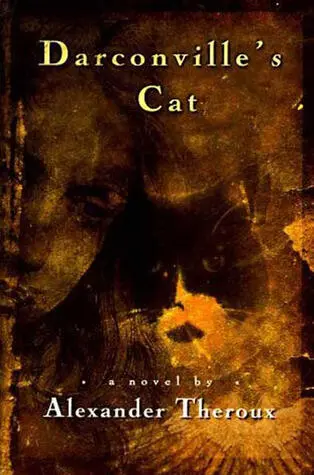
- Название:Darconville’s Cat
- Автор:
- Издательство:Holt Paperbacks
- Жанр:
- Год:1996
- ISBN:нет данных
- Рейтинг книги:3 / 5. Голосов: 2
-
Избранное:Добавить в избранное
- Отзывы:
-
Ваша оценка:
Darconville’s Cat: краткое содержание, описание и аннотация
Предлагаем к чтению аннотацию, описание, краткое содержание или предисловие (зависит от того, что написал сам автор книги «Darconville’s Cat»). Если вы не нашли необходимую информацию о книге — напишите в комментариях, мы постараемся отыскать её.
Darconville's Cat Its chapters embody a multiplicity of narrative forms, including a diary, a formal oration, an abecedarium, a sermon, a litany, a blank-verse play, poems, essays, parodies, and fables. It is an explosion of vocabulary, rich with comic invention and dark with infernal imagination.
Alexander Theroux restores words to life, invents others, liberates a language too long polluted by mutters and mumbles, anti-logic, and the inexact lunacies of the modern world where the possibility of communication itself is in question. An elegantly executed jailbreak from the ordinary,
is excessive; funny; uncompromising; a powerful epic, coming out of a tradition, yet contemporary, of both the sacred and the profane.
Darconville’s Cat — читать онлайн бесплатно полную книгу (весь текст) целиком
Ниже представлен текст книги, разбитый по страницам. Система сохранения места последней прочитанной страницы, позволяет с удобством читать онлайн бесплатно книгу «Darconville’s Cat», без необходимости каждый раз заново искать на чём Вы остановились. Поставьте закладку, и сможете в любой момент перейти на страницу, на которой закончили чтение.
Интервал:
Закладка:
“Have you then understood me to say to love only in the mind? I summon a thousand angels to disprove such a thing, charging you to love with your hands, your heart, your paper and poems, whistles and whispers, the light of your soul, its pathetical prayers, and the candle that sits in your head pointing its flames toward the goblin perched over your head called night. O, illustrious Trismegist, you who love, you yourself are the very miracle you seek to keep! You have been given the gift of love!
“Go and love! The exhortation must be shouted in twos, else for you shall the world be dark as Lycophron. Lovers, you move toward the completion thankfully never complete. You are the denial of denials. You would do all and dare outdo what, done, deems yet more to do. You would practice months of refusals and scoff in the teeth of exhaustion but to comfort her! You would, like Alexander, burn to the ground the entire city of Persepolis if it stood in the way of your love! You would pull down an entire sky only to present her with a supply of calliblepharies for her eyes! You would tremble in the night at the sound of far-off bells, fearing the merest implication of new events and change, for you have been given the gift of love. You would heal the pottage of Gilgal, suck up the Nile at a single haust yet still cry out for thirst, and watch through tempests of provocation to see it snow eryngoes and shower down the sun! You would willingly die tomorrow only that she might kill you with her own hands! You would be drugged with Spanish licorice and let your bones be used for hell-dice only to look into her eyes and see yourself reflected there! For you have been given the gift of love!
“Proud would you be her phaeton, her gig, her shoe-latchet snapped shut to walk her safely in the fittest steps toward paradise, to the snows of Monte Rosa, to the heights of Horeb where each dream dreamt is only yet another dream dreamt among dreams. You have been given the gift of love. You believe it only when you realize it, and yet at that very stroke you cannot but have removed its momentous secret far beyond the hollow formulae, abstract terms, and words such as these that since the beginning of time have stammered after it, pitifully, in the desolation of vain human syllables.”
XXXIX The Cardinal’s Crotchet
The lioness had torn some flesh away,
Which all this while had bled.
— WILLIAM SHAKESPEARE, As You Like ItDARCONVILLE that afternoon took the essay to Dr. DodypoPs house and turned by Fitts on his way back: Isabel, apparently, had gone to Charlottesville for the weekend. And so he returned to his rooms and, with nothing else to do, began sorting through his trunk. He found something at the bottom he’d long forgotten he’d put there: an old book.
It was a rectangular folio — soiled, plates missing, bisected at the spine — whose tight biscuity signatures and stiff pages, each a pointillisme of brown spotting, could hardly be turned, and the lower corner of each recto was polished to yellow horn from its many long-ago encounters with curious and inquisitive thumbs. A page was turned to a symphony of crepitations. It was a relic of the sixteenth century, something of a gradus then, but handed down through the centuries it bore, increasingly, the characteristic of a strange little joke within the family. What value, then, if any, might be assigned it? The question, somehow, always posed itself to Darconville on those few occasions when he’d ever bothered to look at it. What value? Historical, at least, he thought.
He puffed dust from the cover and smoothed his hand down the buckled vellum. He marveled at it. The book had been indited in the Year of Our Lord 1574 by that common ancestor of the illustrious “writing d’Arconvilles,”[2] the learned grammaticus and saintly but uncompromisingly tough old mumblecrust — whose blessed memory we recall, annually, in the glorious martyrology of the Church — named Pierre Christophe Cardinal Théroux-d’Arconville (1532–1601).
[[2]Dame Marie Geneviève Charlotte d’Arlus Théroux-d’Arconville (1720–1805), author of Vie de Marie de Médias, princesse de Toscane, reine de France et de Navarre (1774); Des Passions (1764); Discours sur l’amour propre (1770) and many notable others. The first French translator of Chaucer, Prior, and Pope, she also acted in a theatrical production of Mérope , directed by Voltaire himself. Jean Thiroux (1691–1740?) in his Gallia Christiana in Provincias Ecclesiasticus Distributa (1715) documented current monastic studies at that time. Louis Théroux de Crosne d’Arconville (1736–1789), lieutenant general of the Paris constabulary, wrote the classic monograph, still in use, called “Les Interprétations criminelles des oreilles” before losing his life to the Jacobins and their despicable peasant revolt. (“ Après la prise de la Bastille, il se démit de sa charge entre les mains de Bailly le 16 juil. 1789,” La Grande Encyclopédie, trente et unième , Paris.) Charles Victor Théroux-d’Arconville (1803–1862), captain of artillery and theoretical militarist at the Ecole Militaire de Saint-Cyr, attacked in his polemic La Flotte marchande (1853), for abuses, all the parasitical birds-in-hand of the merchant marine who, educated at government expense, greedily sought to acquire private fortunes in civilian life in lieu of military service. It will be here pointed out, in discommendation of any such charge, that none of the above writers falls into the strict category of the professional, a vulgar correption to which true nobility need not, and must never, submit, especially those through whose veins pounds the blood of the heroic Valois.]
Born in Rouen, he entered the priesthood and, distinguishing himself in canon law at a quite young age, was raised to the cardinalate at thirty-three. An age of apostasy had set in. It was decided, so legend went, that he be sent with speed to England — so horribly crowtrodden there was the ancient faith — where, even before his arrival, a clandestine one (as nuncios from a hundred sees were being slain in their innocence on the very shores), he had become simply from reputation the scourge of several pernicious Tudors and more than one profligate, not to say schismatic, court, the most significant, for our record, being that of the mongrel queen, Elizabeth I, the essential tenet of whose religion proved to be little more than prestidigitation.
The facts are scant. It is known, however, that Cardinal Théroux-d’Arconville had at one period secretly worked with the holy pamphleteer, Robert Southwell, and had personally seen to the welfare of both the Jesuits, Campion and Parsons, upon their arrival in England in 1581. It was a dangerous time for Catholics. It was perfectly murderous for priests. Great bonfires, fed with roods, pyxes, and sacred images, were burning in the streets, and execrations were being heaped upon the names of those guilty of no crime but that of showing fidelity to what had been honored in England for a thousand years. The Grey Friars of Greenwich, the Black Friars of Smithfield, the priests and nuns of Syon and the Charterhouse, the abbot and monks of Westminster, all were deposed, and, with their sees confiscated, countless holy bishops — Watson of Lincoln, Thirlby of Ely, Bonner of London, Bourne of Bath and Wells, Turberville of Exeter, Scott of Chester, Pate of Worcester, Heath of York, and many loyal others — were thrown headlong into prison (most of them never to be delivered) so that Elizabeth, with her overriding ambition and underriding conscience, and all the exoletes, dunces, procumbents, and unpalteringly ugly bagmen she called her councillors could begin to carry out their scheme of relieving the emptiness of the Exchequer.
Читать дальшеИнтервал:
Закладка:
Похожие книги на «Darconville’s Cat»
Представляем Вашему вниманию похожие книги на «Darconville’s Cat» списком для выбора. Мы отобрали схожую по названию и смыслу литературу в надежде предоставить читателям больше вариантов отыскать новые, интересные, ещё непрочитанные произведения.











Обсуждение, отзывы о книге «Darconville’s Cat» и просто собственные мнения читателей. Оставьте ваши комментарии, напишите, что Вы думаете о произведении, его смысле или главных героях. Укажите что конкретно понравилось, а что нет, и почему Вы так считаете.