Alexander Theroux - Darconville’s Cat
Здесь есть возможность читать онлайн «Alexander Theroux - Darconville’s Cat» весь текст электронной книги совершенно бесплатно (целиком полную версию без сокращений). В некоторых случаях можно слушать аудио, скачать через торрент в формате fb2 и присутствует краткое содержание. Год выпуска: 1996, Издательство: Holt Paperbacks, Жанр: Современная проза, на английском языке. Описание произведения, (предисловие) а так же отзывы посетителей доступны на портале библиотеки ЛибКат.
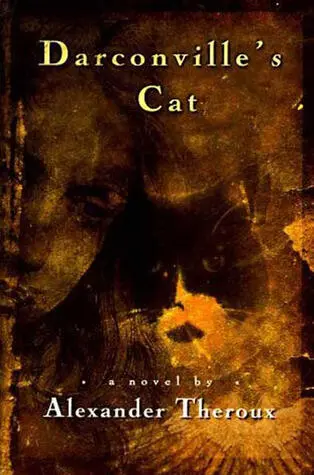
- Название:Darconville’s Cat
- Автор:
- Издательство:Holt Paperbacks
- Жанр:
- Год:1996
- ISBN:нет данных
- Рейтинг книги:3 / 5. Голосов: 2
-
Избранное:Добавить в избранное
- Отзывы:
-
Ваша оценка:
Darconville’s Cat: краткое содержание, описание и аннотация
Предлагаем к чтению аннотацию, описание, краткое содержание или предисловие (зависит от того, что написал сам автор книги «Darconville’s Cat»). Если вы не нашли необходимую информацию о книге — напишите в комментариях, мы постараемся отыскать её.
Darconville's Cat Its chapters embody a multiplicity of narrative forms, including a diary, a formal oration, an abecedarium, a sermon, a litany, a blank-verse play, poems, essays, parodies, and fables. It is an explosion of vocabulary, rich with comic invention and dark with infernal imagination.
Alexander Theroux restores words to life, invents others, liberates a language too long polluted by mutters and mumbles, anti-logic, and the inexact lunacies of the modern world where the possibility of communication itself is in question. An elegantly executed jailbreak from the ordinary,
is excessive; funny; uncompromising; a powerful epic, coming out of a tradition, yet contemporary, of both the sacred and the profane.
Darconville’s Cat — читать онлайн бесплатно полную книгу (весь текст) целиком
Ниже представлен текст книги, разбитый по страницам. Система сохранения места последней прочитанной страницы, позволяет с удобством читать онлайн бесплатно книгу «Darconville’s Cat», без необходимости каждый раз заново искать на чём Вы остановились. Поставьте закладку, и сможете в любой момент перейти на страницу, на которой закончили чтение.
Интервал:
Закладка:
The Culpas’ backyard now looked like the Shevardino Redoubt. Here and there, bodies lay sprawled around the grounds like dead cuddies. Dr. Glibbery, his periodic guffaws echoing out of the darkness, was creeping around the backwoods trying to siphon-bottle sleeping birds. Prof. Wratschewe, who’d earlier in the evening frankly told Miss Sweetshrub to go marry her beagle, was now engaged in a game of belly-blind with Mrs. McAwaddle, who dearly hoped it wouldn’t offend her husband, despite the fact that he’d been eight long years in pectore Abraam . And Miss Gibletts was now handspringing naked and discalced through the shrubbery, which Miss Ghote said — though Miss Shepe disagreed — was the Unpardonable Sin and for that disagreement hit her with a pie, splat! the force of which knocked Miss Shepe dumfounded and fenderless right over the picnic bench where she sat in a pile and began to cry. To the loud music of the phonograph several couples — bartered brides, groping grooms — shifted back and forth in the upright position of neo-copulative thrall. Back in the dining-room, Mrs. DeCrow, ravenously cro-magnoning a last platter of beef, saw no one about, shoved a ham into her handbag, and disappeared. The Weerds, ready to go home, together decided they’d collaborate on a poem about the party and call it “Party.” And President Greatracks, puffing his mugwumpist cheeks, fought exertion and tried as best he could to get Mrs. Dodypol from under the table where she was so often found to the top of it where she was so often left. He bent over, his buttocks sticking out like two curious faces — or a single hideous one — and grabbed her by her skulled toes and pulled. It was impossible. She was stiff as a knout.
“A pity,” said Darconville. He couldn’t get Dr. Dodypol’s words out of his mind. Hell hath no fury like a husband horned. Standing beside him at the window, Felice quietly stirred her drink with a finger. “Does she always get carried away with herself?”
“Only,” said Felice, “when there’s no one else to do it for her.”
Darconville wondered. He looked out across the garden past the lanterns and saw Dr. Dodypol, to hide, presumably, his bereaved wits, pacing up and down a path ignoring the flowers and struggling no doubt to get out of his head a horned syllogism: the syllogismus cornutus . He was waiting for his wife, of course. He would wait until the crack of doom. Blind endurance, thought Darconville, was a kind of faith, and in the bewildered souls of those cuckolds who, like watermen, row one way and yet look another, was a strange bravery. Dodypol had it — and yet against what odds? Darconville knew Dodypol’s black view of nature both directly and in a little poem he’d once read of his:
Your eyes please keep
Above the puppet man — and weep,
For when he nods
The operator’s wrist is God’s.
How many such caitiff-ridden husbands and traduced wives were there, walking around aimlessly, each carrying his or her metaphorical sandwich-board reading “wittol”—creatures who wrapped their cracked and heavy hearts in the disguise of jests and tiny poems? It was all odd, as if he, Darconville, were reflecting on himself who was so much luckier than they. Was it perhaps because Love itself cuckolds the man who, left alone, can’t express it?
As often happened, Felice Culpa knew more or less what he was thinking. “Isabel is tired,” she said, attempting to console him. The beautiful name, uttered, filled his heart. Why haven’t you come, my chrysopoetic girl? Why haven’t you called?
“What hurts, teaches.” She paused. “Do you believe that?”
“I don’t know.”
“You will, my darling, you will.”
Darconville couldn’t smile. She kissed his cheek and repeated, “Isabel is tired.”
Hearing that, Darconville wondered: and does that bode well? And does that bode ill? The present tense, he thought, overflows categories of past, present, and future and drifts into the unreal, timeless realm of ideation. The present tense argues, lexically, the habitual mode, reflects that which is essentially unlimited and a-substantial. Isabel is tired, Isabel is forever tired, Isabel is tired four hundred years ago, per omnia saecula saeculorum, amen . There was no time, for there was no creation, no movement, only the sepulchral mode. It did not designate a temporal coordinate as the “past” or “future” did and remained as vague and unassailable as a killer virus, a stasis, a settled vision unto itself. Vision? There was no vision, for in the present tense there could be no development. It thwarted change, revision, growth, alteration, rehabilitation, and hope. What, marching into its depths, could be made in the way of progress? And what, he wondered, might there be to change in her that he might be unable to change, ever? But time and change, he reasoned, were existential proofs of each other, weren’t they? It was precisely, thought Darconville, what Dr. Dodypol banked on over there, walking with eyes askance through the midden of that dark garden of his life, asprout with caveats: poison poppies, dwarfed tulips, deathful lilies. Dr. Dodypol’s faith was as rare as the horns on a rabbit — but faith it was. And Darconville knew he must learn from that.
Darconville chastised himself, for, cross-examining his fears about Isabel, he had willfully assumed the worst. The opposite of faith, he realized, was not believing in nothing but rather believing in anything . And so home through the night he walked, resolved any error whatsoever to contain lest by more truth he find in himself more pain.
XXXVII Expostulation and Reply
None but himself can be his parallel.
— LEWIS THEOBALD, The Double FalsehoodTHE NOISE was unmistakable: thissst —something had been slipped under his door, and, not asleep, Darconville quickly rolled up and forward, bouncing Spellvexit in a high bumbershot from the top of his chest into a hollow of the blanket where he lay low and pouched for safety. A little vimbat of a face slowly appeared, with whiskers twitching. “ ‘Swowns!” squeaked the cat, who’d been brought up better than that. Ignoring him, Darconville grabbed his bathrobe, stumbled to the door — the noise from the party still in his head — and called Isabel’s name several times. There was an envelope on the floor. Perhaps this explained—?
But it was a poem, written by Dr. Dodypol.
HAVES AND HOLES
Like a novel, like its sequel,
Marriage is that equal:
Halves, but one half previous;
The other, somewhat devious,
A counterpart, say, in the following way—
As a workweek equals a Friday’s pay.
Two stones grind in an ancient quern,
One stays static, one will turn.
Nothing in nature is equal quite;
Jaws don’t match in a single bite.
Your ear on the right, your ear on the left—
Some will say “reft,” some will say “cleft”:
The words to that queer inner-porch both apply.
The cave from the darkness who can descry?
The terms are the same, but not so the ears,
With shapes as different as smiles from tears.
A push, you say, is only a pull?
A glass half empty is a glass half full?
The riddle’s the riddle of number two;
The one call me, the other you.
But a couple, alas, is not a pair.
Love’s disappointment’s precisely there!
If a simple kiss is what one wants
Turning the cheek is the other’s response.
The vision you’d share can never be,
Not to another who cannot see.
For the singular act of one’s creation
Absolves the other of obligation.
Love-letters sent, countless and grand,
Читать дальшеИнтервал:
Закладка:
Похожие книги на «Darconville’s Cat»
Представляем Вашему вниманию похожие книги на «Darconville’s Cat» списком для выбора. Мы отобрали схожую по названию и смыслу литературу в надежде предоставить читателям больше вариантов отыскать новые, интересные, ещё непрочитанные произведения.






Обсуждение, отзывы о книге «Darconville’s Cat» и просто собственные мнения читателей. Оставьте ваши комментарии, напишите, что Вы думаете о произведении, его смысле или главных героях. Укажите что конкретно понравилось, а что нет, и почему Вы так считаете.