Alexander Theroux - Darconville’s Cat
Здесь есть возможность читать онлайн «Alexander Theroux - Darconville’s Cat» весь текст электронной книги совершенно бесплатно (целиком полную версию без сокращений). В некоторых случаях можно слушать аудио, скачать через торрент в формате fb2 и присутствует краткое содержание. Год выпуска: 1996, Издательство: Holt Paperbacks, Жанр: Современная проза, на английском языке. Описание произведения, (предисловие) а так же отзывы посетителей доступны на портале библиотеки ЛибКат.
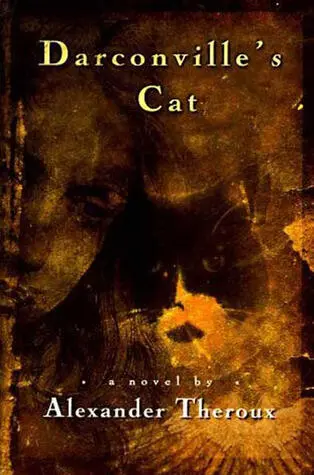
- Название:Darconville’s Cat
- Автор:
- Издательство:Holt Paperbacks
- Жанр:
- Год:1996
- ISBN:нет данных
- Рейтинг книги:3 / 5. Голосов: 2
-
Избранное:Добавить в избранное
- Отзывы:
-
Ваша оценка:
Darconville’s Cat: краткое содержание, описание и аннотация
Предлагаем к чтению аннотацию, описание, краткое содержание или предисловие (зависит от того, что написал сам автор книги «Darconville’s Cat»). Если вы не нашли необходимую информацию о книге — напишите в комментариях, мы постараемся отыскать её.
Darconville's Cat Its chapters embody a multiplicity of narrative forms, including a diary, a formal oration, an abecedarium, a sermon, a litany, a blank-verse play, poems, essays, parodies, and fables. It is an explosion of vocabulary, rich with comic invention and dark with infernal imagination.
Alexander Theroux restores words to life, invents others, liberates a language too long polluted by mutters and mumbles, anti-logic, and the inexact lunacies of the modern world where the possibility of communication itself is in question. An elegantly executed jailbreak from the ordinary,
is excessive; funny; uncompromising; a powerful epic, coming out of a tradition, yet contemporary, of both the sacred and the profane.
Darconville’s Cat — читать онлайн бесплатно полную книгу (весь текст) целиком
Ниже представлен текст книги, разбитый по страницам. Система сохранения места последней прочитанной страницы, позволяет с удобством читать онлайн бесплатно книгу «Darconville’s Cat», без необходимости каждый раз заново искать на чём Вы остановились. Поставьте закладку, и сможете в любой момент перейти на страницу, на которой закончили чтение.
Интервал:
Закладка:
Are you in quest of comparisons?
LXXXV A Digression on Ears
To strike at eares is to take heed there bee
No witnesse, Peter, of thy perjury.
— RICHARD CRASHAWTHE EARS, which master the face of a dunce, are that part of the head which most publishes stupidity. It was into none other than these, fluting up moronically like foolish squills— penchant à la réception de suggestions négatives —wherein was poured, thought Darconville, more venomous lies than even Hearsay of Satinland and all his polyotical side-intelligencers could accommodate! It was astounding: they seemed both to strain away from the cheeks in such vicious inflexions of helix and anti-helix and yet draw up to such devilish points that ugliness was announced instantly and absolutely, as if in those oversized dirt-traps, shutting out all melodies and comprehending only discord, no plot could hatch fouler than themselves. The pinna looked hard and mollusk-shaped, the tragus hemorrhoidal, and the conch darker than the keyhole to hell. There were no lobes.
What is there in the malformed ear that is so revolting? It is the ideographic mark of perverts, penny-simples, and Puritans, and be disarranged in whatever way they might, nothing better indicates a blemished soul. Contour — whether prick-eared, flap-eared, tulip-eared, lop-eared, or jug-eared — does not establish periphery, for what it is is only a poor remnant of what it means: small ones announce madness; flat, brutishness and rusticity; spheroidal, talkativeness; twisted, silliness or imbecility; pointed, cunning, deceit, and that hypocritical kind of lust commonly associated with those face-pulling and dissenting Anabaptists and Allobrogensians with their bowl-haircuts and venereal poxes who were ever ready to club quotations and descant on bare supposais and bantle scripture about in order to preach the dresses off the neighborhood girls, until, you’ll recall, King Charles II took the matter in hand — toy those twin appendages, in fact, which he found could be gloriously cropped or notched or slit to fit several fashions of contrition. But large ears? They are the sumps of rumor and redundance, each a whirlpool fierce to suck in fabrications of a thousand sorts. These are the penetralia of the body, known to every Dumbo, Jumbo, and woebegone basset hound of a detractor who’s tripped on them — flags that semaphore treachery — which historically denote flight before spiritual responsibility, natures playing at modesty while working hard at things like ruses, and those meager, choleric, inconstant, and unethical schemes observable from without yet confined within the twisted and grotesque mule-pulleys of people like Wycliffe, Prynne, Calvin, Vickers, Wither, Cranmer, Herr Ludder and other nasal Protestant archdapifers who’d have left the world a far, far better place had they all been immediately banished to the infamous island of Panotiorum where the cruel aboriginals of that place are so monstrously fluked that they live out their lives actually wrapped in their ears! “A long-ear’d Beast and Flanders College,” wrote Swift, “is Dr. Tisdale to my knowledge.” To big ears we owe our universal death. Eve, the first macrotus, wished to hearken only to what she heard she wanted. Acousticus first brought wickedness into the world.
There is more to the ear than meets the eye. It looks awful, for one thing — the asymmetrical non-whorls and misvolutions of its general format showing a factual resemblance to nothing whatsoever on earth, except perhaps for that one striking correspondence to Dutch landscape. A simile is applied to it as schnaps to a Voortrekker: one is never sufficient. Is it an air-conditioner? A love-lure? A gravity ball? It is a human question mark with a cochlea like a snail, a center like a diphthong, and a rim like a last quarter moon or the symbol for a suffruticose shrub. It never trumpets, though it resembles one. Sound goes through it perforating nothing — as theologians explain the Virgin birth — like saffron through a bag. Its squashed-up shape is a poor vestige of the mobile catchment-cup of many other mammals. It cannot be hid. (The contraptions, in fact, contrived for whatever good reason to cover them temporarily— oreillettes , muffs, earcaps — are more hideous than the ears themselves!) It is the only aperture impossible to shut by itself. It is forever open to fungi, otosis, and the mendacities of talebearers, false delators, and tare-sowing dogs. It cannot discriminate between noises it will and will not hear.
It is a vicious circle, like all circles. It has no other one like it. It begins to hum for no apparent reason. It aches at simple heights and depths. It cannot move. Insert an insect: there sounds a deafening heavy-footed tread — and yet it is unable to hear higher pitches commonly available to the lower beasts. It can claim no exact certitude in relation to distance, space, and often time. It cannot determine truth. Of itself it can retain and remember nothing, and nothing produces, save an ignoble dirty mulch called “cerumen” which gathers in the dark like mushrooms and deafens before it disgusts. It is therefore the worst tool to grasp philosophical knowledge. It freezes, it shrinks, it sprouts hairs, it turns color, and, worst of all perhaps, it repeatedly reports — for if one sleeps on one ear, the other can always bring bad news. By our ears our hearts become tainted! We speak of being up to one’s ears , meaning involved or implicated, in debt, or in trouble; or on one’s ear as captiously or excessively irritated or irritable; or all ears , indicating ambitiously opportunistic or vulgarly eager; or by the ears as entering into a state of strife or discord. It is a noun with as many contemptuous and derogatory implications in English as has the word “Dutch.” The ears of people do not follow suit with the rest of them as they age, remaining not only large, if initially so, but the efflorescence of ugliness until the very moment of death. There is little loveliness, indeed, even for the normal ear, often failing to correspond regularly between the tip of the nose and eyebrow line at the base of the forehead. It is the single tragic constant on the head of man.
But what of those ears of Gilbert les Grands Écoutilles ? They were goosewings — tegumentary expansions of skin, suggesting the distinct possibility of aerial flight, stretched from head side to the elongated digits of their points as if ready to crow and flap away. It was a comic set of volutes, each proof against each, one slightly forward of the other, like an owl’s. They flew up only to be pulled down, ballasted by the priapic weight that wouldn’t let them leave and, wallowing unwieldy, enormous in their gait, stuck out while infolding to a flat welt as if not belonging to their bearer. The placement was no better than the spread which was worse than the shape, a contortion best put somewhere between a potato chip and a reporter’s logograph for the word “impostor”= p. It was volume, nevertheless, without bounty, size without grandeur, bulk without any aura of command, an enlargement, though empty, enouncing far more than exceeds enough. They shot up suddenly from ears to shears to sheaths to wreaths! He himself almost narrowed in the competition. He was as if pinned to them, his weak face left in a posture of gawk like a Doofes Vogelscheuche seeming to refuse the outlandish ascendancy they simultaneously usurped. He looked like a taxi going down the street with both doors open.
Phrenology claims that certain undeveloped organs of the brain, combined with others abnormally developed, show a tendency toward criminality. The external ear receives the terminal branches of so many classes of nerves and concentrates in such a small space the lines of communication from various centers of sensation that the otyog-nomist may readily recognize such tendencies. Here, the large circumference where the ear joined the head showed an incorrigible spirit, the coarse and thickened texture denoting destructive tendencies, and the marginal line of the anti-helix establishing an inclination toward rashness. The width at the base of the conch showed a lack of sympathy, with a plane of comprehension very very small. The incisura intertragica, very wide, showed an almost animal covetousness, and the lobelessness, attaching the ear to the face, as it were, made a limitrophe of a complete head. They might have been boxed shut, thought Darconville, but not boxed enough! I shall be called Ukhovyortov!
Читать дальшеИнтервал:
Закладка:
Похожие книги на «Darconville’s Cat»
Представляем Вашему вниманию похожие книги на «Darconville’s Cat» списком для выбора. Мы отобрали схожую по названию и смыслу литературу в надежде предоставить читателям больше вариантов отыскать новые, интересные, ещё непрочитанные произведения.












Обсуждение, отзывы о книге «Darconville’s Cat» и просто собственные мнения читателей. Оставьте ваши комментарии, напишите, что Вы думаете о произведении, его смысле или главных героях. Укажите что конкретно понравилось, а что нет, и почему Вы так считаете.