Alexander Theroux - Darconville’s Cat
Здесь есть возможность читать онлайн «Alexander Theroux - Darconville’s Cat» весь текст электронной книги совершенно бесплатно (целиком полную версию без сокращений). В некоторых случаях можно слушать аудио, скачать через торрент в формате fb2 и присутствует краткое содержание. Год выпуска: 1996, Издательство: Holt Paperbacks, Жанр: Современная проза, на английском языке. Описание произведения, (предисловие) а так же отзывы посетителей доступны на портале библиотеки ЛибКат.
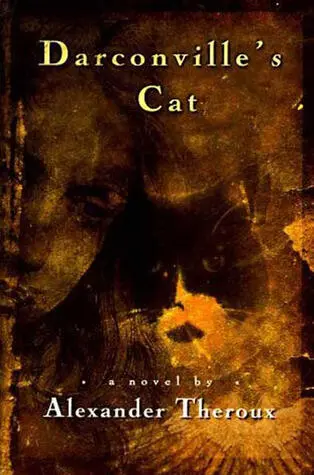
- Название:Darconville’s Cat
- Автор:
- Издательство:Holt Paperbacks
- Жанр:
- Год:1996
- ISBN:нет данных
- Рейтинг книги:3 / 5. Голосов: 2
-
Избранное:Добавить в избранное
- Отзывы:
-
Ваша оценка:
Darconville’s Cat: краткое содержание, описание и аннотация
Предлагаем к чтению аннотацию, описание, краткое содержание или предисловие (зависит от того, что написал сам автор книги «Darconville’s Cat»). Если вы не нашли необходимую информацию о книге — напишите в комментариях, мы постараемся отыскать её.
Darconville's Cat Its chapters embody a multiplicity of narrative forms, including a diary, a formal oration, an abecedarium, a sermon, a litany, a blank-verse play, poems, essays, parodies, and fables. It is an explosion of vocabulary, rich with comic invention and dark with infernal imagination.
Alexander Theroux restores words to life, invents others, liberates a language too long polluted by mutters and mumbles, anti-logic, and the inexact lunacies of the modern world where the possibility of communication itself is in question. An elegantly executed jailbreak from the ordinary,
is excessive; funny; uncompromising; a powerful epic, coming out of a tradition, yet contemporary, of both the sacred and the profane.
Darconville’s Cat — читать онлайн бесплатно полную книгу (весь текст) целиком
Ниже представлен текст книги, разбитый по страницам. Система сохранения места последней прочитанной страницы, позволяет с удобством читать онлайн бесплатно книгу «Darconville’s Cat», без необходимости каждый раз заново искать на чём Вы остановились. Поставьте закладку, и сможете в любой момент перейти на страницу, на которой закончили чтение.
Интервал:
Закладка:
The memory, according to Pliny, is seated in the lobe of the ear. But these of course were lobeless and exappendiculate — unable then to retain any recollection of that to which, once covetous to hear, they’d been filthily privy — like the barren habitat of two planets sealed off, mindless and instinctive, from sentient life and reduced to the basic elements of the physical universe which, in fact, they incorporated: earth (the loam in the conch); water (the endolymph and perilymph fluids); air (the sonoric puffs that touched the tympanic membrane) — but fire? Where was the fire?
As Darconville studied the labyrinths of those ears, he assessed them. They were colossal, he saw, but large enough, he wondered, to contain the vehemence of my accusations? They provided spatial orientation but balance enough, he wondered, to sustain any gravity against the onslaught I should mount? They stood rigidly attentive, but were they vigilant enough, he wondered, against shrieks of destruction that could pierce more wheels of wax than could Odysseus supply for his men? Finally, they were rooted firmly there but tight enough, he wondered, to remain when fastened to the tenacious grist-bite of my hands?
Fire? thought Darconville. O, that could be provided. That could be arranged.
LXXXVI The Tape Recording
All that’s spoke is marred.
— WILLIAM SHAKESPEARE, OthelloIT WAS A GREY AFTERNOON, smelling of rain, several weeks later when the long-awaited explanation from Isabel finally arrived— a primitive misaccomplishment not unrelated, if the truth be told, to a brief telephone conversation Darconville had had with her mother just prior to his release from the hospital when to that solution-proof but suddenly suspicious soul it was quite soberly vouched, and repeatedly so, that though it were the very day of her daughter’s wedding, that though the world itself flew off its supports, that though he himself had to crawl back from the dead trawling a sheet of flame, he would have it. And then it finally turned up, in a sealed envelope with insufficient postage, at the Harvard post-office. There was no letter, nothing written down — only a small cassette.
There was a sick color in the sky. The wind was up and the pale undersides of the few leaves left on the trees were layered to windward as, frantically, Darconville set off on the run to find a recording machine — across to Langdell, over to Paine Hall, into the Science Center, and then cutting back through the Yard he found one upstairs on the fifth-floor of the Lamont Library where, conveniently, no one was about. The librarian pointed to a machine. Darconville tore off his coat, clicked the tape into place, and — holding his breath — pushed the button to play. Isabel’s voice was cool.
“I found it impossible to write. I’ll try, anyway, to explain as much as I can here. You said you wanted the truth, well, I doubt that my truth will satisfy you. And you might as well know right now that there’s really no point in trying to see me. I guess I can’t actually blame you [ sigh ] for the way you must feel now, but it doesn’t matter anymore, you see, because I’ve too long listened to what you’ve said to me. It hasn’t been good for me. I’m afraid I’ve let you dominate me.”
Darconville closed his eyes.
“I don’t exactly blame you for that as I suppose, oh, I’ve let myself be dominated. I can’t tell you, I guess, when this whole thing began, but you might say it began from the beginning. There were — little things — always: the trust thing we, you know, had a big conflict over. If you don’t know what I mean, it’d be pointless to explain.”
“You might condescend to try,” said Darconville.
The voice on the tape was assured and complacent, with a touch of weary finality to it implying its wisdom, and the mature pain that informed it, might be just a trifle too incomprehensible to those of less spiritual provision, and yet it bore the stamp of set-speech, typically found in that kind of parvenu whose sudden confidence, determining the self-congratulatory tone which adopts clarity of diction to express itself, is so flown with the conviction of its own new respectability that it becomes in itself the worst kind of hauteur, as merciless as it is recent.
“I didn’t really trust you. I assumed you were seeing other people, right from the beginning. That’s when it began, I think. I mean, I knew you lied to me. I didn’t blame you, I honestly didn’t, I should have been more mature about it all, and maybe it was my own fault for not trusting. But my first year at Quinsy? All that business with Hypsipyle Poore? As you—”
Horrified, Darconville shoved the stop button, pushed rewind, and pressed the machine to play.
“—trusting. But my first year at Quinsy? All that business with Hypsipyle Poore?”
What the devil in hell?
“As you know I was completely taken with you. It didn’t matter what you did. Like when you went away, I was completely faithful to you and didn’t see anyone, not when you were in England (I don’t suppose I can ever really go back there again, you know?) or anytime. And I knew even then that both Govert and Gil, well, I don’t know [ audible grinning ], wanted to be with me, you could say.”
“Forty thousand brothers could not with all their quantity of love make up my sum,” said Darconville, quoting another disappointed friend.
“But I suffered a lot, just like it was with Hypsipyle. I knew there was something there — a person can tell. In school people talk. Girls: about your looks, your car, your being unmarried. I didn’t believe a lot of it, the rumors and what all. [ yawn ] And of course I didn’t even know what was going on until I found some of the notes. That was when the doubts came back. And pressures, like you wouldn’t believe. You know?”
It was totally unanswerable: vox, et praeterea nihil —a piece of faery almost flowing with the lewd heat of anticipation for the third party in whose defense she was forced to reach back four years for an excuse that was non-existent. The habit of lying did beget credulity in the liar! She was talking like a tour-guide, perjuring like Epaminondas, but she was so fully pretentious she seemed not to be! Were bad actors, wondered Darconville, only good actors playing bad actors? Yet he couldn’t move, so fixed was he to travel along with the words that raveled off with such a routine and premeditated sense of convenience. He could see her: she was obviously lying down — probably at night — feet crossed, speaking her little penny-repentance into the microphone in one hand and maybe eating tiny hard candies with the other, while the slowly turning mobile overhead sent its slow heliocometrical shadows across the cream-and-red bed.
“This past summer those pressures were gone. I was alone — getting in touch with my feelings. Though I needed you, I resented you too. I know you sold your car, I know you were teaching to earn money for the wedding, I know you couldn’t get up from Quinsyburg to see me, still — and you can see I have faults, like anybody else — I resented you. [ giggle ] It’s almost, you know, like a love/hate relationship. It’s so painful, all this reviewing — but [ sigh ] I have to, for you. I see that.”
“Trowel on, Mason,” said Darconville.
“Then I had my car accident that time. And for you to tell me I drove too fast, I always drove too fast? I didn’t need that then — I needed a shoulder! That’s when it began, I think. That just stripped away everything that was left and just ruined, rueened , all I ever felt for you, though I can’t explain why. That wasn’t all. There was the sewing — the money? you gave me? remember? — well, I never really wanted to make my wedding dress. I felt confused about that, [ long pause ] I guess I’m happy with myself — except in the way I’ve treated you, which I think you know you caused as much. It’s just that you made me feel small. I would have always felt unimportant if we were ever — together — that I was, I don’t know, lacking a lot. You’re probably laughing even now — to be hearing all this, to see how sensitive I can be. I’m just a country girl, really, who wants to live close to nature and animals and things, [ sigh ] I guess you forced me to look at myself, to make me see things I didn’t want to see. I mean, maybe I should see a psychiatrist. (Of course I can’t afford one.) But sometimes I wonder if it’s just not better going through life not so concerned with your faults. I have faults, I admit, if you look closely they’re there. Please don’t think I’m making you out to be an ogre or, I don’t know — you know—’cause I think you’re basically a good person, as, um, you are well aware of.”
Читать дальшеИнтервал:
Закладка:
Похожие книги на «Darconville’s Cat»
Представляем Вашему вниманию похожие книги на «Darconville’s Cat» списком для выбора. Мы отобрали схожую по названию и смыслу литературу в надежде предоставить читателям больше вариантов отыскать новые, интересные, ещё непрочитанные произведения.










Обсуждение, отзывы о книге «Darconville’s Cat» и просто собственные мнения читателей. Оставьте ваши комментарии, напишите, что Вы думаете о произведении, его смысле или главных героях. Укажите что конкретно понравилось, а что нет, и почему Вы так считаете.