Alexander Theroux - Darconville’s Cat
Здесь есть возможность читать онлайн «Alexander Theroux - Darconville’s Cat» весь текст электронной книги совершенно бесплатно (целиком полную версию без сокращений). В некоторых случаях можно слушать аудио, скачать через торрент в формате fb2 и присутствует краткое содержание. Год выпуска: 1996, Издательство: Holt Paperbacks, Жанр: Современная проза, на английском языке. Описание произведения, (предисловие) а так же отзывы посетителей доступны на портале библиотеки ЛибКат.
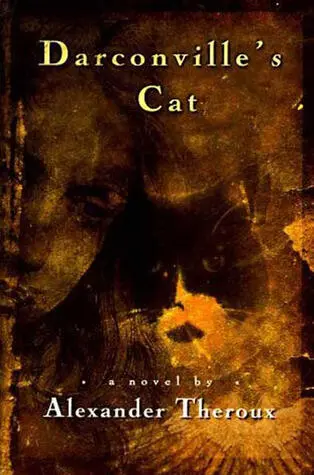
- Название:Darconville’s Cat
- Автор:
- Издательство:Holt Paperbacks
- Жанр:
- Год:1996
- ISBN:нет данных
- Рейтинг книги:3 / 5. Голосов: 2
-
Избранное:Добавить в избранное
- Отзывы:
-
Ваша оценка:
Darconville’s Cat: краткое содержание, описание и аннотация
Предлагаем к чтению аннотацию, описание, краткое содержание или предисловие (зависит от того, что написал сам автор книги «Darconville’s Cat»). Если вы не нашли необходимую информацию о книге — напишите в комментариях, мы постараемся отыскать её.
Darconville's Cat Its chapters embody a multiplicity of narrative forms, including a diary, a formal oration, an abecedarium, a sermon, a litany, a blank-verse play, poems, essays, parodies, and fables. It is an explosion of vocabulary, rich with comic invention and dark with infernal imagination.
Alexander Theroux restores words to life, invents others, liberates a language too long polluted by mutters and mumbles, anti-logic, and the inexact lunacies of the modern world where the possibility of communication itself is in question. An elegantly executed jailbreak from the ordinary,
is excessive; funny; uncompromising; a powerful epic, coming out of a tradition, yet contemporary, of both the sacred and the profane.
Darconville’s Cat — читать онлайн бесплатно полную книгу (весь текст) целиком
Ниже представлен текст книги, разбитый по страницам. Система сохранения места последней прочитанной страницы, позволяет с удобством читать онлайн бесплатно книгу «Darconville’s Cat», без необходимости каждый раз заново искать на чём Вы остановились. Поставьте закладку, и сможете в любой момент перейти на страницу, на которой закончили чтение.
Интервал:
Закладка:
It was rhetorical higry-pigry: a language in which Darconville heard the rude and rustic paratragediations of Fawx’s Mt. — the legacy of living down there with all those truckfarmers, sheep-fucking insouciants, and raw-wristed moonlings with their flails and rakes — and from nothing more than the sounds of this meaningless monologue, in which linguistic incorrectness grappled with illogical inadvertency, was he able to summon to mind with almost ritual wretchedness those long wasted years of his life and to see at last the sudden poverty of those once-cherished memories smelted out of the dross heap of the past.
“I can be very independent and want to be. I let myself lose that. I felt you didn’t respect me. That’s when it began, I think. I felt I couldn’t be myself. I always felt I had to be — to do —something; it was important to you, I think, even though you told me the opposite. I felt like I had to live up to something — that was a pressure. But, you know, maybe this is good: it points up, like, I’m not what you thought I was. Maybe if you thought I was too good — which I wasn’t —it’ll help you get over this, [ yawn ] You know? I’m not perfect. I know you love me, but, lord, people get over things like this, and you will too. I don’t blame you for hating me, I guess. I don’t know, maybe you can think back on all the good. I know you’ll always resent me— but maybe it’ll provoke great writing on your part [ audible grinning ] at the expense, I suppose, of myself. But, who knows, maybe I’ve given you a motive.”
The first side of the tape ran out.
It was a bolus of mendacities. There was no strict line of conciliation to thought or duty or affection, only a post-posited and out-of-sequence rehearsal to avoid explanation, un pièce radiophonique recorded with an overdeveloped theatrical flair — careless, stupid, and anaphrodisiac — in order to present herself as a sloe-eyed Blakean infant in touch with the dark para-rational world of animals and forests, one of those fake innocenti who’d like you to believe she kissed fog or slept with a felt rabbit, and yet those few sequences not ceremoniously spent in buying her virtue by selling her guilt were squandered in a fatuous half-hour of perfect indistinguishableness, cruelly disregarding any ratio of priority to subsequence and leaving unillumined by the concentrated light of any single defining concern the real facts of her iniquity which she dismissed, typically, by way of the formulaics of heroineism — the “brave” smile in the face of tragedy; the pos-terosuperior piety; the studio-finish profile framed in modest contrition; and the jolly heads-up tone, making versicle response, that victory will always use in lessoning defeat. It was rubbish. What had really happened? When did it actually begin? Why had she kept up a sham for four years?
Sitting forward, Darconville slapped in side two and the voice continued its disclosures, as hypocritical and excusive as were those of the smooth, deceitful chatelaines of yore. Remembrance fallen from heaven! Madness risen from hell!
“I put off writing to you after you left because I couldn’t cope with it. That’s one thing I guess I can’t be forgiven for: not writing. I started several letters and they just came out wrong, but you’ll be happy to hear, anyway, that it’s bothered me; and that’s one good thing that’s come out of all this — you remember our talks about it? — I knoooow I have a conscience. That’s almost a relief to me. Yes, I’ll admit, I’ve been happy, very happy, these past few weeks, it really’s nice now, but it’s somehow been tainted, too. I know that because of me you can never really be happy.”
“ Canaille !” shouted Darconville.
The librarian looked up.
“In June — I don’t remember the sequence — that’s when it began, I think. I was really excited about getting married and had no intentions of not marrying. Ask my mother. Then I remember I got scared — I panicked. It was incredible! But by then, I forget exactly when, you had left for Massa—”
Stop.
The time-frame? It was crucial! What was the time-frame? Darconville felt an entire period had passed with Isabel waiting not only for him to leave but to see whether this neighbor of hers would propose to her! He was certain they had made their rendezvous sometime during the summer, long before the fall. She was always a coward and cunning all the time, but while September made her fickle, July made her a liar!
Perspiring, Darconville quickly tapped the rewind button, pushed play, and strained with every fiber of his being to listen beyond the nonversation to the exact words. But she hopped the hole.
“—got scared — I panicked. It was incredible! But by then, I forget exactly when, you had left for Massatoochits. And, you know, I think if you had said that day, ‘Please come,’ you know, ‘I beg you,’ I almost wonder if I wouldn’t have come. I remember exactly when I was thinking that — I was wearing that violet jersey with things, flowers, little ones, on it.”
“Resign your purple, Pretender,” said Darconville, who knew that a liar could always be detected by that one ridiculous use of detail.
“When you left I missed you, I did. I worried or wondered — I don’t know — you’d get up there and find — oh, I don’t know. I have this picture of Harvard, all those tremendous people, and I always thought I was never quite [ smile ] enough. So [ yawn ] a couple of days after you left, I didn’t miss you as much. I wanted to, I guess— miss you, I mean. But after a week had passed, I just knew. That’s when it began, I think. I just — I don’t know— knew .”
It was frightening. Darconville was almost now unable to recognize actual truth as separate from the violence of her fictions, for she had by her new lights turned revisionary and set upon and savaged fact, like the voracious Terrare who can seize a live creature with its teeth, eventrate it, suck its blood, and, devouring it, leave only the bare skeleton behind. Furthermore, the mode of speech, all borrowed apocalypse, was itself a fabrication — at once, honeyed and perfidious. It was more than a crazy dysphasia fighting ataxaphasia. There was both a fake voice and a real, with neither, curiously, able to hide the kind of muflisme that is fascinated with the analysis of itself, but while the former was a sort of mistily gentle babytalk, a canting simulation of virtue spoken as if offered like scented incense to evaporate in this harsh and brutal world not of her making, the real voice, cold as proof, might have been muttered in covens, weaving low in a shuttle of bitter contempt that was full of unseen and unpropitious events in the throat. She had a soul like a jackknife, the kind that opened everywhichway.
There was more, however, and constant observer continued confronting inconstant object.
“I’ve told you what I remember. And so we come — to Gilbert, and if you dare to come down here to try to talk to any of these people, I’ll not be here, and that’s a promise! I’ve heard about your letters and telephone calls. I knew in a way they’d be coming, [ cruel laugh ] You didn’t think I was very perceptive, did you?”
Darconville found that perceptive. In her words he could see her scar whiten and the ugly close-set bullet eyes protruding.
“Well, do your worst! You’re mad as a hatter, that’s what I think. But it doesn’t matter, you and I have absolutely nothing to say to one another, [ long pause ] I admit it, look, you were nice — that’s not the right word — [ sigh ] gracious, I suppose, about being willing to let me go out with other guys if I wanted to. Well, to be honest about it, there were times back in Quinsyburg when I did want to be with someone else — him. That’s when it began, I think. I suppose I should have told you. But don’t you see? They were neighbors, it was nothing, Mrs. van der Slang was like my second mother. I was close to that family, I knew them so well, but as I think back, everytime I was with Govert — it’s funny, really — I actually wanted to be [ audible grinning ] with Gilbert. He was home, anyway, for a couple of days at Christmas and a couple of days in July—”
Читать дальшеИнтервал:
Закладка:
Похожие книги на «Darconville’s Cat»
Представляем Вашему вниманию похожие книги на «Darconville’s Cat» списком для выбора. Мы отобрали схожую по названию и смыслу литературу в надежде предоставить читателям больше вариантов отыскать новые, интересные, ещё непрочитанные произведения.







Обсуждение, отзывы о книге «Darconville’s Cat» и просто собственные мнения читателей. Оставьте ваши комментарии, напишите, что Вы думаете о произведении, его смысле или главных героях. Укажите что конкретно понравилось, а что нет, и почему Вы так считаете.