Alexander Theroux - Darconville’s Cat
Здесь есть возможность читать онлайн «Alexander Theroux - Darconville’s Cat» весь текст электронной книги совершенно бесплатно (целиком полную версию без сокращений). В некоторых случаях можно слушать аудио, скачать через торрент в формате fb2 и присутствует краткое содержание. Год выпуска: 1996, Издательство: Holt Paperbacks, Жанр: Современная проза, на английском языке. Описание произведения, (предисловие) а так же отзывы посетителей доступны на портале библиотеки ЛибКат.
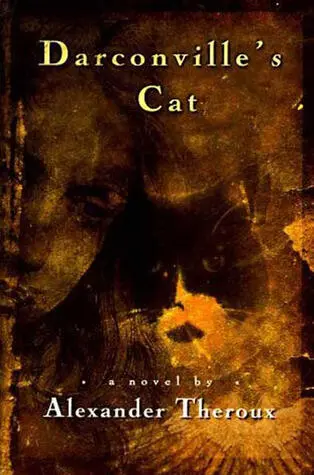
- Название:Darconville’s Cat
- Автор:
- Издательство:Holt Paperbacks
- Жанр:
- Год:1996
- ISBN:нет данных
- Рейтинг книги:3 / 5. Голосов: 2
-
Избранное:Добавить в избранное
- Отзывы:
-
Ваша оценка:
Darconville’s Cat: краткое содержание, описание и аннотация
Предлагаем к чтению аннотацию, описание, краткое содержание или предисловие (зависит от того, что написал сам автор книги «Darconville’s Cat»). Если вы не нашли необходимую информацию о книге — напишите в комментариях, мы постараемся отыскать её.
Darconville's Cat Its chapters embody a multiplicity of narrative forms, including a diary, a formal oration, an abecedarium, a sermon, a litany, a blank-verse play, poems, essays, parodies, and fables. It is an explosion of vocabulary, rich with comic invention and dark with infernal imagination.
Alexander Theroux restores words to life, invents others, liberates a language too long polluted by mutters and mumbles, anti-logic, and the inexact lunacies of the modern world where the possibility of communication itself is in question. An elegantly executed jailbreak from the ordinary,
is excessive; funny; uncompromising; a powerful epic, coming out of a tradition, yet contemporary, of both the sacred and the profane.
Darconville’s Cat — читать онлайн бесплатно полную книгу (весь текст) целиком
Ниже представлен текст книги, разбитый по страницам. Система сохранения места последней прочитанной страницы, позволяет с удобством читать онлайн бесплатно книгу «Darconville’s Cat», без необходимости каждый раз заново искать на чём Вы остановились. Поставьте закладку, и сможете в любой момент перейти на страницу, на которой закончили чтение.
Интервал:
Закладка:
—from Belides, the dragonian doxy,
—from Actoria Paula, peripole
and paranymph,
—from Hiberina, the bottomless well,
—from Grognon, the ill-willed
Stiefmutter ,
—from Catherine Bora, the lutheran duck,
—from Penthisilea, the Amazonian bunt,
—from Eryphile, the low betrayer,
—from the Empress Dowager Tsu Hsi
of Imperial China, the Scourge of
God,
—from Thais, the trugmullion of
Alexander the Great,
—from Lady Bertalda and her lavenders
and leaping-housewives,
—from Typhaon the tallywoman,
—from Guinevere, the spiteful solicitrix,
—from the seductress Phrynne and all
pamels everywhere who march by
two and three,
—from Pheretrina, the crudest of
connivers,
—from Fulvia and Arsinoë, bumfondlers,
—from Sofya Andreyevna Bers, who
stole toys,
—from Pythionice the pallaptern,
—from Jennyanydots and her Gumbie cats,
—from Barbara Muehleck Kepler,
the left-handed jilt,
—from Clorinda, the chattel of sullen
memory,
—from Ulin, the false enchantress,
—from the Grandmother of Ghosts and
her woolen effigies,
—from the Princess Papulie with plenty
papaya,
—from Cytheris, the jade prophet,
—from Miss Emily Faithful, man-hating
amazon,
—from the Weird Sisters and their
wheyfaced wirepulling,
—from Anteia the inallegiant,
—from Madame Arcadina, pinnace
and pythoness,
—from Princess Sumru of Sirdhana,
the sunck, who smoked her hookah
over the graves of men buried alive,
—from Solange Dudevant, the deywife,
—from Olympias, the Greek hen,
—from Semiramis the Assyrian punk,
—from Hypatia, pagan philosophress,
—from Fiametta, bastard of the King
of Naples,
—from Dian L. Rotbun, hedonomaniac,
—from Ge Panmeter and all the whorage
of wifkin,
—from Marie Duplessis de Camellias,
la baiseuse, la chouquette, la
gisquette, la gonzesse, la punaise, la
travailleuse, la racoleuse, la caliche,
la pétasse, la poufiasse .”
Dr. Crucifer in one move shut off the phonograph and, caracoling belly-forward, countermarched to the bed with the mouth of a bell and the heart of hell and the head of a gallows tree, but the day of toil for Darconville, his ashen eyes no longer staring into space, had fortunately ended several minutes before when with an inexplicable stabbing in the lungs from a last indrawn breath he passed the threshold of pain now into a deep coma.
LXXXIII Gone for a Burton
When I loved you and you loved me,
You were the sky, the sea, the tree;
Now skies are skies, and seas are seas,
And trees are brown and they are trees.
— CHARLES A. WAGNERSTILLMAN INFIRMARY was white and antiseptic, the room on the seventh floor nothing more than a table, a chair, and a high wheel-footed bed. There was no flourish of architecture, no ornament, only chrome, silence, and a monotony of windows. Doors, opening, shut. Lights, coming on, went out. There was no sky beyond the window. The view, looking westward, was too high for one to see the trees.
The doctors had been worried. They might have lost him, they said, charging Darconville where he lay, forfoughten, with contributory negligence not only for excessive smoking but for an acute tension due to some kind of overexertion or apprehension he’d ignored. Where had he been this past week? And how long had he gone without food? The quick hard pulse and convulsive motions had frightened them, along with the obvious weight loss, dyspnea even at rest, and the labored use of accessory muscles for respiration; his chest was hyper-resonant to percussion. He had to lean forward, while sitting, to brace himself. An inept intern, searching for a cardiac murmur (known only to himself), had initially forced him through a valsalva maneuver: the sudden stabbing pain was so severe that Darconville became hypoxic and, past his limitation, fell into hypotensive shock. The intern quickly called an emergency code. Several resident doctors ran in and gave him a saline infusion — wide-open — of 1500 cc’s over three hours. They found a bounding right ventricular pulse in the chest beneath the sternum and the sound of wet rattling rhonci on the right but, more ominously, on the left side of the lung only a seashell hollowness. There followed prolonged expiration through pursed lips, profuse sweating, and flailing movements in the chest. An emergency X ray revealed scattered lucencies throughout the lung fields, and now they knew what they had — a congenital condition of bullous emphysema, with an episode of spontaneous pneumothorax.
It called for immediate intervention: one or several bullae had ruptured, causing air, leaking from one lung, to rush into the chest and being trapped there to increase the pressure from outside the lung to collapse it. The harder he tried to breathe, the more the lung collapsed. Quickly, the doctors punched a hole in the chest wall and through the ribs inserted a tube attached to a Gomco machine to suck out air in order to reinflate the collapsing lung, prevent it from closing down, and allow scarring to seal the rupture.
Darconville spent several days on a respirator while being fed intravenously, and his pulmonary competence was restored to a fragile but stable state. No visitors were allowed — not black lameth; not Hasmed, angel of annihilation; not Af, ruler over the death of mortals. He slept fitfully. When he awoke, the sweat had stenciled his hair to his forehead and his head rocked with conflicting swing and spin, a relentless hammering between the eyes as if, with importunate questions, someone to solve justice yet not knowing how desperately sought release to find and punish the criminal who belonged there instead. He had almost gone for a burton — he didn’t care, for it was better to die than live some death too bitter to fear — but he was still alive. He remembered nothing of how he got there, but for all he knew the university had already issued a writ de lunatico inquirendo , scheduled as he was, before a week was out, to undergo a required bit of zoopery with a psychiatrist.
“It would of course be taken as healthier — more normal — for you to hate her,” the psychiatrist muttered, sitting back and meditatively circling his foot. It was absurd: hate Isabel? Darconville loved her. He wouldn’t say it again. But he wouldn’t pray for it anymore, either, for God now seemed to him the refuge to whom men only turned to avoid any homage to their neighbor. And then how did Christ expect us to love as we were bidden to do in this life when the very chance for it was taken away? The heavens? No, to seek solutions there — whether of a crime, or a code, or a criss-cross puzzle — was to have your questions not solved but dissolved. To solve it all, on the other hand, he was nevertheless determined (he simply didn’t know how!) for love was somehow inside him, giving him no rest; it was not a pursuit to which he could turn his attention or not as he chose. In any case, she had promised she’d send him an explanation, hadn’t she? — he would wait for it, then. It would help. It must help.
There must be more to love than death, thought Darconville during those long empty days, feeling he wanted only to find something he needed or needed to find something he wanted-to step on the moon and say, to the cagastric night, “Be day!” No, something would come that would save him from hate, and if it wasn’t death it had to be love, didn’t it?
Darconville told the psychiatrist he missed his cat. Yes, that’s right, his cat — because he believed, as he said, that we partially died, all of us, through sympathy at the death or disappearance of each of our friends; memories, even if one wished it, couldn’t be forgotten. It became a thought that literally upon the thinking brought an ache to his wounded lung, compressing his chest. (Secretly, he began to take the benperidol.) He asked the psychiatrist, describing him, if by any chance he had ever seen Spellvexit. He badgered him to make inquiries. And repeatedly he begged him if he would telephone Isabel on his behalf. Would he? Why wouldn’t he? But there was no reply, the foot merely continuing meditatively to circle, now this way, now the other. It must have been a Saturday, at one such session, when Darconville strained across the bed to peer down at the street: the distant marching music, attracting him, was that of the Harvard band escorting a football crowd through the streets below. They all looked so happy, the boys in topcoats and flannels hugging blankets in one hand and beautiful slender girls in crimson tarns and scarves waving fishtail-pennants in the other, all of them limber, alive, in the bright sword-cold October air and kicking through autumn leaves toward the grey arcade of the stadium across the river. It made Darconville feel more isolated than ever. Would he telephone, please? Would he call? No, decided the psychiatrist, he must simply learn to forget her; he was worried: the largest number of inmates in bedlam, he pointed out, were people, unresigned to it, who’d been rejected in love. The psychiatrist, however, asked what he was going to do, lest he end up among them. (Instantly, Darconville felt an overwhelming compulsion to write a book in defense of them all. I wonder why? he thought. I ? Perhaps, he thought, there isn’t an I at all and we’re simply the means of expression of something else. Wonder ? What is wonder but the imagination seeking what it hasn’t. Why ? Y: the past tense of antique verbs resurrected to predicate present behavior.) His reply was that he was waiting — Isabel was going to send an explanation. But the psychiatrist frowned and continued to express concern, remarking again on the curious absence of a normal heteropathic symptom of improvement: relief by rage. Why did he not hate her? Then Darconville turned to him, not with rebuke, not with ridicule, neither with irony nor sarcasm, but rather with the kind of childlike and simple-hearted ingenuousness that suddenly lit up his eyes with innocence as he softly asked, “Do you think she’d believe I loved her then?”
Читать дальшеИнтервал:
Закладка:
Похожие книги на «Darconville’s Cat»
Представляем Вашему вниманию похожие книги на «Darconville’s Cat» списком для выбора. Мы отобрали схожую по названию и смыслу литературу в надежде предоставить читателям больше вариантов отыскать новые, интересные, ещё непрочитанные произведения.











Обсуждение, отзывы о книге «Darconville’s Cat» и просто собственные мнения читателей. Оставьте ваши комментарии, напишите, что Вы думаете о произведении, его смысле или главных героях. Укажите что конкретно понравилось, а что нет, и почему Вы так считаете.